.svg)
Teamflect and Culture Amp are both enterprise HR software platforms, but they take different approaches to people management. Teamflect is designed around the Microsoft 365 ecosystem, integrating deeply with Microsoft Teams and Outlook to bring performance management into the tools employees already use.
Culture Amp, meanwhile, takes a data-driven approach to employee experience, combining engagement surveys, people analytics, and performance management with people science and benchmarking data from more than 8,900 organizations.
Both are enterprise HR software platforms, and the decision comes down to whether your primary need is a frictionless performance workflow inside Microsoft 365, or a rigorous measurement and engagement program with external benchmarking context.
Teamflect Overview
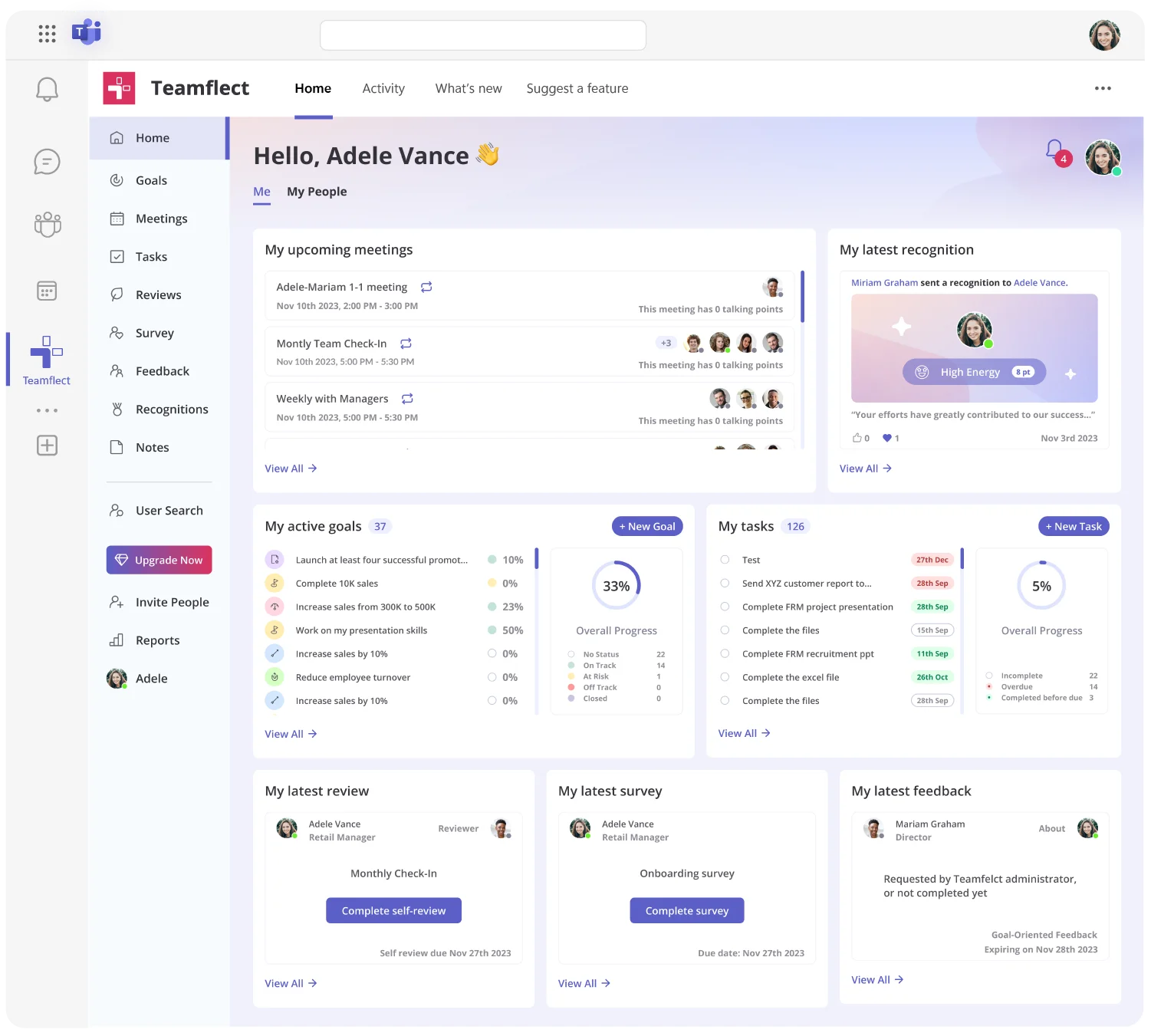
Teamflect is a performance management platform that integrates deeply with Microsoft Teams and Outlook, covering goals, reviews, 1:1 agendas, feedback, recognition, and surveys. For organizations that are standardized on Microsoft 365, this keeps performance workflows inside the tools employees already use every day. For teams focused on recognition and rewards, Bonusly is worth considering, especially for peer-to-peer recognition.
Teamflect holds around a 4.5/5 on G2 (181 reviews) and 4.7/5 on Capterra as of August 2026 (ratings and review counts change over time), with a majority of reviewers from small and mid-size businesses.
Pricing is transparent: a free Starter plan covers up to 10 users and includes all nine core modules, with some advanced capabilities reserved for paid plans. Essential is $7/user/month and Professional is $11/user/month on annual billing ($9 and $14 month-to-month, respectively). The AI Agent is available with limited access on Essential and full access on Professional.
The platform covers the full performance management cycle in one place. Here is what's included:
Key Features
- Goal and OKR tracking with alignment from company to individual level, updated inside Microsoft Teams
- Performance reviews with customizable templates, rating scales, 360-degree feedback, and calibration; supports 30/60/90-day, quarterly, annual, and exit review cycles
- 1:1 meeting agendas with shared talking points, action items, and follow-ups that appear directly in meeting invites
- Continuous feedback and peer recognition inside Teams and Outlook, with no tab-switching required
- Employee surveys (pulse, engagement, onboarding, and exit) run from within the Microsoft 365 environment
- Nine-box talent matrix for performance versus potential mapping
- Development plan functionality is included in reviews on all plans; advanced Individual Development Plans and succession planning are Professional features
- HRIS integrations and the Power BI connector (Professional and Enterprise plans)
- AI Agent: limited access on Essential, full access on Professional; assists with actions using company data and policies inside Teamflect
Pros
“I like that Teamflect is integrated into Teams, which makes it easy to adopt. The customer service and overall experience have been great, and I find the admin panel straightforward to use and navigate. I also appreciate not having to log into yet another performance system, since Teamflect provides all the functionality we need in one place.” – G2 reviewer
- Zero-friction adoption for Microsoft 365 organizations. Its Teams and Outlook integration can reduce context-switching and adoption friction for Microsoft 365 organizations. G2 and Capterra reviewers consistently cite this as the platform's clearest differentiator.
- Transparent, self-serve pricing with a meaningful free tier. The Starter plan is free for up to 10 users and includes all nine core modules, with some advanced capabilities reserved for paid plans. Published pricing (Essential $7/user/month, Professional $11/user/month on annual billing; $9 and $14 month-to-month) lets buyers model costs without a sales conversation.
- Full performance management cycle in one platform. Goals, reviews, 360 feedback, 1:1s, recognition, surveys, development plans, and talent mapping are available within Teamflect's performance-management suite, subject to plan-specific feature limits.
- Dedicated Customer Success Manager included in every paid plan. Implementation support, personalized training, and ongoing CSM access are included as standard, which reduces the onboarding friction that often undermines HR software rollouts.
Cons
“On Integrations, it works best within the Microsoft ecosystem, so it may feel limiting for companies using a wider mix of third-party tools.” – G2 reviewer
- Requires Microsoft 365. Teamflect's value is directly tied to the Microsoft ecosystem. Organizations not standardized on Teams and Outlook cannot access the core in-flow experience, and the platform offers no meaningful alternative for non-Microsoft environments.
- No core HRIS features. Teamflect does not include payroll, benefits administration, time tracking, or employee records. It is a performance and engagement layer that sits on top of an existing HRIS, not a replacement for one. Organizations evaluating Teamflect should confirm their HRIS coverage before purchasing.
Culture Amp Overview
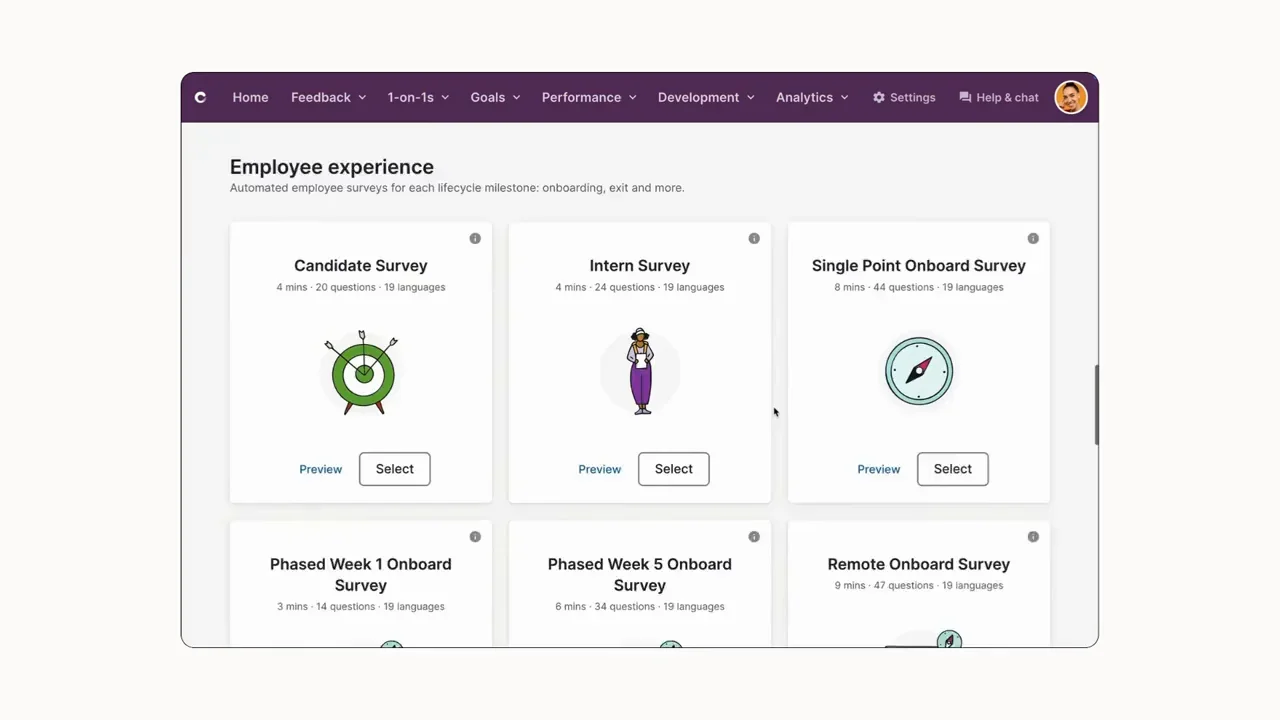
Culture Amp's origin is in the question that most HR tools skip: not 'did we do the review?' but 'what is actually happening with our people, and how does it compare to other organizations?' Launched in Melbourne in 2011 by Didier Elzinga and co-founders, it built its reputation on engagement surveys developed with organizational psychologists and backed by benchmark data from thousands of companies, a dataset that has grown to cover more than 8,900 organizations surveyed (per Culture Amp).
Culture Amp holds around a 4.5/5 on G2 from 1,536 reviews as of August 2026, with a majority from mid-market organizations (ratings and review counts change over time). Pricing is not published and requires a sales conversation.
Performance management, development tools, and the AI Coach were layered in over time. In 2026, the company launched the Performance Culture Quadrant (PCQ), a diagnostic survey included with Engage.
Key Features
- Science-backed engagement, lifecycle, pulse, onboarding, and exit surveys with validated question libraries developed by organizational psychologists
- Benchmark dataset covering over 8,900 organizations, 74 million surveys, and 1.61 billion questions answered (per Culture Amp)
- People analytics: driver analysis, Retention Insights, heatmaps, and manager effectiveness dashboards
- AI Coach: included in Engage and Perform products for survey summary, insight surfacing, and manager coaching
- Culture Amp Perform: continuous feedback, reviews and calibration, 1:1 conversations, employee development plans, goal management, and performance insights
- Develop: skill-building, learning pathways, and growth plans
- Performance Culture Quadrant (PCQ): a diagnostic survey launched in 2026, included with Engage
- People Science Consulting: an add-on to Engage and Perform; enterprise customers receive a results call with a People Scientist
- HRIS integrations (verify current supported systems in the Culture Amp integrations directory)
Pros
"CultureAmp has really elevated how we collect employee feedback. It helps people feel safe speaking up, and it delivers actionable information with year-over-year tracking so we can see progress over time. Overall, it’s been a game changer for us." – G2 reviewer
- Rich benchmarking and people science depth. The 8,900+ organization dataset, validated question libraries, and driver analysis give HR leaders defensible, research-backed context that most competitors cannot match.
- AI Coach adds scalable manager support. Included with Engage and Perform, AI Coach summarizes open-text survey responses and surfaces coaching guidance for managers, reducing the manual work of turning raw feedback into action.
- Comprehensive people analytics out of the box. Driver analysis, Retention Insights, heatmaps, and manager effectiveness dashboards give People teams population-level visibility that most performance-first platforms do not offer natively.
- Dedicated implementation support at scale. Customers in the 200 to 999 employee range receive one-on-one customer-success support and implementation project management, which benefits organizations running a structured, company-wide listening program.
Cons
“What's least helpful is the lack of customization in certain products, like reviews. There's also no option for custom reminders or notifications within review cycles, which would help keep things on track. On top of that, product improvements based on customer feedback can sometimes feel slower to roll out than we'd like.” – G2 reviewer
- Pricing opacity complicates early budget planning. Culture Amp does not publish pricing. All plans require a sales conversation before any cost information is disclosed. This makes early-stage vendor comparison difficult and prevents buyers from independently qualifying the platform against budget constraints.
- Review cycles don't flex by team or role. G2 reviewers report that customizing a performance review for a specific manager or individual contributor requires building an entirely separate cycle rather than adjusting the existing one, and some describe the built-in development-planning tools as underdeveloped compared to the rest of the platform.
Pricing Comparison
Teamflect publishes its pricing. Culture Amp requires a sales conversation before disclosing any pricing. For buyers who want to model costs and compare vendors independently, this is one of the most significant practical differences between the two platforms.
| Teamflect | Culture Amp | |
|---|---|---|
| Pricing Model | Published tiered pricing; per user/month | Custom; modular; fully quote-based |
| Free Tier | Starter: free for up to 10 users, includes all 9 core modules; some advanced features reserved for paid plans | None; demo available |
| Entry Paid Tier | Essential: $7/user/month annual ($9/user/month monthly) | Not published; contact Culture Amp for pricing |
| Mid-Tier | Professional: $11/user/month annual ($14/user/month monthly) | Pricing varies by selected products, organization size, and contract terms |
| Enterprise | Custom; contact Teamflect | Custom; contact Culture Amp |
| Free Trial | 30-day Professional trial available | No public self-serve trial is listed; request a demo or contact sales |
| Pricing Transparency | Published on website | Custom quote required |
Note: Teamflect pricing is verified from the Teamflect pricing page as of August 2026 and is subject to change. Culture Amp does not publish pricing; contact Culture Amp directly for a current quote. Third-party analyses suggest Culture Amp's effective per-employee cost varies significantly by module, company size, and contract terms.
Feature Comparison: Teamflect vs Culture Amp
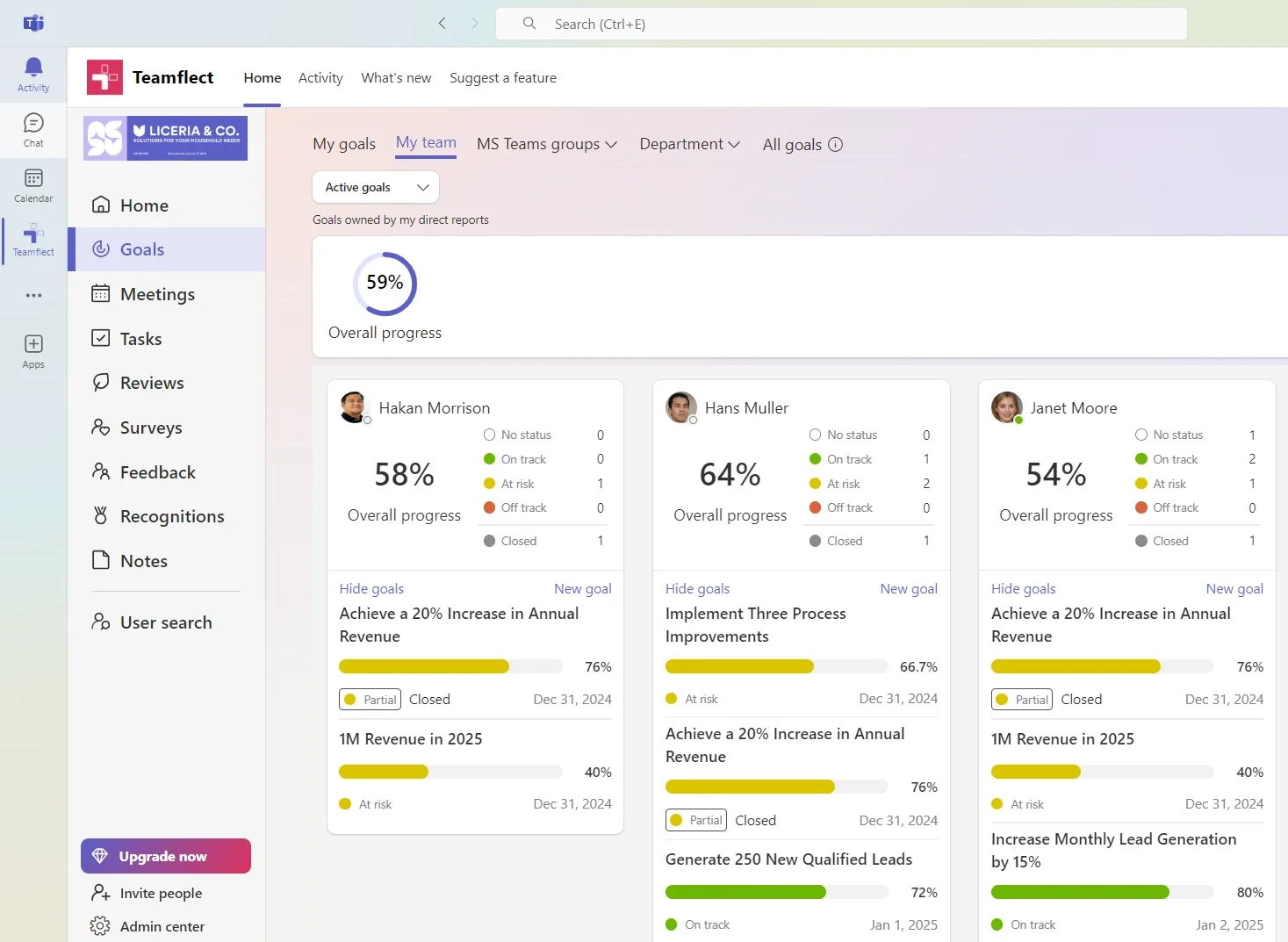
These platforms overlap in some categories but differ fundamentally in what each was designed to do best. These are the five areas where the choice is most consequential.
Workflow and Ecosystem Integration
Teamflect integrates deeply with Microsoft Teams and Outlook: reviews, goals, 1:1 agendas, feedback, and recognition are available within the Microsoft 365 environment, so employees give feedback, run 1:1s, and update goals without opening a separate application. G2 reviewers consistently cite this in-flow experience as the reason performance habits actually form rather than fading after launch.
Culture Amp, by contrast, is a separate application. The core work of completing surveys, reviews, and 1:1s happens by logging into the standalone Culture Amp platform rather than inside Teams or Outlook. Culture Amp does offer a lightweight companion app for Slack or Microsoft Teams that delivers notifications, survey reminders, and peer recognition ("shoutouts"), and account admins can connect one or the other, though Culture Amp notes that Slack and Teams can't both be active at the same time.
Verdict: Teamflect for Microsoft 365-centric organizations that want performance management in the flow of work, across both Teams and Outlook; Culture Amp for organizations that prioritize measurement depth over workflow integration, and that are comfortable with survey/feedback notifications in Slack alongside a standalone core platform.
Employee Engagement Surveys and Benchmarking
Culture Amp's benchmark dataset (over 8,900 organizations, per company), science-backed question libraries, driver analysis, and People Science Consulting make it the stronger choice for organizations that need to contextualize engagement scores against industry peers. The AI Coach adds open-text summarization and action-planning support that most survey tools do not offer.
Teamflect includes pulse, engagement, onboarding, and exit surveys inside Microsoft 365. The functionality is practical but does not carry benchmarking data or people science validation. For organizations where engagement measurement is a primary strategic investment, the gap is material.
Verdict: Culture Amp for organizations that treat engagement measurement as a strategic priority requiring benchmarking, driver analysis, and people science rigor; Teamflect for organizations that prioritize ease of use, high survey completion rates, and integrated survey capability inside Microsoft 365.
Performance Reviews and OKR Management
Teamflect's review functionality includes customizable templates, 360-degree feedback, calibration, and a nine-box talent matrix, all operating within Teams. Goals and OKRs are a core module updated alongside daily work, so reviews draw on an ongoing record rather than a point-in-time reconstruction. Performance review calibration offers guidance on aligning ratings and reducing inconsistencies across performance reviews.
Maintaining consistent documentation and using structured review criteria can also help organizations reduce performance review bias. Understanding common sources of bias, such as recency, halo and horns effects, and leniency or severity bias, can help HR teams build fairer review processes.
Culture Amp's Performance Insights covers reviews, goals, and 1:1s, but reviewers who have used dedicated performance platforms describe it as secondary to the listening side. For organizations where performance management is the central investment, Teamflect is more purpose-built.
Verdict: Teamflect for organizations that want comprehensive, daily-use performance management tightly integrated into where work happens; Culture Amp's performance tools complement its engagement core but are not its primary differentiator.
People Analytics and Reporting
Culture Amp's driver analysis, Retention Insights, heatmaps, and manager effectiveness dashboards provide population-level insight that most performance management tools do not match. The 2026 Performance Culture Quadrant extends this by connecting engagement scores with performance confidence signals.
Teamflect's native Reports module extends across every module in the platform, from goals and OKRs to reviews, feedback, recognition, and survey-based engagement data, giving one reporting view instead of a separate analytics tool. Its AI Agent builds analysis directly into those reports, summarizing survey responses and surfacing trends on demand, and the Power BI connector layers in enterprise-grade, custom dashboards for teams that want to go deeper.
Verdict: Culture Amp for out-of-the-box people analytics depth, driver analysis, and research-backed measurement frameworks; Teamflect for reporting that spans the full performance and engagement suite in one place, backed by built-in AI analysis and the Power BI connector for teams that want to go further.
Implementation and Time to Value
Teamflect's Teams and Outlook integration can reduce adoption friction for Microsoft-centric organizations, as employees and managers work within familiar tools. A dedicated CSM and implementation support are included in every paid plan, and a 30-day trial is available on Essential and Professional.
Culture Amp's implementation depth varies by service tier and company size. Customers in the 200 to 999 employee range receive one-on-one customer-success support and implementation project management. For organizations with a capable People team and a strategic commitment to the measurement program, this level of support is appropriate; for those that need a fast start, it may feel more involved than lighter alternatives.
Verdict: Teamflect for fast time to value inside Microsoft 365; Culture Amp for organizations willing to invest in a structured implementation to get the full depth of the measurement platform.
Choose Teamflect If:
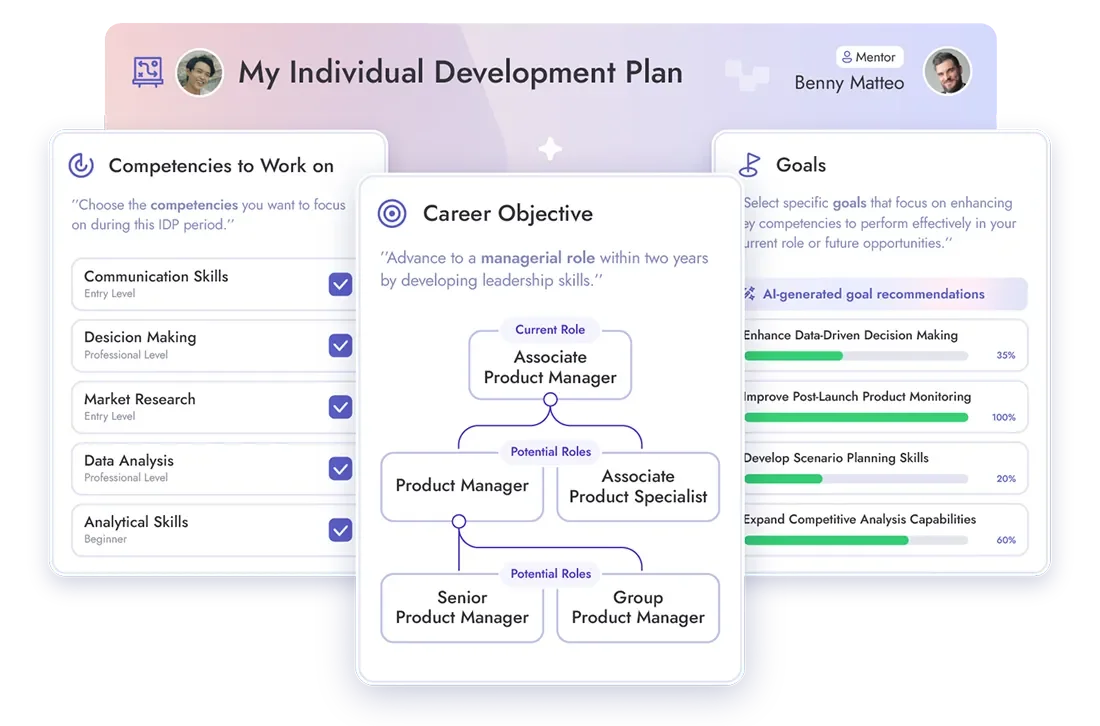
- Your organization is standardized on Microsoft 365 and Microsoft Teams is the primary workspace for most employees. Teamflect's value is directly tied to Teams adoption; organizations that work heavily in Teams see the highest return from the platform.
- You want a complete performance management cycle (goals, reviews, 1:1s, feedback, recognition, surveys, and development plans) in one platform without separate modules, add-on costs, or a sales-led buying process.
- You need a fast implementation. Teamflect's in-flow design and included CSM support make it one of the faster performance management platforms to deploy for Microsoft 365 organizations.
- Employee recognition and continuous feedback are part of your performance strategy alongside formal reviews. All are included in the platform and run inside Teams without additional cost.
Choose Culture Amp If:
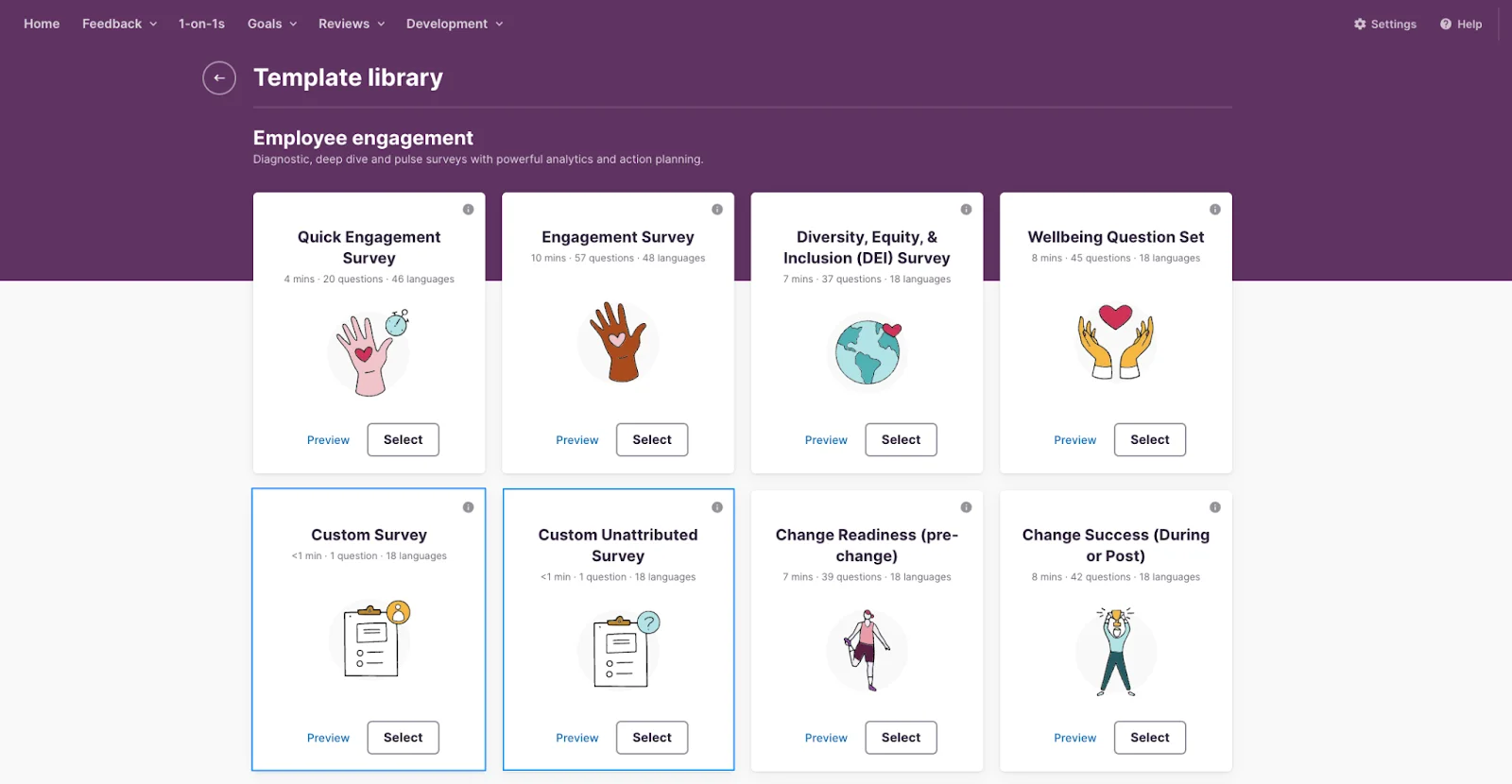
- Employee engagement measurement is a primary strategic investment for your People team, and you need to contextualize your scores against industry peers with defensible, science-backed benchmarking data.
- Your HR leadership presents engagement data to boards, executive committees, or investors, and needs external benchmarks and research-backed frameworks (such as the Performance Culture Quadrant) to make that data credible.
- You have a dedicated People team with the capacity to design rigorous listening programs, interpret analytics, and drive manager follow-through on survey findings. Culture Amp's strength is in surfacing insight; translating that into action requires organizational commitment alongside the tool.
- Your primary need is engagement measurement and people analytics across a broad HR tech stack, or you are not a Microsoft 365-centric organization.
Final Verdict
These two platforms are not natural competitors despite occupying adjacent categories. Teamflect is a performance management tool built around a single insight: that the biggest obstacle to HR software adoption is asking people to leave the tools they already use. For Microsoft 365 organizations, that insight produces a genuinely higher-adoption performance management experience. It covers the full performance cycle, it is priced transparently, and it gets used because it lives in Teams.
Culture Amp is a measurement platform that also does performance management. Its engagement benchmarking and people science capabilities that Teamflect does not replicate. For People teams that treat engagement measurement as a strategic function requiring external benchmarking and driver analysis Culture Amp is the stronger fit. The trade-off is pricing opacity, longer implementation, and performance management tools that are secondary to the measurement core.
Our performance management software roundup and employee engagement software roundup cover additional platforms evaluated against the same criteria.
Frequently Asked Questions (FAQs)
Is Teamflect a replacement for Culture Amp, or the other way around?
Both, depending on what you need the platform to do. These tools replace each other in the sense that their feature sets overlap heavily: each covers performance reviews, goals, 1:1s, feedback, and employee surveys, so most organizations run one or the other rather than both. Which direction the replacement runs comes down to where your priority sits. Teamflect shines on workflow and adoption, with the full performance cycle (goals and OKRs, 360 reviews with calibration, 1:1s, recognition, development plans, and nine-box talent mapping) plus pulse, engagement, onboarding, and exit surveys running inside Microsoft Teams and Outlook. Culture Amp shines on measurement depth.
Which one is better for performance reviews specifically?
Teamflect is more purpose-built here. It includes customizable templates, 360-degree feedback, calibration, and a nine-box talent matrix, with goals updated alongside daily work so reviews draw on an ongoing record. Culture Amp covers reviews, goals, and 1:1s, but G2 reviewers report that tailoring a cycle for a specific manager or individual contributor means building a separate cycle rather than adjusting the existing one.
Does Teamflect include engagement surveys, or do I still need Culture Amp?
Teamflect includes pulse, engagement, onboarding, and exit surveys that run inside Microsoft 365. What it doesn't carry is external benchmarking data or people science validation. If you need to compare your scores against industry peers or present benchmarked data to a board, Culture Amp is the stronger fit.
Does either platform include payroll or core HRIS functionality?
No, both are performance and engagement tools that sit on top of an existing HRIS rather than replacing one. Teams evaluating either vendor should confirm their HRIS coverage separately.
Can I try either platform before committing?
Teamflect offers a 30-day trial on its Essential and Professional plans. Culture Amp does not list a public self-serve trial; a demo request is the typical path to seeing the platform in action.