.svg)

.svg)
.svg)
.svg)
Quick Verdict
| What it is | A focused performance management platform covering performance reviews, continuous feedback, 1-on-1 meetings, objectives, pulse surveys, and peer recognition. Built for simplicity, not enterprise depth. |
| Best for | Tech-forward organizations of 50 to 500 employees that want a fast-to-deploy, easy-to-use review and feedback system without the configuration overhead of larger platforms. |
| Not for | Organizations that need enterprise-grade OKR cascading, calibration tools, compensation planning, engagement benchmarking, or a mobile-first experience. Also not suitable for teams without Slack or a standard HRIS, as integrations are central to how the platform works in practice. |
| Starting price | $3/user/month (Launch plan, billed annually). Grow plan: $6/user/month. Elevate plan: $9/user/month. 30-day free trial available. Volume discounts available. Verified June 2026. |
| G2 / Capterra | 4.3/5 on G2 (78 reviews); 4.2/5 on Capterra (34 reviews). Verified June 2026. |
| Our overall rating | 3.6/5 (see rating rubric below) |
Small Improvements has been quietly doing one thing well since 2011: making performance reviews and feedback fast enough that people actually complete them. It is not trying to be the last HR platform your company will ever need. It does not have a compensation module, a headcount planning tool, or enterprise calibration.
What it has is a genuinely lightweight review cycle, a feedback loop that works inside Slack without friction, and an interface that new hires navigate without a tutorial. This software review examines where that focus pays off and where it becomes a real limitation.
What Is Small Improvements?

Small Improvements is a performance management platform founded in 2011 and headquartered in Berlin, Germany. It serves 700+ organizations worldwide, including Zapier, Duolingo, Soundcloud, and Strava, primarily in the 50 to 500 employee range. The platform covers performance reviews, 360-degree feedback, 1-on-1 meetings, objectives, pulse surveys, and peer recognition in one configurable system. It does not replace an HRIS, handle payroll, or offer compensation planning.
Key Features
Small Improvements covers the core performance management workflow without the complexity that comes with enterprise platforms. The feature set is deliberately constrained, which is both its appeal and its limitation.
1. Performance Reviews
Configurable review cycles with self-assessments, peer reviews, and manager evaluations. HR administrators can define question sets, set timelines, and run cycles for the whole organization or specific teams simultaneously. The self-evaluation and manager assessment display side by side in the interface, which G2 reviewers consistently cite as one of the more useful UX decisions in the platform. Past feedback, goals, and praise are accessible during the review, giving reviewers relevant context before writing assessments. Small Improvements supports structured performance reviews with customizable cycles, self-assessments, manager reviews, and continuous feedback. As organizations evaluate these capabilities at scale, factors like review-cycle configuration, calibration, integrations, and reporting carry more weight when choosing performance review software for enterprise organizations.
“We've been using Small Improvements for a while now, and it's become a central part of how we manage our performance and people processes. What I appreciate most is how easy it is to use, both for managers and employees.” - G2 reviewer
2. Continuous Feedback and Praise
Employees can request or give feedback at any time, with delivery through Slack. Feedback visibility is configurable: it can be private between two people, shared with the recipient's manager, or posted as public praise visible to the whole company. The Praise Wall creates a running record of recognition that managers report increases informal engagement between formal review cycles. An AI Writing Assistant, added in recent updates, refines feedback phrasing without generating it from scratch.
“I really appreciate how it supports best practices—like continuous feedback, structured reviews, and goal setting—in a way that feels natural and non-disruptive. It’s a great tool for fostering meaningful conversations and development across teams.” - G2 reviewer
3. 1-on-1 Meetings

Shared meeting agendas between managers and direct reports, with talking point templates, action item tracking, and persistent meeting notes that carry forward between sessions. Meetings sync with Google Calendar and Outlook, and agenda items can be added directly from Slack conversations. The running record of 1-on-1 notes feeds into performance reviews, which reviewers describe as making the review itself more grounded and less guesswork-dependent.
“We are able to track weekly highs and lows for our team-members. Feature that enable and overall comment / result for each 1:1 meeting would be great. Example: cancelled, or cancelled and reason as holidays, etc.” - Capterra reviewer
4. Objectives
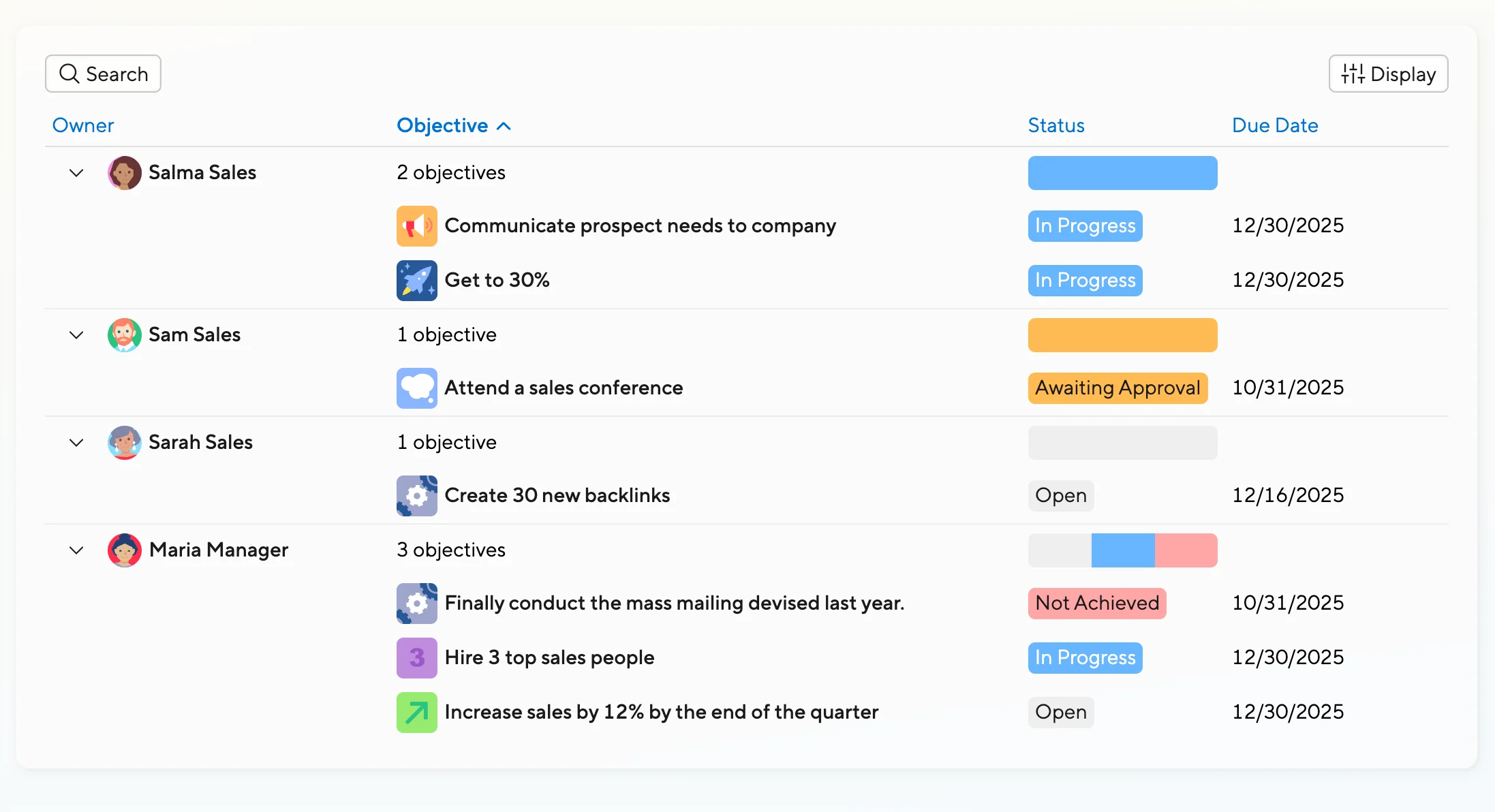
Individual and team goal tracking with key results, progress updates, and configurable sharing settings. Objectives can be set to visible to the manager only, the team, or the whole organization. A cascading objectives feature was introduced in recent updates, allowing goals to connect across levels, though this rollout is still in progress as of June 2026 and does not yet match the depth of dedicated OKR platforms like Betterworks or Lattice.
“It is easy for our team to work with it. Setting goals and tracking them has never been this easy. With it, our performance reviews are faster and enjoyable.” - Capterra reviewer
5. Pulse Surveys
Lightweight engagement surveys delivered on a configurable cadence. Results surface in a dashboard visible to HR administrators. The feature covers basic engagement measurement but does not include external benchmarking data. Organizations that need Mercer-level comparison datasets or driver analysis will find this insufficient.
“Small Improvements makes managing performance reviews, OKRs, and pulse surveys EASY for team members and administrators alike. With customization, flexibility, and its commitment to keeping things simple and straightforward, I recommend it to many of my clients. 5 stars!” - G2 reviewer
6. Integrations
Small Improvements integrates with Slack, Google Calendar, Outlook (calendar sync only), BambooHR, Rippling, Workday, Personio, Okta, OneLogin, Sapling, Namely, and Zapier. The Jira integration is a notable differentiator: it allows engineers to link development tickets directly to performance goals, which makes it one of the few performance management platforms that feels native to engineering workflows rather than HR-imposed on them.
“The platform is extremely flexible, offering a wide variety of question formats that can be tailored to fit your preferred review style. Easily integrates with HRMS.” - G2 reviewer
Pros
One G2 reviewer writes, “Small Improvements is an incredibly user-friendly site that makes it easy to capture the “why” behind our success. I especially appreciate how the seamless Praise feature ensures that no great client moment goes unnoticed, and how it flows naturally into our daily workflow in Slack.”
Another Capterra reviewer comments, “As a small company, this is a great tool to keep us on track without using up too much of any one person's time.”
- The feedback tools are the clearest strength. Continuous feedback, the Praise Wall, and Slack-native delivery combine in a way that G2 reviewers consistently describe as producing actual cultural change rather than just compliance. The AI Writing Assistant, added in recent updates, improves feedback quality without replacing the human judgment behind it. One G2 reviewer describes it as helping turn good feedback into great feedback, while allowing employees to translate that feedback into strong objectives.
- Developer-friendly integrations set it apart from most HR tools. The Jira integration for linking development tickets to performance goals makes Small Improvements genuinely useful to engineering teams rather than something imposed on them. No other performance management platform at this price point includes this natively.
- Setup time is measured in hours, not months. Capterra reviewers consistently describe going from decision to live review cycle in days. G2's average time-to-implement is reported as under one week for most deployments. There is no professional services requirement, no structured change management, and no minimum seat count.
- The interface requires minimal training. SelectSoftwareReviews' hands-on evaluation notes that new hires navigate goals, 1-on-1s, and feedback without onboarding sessions. For organizations where HR time is limited and manager buy-in is fragile, this matters more than a feature checklist.
- Pricing is transparent and accessible at small scale. At $3/user/month for the Launch plan and $6/user/month for the Grow plan, Small Improvements is one of the few performance management platforms with fully public pricing, a 30-day free trial, and volume discounts. Capterra notes it is affordable for small teams, though the per-user rate becomes less competitive as organizations scale past 200 employees where deeper platforms offer more value per dollar.
Cons
A G2 reviewer notes, “I dislike how the Pulse surveys are a bit difficult to navigate when concerning start and end time. I wish things were clearer on the dashboard of it will be sent out on this date and they have until this date to complete it without going back in and doing a lot of editing.”
Another Capterra reviewer writes, “At times, I need to flail around to figure out settings, but overall it is not an issue and we really think this software is a great addition to keep us on track.”
- No mobile app. Small Improvements does not have a mobile application. Multiple sources confirm this as a structural gap, not a missing feature on the roadmap. For organizations where managers and employees work primarily on mobile, or where field-based teams need to access feedback and goals on the go, this is disqualifying.
- Analytics depth is limited. The reporting module surfaces basic completion rates, goal status, and feedback volume, but does not support the kind of drill-down analysis, custom dashboards, or people data exports that HR teams at growing organizations need. G2 reviewers flag limited customization as one of the most repeated friction points, and SelectHub's aggregate analysis identifies reporting depth as a documented gap. Organizations that need sophisticated people analytics should look at Culture Amp or Lattice.
- OKR functionality is lightweight. The Objectives module supports individual and team goals with key results and progress tracking. The cascading objectives feature is new and still rolling out as of June 2026. It does not yet support the multi-level enterprise cascade, execution-risk detection, or alignment visibility that OKR-native platforms deliver. TrustRadius reviewers note that goals are binary (0% or 100%) in some configurations, with no partial progress tracking.
- Calibration tools are absent. Small Improvements has no calibration module. For organizations where equitable rating distribution across managers is a documented concern, or where HR needs to facilitate a structured normalization session before sharing review outcomes, this platform has nothing to offer.
- Navigation can feel disorganized. G2 reviewers flag that it is easy to get disorganized or struggle to locate past reviews, particularly for employees who are involved in reviews for multiple people. Capterra reviewers also note that the review admin experience, specifically extending cycle dates and managing approval flows, is more cumbersome than it should be for a platform positioned on simplicity.
First-Hand Evaluation
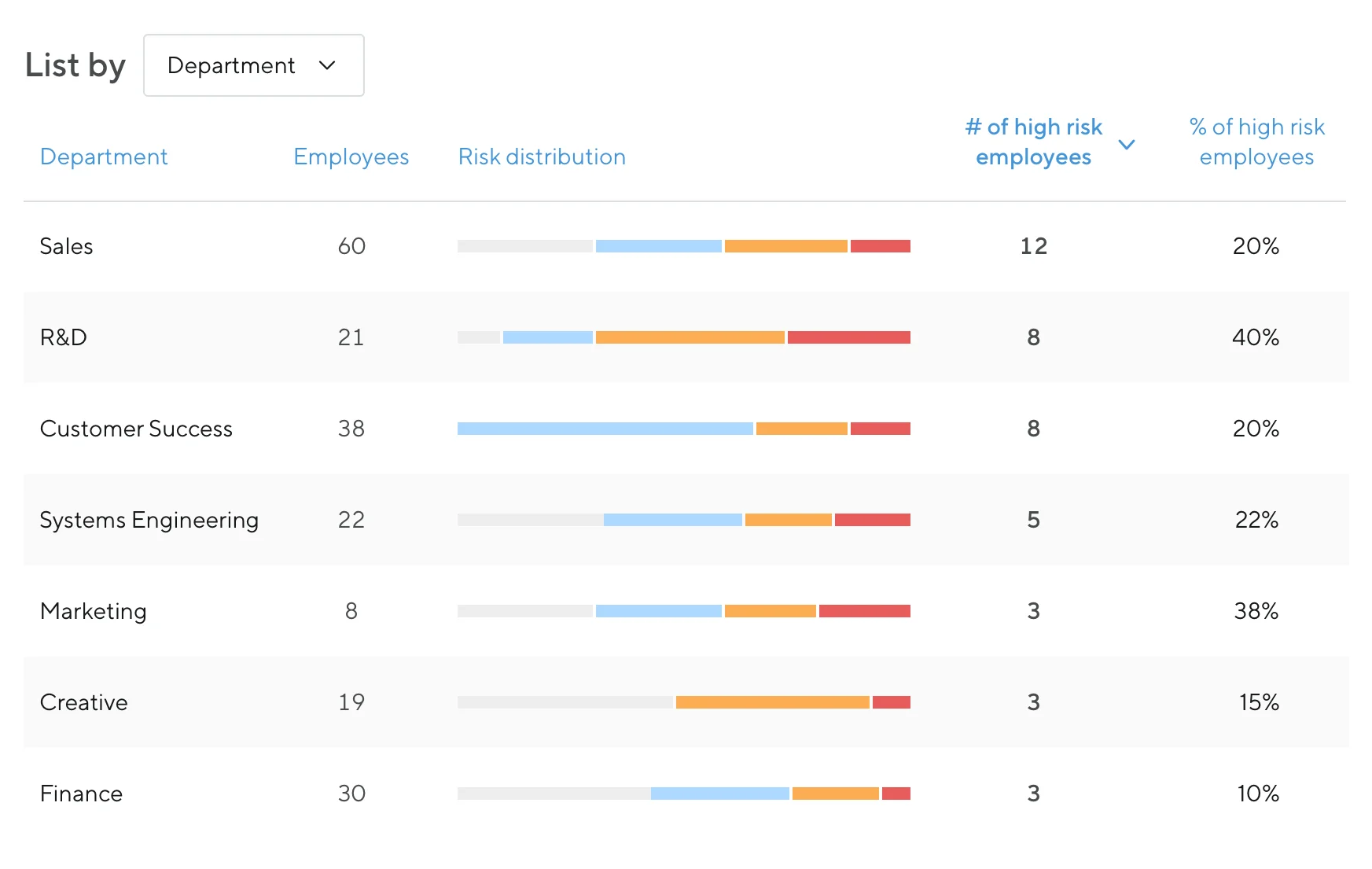
We set up a free trial of Small Improvements on 2 June 2026 and ran a simulated quarterly review cycle for a five-person team over three days. Key observations:
Review cycle setup was straightforward. Creating a quarterly review with self-assessment, manager evaluation, and two peer reviewers took 14 minutes from blank account to launch-ready. The question template library provided a reasonable starting point, and the visibility controls for each question were clear. We did not encounter configuration friction during setup.
The 1-on-1 meeting tool impressed us more than expected. Adding agenda items from a simulated Slack conversation via the integration worked without requiring a context switch. The persistent notes from prior meetings were accessible inside the current meeting view, which meaningfully reduces the preparation overhead that most 1-on-1 tools ignore.
The feedback request flow was the fastest we have seen at this price point. Requesting feedback from a specific colleague, setting visibility to manager-only, and submitting took under 90 seconds. Feedback arrived in the recipient's Slack within a few seconds of submission.
Where we hit friction: extending the cycle end date after launch required navigating to a non-obvious settings location. This matches the Capterra complaint about admin cycle management. We also found the objectives module limited: creating an individual goal with key results worked, but linking it to a team-level objective was not available in our trial configuration, which appears consistent with the cascading objectives feature still rolling out.
We requested a demo call to explore the reporting module more fully. The solutions team demonstrated the admin dashboard, which showed completion rates, feedback counts, and goal status at a glance. We could not access cross-team demographic breakdowns or export data to a custom format without going through Zapier. For organizations that need analytics beyond completion tracking, this is a real constraint.
Pricing and Plans
Small Improvements publishes its pricing publicly, which is not universal in this category. All figures are verified directly from the Small Improvements pricing page as of June 2026.
| Plan | Price | What's Included |
|---|---|---|
| Launch | $3/user/month (annual) | Essential performance reviews, Praise, Company Directory, HRIS integrations, Google Sign-in |
| Grow | $6/user/month (annual) | Everything in Launch, plus 360° and Anytime Feedback, Objectives, 1:1 Meetings, Pulse Surveys, Slack integration |
| Elevate | $9/user/month (annual) | Everything in Grow, plus all features, all integrations, all customizations, and Advanced Analytics |
| Free trial | 30 days | Available on all plans. Volume discounts available. Minimum pricing applies. |
Annual cost examples: At 100 employees, the Launch plan runs $3,600/year, Grow runs $7,200/year, and Elevate runs $10,800/year. At 300 employees: $10,800, $21,600, and $32,400 respectively. Minimum pricing applies at all tiers — confirm the floor with Small Improvements directly before budgeting. Capterra reviewers note the per-user rate feels reasonable at smaller team sizes but less competitive as headcount grows past 200 employees, where platforms like 15Five and Lattice offer more analytics and compensation depth per dollar.
Our Rating
| Dimension | Score | Notes |
|---|---|---|
| Core feature depth | 3.0/5 | Strong feedback and 1-on-1 tools; objectives and pulse surveys are functional but lightweight. No calibration, no compensation, no advanced analytics. |
| Integration ecosystem | 4.0/5 | The Jira integration is a genuine differentiator for engineering teams. HRIS connections (BambooHR, Workday, Rippling) cover the core requirements. No mobile app is a structural gap. |
| User ratings (G2 + Capterra avg.) | 4.3/5 | 4.3/5 on G2 (78 reviews); 4.2/5 on Capterra (34 reviews). Verified June 2026. Review base is small but consistent. |
| Pricing transparency and value | 4.0/5 | Published pricing, free trial, no seat minimum. Good value for 50-200 employee organizations. Less competitive at 300+ employees where platform depth matters more. |
| Implementation and onboarding | 4.5/5 | Under one week typical time-to-implement. No professional services required. New hires navigate without training. Admin cycle management has documented friction points. |
| Overall | 3.6/5 | — |
Best Use Cases
Small Improvements earns its place on a shortlist for a specific type of organization. Outside that profile, the limitations become more consequential than the strengths.
Small Improvements is a strong fit for:
- Tech companies and engineering-led organizations of 50 to 300 employees where Jira is the primary project management tool and Slack is the daily communication layer. The native integrations with both make it the only performance management platform at this price point that does not feel like an HR tool imposed on a developer workflow.
- Organizations that have been running reviews in spreadsheets or Google Docs and need a step up without a six-month implementation. Small Improvements can go from signed contract to live review cycle in under a week, with no professional services dependency.
- HR teams of one or two people who need a platform employees will use without reminders and training sessions. The interface genuinely requires minimal onboarding, and the Slack integration means most employees encounter the platform in a context they already use rather than as a separate login.
- Non-profits and mission-driven organizations on limited HR software budgets. Small Improvements has offered non-profit pricing and the Launch plan at $3/user/month is among the most accessible entry points in the performance management category.
Look elsewhere if:
- Your managers and employees work primarily on mobile. The absence of a mobile app is a structural gap, not a roadmap item, and there is no workaround that matches a native mobile experience.
- OKR alignment across teams and departments is a primary goal. The cascading objectives feature is still rolling out as of June 2026 and does not match what Betterworks, Lattice, or 15Five deliver for multi-level goal alignment.
- You need calibration, compensation planning, or engagement benchmarking. Small Improvements has none of these. Lattice or 15Five are the more appropriate conversations depending on which of those requirements is primary.
- Your organisation is growing past 300 employees and expects HR analytics to scale with it. The reporting module serves organizations that need completion tracking and basic dashboards. It does not serve organizations that need custom exports, demographic breakdowns, or engagement driver analysis.
Alternatives and Competitors
These are the platforms most commonly evaluated alongside Small Improvements, depending on which feature gap is the deciding factor:
- 15Five: The most natural step up for organizations that have outgrown Small Improvements and need stronger OKR management, engagement analytics, and manager coaching tools. Published pricing starting at $4/user/month (Engage) and $11/user/month (Perform). 1,857 G2 reviews versus Small Improvements' 78, which gives buyers more signal during evaluation.
- Lattice: Worth evaluating when compensation planning or Mercer engagement benchmarking is a hard requirement. Considerably more configuration overhead and cost than Small Improvements, but covers a wider scope in a single platform.
- Leapsome: Strong alternative for organizations that want learning and development integrated alongside performance and feedback. Rates at 4.8/5 on G2. More expensive and more complex than Small Improvements.
- Culture Amp: The better choice when engagement measurement and benchmarking are the primary investment and performance management is secondary. Deep survey and driver analysis capabilities that Small Improvements' pulse survey module does not approach.
- PerformYard: Worth comparing if flexible review cycle configuration is the primary requirement and the Jira integration is not a deciding factor. PerformYard's review workflow customization runs deeper than Small Improvements at a similar price point.
Final Verdict
If you are an engineering-led company of 50 to 200 employees running Jira and Slack, and your current performance process is a spreadsheet or a Google Form sent out once a year: Small Improvements is the right tool for where you are right now. It will go live in days, your developers will actually use it, and the feedback quality will improve without a lengthy change management program. The $3 to $6/user/month cost is transparent and the 30-day free trial is real.
If you have more than 300 employees, or if OKR alignment across teams, compensation planning, or engagement benchmarking are on your requirements list: Small Improvements is the wrong platform, not because it is bad at what it does, but because what it does is deliberately narrow. The analytics will frustrate your HR team, the cascading objectives will feel incomplete, and you will end up layering other tools on top to cover the gaps. At that point you are paying for two platforms and getting a partial solution from each.
If mobile access is a hard requirement for your workforce: rule it out regardless of size. There is no mobile app, and that is not changing on any confirmed roadmap. 15Five has a mobile experience worth evaluating next.
.png)
.avif)