.svg)

.svg)
.svg)
.svg)
Quick Verdict
Switching payroll platforms is one of the higher-stakes HR technology decisions a mid-market organization makes. Paycor has been a recognized name in this space since 1990 and serves over 40,000 small and mid-sized US businesses. But 2025 introduced a material change: Paychex completed a $4.1 billion acquisition of Paycor in April 2025, and recent reviews show a consistent pattern of support quality complaints from current customers. This software review evaluates whether the platform’s payroll accuracy and analytics depth justify the support risk and pricing opacity that come with it in 2026.
What Is Paycor?
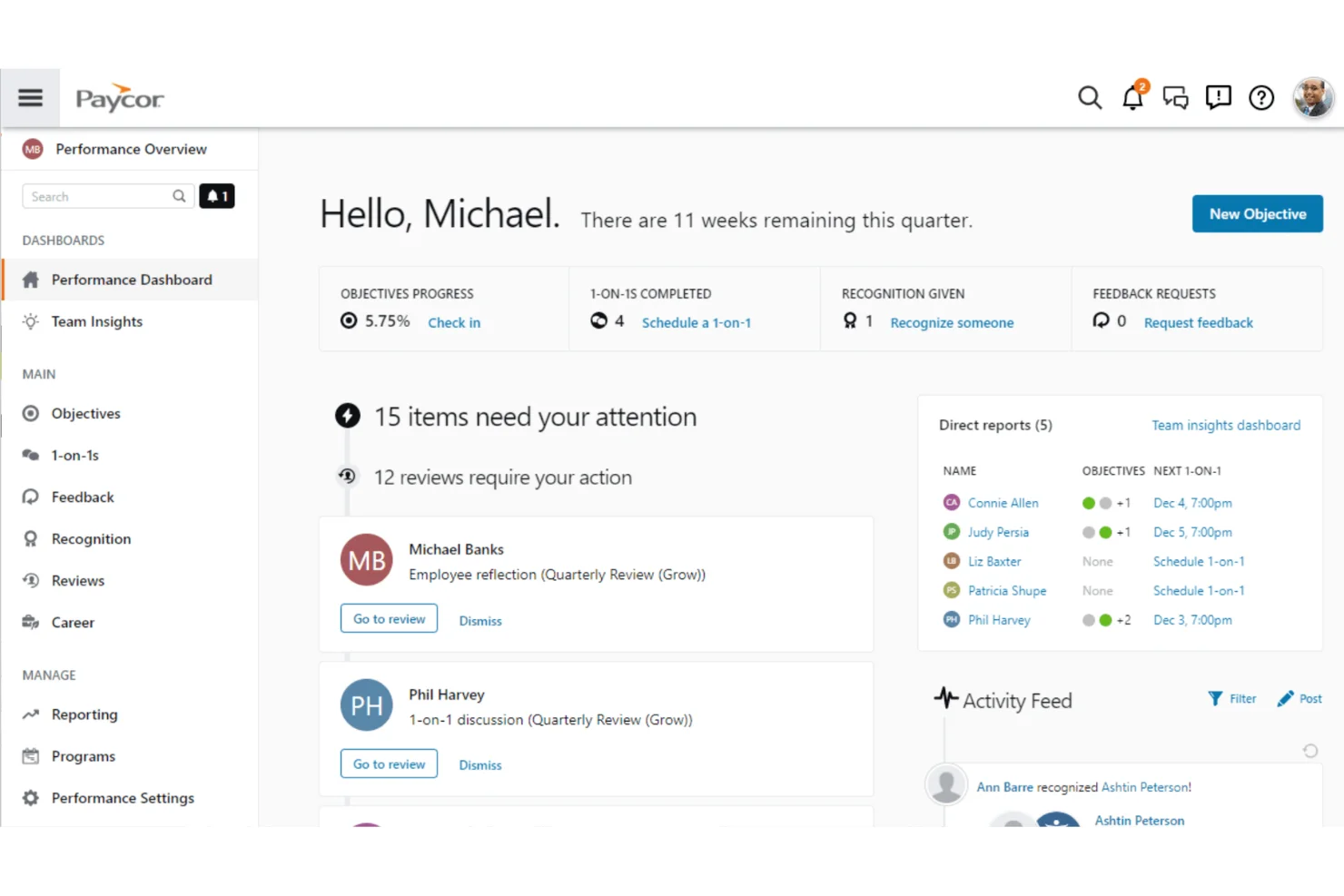
Paycor is a US-only HCM platform covering the full employee lifecycle: recruiting, onboarding, payroll processing, time and attendance, benefits administration, performance management, and workforce analytics. Founded in Cincinnati, Ohio in 1990 and acquired by Paychex in April 2025, it serves over 40,000 businesses across the country, primarily in the 50 to 1,000 employee range.
The platform does not support international payroll. For US-based organizations that are purely domestic, this is not a limitation. For companies with any employees outside the US, it is a hard stop. Since the acquisition, Paycor describes itself as “a Paychex company” on G2 and its own website. The two platforms continue to operate separately as of July 2026, with Paycor customers remaining on the Paycor platform. No product consolidation has been announced, but it is a legitimate question to raise in any multi-year contract conversation.
Paycor's review base is concentrated in mid-market organizations. G2 data shows the platform is especially popular among businesses with 11 to 500 employees. The industries most represented in satisfied reviews are healthcare, manufacturing, restaurants, retail, and nonprofits, all contexts where managing large hourly workforces with complex scheduling and multi-location compliance is the core challenge.
Key Features
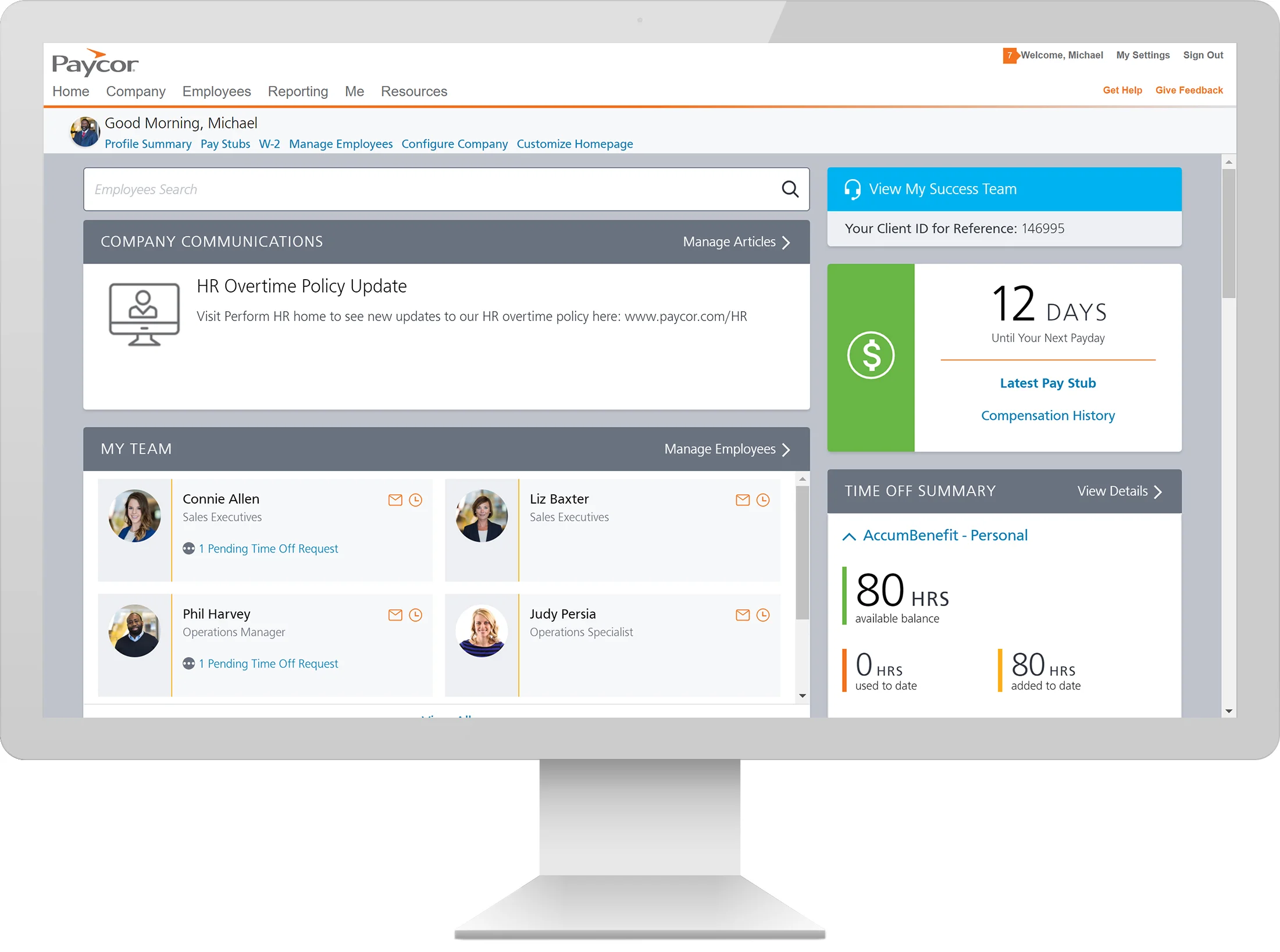
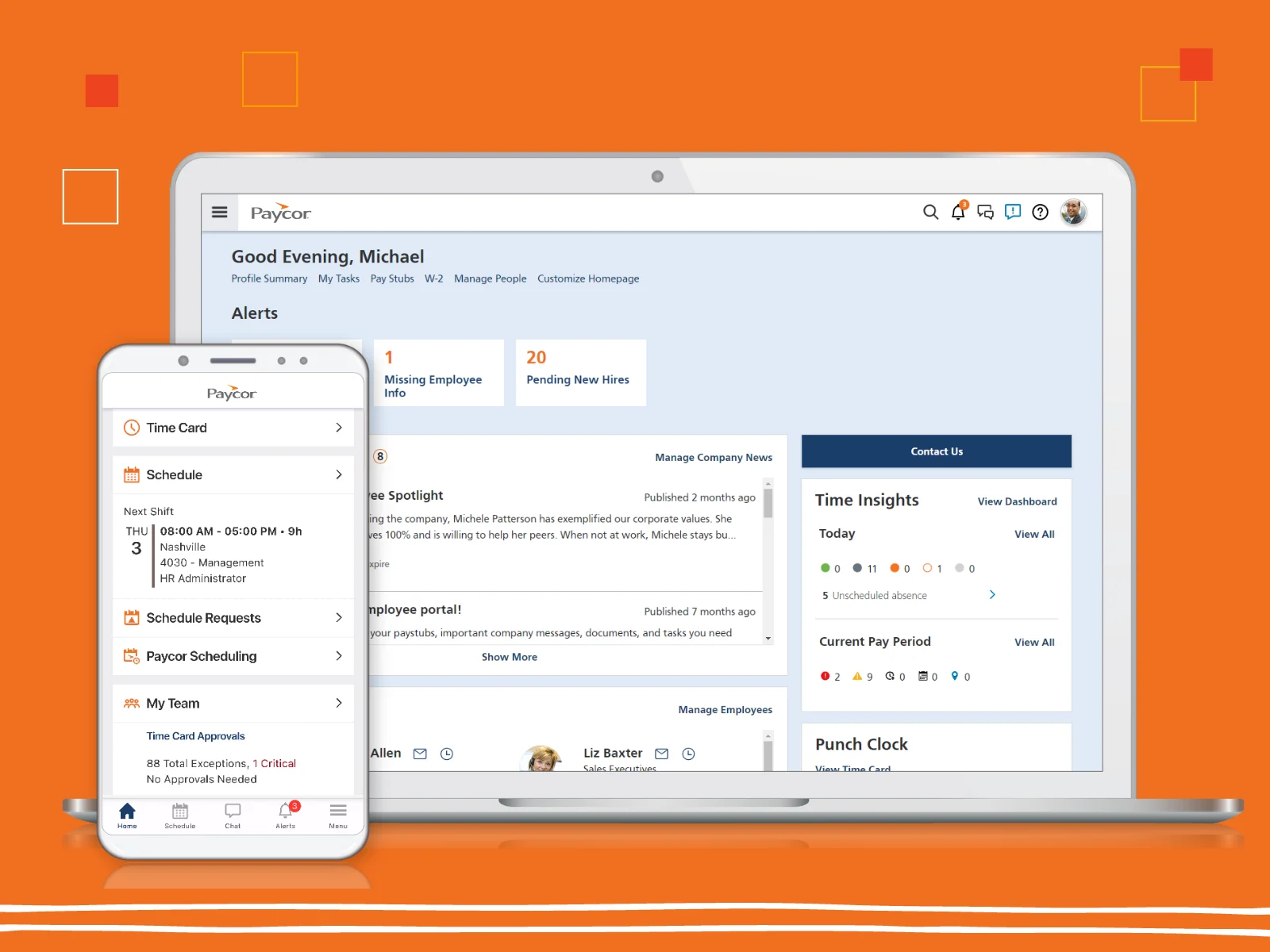
Paycor's modules cover most of what a mid-market HR team needs in one system. Feature depth varies significantly across modules. Payroll and analytics are the strongest. Recruiting and learning show their age.
1. Payroll Processing
Payroll is the core product and the area that earns Paycor its most consistent praise. The platform automates tax calculations, direct deposits, wage garnishments, and year-end W-2 and 1099 filing. It supports multiple pay frequencies and multi-state payroll, with automatic tax table updates. Even reviewers who are deeply critical of support, pricing, or other modules consistently exempt payroll accuracy from their complaints.
2. HR Administration and Employee Self-Service
The HR module covers employee records, document management, onboarding workflows, e-signatures, and time-off management. Employee self-service is a genuine strength: staff manage their own personal details, direct deposit splits, PTO requests, and pay stub access without contacting HR. Multiple reviewers specifically credit this feature for reducing routine inquiries.
3. Time and Attendance
Time tracking, scheduling, and PTO management are integrated modules positioned specifically for hourly workforces. Geofencing supports mobile clock-ins for field and multi-location businesses. Scheduling is a more mixed area: reviewers in simple shift environments find it straightforward, while those managing complex rotation schedules describe it as requiring workarounds.
4. Recruiting and Applicant Tracking
The ATS integrates with Indeed, ZipRecruiter, LinkedIn, and Glassdoor and includes an AI job description builder. Paycor Smart Sourcing, available as an add-on, provides AI-powered passive candidate outreach. The tier structure matters here: Essential allows only 3 active job postings, Core allows 5, and Complete removes the cap entirely. Teams hiring at any real volume need to budget for Core or Complete from the start.
5. Workforce Analytics
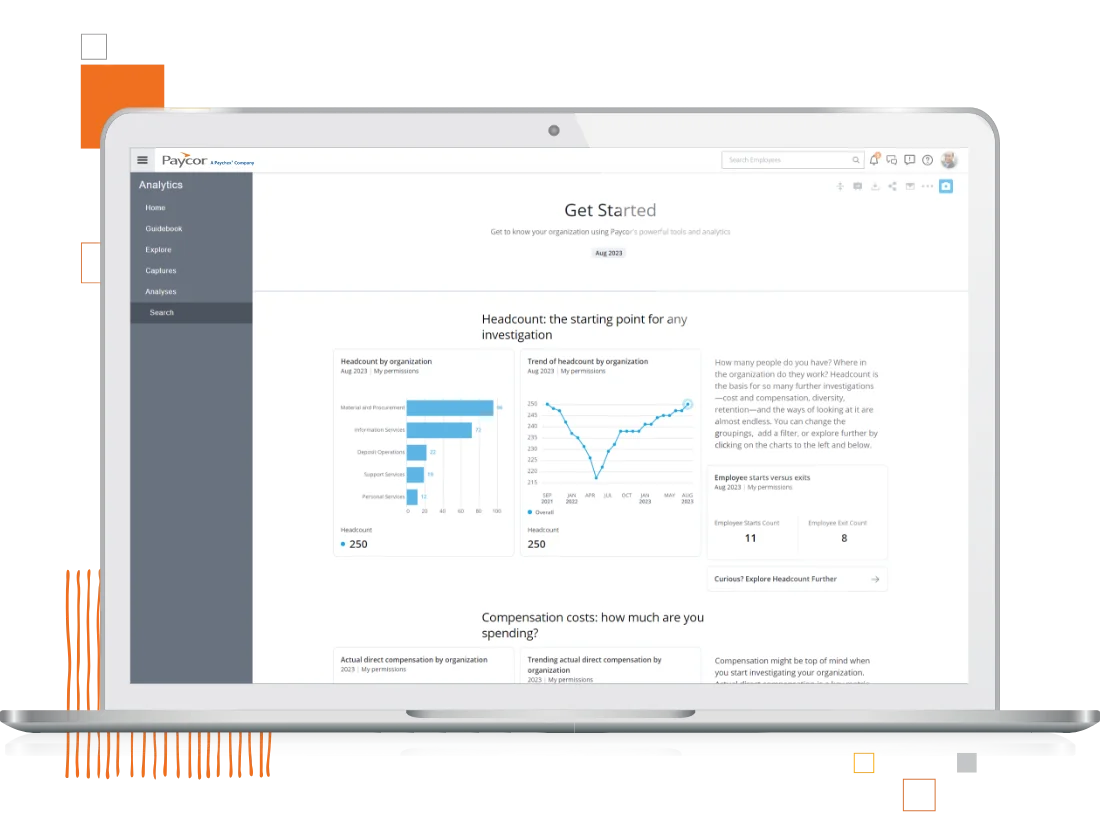
Analytics is one of Paycor’s genuine differentiators at this price tier. Real-time workforce dashboards, turnover analysis, competitor benchmarking, and key driver analysis are included. Reviewers in HR Director and senior people operations roles consistently name analytics as a reason to choose Paycor over alternatives they evaluated.
6. Benefits Administration
Benefits enrollment, ACA compliance, carrier integrations, and total compensation statements are covered. Open enrollment receives specifically positive feedback: multiple reviewers describe it as smooth and well-structured. Day-to-day benefits navigation gets more mixed marks, and some HR teams find it less intuitive than the payroll and time modules. EDI feed management between Paycor and benefits carriers is specifically called out as a pain point in multiple reviews.
7. Performance Management and Learning
Performance reviews, goal tracking, 1:1 tools, and a built-in learning management system are available on Core and Complete tiers. The LMS integrates with onboarding, which reviewers cite as a time-saver for new hire training completion. Both the learning and performance modules receive less investment than the payroll core, and the recruiting platform specifically is described as looking outdated compared to the rest of the product.
Pros
“I like Paycor for its ease of use; it's really simple to navigate. I also appreciate how quickly they fix issues when they arise. The scheduling aspect is really important to us, and the LMS is a significant benefit too. The initial setup was very easy because they did all of the work, which I found particularly helpful. We're very likely to recommend Paycor and actually recommend it all the time.” – G2 reviewer
“Overall, Paycor has helped us streamline our HR processes and better support our employees. We can relay on its accuracy in processing payroll to ensure proper payment to our employees.” – Capterra reviewer
- Payroll accuracy is the platform’s most reliable strength. Across hundreds of G2 and Capterra reviews, payroll reliability and direct deposit accuracy are the features praised most and complained about least. This holds even among reviewers who are highly critical of support or pricing. In a category where payroll errors have direct employee and regulatory consequences, this is the most important thing a platform can get right.
- Workforce analytics depth stands out at this price tier. Real-time dashboards, turnover analysis, competitor benchmarking, and key driver analysis give HR leaders more strategic data than most mid-market competitors include by default. Reviewers in data-focused roles specifically name analytics as a reason to choose Paycor over alternatives they considered.
- Employee self-service meaningfully reduces HR administrative load. Multiple reviewers describe measurable reductions in routine inquiries after employees begin managing their own information directly in the platform. The mobile app is consistently described as easy to use and accessible for employees who are not technically oriented.
- Single platform eliminates tool sprawl. Payroll, ATS, onboarding, time tracking, benefits, performance, and LMS under one login is the most common reason buyers give for choosing and staying on Paycor, even among reviewers who would not recommend the platform to others.
- Strong vertical depth for healthcare and shift-based workforces. Scheduling, geofencing, compliance tools, and industry-specific configurations are more developed than in general-purpose HCM platforms. This shows up clearly in satisfied reviews from healthcare, manufacturing, and restaurant organizations.
Cons
“Customer service was a concern. There wasn't a dedicated person or team, so when we had questions or issues, we would call, be on hold sometimes for over an hour, and the person wouldn't know the history because there were no notes left by the previous agent. It was frustrating to retell the issue over and over.” – G2 reviewer
“Overall I have had a negative experience and do not feel that Paycor listens to or supports its customers. I think the sales pitch and what they say they offer is great but the reality of what you get is distant.” – Capterra reviewer
- Customer support is the most consistent complaint, and the pattern in reviews is recent. G2’s Quality of Support score for Paycor is 7.6/10, the lowest among comparable HCM vendors. Recent 2025 and 2026 reviews frequently describe a decline in support quality, and some explicitly connect these issues to changes following the April 2025 acquisition, describing it as a turning point in their experience. Hour-long hold times, dropped calls, tickets closed without resolution, and agents without case history are the specific complaints that recur. This is not an isolated pattern.
- Implementation is long and complex. G2 data shows an average implementation period of around 90 days, with complex deployments running 4 to 6 months. Implementation teams are consistently described as stretched thin. Reviewers who describe onboarding problems frequently note that the support model that was supposed to ease them through it had already degraded by the time they needed it.
- Pricing is fully opaque and the promotional discount structure creates a cost cliff. Paycor removed all pricing from its website after the Paychex acquisition. Third-party sources report new customers commonly receive around 50% off for the first six months, with full pricing applying from month seven. One reviewer noted price increases year over year: “I am always in fear that our company will not be able to afford it as pricing keeps going up every year.” The 50-employee threshold also triggers a move from small-business to custom enterprise pricing that catches buyers off guard.
- Recruiting and learning modules lag the payroll core. ATS job posting caps at lower tiers (3 on Essential, 5 on Core), limited ATS reporting, and a learning platform described as looking outdated in 2026 reviews make Paycor a weaker choice when recruiting is a primary workflow. One G2 reviewer described this gap specifically: the learning and recruiting platforms “look a little antiquated.”
- Trustpilot data shows a different population’s experience. On G2 and Capterra, Paycor scores 3.9 to 4.3/5. On Trustpilot, ratings are around 2/5 with the majority of reviews at one star as of mid-2026. The gap likely reflects a different reviewer mix, but themes are consistent: support responsiveness and billing accuracy.
First-Hand Evaluation
Paycor does not offer a free trial, so this evaluation is based on verified reviewer data across G2, Capterra, Trustpilot, and BBB as of July 2026, alongside third-party pricing research and product documentation. Four observations stand out.
The G2 review pattern is notably split by role. Employees and end-users rate the platform consistently higher than HR administrators and payroll managers who deal with support escalations.
The recent support complaints are consistent enough across platforms to take seriously. Reports of dropped calls, tickets closed without resolution, agents without case notes, and an unreachable tax department with 8 to 12 week turnaround times appear across G2, Capterra, Trustpilot, and BBB in 2025 and 2026. Organizations evaluating a multi-year contract should ask specifically what dedicated support resources are guaranteed in writing, not just described in the sales conversation.
The 50-employee pricing cliff is worth modeling before signing. Third-party buyer guides note that negotiation leverage is available, with strategic buyers achieving 15 to 30% off initial quotes through multi-year commitments. Run the actual numbers for your headcount trajectory before committing to any tier.
Pricing and Plans
Paycor does not publish pricing and requires a custom quote for all plans. The tier structure below is based on last-published rates from before Paycor removed pricing from its website, as reported by business.com and Pin.com. Third-party Vendr transaction data shows real-world annual contracts ranging from roughly $6,272 to $55,918, with a median of approximately $21,624. Contact Paycor directly for current rates.
What to ask in the sales conversation: New customers commonly receive approximately 50% off for the first six months, with full pricing at month seven. Ask what the year-two cost looks like before committing. Ask specifically about the pricing transition at 50 employees, about guaranteed support resources, and about renewal terms. Larger organizations with 100+ employees commonly secure 20 to 35% lower PEPM rates through negotiation.
Our Rating
Best Use Cases
Paycor’s value is concentrated enough that it is worth being specific about who benefits most.
Paycor is a strong fit for:
- Mid-market US businesses with 50 to 500 employees in healthcare, manufacturing, retail, or food service. These industries appear most consistently in satisfied reviews. The scheduling, geofencing, and compliance tooling is built for contexts where managing large hourly workforces across multiple locations is the core HR challenge.
- HR teams consolidating from a multi-vendor stack. If you are currently running separate payroll, ATS, time tracking, and benefits vendors and want one system of record, Paycor addresses that without enterprise-level cost or complexity. The all-in-one consolidation is the most common reason satisfied buyers give for choosing the platform.
- Organizations where analytics depth is a primary evaluation criterion. The workforce dashboards, turnover analysis, and competitor benchmarking are genuine differentiators at this price tier. HR leaders who need this data without paying for a full enterprise HRIS will find Paycor’s analytics among the best available at the mid-market price point.
- Teams with realistic implementation timelines. A 90-day-plus implementation is not unusual. Buyers with a dedicated HR operations resource and a go-live target at least four months out can make this work. Buyers who need to be live in 30 to 60 days should look elsewhere.
Look elsewhere if:
- Responsive, reliable customer support is a baseline requirement. The post-acquisition support pattern is real, recent, and specific. If support quality is non-negotiable for your organization, the current evidence is a genuine yellow flag. Paycom and isolved carry meaningfully stronger support reputations in 2026 reviews.
- You have employees outside the United States. Paycor covers US payroll only. For global teams, Deel or Rippling are the relevant alternatives.
- You are under 25 employees. The pricing model and feature depth favor mid-market organizations. Gusto or Rippling’s SMB offering are more appropriately sized.
- Recruiting is a primary workflow and volume hiring is involved. The ATS job posting caps at lower tiers, limited reporting, and outdated interface make Paycor a weaker choice when recruiting is core rather than occasional.
- You need transparent pricing before entering a sales conversation. Paycor’s fully opaque pricing and the promotional discount structure make it genuinely difficult to budget without going through the sales process first.
Alternatives and Competitors
These platforms compete most directly with Paycor depending on the deciding factor:
- Rippling: 4.8/5 on G2 with a large verified review base (count subject to change; check g2.com/products/rippling/reviews). Covers HR, payroll, IT, and finance in one platform with global payroll support. More expensive at the base level but often replaces more tools, which changes the total cost comparison. The highest review volume in the category provides the most reliable satisfaction signal.
- Paycom: 4.5/5 on G2 across 4,541 reviews. A single-database HCM with a strong employee self-service model and a significantly better support reputation in recent reviews. The most natural alternative when Paycor’s post-acquisition support pattern is the primary concern.
- isolved: 4.3/5 on G2 across 1,280 reviews. A frequent Paycor alternative in the 50 to 500 employee range, particularly in healthcare and professional services. Carries a stronger support reputation in 2026 reviews.
- Gusto: Published transparent pricing, strong support ratings, and a clean setup experience for teams under 100 employees. The most natural comparison when simplicity and upfront pricing transparency matter more than analytics depth.
Final Verdict
Paycor is a capable mid-market HCM platform that does payroll well, delivers genuine analytics value, and consolidates a meaningful chunk of the HR technology stack. For healthcare organizations, manufacturers, and multi-location hourly workforces in the 50 to 500 employee range, it earns serious consideration.
The honest caveats are significant and recent. Customer support has declined measurably since the Paychex acquisition in April 2025, and that pattern appears in 2025 and 2026 reviews consistently, not as isolated incidents. Implementation takes months. Pricing is fully opaque. The promotional discount structure means year-one costs do not reflect year-two costs. The mid-market pricing transition at 50 employees is a surprise that catches buyers off guard.
The Paychex acquisition is not itself a reason to walk away. The institutional stability and compliance infrastructure are real advantages. But it is a reason to ask pointed questions before signing: about the product roadmap, about what dedicated support is guaranteed in the contract, and about renewal pricing after the promotional period. The organizations most likely to be satisfied with Paycor in 2026 are those that negotiate these points explicitly, not those who assume the sales experience reflects the ongoing one.
For the broader field of payroll and HR platforms at this tier, the top payroll software roundup covers the alternatives in detail.
.png)
.avif)