.svg)

.svg)
.svg)
.svg)
Quick Verdict
What Is Personio?
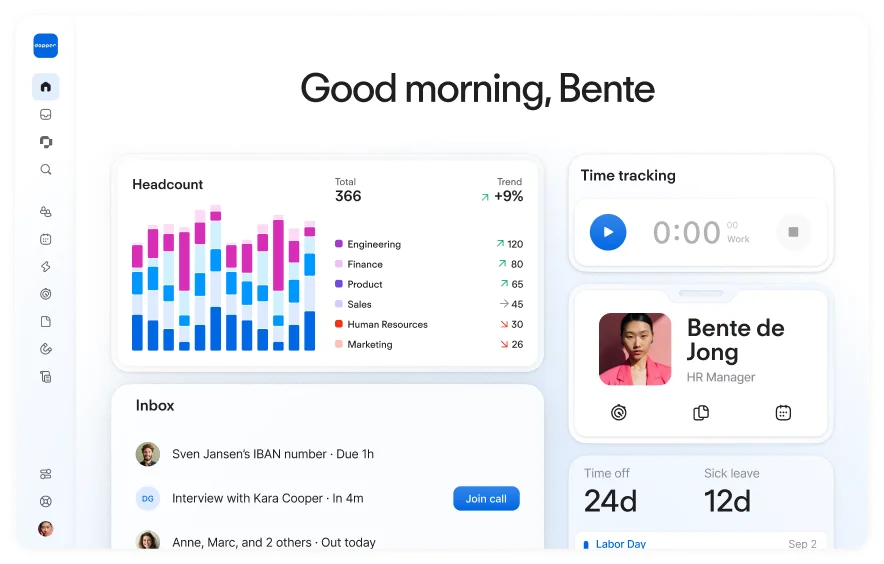
Most HR software was designed in the US and adapted for Europe as an afterthought. Personio was built the other way around.
Founded in Munich in 2015 by Hanno Renner and co-founders from the Technical University of Munich, the platform was designed from the start for companies navigating European labor law, multi-country compliance, GDPR requirements, and regional payroll complexity. It is now one of Europe’s largest HR software providers, serving more than 16,000 companies across Germany, Austria, Switzerland, the UK, Spain, and beyond.
The platform runs the full employee lifecycle in one system: recruiting with an applicant tracking system, digital onboarding, time tracking, absence management, document management with e-signatures, payroll preparation (and full payroll in select markets), performance reviews, and workforce reporting. The integrations library covers 200+ tools, including DATEV, Slack, Google Workspace, Greenhouse, Jira, and Microsoft 365. It runs natively in German, English, Spanish, French, Dutch, and Italian, and all customer data is stored in EU data centres with GDPR compliance built into the product architecture.
Personio targets companies with 10 to 2,000 employees, though it is increasingly used by larger organizations. The review base on G2 skews mid-market: 62% of reviewers come from companies with 51 to 1,000 employees, and roughly 10% from enterprises with over 1,000 employees.
Key Features
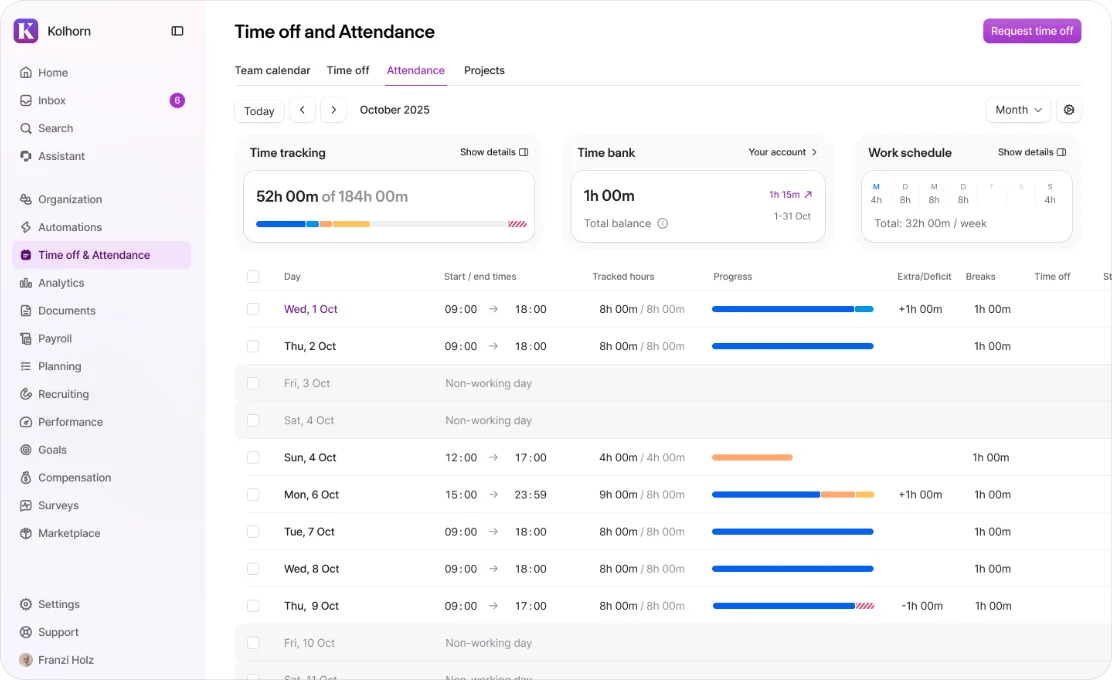
Personio’s core modules cover the full employee lifecycle. The depth of each module varies, and some are only available as add-ons.
1. Core HR and Employee Records
The foundation of Personio is centralized employee data: personnel files, org charts, role and salary history, contract documents, and digital e-signatures in one place. Custom employee attributes, configurable roles and permissions, and multi-entity support are all included. The system moves away from scattered spreadsheets and email threads into a single auditable record for every employee.
“We have been using Personio for three years and experience the software as a significant relief in our administrative HR processes. Many procedures are now more structured, efficient, and transparent than before.” – G2 reviewer
2. Absence and Time Tracking
Absence management is one of Personio’s strongest modules. Leave requests, approval workflows, absence calendars, and team visibility are smooth and well-designed. The mobile app extends absence requests and time logging outside the office. Time tracking covers core use cases well, though bulk editing, project-level time categorization, and non-standard working arrangements have known limitations.
“What I particularly like about Personio: It finally consolidates everything in one central place. Whether applying for leave, submitting sick notes, recording working hours, or viewing pay slips – you no longer have to search through different systems, but have everything directly at hand.” – G2 reviewer
3. Recruiting and Applicant Tracking
Personio includes a built-in ATS covering job posting, candidate pipelines, structured interview management, and GDPR-compliant candidate data handling. The recruiting module connects with major job boards and integrates with tools like Greenhouse and Teamtailor. It handles structured mid-market hiring well. Organizations with high-volume or more complex recruiting workflows sometimes pair it with a dedicated ATS for additional depth.
4. Onboarding and Offboarding
HR teams can build checklist-driven onboarding sequences that notify relevant managers and departments, generate contracts, assign documents for e-signature, and guide new hires through structured steps. Offboarding follows the same workflow logic. More complex scenarios, such as simultaneous multi-department notifications or highly conditional checklist branching, have some limitations.
“Personio also offers clear advantages in onboarding: We have created an individual step-by-step guide through automations, so local HR managers are optimally supported and all necessary tasks are structured.” – G2 reviewer
5. Payroll
Full payroll processing is available in Germany, the UK, Ireland, Austria, and Spain. For Germany, the DATEV integration streamlines payroll without manual export and re-import cycles. Payroll outside those markets is handled as a preparatory export to external providers. Setup requires genuine payroll expertise and is more involved than the marketing suggests, but the operational outcome is strong once the system is correctly configured.
“We are quite satisfied with most factors - especially, since Personio has also integrated payroll features and the tiresome export (of HRIS data) and re-import (of salary slips) can be avoided in this way.” – G2 reviewer
6. Performance and Development
Personio’s performance module supports review cycles, self-assessments, peer reviews, 360-degree feedback, goal setting, and individual development plans. It is well-suited for companies running structured performance programs for the first time. Competency model integration, goal-feedback connectivity, and performance analytics are areas where the module does not match the depth of dedicated performance platforms.
7. Workflow Automation
Workflow automation is one of Personio’s clearest practical differentiators. The no-code workflow builder handles a wide range of HR triggers and actions, from absence approvals and contract generation to onboarding task routing and document delivery, all without developer involvement. Automations can be configured and adjusted by HR teams independently, without IT support.
Pros
“What I like most is that it mostly stays out of my way. As a day-to-day user, I barely think about HR admin anymore: booking time off takes a few clicks, my remaining balance is right there on the same screen, and I can see when it’s been approved without having to chase anyone. Documents are the same story. My contract, payslips, and certificates all live in one place that I can open whenever I need, instead of emailing People Ops and waiting a day.” – G2 reviewer
- Built for European compliance from the ground up. GDPR-native architecture, EU data residency, multi-country labor law support, and a regulatory update cadence designed around European requirements give Personio a meaningful structural advantage over US-headquartered platforms that have retrofitted European compliance. For DACH-region companies especially, the DATEV integration alone justifies evaluation.
- Intuitive interface that drives adoption without training overhead. Across hundreds of G2 and Capterra reviews, ease of use is the most frequently cited strength. HR teams, managers, and employees consistently report navigating core workflows without onboarding sessions. The mobile app extends this to absence requests and time logging outside the office.
- Workflow automation eliminates significant manual HR administration. The no-code workflow builder covers a broad range of HR triggers and actions. HR teams that invest in configuring their automations report substantial reductions in routine administrative effort, particularly around absence approvals, onboarding task routing, and contract generation.
- Continuous product development and customer feedback incorporation. Reviewers across multiple years of use describe Personio as a platform that visibly improves. Monthly product updates, a publicly accessible product roadmap, and a community feedback process are cited as reasons long-term customers stay.
- 200+ integrations covering the European HR tool ecosystem. The integration library spans payroll (DATEV, Xero), communication (Slack, Microsoft Teams), productivity (Google Workspace, Jira), and specialist HR tools. Open API support allows custom integrations for companies with non-standard tech stacks.
Cons
“The built-in chat and messaging features for HR requests can feel buggy at times. When issues pop up, customer support takes too long to respond to our internal tickets.” – Capterra reviewer
- Reporting and analytics are consistently flagged as underdeveloped. This is the single most common recurring complaint across G2 and Capterra reviews. Standard reports lack depth for strategic workforce analytics, custom report configuration is described as non-intuitive, and the analysis module requires more technical knowledge than most HR users have.
- Customization has a visible ceiling. Personio is a standardized platform, and reviewers who want to configure workflows or data structures in ways that deviate from the intended design frequently hit limits. This applies to time tracking rules for non-German working patterns, performance module configuration, and some approval workflow logic.
- Support quality is inconsistent and response times have increased. The shift away from direct phone support toward ticket-based AI-assisted support has reduced the speed and human quality of issue resolution for some users. Premium support tiers exist but add cost.
- Payroll implementation is more complex than marketed. Personio’s payroll, particularly in Germany, is presented as self-serviceable, but the setup process requires genuine payroll expertise. Organizations without in-house payroll knowledge should plan for external support during implementation.
- Pricing has increased materially over recent years. Multiple long-term reviewers note that prices have risen significantly since initial contracts were signed, and that add-on pricing means costs can stack up as organizations expand usage. The quote-only model makes pre-purchase cost estimation difficult.
First-Hand Evaluation
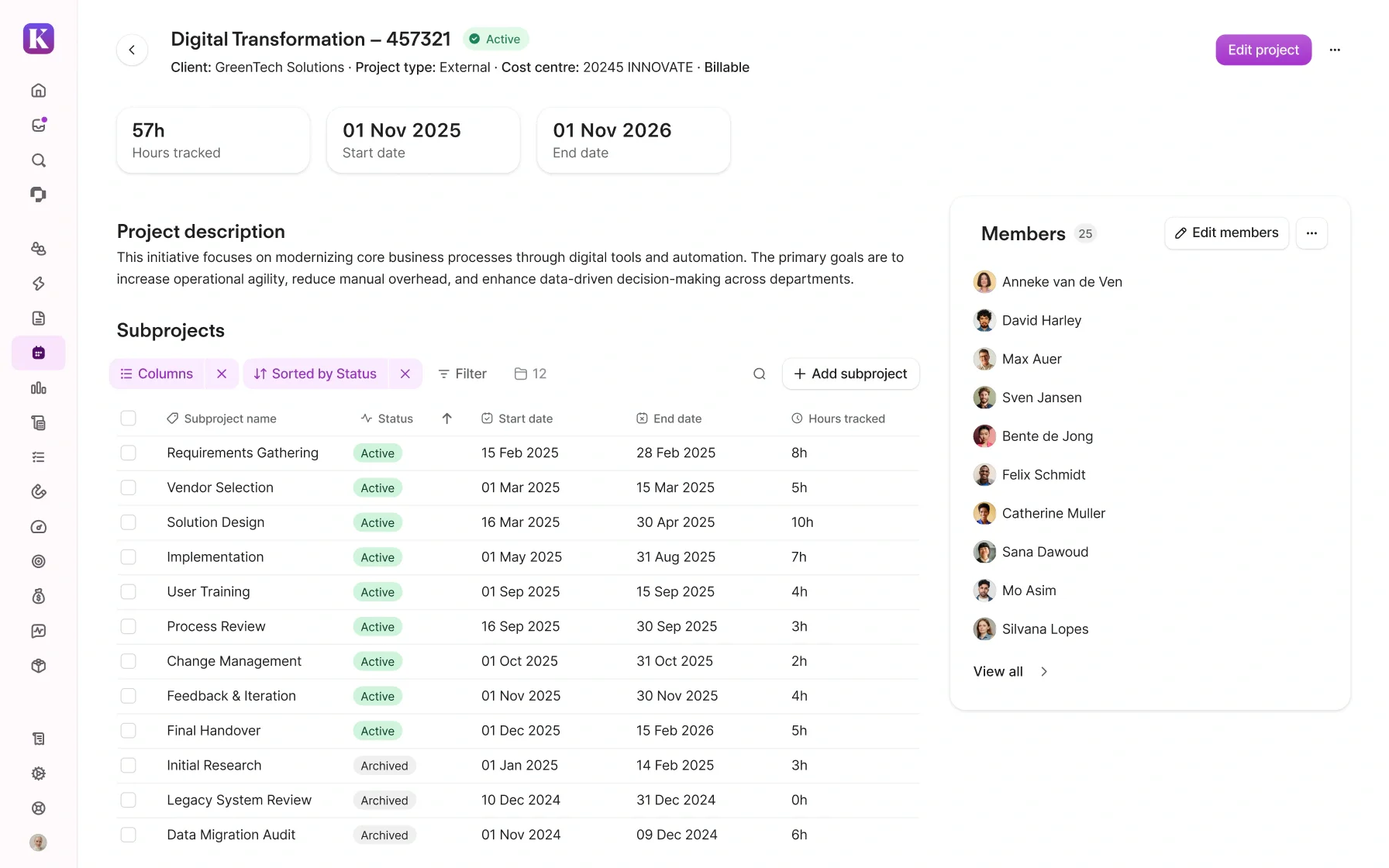
Our team evaluated Personio through its 14-day trial, product documentation, vendor support resources, and verified reviewer data from G2, Capterra, and Gartner Peer Insights as of July 2026. Key observations:
Setup speed is a genuine strength. Employee records, absence policies, and basic approval workflows can be configured within an hour without consulting documentation. The onboarding checklist builder stands out as more intuitive than most comparable platforms at this price point, and the overall navigation logic means HR teams can hand the system to managers and employees with minimal training. For companies replacing spreadsheets and disconnected point tools, the consolidation benefit is visible immediately.
The reporting module is underpowered relative to everything else. Standard dashboards surface headcount and absence metrics clearly, but anything more granular requires exporting raw data to a separate BI tool. For HR teams that present workforce analytics to leadership on a regular basis, this is a recurring gap rather than an occasional inconvenience.
Payroll configuration requires more expertise than the marketing implies. The trial surfaces enough of the setup flow to see that country-specific payroll rules, wage types, and tax configurations need careful, knowledgeable input. An HR generalist without hands-on payroll experience will likely need external support during implementation. This finding is consistent with a clear pattern in long-term reviewer feedback.
Pricing and Plans
Personio does not publish pricing publicly. All plans are sold through a custom quote process based on employee count, selected modules, contract length, and geographic requirements. Third-party procurement data and buyer reports indicate the following approximate ranges.
Multiple reviewers note that pricing has increased meaningfully over the past two to three years, and that the modular structure means total cost can escalate significantly as organizations add capabilities. Request a written breakdown of all module costs and future pricing terms before signing.
Our Rating
Ratings reflect our independent assessment based on verified review data, product capabilities, and market positioning as of July 2026.
Best Use Cases
Personio is a well-suited platform for a specific type of buyer. Understanding where it fits and where it does not saves significant evaluation time.
Personio Is a Strong Fit For:
- European SMEs between 50 and 500 employees. Personio was built for this segment, and the product reflects it. The compliance infrastructure, language support, and integration library are calibrated for European mid-market operating reality.
- DACH-region companies using DATEV for payroll. The DATEV integration is a genuine differentiator. If your company already uses DATEV, Personio is one of very few platforms that connects to it natively without manual export workflows.
- HR teams replacing spreadsheets and fragmented point tools. The clearest ROI case for Personio is consolidation. Companies managing HR across email, Excel, and multiple disconnected tools describe significant time savings and process quality improvements after implementation.
- Organizations that want configurable workflows without developer dependency. The no-code workflow builder is flexible enough to handle a wide range of HR process automation requirements. HR teams that invest time in configuration report strong operational returns.
- Multi-country EU operations needing GDPR-native architecture. EU data residency, GDPR-compliant data handling, and multi-language support make Personio a lower-risk choice for companies operating across EU member states than US-headquartered alternatives.
Consider Looking Elsewhere If:
- Your team is US-based or primarily outside Europe. Personio’s compliance infrastructure, language support, and payroll markets are Europe-focused. US companies will find better-fit alternatives with domestic compliance depth.
- Advanced people analytics are a priority. If your HR team needs strategic workforce analysis, headcount planning models, or sophisticated reporting for leadership, Personio’s reporting tools are likely to frustrate.
- You need a deeply configurable performance management system. Personio’s performance module covers structured review cycles, but reviewers who have used dedicated performance platforms consistently describe it as secondary in depth and configurability.
- You have limited payroll expertise in-house. If nobody on your team has hands-on payroll experience, Personio Payroll’s implementation complexity is a real risk. Budget for external payroll expertise during setup or evaluate alternatives with more guided implementation.
Alternatives and Competitors
If Personio is not the right fit, these are the platforms buyers most frequently evaluate as alternatives.
- HiBob: A strong alternative for European mid-market companies that want a more modern interface and stronger people analytics. HiBob is particularly well-regarded for companies with a people-first culture and teams that want engagement features alongside core HR.
- BambooHR: The standard alternative for smaller teams, especially US-based. BambooHR is simpler, more affordable, and better suited to sub-100-employee organizations that do not need European compliance depth.
- Rippling: For companies that want to combine HR, IT, and payroll under one platform with significantly deeper automation and reporting. Rippling is more expensive and more complex, but the breadth is unmatched at this price tier.
- Factorial: A European HRIS competitor with a similar target market and lower price point. Better suited to companies in Southern Europe (Spain particularly) or those prioritizing affordability over depth.
Final Verdict
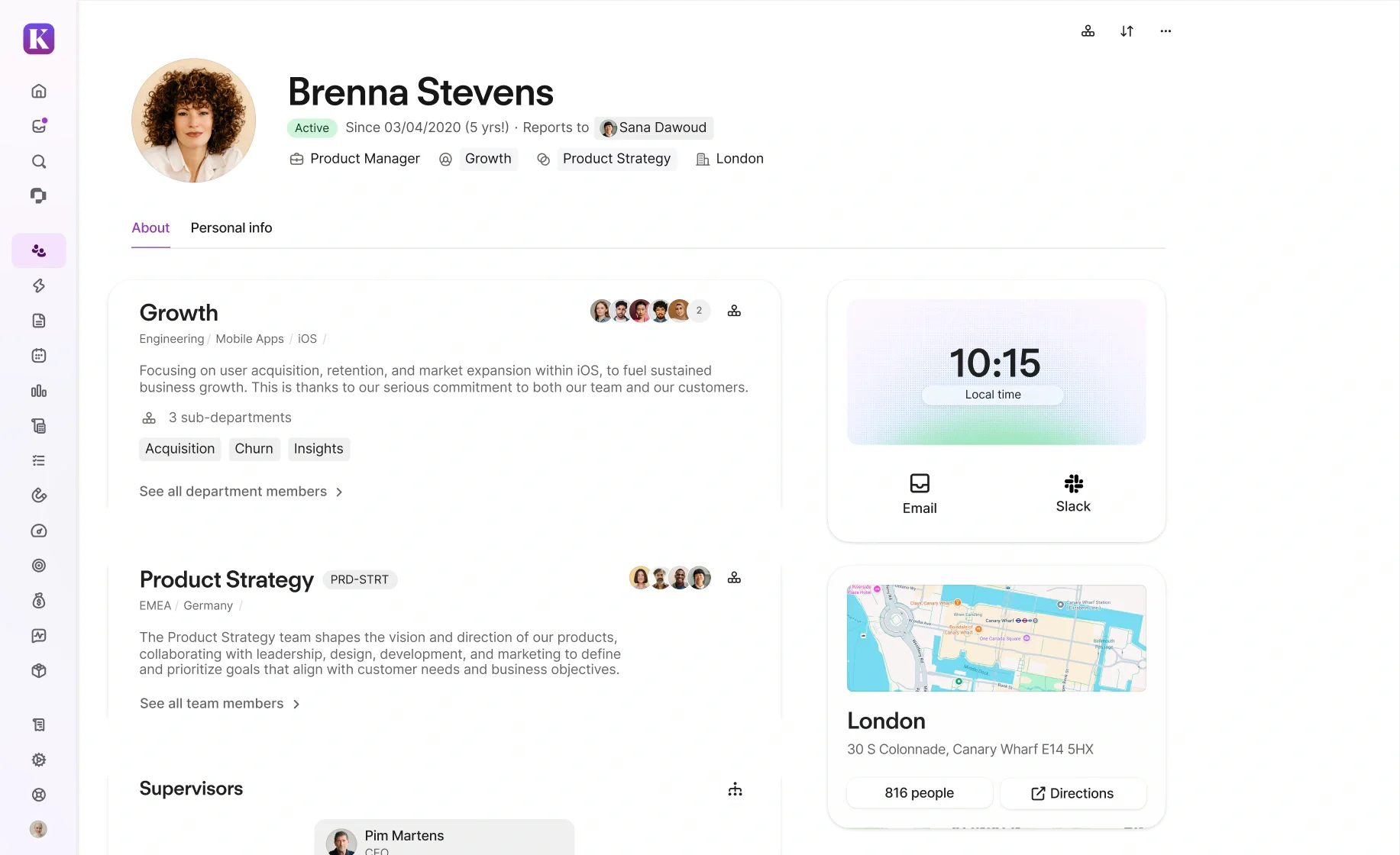
Personio earns its position as Europe’s leading SME HRIS by doing the hard thing well: building compliance, language support, and payroll integration for European markets into the core product rather than bolting them on.
For a company with 50 to 500 employees operating in Germany, the UK, Austria, Spain, or across multiple EU countries, Personio is a credible default choice and often the best-fit platform available. The interface is genuinely intuitive, the workflow automation saves real administrative time, and the DATEV integration alone is a significant operational advantage for DACH companies.
The limitations are real and consistent enough to factor into any evaluation. Reporting is not strong enough for teams that need strategic workforce analytics. Payroll setup is more complex than advertised. Support quality depends heavily on which tier you purchase.
The pricing, while competitive for the feature set, is opaque, modular, and has been rising. For companies outside Europe, or for teams with advanced analytics or deep customization requirements, better-fit options exist.
For a broader look at the category, our top HR software roundup covers additional options.
.png)
.avif)