.svg)

.svg)
.svg)
.svg)
Quick Verdict
Most HRIS platforms claim to serve every company from 10 to 10,000 employees. Namely is more honest than most: it was built specifically for the mid-market gap, the 50 to 500 employee range where companies have outgrown Gusto or BambooHR but are not ready for the complexity of Workday or SAP SuccessFactors. That focus is both its main strength and its ceiling.
This software review evaluates whether Namely delivers on that promise in 2026, and what the 2022 merger with Vensure Employer Solutions and PrismHR has meant for the platform and its customers.
What Is Namely?
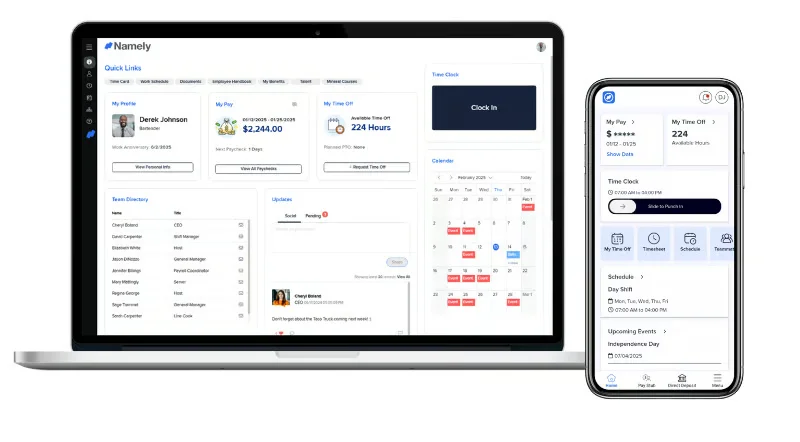
Namely is a US-focused HRIS platform covering core HR, payroll, benefits administration, time and attendance, and talent management. Founded in New York in 2012, it was originally built around a social-style employee experience, giving the platform a Facebook-like interface that employees and reviewers consistently describe as intuitive and easy to navigate.
In September 2022, Namely merged with Vensure and PrismHR, becoming part of one of the largest privately held HR technology and PEO organizations in the US. Namely continues to operate under its own brand, but some Gartner reviewers have flagged the transition, with one writing that the platform “has been diluted” and that “all the talented workers have left, leaving poor client experience.” That is a single reviewer perspective, but it is consistent with other patterns in the record.
Namely’s review base is concentrated in the 51 to 1,000 employee range, with 80.2% of G2 reviewers coming from mid-market organizations. The industries most commonly represented are computer software, information technology, marketing, financial services, and media, which reflects Namely’s historical positioning as the HRIS for knowledge-worker-heavy companies.
Key Features
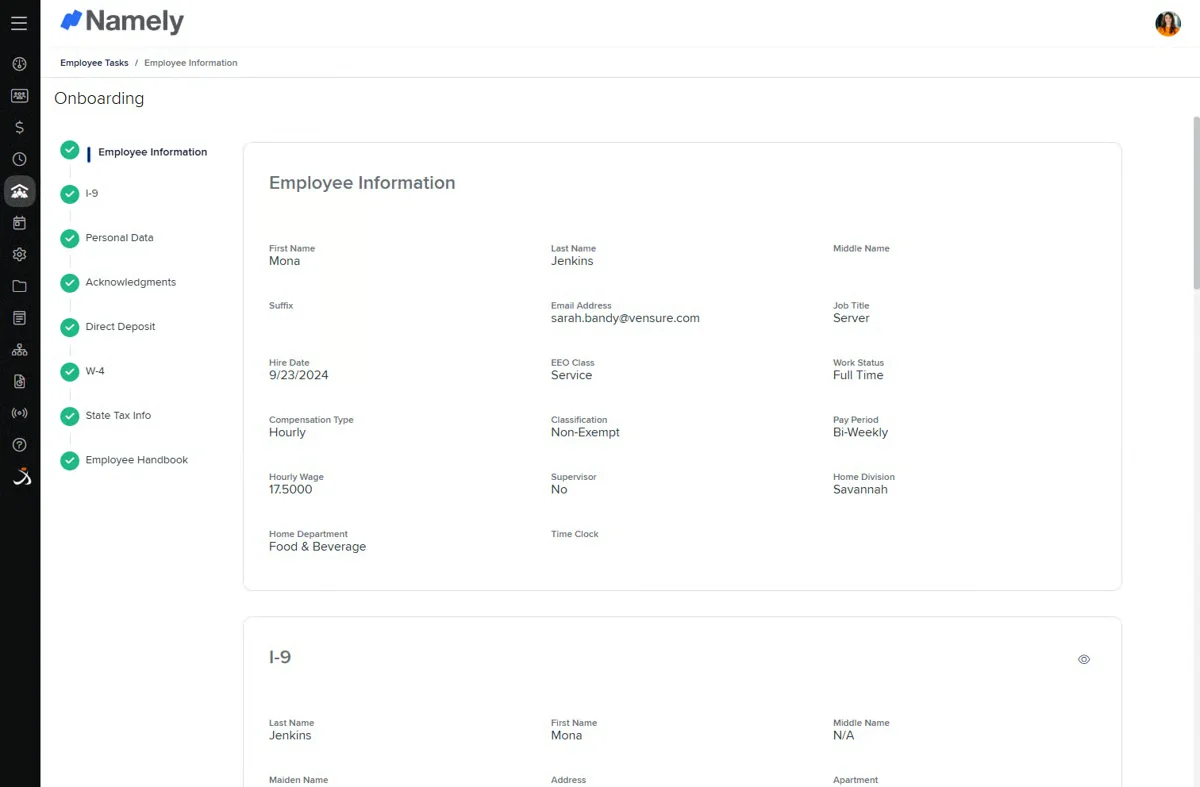
Namely's core modules cover the essentials for a mid-market HR team. The platform's strength is consolidation and ease of use. Its limitations show in reporting depth, advanced configurability, and the upper end of complexity it can handle.
1. Core HR and Employee Records
The employee database is the center of the platform. It stores personal information, job history, compensation records, and documents, and feeds into payroll, benefits, and time tracking. The org chart and employee directory, styled similarly to a social network, are frequently cited as features employees actually use rather than avoid. The self-service portal lets employees update their own information, view pay stubs, manage time-off requests, and complete onboarding tasks without going through HR.
“The interface is clean and generally intuitive for both employees and admins, which helps reduce confusion and cuts down on HR inquiries. We’ve especially appreciated its employee directory and org chart features, which make navigating the team structure easier.” – G2 reviewer
2. Payroll Processing
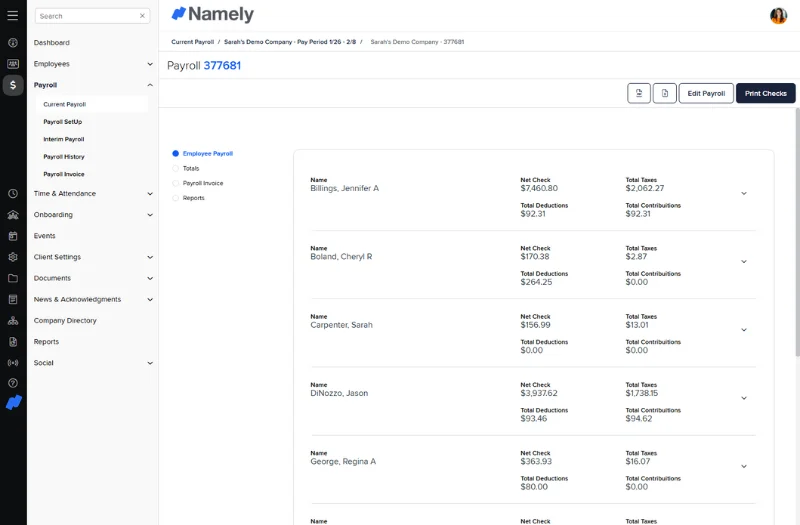
Payroll is a core module covering automated calculations, tax withholdings, direct deposit, and year-end W-2 and 1099 processing. It handles multi-state payroll and standard pay frequency options. Reviewers generally describe payroll as reliable for straightforward use cases. Where the platform draws criticism is at the edges: organizations with complex compensation structures, multiple pay groups, or high volumes of corrections report that the system becomes unwieldy.
“Namely's HR and payroll system is easy to use and intuitive. Our employees love it! The platform's user-friendly interface makes it easy to navigate requesting time off, using the Performance Management tool, eSignature function, updating personal profile information and enrolling in benefits.” – G2 reviewer
3. Benefits Administration
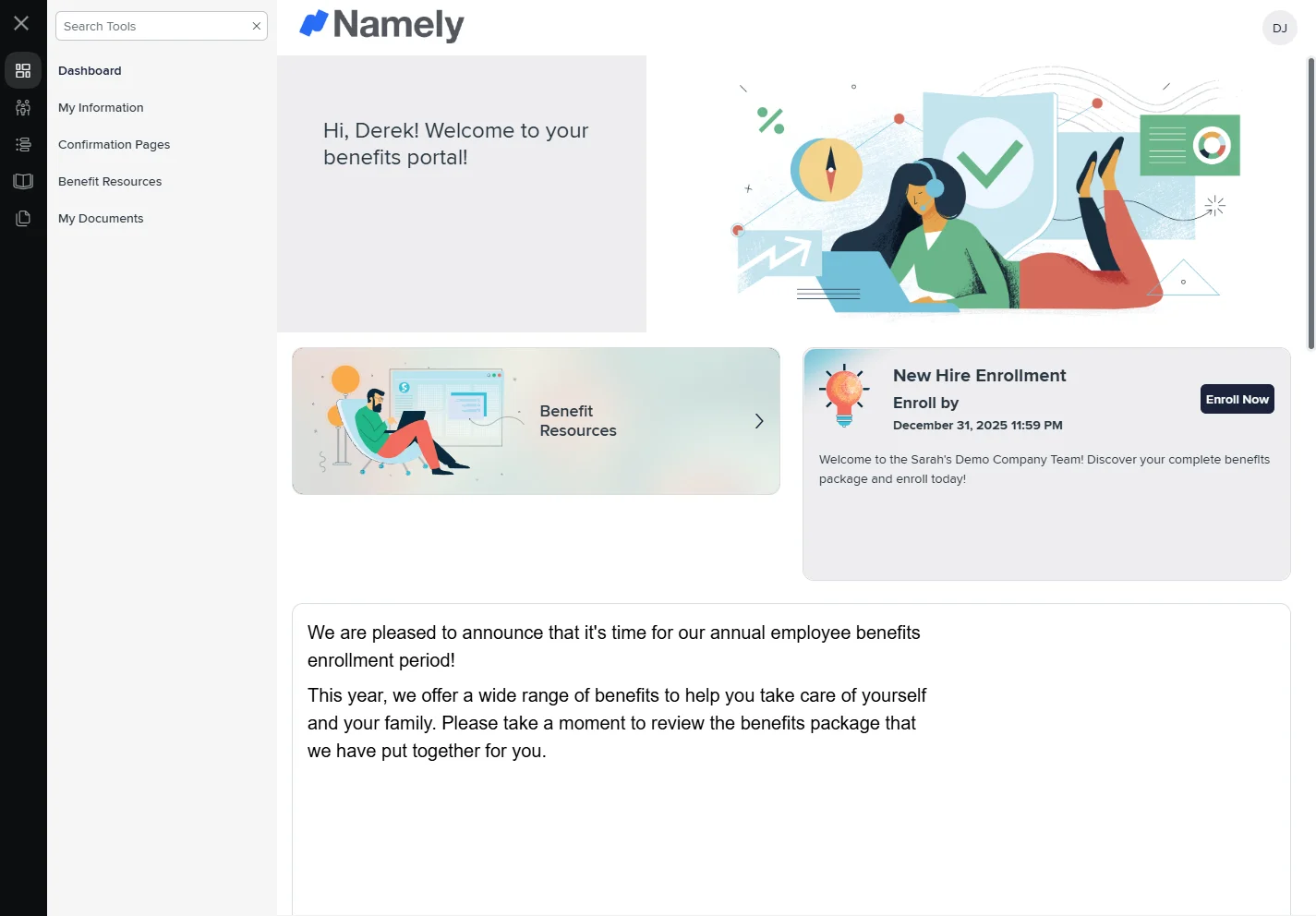
Benefits enrollment, eligibility tracking, open enrollment workflows, and carrier connections are covered. Open enrollment is a consistent positive in the review record, with multiple reviewers describing it as well-organized and employee-friendly. Carrier data exchange and EDI connections are more mixed: several reviewers note that benefits integrations with carriers require manual workarounds and that errors in carrier feeds create correction work for HR teams.
4. Time and Attendance
Time tracking, PTO management, and scheduling are included but represent one of the weaker areas in the platform. Reviewers in companies with complex scheduling needs or hourly workforces frequently describe the time-tracking module as limited. Specific complaints include confusing clock-in and clock-out interfaces, missing notifications for time-off approvals, and syncing issues between time tracking and payroll.
“A great software especially for less than 50 employees companies to manage their payroll system and attendance tracking.” – Capterra reviewer
5. Talent Management
The talent module covers applicant tracking, onboarding, performance reviews, and goal setting. Onboarding is frequently praised: e-signature workflows, document collection, and new-hire task management are described as clean and easy for both HR teams and new employees. The ATS is basic, integrating with a limited set of job boards and offering less configuration than dedicated ATS platforms. Performance reviews and goal tracking are functional for straightforward use cases but lack the depth of dedicated performance management tools.
6. Reporting and Analytics
Reporting is one of the most consistently criticized areas in Namely's review record. The platform offers a library of pre-built reports and a custom report builder, but reviewers regularly describe the reporting tools as cumbersome, limited in flexibility, and difficult to navigate.
7. Compliance and Document Management
Namely includes a compliance resource library, state-mandated training management, and a handbook builder. The compliance search functionality receives positive mentions from HR teams that use it for quick state-law lookups. Document management covers e-signatures, storage, and bulk distribution, though document tagging is noted as a limitation in the SelectHub analysis.
Pros
“I like that Namely's UI is nice to look at. The features allow for basic account management and payroll management. It helps our HR team manage the workforce of our company and ensures everything is recorded properly and everyone gets their pay on time.” – G2 reviewer
- The interface is the platform’s most consistent strength. Reviewers across role types and company sizes describe Namely as intuitive and visually clean. The social-style design, org charts, employee directory, and self-service portal contribute to higher employee adoption than most comparable HRIS platforms. For HR teams that have struggled to get employees to use self-service, this is a meaningful differentiator.
- Onboarding is genuinely well-designed. The combination of e-signatures, task workflows, document collection, and new-hire portals receives consistent praise from HR teams across industries. Multiple reviewers describe it as making a strong first impression on new hires, which matters for retention in competitive talent markets.
- Payroll is reliable for standard use cases. For companies with straightforward payroll needs, single or multi-state, standard pay frequencies, and no complex compensation structures, reviewers consistently describe payroll processing as accurate and easy. The integration between payroll and benefits reduces the manual data entry that causes errors on separate-system setups.
- Benefits open enrollment is smooth. Multiple reviewers call out open enrollment as a specific highlight, describing it as well-organized and easier for employees than previous systems. For companies running annual benefits enrollment as a significant HR event, this is worth weighting.
- Consolidation value for the right size company. For companies in the 50 to 200 employee range, Namely’s combination of HR, payroll, benefits, and time tracking in one system with a consistent interface removes the integration tax of managing separate vendors. The consolidation is the most common reason satisfied buyers give for choosing the platform.
Cons
“While it's easy to reach support, the quality has fallen over time. It feels like as time passes, the expertise and knowledge of support has been falling. The system definitely feels like it's not being updated anymore and just maintained.” – G2 reviewer
- Reporting is the most commonly cited weakness. G2 reviews flag complex, cumbersome, and limited reporting as one of the top complaints across company sizes. Organizations that need flexible, custom reporting or workforce analytics as a core output from their HRIS will find Namely’s capabilities genuinely limiting. This is not a polish issue; it is a structural gap in the product.
- The platform has a scaling ceiling. Namely works well for companies in the 50 to 200 employee range. As organizations grow past 300 to 500 employees, or when payroll and HR complexity increases, multiple reviewers describe the platform becoming unwieldy. This is a documented pattern, not an edge case. Companies that expect significant growth should model whether they are buying a platform they will outgrow.
- Support quality has declined and the trend is recent. Multiple 2025 and 2026 reviews describe a fall in support expertise and responsiveness, with some reviewers explicitly connecting this to changes following the Vensure merger. The Gartner review pattern is more pointed: one reviewer described the post-acquisition loss of “talented workers” as leaving “poor client experience.” Whether or not the merger is the cause, the pattern of declining support quality appears consistently enough in recent reviews to warrant attention in any evaluation.
- Time tracking and scheduling are limited. For companies with complex scheduling, shift-based workforces, or hourly employees, Namely’s time-tracking module is consistently flagged as insufficient. Syncing errors between time and payroll, confusing clock-in interfaces, and missing notifications appear in multiple reviews. Companies whose core challenge is managing hourly workforces should evaluate time-tracking depth before committing.
- Customization and workflow configurability are light. Workflow automation and custom process configuration are areas where Namely lags more configurable platforms like Rippling or BambooHR. For HR teams that rely heavily on automated workflows, approval chains, or custom process logic, the limitations show up quickly after implementation.
First-Hand Evaluation
Namely does not offer a free trial. This evaluation is based on verified reviewer data across G2, Capterra, Gartner Peer Insights, and Software Advice as of July 2026, alongside third-party pricing research and product documentation.
The review pattern splits by use case. Companies using Namely for core HR, payroll, and benefits in the 50 to 200 employee range report high satisfaction, with HR teams specifically citing stronger employee adoption of self-service features than prior systems. Complaints cluster around two scenarios: organizations that scaled past the low-hundreds in headcount and hit a configuration ceiling, and HR leaders who found the reporting tools insufficient for leadership presentations and workforce planning.
The post-merger support trajectory is the most significant uncertainty for new buyers. A March 2026 G2 reviewer describing expertise declining "over time" aligns with a Gartner reviewer's note that the platform feels maintained rather than actively developed. Buyers should ask directly about support resources and product roadmap during any evaluation.
Pricing and Plans
Namely publishes an entry-level starting price for Core HR, but full plan pricing is still sold through a custom quote process. The modular structure means payroll, benefits, and time tracking each add to the base cost.
The Core HR starting price is publicly listed by Namely. Additional module costs require a direct quote. Contact Namely for current bundled pricing.
What to clarify in the sales conversation: Ask specifically about the total PEPM cost with the modules you need, not just the base Core HR rate. The modular structure means the number you see in third-party sources is typically for HR-only and does not reflect the all-in cost for a full payroll, benefits, and time stack. Also ask about pricing behavior as headcount grows and what the contract looks like at renewal.
Our Rating
Best Use Cases
Namely’s value is most concentrated in a specific company profile. The further you move from that profile, the weaker the fit.
Namely is a strong fit for:
- US companies with 50 to 250 employees in knowledge-worker industries. Technology, media, financial services, marketing, and professional services represent the clearest fit. The interface, onboarding experience, and employee portal are built for this population, and the review satisfaction data concentrates here.
- HR teams replacing a spreadsheet or basic HR tool for the first time. Namely’s onboarding, self-service, and consolidated payroll and benefits represent a meaningful step up from ad-hoc systems. Implementation is relatively fast, and the learning curve for both HR teams and employees is lower than most comparable platforms.
- Organizations prioritizing employee experience and adoption. The social-style interface, org charts, and employee directory consistently drive higher adoption than more utilitarian platforms. For HR leaders who have struggled to get employees to use self-service, this is a genuine advantage.
- Companies that want payroll and HR consolidated without complexity. Namely's consolidation value is real for straightforward payroll and benefits use cases. The integration between modules reduces the manual reconciliation work that comes with managing separate systems.
Look elsewhere if:
- You are above 300 employees or expect to grow there within the contract term. The scaling ceiling is documented and consistent. If headcount growth is part of the plan, evaluate whether Namely can support where you are going, not just where you are. Rippling and Paylocity are the most natural next-step alternatives for companies growing out of Namely.
- Reporting and workforce analytics are a core requirement. If HR leadership needs to produce regular workforce reports for the board, model compensation equity, or run headcount analytics, Namely’s reporting tools are likely to frustrate. BambooHR and Rippling offer meaningfully stronger reporting at comparable price points.
- You manage a large hourly or shift-based workforce. Time tracking and scheduling are documented weak points. For organizations where managing hourly schedules, shift swaps, and complex PTO rules is a core HR function, Namely is the wrong tool.
- Workflow automation and custom approvals are important. If your HR processes rely on configured workflows, automated approval chains, or conditional logic, Namely’s configurability is limited. A more configurable platform is worth the additional evaluation time.
Alternatives and Competitors
These platforms are most commonly evaluated alongside Namely:
- BambooHR: The most direct competitor for the same 50 to 500 employee range, with stronger reporting and a well-regarded support reputation. 4.4/5 on G2 across 5,700+ reviews. More expensive at equivalent module depth but frequently rated higher overall.
- Rippling: 4.8/5 on G2 with a large review base. Covers HR, IT, and finance in one platform and scales to 1,000+ employees with minimal loss of capability. More expensive and more complex to implement, but the right step up for companies that anticipate outgrowing Namely.
- Paylocity: 4.4/5 on G2 across 6,000+ reviews. Strong in payroll, benefits, and engagement features. A natural alternative for mid-market companies where payroll complexity is a bigger factor than Namely can handle.
- Gusto: Better fit for companies under 100 employees that want transparent pricing and a clean payroll experience. Published pricing, strong support reputation, and faster implementation than Namely.
Final Verdict
Namely delivers on its core promise for a specific buyer: a mid-market company in the 50 to 250 employee range, with knowledge-worker employees, standard payroll and benefits needs, and an HR team that wants a consolidated platform employees will actually use. The interface is genuinely good, onboarding is among the best in the category, and payroll is reliable for straightforward use cases.
The honest limitations matter. Reporting is a structural gap. The scaling ceiling is real and well-documented. Support quality has declined in recent reviews, with a pattern consistent enough that buyers should ask pointed questions about what dedicated support looks like in a contract rather than assuming the pre-merger experience will continue.
The Vensure merger is the most important context for any new buyer. Namely now sits inside a large PEO and HCM aggregator with 100+ acquisitions. That provides financial stability and a broader ecosystem, but it also introduces the risk that product investment is spread thin and that platform-specific expertise has diluted. Whether that trajectory improves or continues is genuinely uncertain.
For a company in Namely’s sweet spot signing a two-year contract, those are the right questions to press in the sales process. For the full landscape of HR platforms at this tier, the best HRIS software roundup covers the alternatives in detail.
.png)
.avif)