.svg)
In a WorkBoard vs Betterworks comparison, the biggest difference comes down to what you want your OKR process to support. WorkBoard puts more attention on strategy execution, so leaders can keep company priorities visible and see how the organization is progressing. With Betterworks, the focus shifts more toward the employee side, where goals can be tied into performance management and broader talent processes.
The difference becomes more important when you look at what you actually need from an OKR platform. You may get more value from WorkBoard if strategy execution is your main concern, while Betterworks makes more sense when you want goals to work alongside your existing HR processes.
Below, you’ll see how the two compare on features, pricing, and overall fit.
WorkBoard Overview
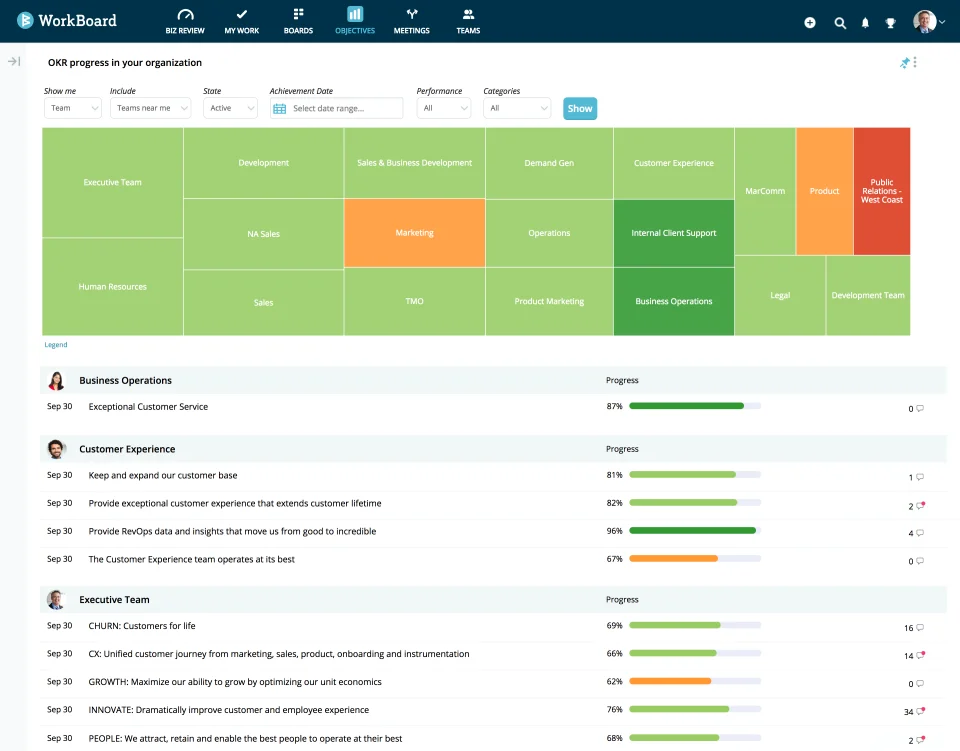
WorkBoard is an enterprise OKR and strategy execution platform built for leadership and strategy teams. Along with OKRs, it covers business reviews and cross-functional accountability, keeping the focus on how your organization turns strategy into execution.
Unlike a full performance management platform, WorkBoard doesn’t try to cover everything on the HR side. Instead, you can use it alongside existing systems for employee reviews, compensation, or employee records.
As of September 2026, WorkBoard has a 4.6 out of 5 rating on G2 (subject to change). Pricing is quote-based, with no published free plan or free trial, and G2's pricing page shows the same.
Key Features
- Company, business-unit, team, and individual OKRs with alignment views
- Strategy canvases that connect long-range strategy with quarterly priorities
- Business reviews, scorecards, and progress views for leadership teams
- Action items, workstreams, dependencies, confidence signals, and outcome tracking
- Executive briefs and AI-supported OKR drafting, coaching summaries, and dependency suggestions
- Integrations for enterprise planning, collaboration, and work-management environments
- Operating-rhythm support for weekly, monthly, and quarterly execution reviews
Pros
“I like how structured, well planned, and clear WorkBoard is. Goals, targets, updates, and priorities are off my shoulders and easy to track in one place. Having everything in one place makes it easier to stay clear on priorities.” – G2 reviewer
- Strategy Execution Is the Product’s Core Purpose: WorkBoard goes beyond goal entry by supporting the business reviews, scorecards, dependencies, and accountability conversations that sit around enterprise OKRs.
- Leadership Visibility Is a Major Strength: Executives can use progress and outcome views to identify strategic risk without waiting for manual status-reporting cycles.
- Cross-Functional Work Gets More Structure: Alignment views and workstreams make it easier to show where one team’s progress depends on another team’s outcome.
- AI Features Are Tied to Execution Workflows: The platform documents tools for OKR drafting, executive briefs, dependency suggestions, and manager feedback summaries.
Cons
“The interface can feel a bit complex at first, and it takes some time to get used to all the features. Making it beginner friendly would make it so easy.”– G2 reviewer
- It Is Not a Full Performance-Management System: WorkBoard does not replace a platform for formal reviews, multi-rater feedback, calibration, compensation, or talent reviews.
- Executive Adoption Is Essential: If leaders continue to run business reviews in slides and spreadsheets, WorkBoard can become another reporting destination instead of the operating system it is intended to be.
- Pricing Is Not Transparent: The platform is quote-based, which means buyers need a scoped proposal before they can model total cost.
- The Platform Can Be Demanding for New OKR Programs: Companies without clear objectives, owners, scoring rules, and review habits may need to establish those operating practices before the software delivers value.
Betterworks Overview
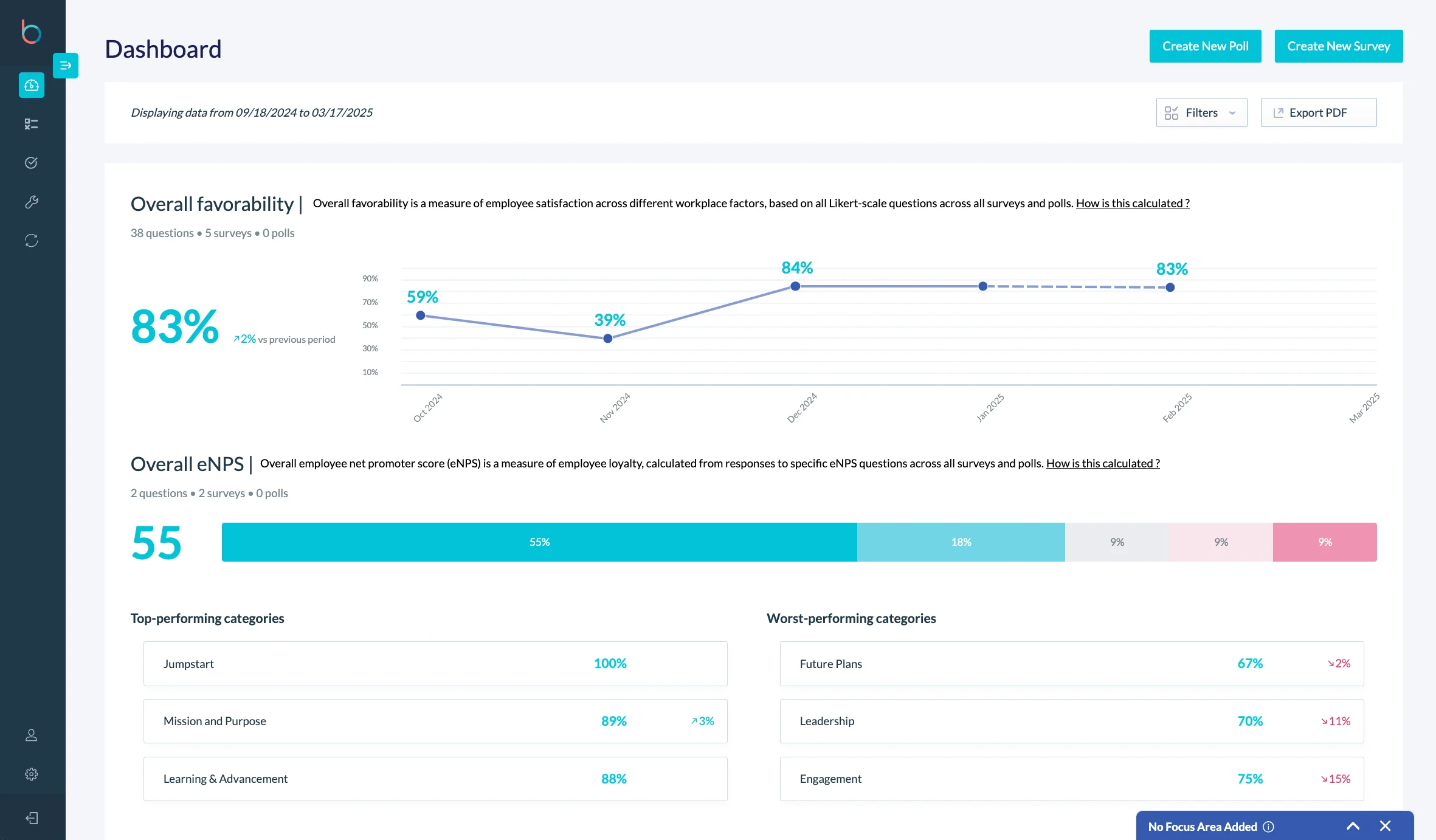
Betterworks puts more of its focus on performance management and talent. You can connect goals with feedback, manager conversations, performance reviews, calibration, and development planning, so goals don’t have to sit separately from your other HR processes.
For HR teams, that broader setup can be useful when you want more structure around how goals and performance are managed. Betterworks currently offers Performance and Performance + Talent Intelligence, with Enterprise services available for features such as engagement surveys and additional rollout support.
As of September 2026, Betterworks has a 4.4 out of 5 rating on G2 (subject to change). Pricing starts at $8 per user per month for Performance and $9 for Performance + Talent Intelligence, according to Betterworks' plans page.
Key Features
- Goals and OKRs with company, department, team, and individual alignment
- Continuous feedback, manager conversations, check-ins, and one-on-ones
- Structured performance reviews and configurable workflows
- Anytime Calibration, talent profiles, succession planning, and development plans
- Skills Intelligence and AI-assisted goal and performance workflows
- Enterprise HRIS integrations, SAML SSO, and SCIM provisioning
- Enterprise engagement surveys and change-management support on higher plans
Pros
“Betterworks offers a modern interface for tracking goals, sharing feedback, and collaborating with others. Also I really appreciate the AI tools to enhance feedback texts, this is maybe my major advantage. In addition I never had issues with performance - the system seems to be stable and scalable.” – G2 reviewer
- Goals and Performance Management Are Closely Connected: Employees and managers can use the same platform for goals, feedback, conversations, and formal reviews instead of treating them as separate processes.
- Talent Intelligence Goes Beyond Review Forms: Skills, calibration, talent profiles, succession planning, mobility, and development create a deeper option for HR teams making promotion and succession decisions.
- It Is Designed for Enterprise Governance: Betterworks supports structured workflows, identity management, auditability, and HRIS-connected processes that larger organizations often need.
- Published Starting Pricing Improves Early Budgeting: Buyers can begin with the $8 Performance plan or $9 Performance + Talent Intelligence plan before discussing an Enterprise package.
Cons
“At times, Betterworks can feel like an added administrative layer, especially when updating goals frequently. The interface and navigation can also be less intuitive, which can make it harder to quickly capture progress during busy project periods.” – G2 reviewer
- Implementation Requires Real HR Capacity: Betterworks works best when HR has clear decisions about goals, reviews, ratings, feedback, calibration, and manager training before launch.
- It Can Be More Platform Than a Strategy-Only Team Needs: Companies using Betterworks only for OKRs may not need the surrounding performance and talent workflows.
- Enterprise Services Can Add to Total Cost: Implementation is a separate one-time cost, and Enterprise requirements such as engagement surveys and transformation support require a custom proposal.
- Engagement Is Not the Main Reason to Choose It: Organizations buying primarily for employee listening should also evaluate whether a dedicated engagement platform would be a better fit.
Pricing Comparison
Betterworks gives you a clearer idea of what you might pay since it publishes starting prices for its two main plans. WorkBoard, on the other hand, uses custom enterprise pricing, so you'll need to request a quote before you can make a direct comparison.
However, the starting price isn't necessarily what you'll end up paying. When comparing the two, look at the total cost over several years and check whether there are additional costs that aren't included in the published price.
Feature Comparison: WorkBoard vs. Betterworks
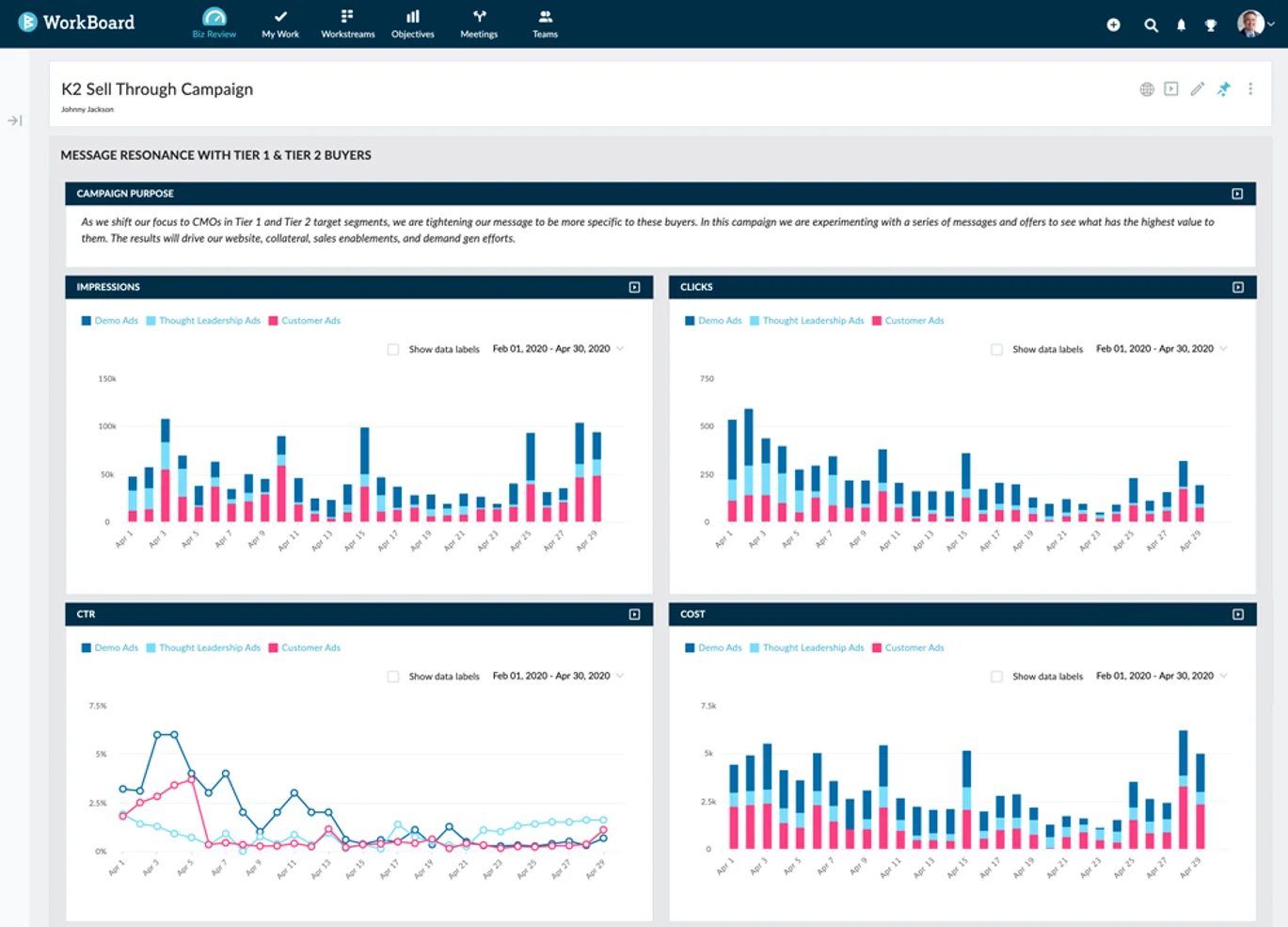
WorkBoard and Betterworks both help companies manage OKRs, but the way they use those goals is different. WorkBoard focuses more on keeping company strategy on track, while Betterworks connects goals more closely with employee performance.
OKR and Goal Management
WorkBoard puts OKRs at the center of its strategy execution process. Leaders can connect company priorities with team goals and use them to see how different parts of the organization are progressing. This makes it easier to keep everyone moving toward the same priorities.
Betterworks also lets companies create goals across different levels of the organization. However, its goals are more closely connected to employee performance. Goals can be used during feedback and performance conversations, which gives managers more context when reviewing individual progress.
Verdict: WorkBoard is a better fit when you mainly want OKRs to support company strategy. Betterworks makes more sense when employee goals need to be part of the performance management process.
Business Reviews and Strategy Cadence
WorkBoard puts a lot more emphasis on what happens after goals are created. Leaders can use its strategy views and scorecards to review progress and see where things may be falling behind. This can also reduce some of the manual work involved in preparing for regular business reviews.
Betterworks has check-ins and goal updates, but those features serve a different purpose. They are more useful for keeping managers and employees on the same page than for running larger executive business reviews.
Verdict: WorkBoard is the stronger option when business reviews are an important part of how your leadership team works.
Performance Reviews and Calibration
Betterworks has much more to offer when formal performance management comes into the picture. HR teams can use the platform for performance reviews and calibration while keeping those processes connected to employee goals.
WorkBoard can still help with accountability around objectives, but it isn't meant to replace a full performance review system. So, if your company has more complex review requirements, you may also want to compare it with other enterprise performance review software.
Verdict: Betterworks is the better choice when formal performance reviews and calibration are a major part of what you need.
Talent Intelligence and Development
Betterworks also has more depth when it comes to talent management. Its Performance + Talent Intelligence plan gives HR teams more information around employee skills and development. That goes beyond simply setting goals and checking whether they have been completed.
WorkBoard keeps its focus on strategy execution instead. It can support conversations around employee progress, but broader talent processes would usually need another HR system alongside it. You may also want to look at separate employee development software if employee growth is a major requirement.
Verdict: Betterworks has more to offer when you want goals to connect with talent and employee development.
Analytics and Reporting
WorkBoard's reporting is more focused on company strategy. Leaders can see how objectives are progressing and where things may be falling behind. That information becomes especially useful when it's brought into regular business reviews.
Betterworks takes more of an HR approach to reporting. Its reports give teams more visibility into employee goals and performance, which can be useful when HR needs information to support decisions around employees.
Verdict: WorkBoard makes more sense for strategy reporting, while Betterworks is more useful when reporting needs to stay close to HR and performance.
Integrations and Ecosystem Fit
WorkBoard is more likely to sit alongside the systems your strategy and operations teams already use. However, you shouldn't judge the fit based on the integration list alone. It's important to know how information moves between systems and whether the connection actually works the way your team needs it to.
Betterworks fits more naturally into an HR environment because employee information and reporting structures are important to how the platform works. That can make a difference if your goal is to connect your OKR process with the HR systems you already have.
Verdict: WorkBoard makes more sense for a strategy and operations setup. Betterworks is a more natural fit when HR is at the center of the workflow.
AI Capabilities
WorkBoard's AI features are mainly focused on strategy execution. They can help with creating OKRs and reduce some of the manual work involved in preparing executive reports. That makes the AI more useful for teams that spend a lot of time managing strategy and business reviews.
Betterworks takes AI further into performance and talent management. Its capabilities also extend into skills intelligence and talent planning, which gives HR teams more ways to use AI within their existing processes. If AI is an important part of your evaluation, you can also compare it with other AI-powered HR software.
Verdict: WorkBoard's AI is more focused on strategy execution, while Betterworks puts more emphasis on performance and talent.
Choose WorkBoard If:
- Strategy Execution Is the Main Concern: WorkBoard makes more sense when your biggest priority is turning company strategy into goals that teams can actually work toward and review.
- Teams Need Better Visibility: If teams are struggling with unclear ownership or don't know how their work connects to larger priorities, WorkBoard can give everyone a clearer view of what's happening.
- Strategy or Operations Will Manage It: WorkBoard is better suited to companies where the platform will sit with strategy, operations, or another team responsible for keeping the business on track.
- Leaders Are Willing to Use It Regularly: The platform works best when executives actually use the scorecards and progress updates during their regular reviews instead of going back to separate slide decks.
- You Already Have a Performance System: There's no need to replace your existing HRIS or performance process. WorkBoard can sit alongside those systems and focus on the strategy side.
- You Can Support the Rollout: Your team will need to put some structure around how objectives are created and reviewed. Without that consistency, even a strong OKR platform can become another system people stop using.
Choose Betterworks If:
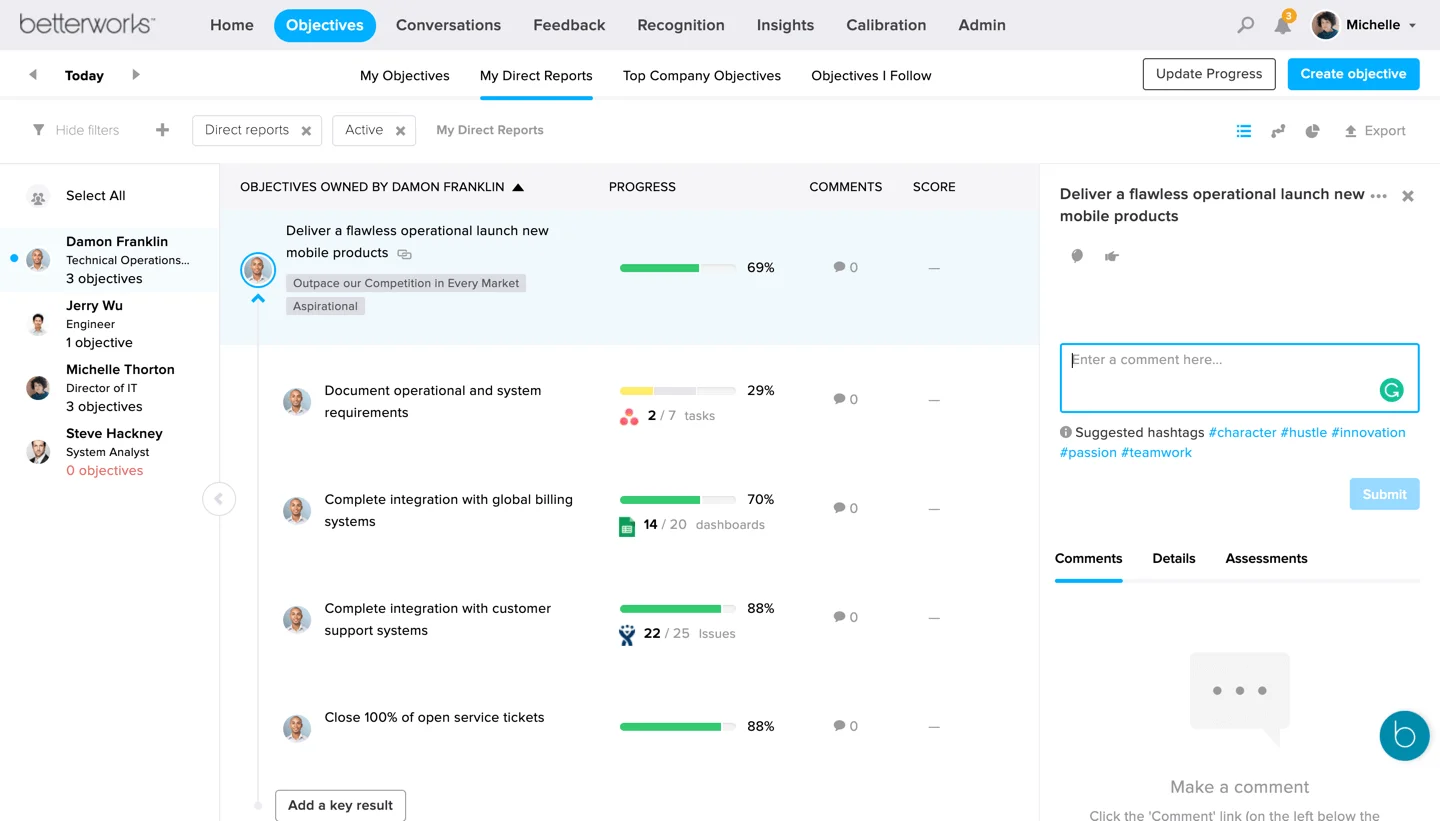
- HR Will Manage the Platform: Betterworks is a more natural fit when HR is responsible for keeping goals connected to the employee side of the business.
- Formal Performance Management Matters: Performance reviews and calibration are a bigger part of the picture here, so Betterworks is worth considering when those processes need more structure.
- Employee Goals Are a Priority: Rather than focusing mainly on executive strategy, you can use Betterworks to connect company goals with what individual employees are expected to accomplish.
- You Need Better HR Integration: Employee information and organizational data play an important role in Betterworks, which can make it easier to fit the platform into an existing HR setup.
- You Need a Starting Point for Your Budget: Betterworks publishes starting prices of $8 and $9 per user per month. That gives you something concrete to work with when you're putting together an initial budget.
- You Want Goals and Performance in One Place: You won't need to keep goal management completely separate from performance management. Betterworks brings the two together, which can be useful for companies that want a more connected HR process.
Final Verdict
In the end, the WorkBoard vs Betterworks decision comes down to what you need beyond basic OKRs.
You may lean toward WorkBoard if your priority is strategy execution, since it gives leaders a place to track company priorities and review how the organization is progressing as a whole. On the other hand, Betterworks is the better pick if you want your goals to connect with performance management and give HR more support with the employee side of the process.
If you're mainly looking for a simpler way to manage goals, you may not need either platform. In that case, you can also look at other OKR software options to find something that better fits your needs.