.svg)
When HR leaders compare performance management and employee engagement tools, the conversation usually starts with three questions: What does each platform actually do? How much will it cost? And will employees use it?
Teamflect and Motivosity are both well-regarded in the HR software space, but they approach people management from very different angles. This comparison breaks down both platforms across features, pricing, integrations, and support so you can make a confident decision for your organization.
Teamflect Overview
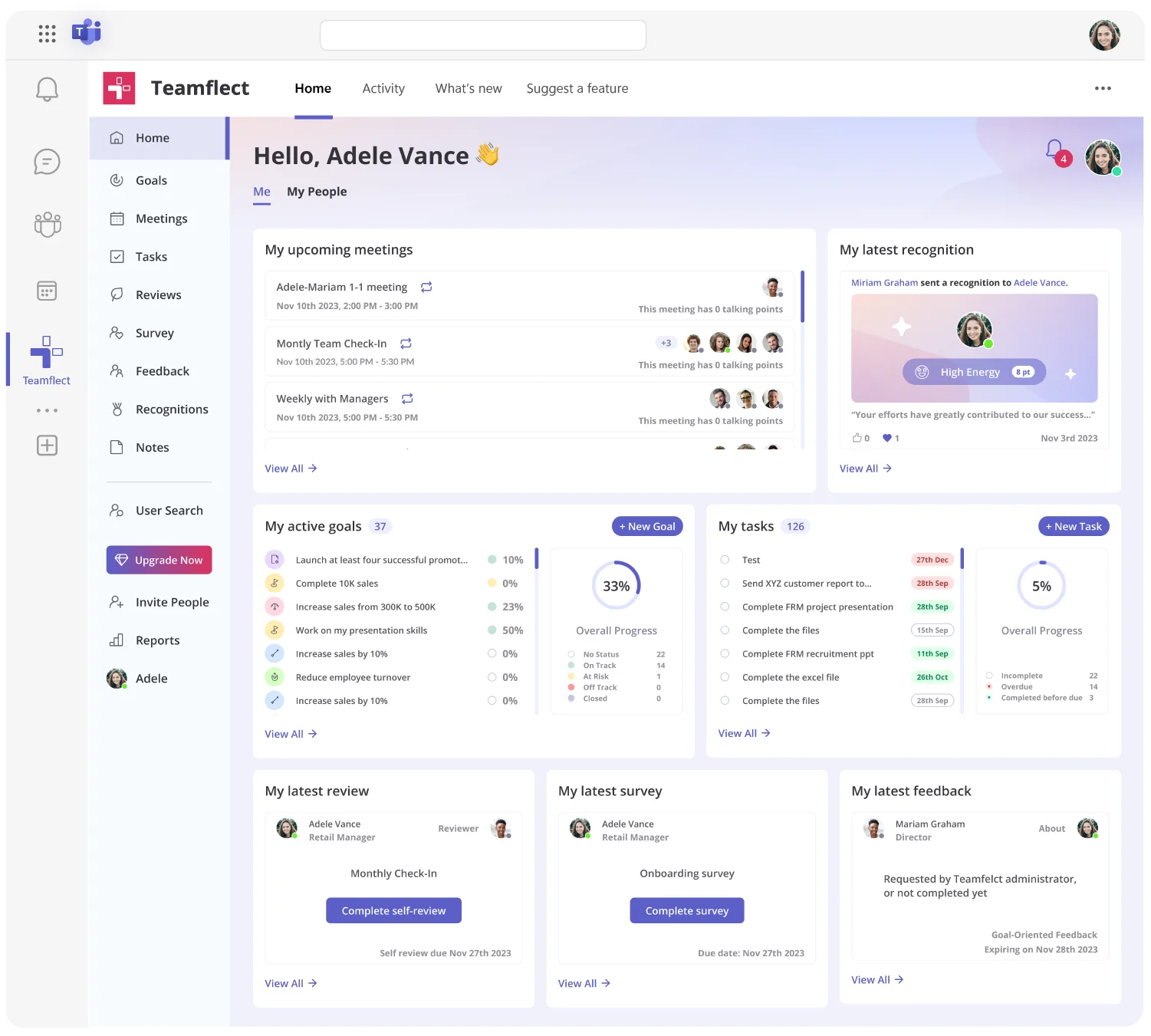
Teamflect is an all-in-one performance management platform designed specifically for organizations running Microsoft 365. It covers the full range of people management needs, all accessible from within Microsoft Teams or Outlook without requiring a separate login or a new interface to learn. Teamflect holds a 4.6/5 rating on G2.
Key Features include:
- Performance reviews with customizable templates and automated cycles
- Goals and OKRs with cascading alignment from company to individual level
- 360-degree feedback and structured 1-on-1 meeting management
- Employee recognition with badges, points, and custom reward catalogs
- Engagement surveys with built-in analytics
- Career pathing and development planning
- Task management integrated within Teams
- AI Agent for review comments, goal suggestions, and coaching insights
- Power BI integration for advanced workforce analytics
Pros: "Teamflect provides tools for goal setting, feedback, and recognition, which helps create a more structured and consistent approach to employee development, according to multiple software review platforms." - Capterra Review
- Runs natively inside Microsoft Teams and Outlook, no tab-switching required
- Fast implementation with a dedicated Customer Success Manager included in every plan
- Free plan available for teams of up to 10 users
- AI features are grounded in actual employee data, not generic prompts
- Covers the full performance cycle in a single platform
Cons:
- Requires a Microsoft 365 environment; less compelling for teams on Google Workspace or other ecosystems
- Does not include core HRIS functions such as payroll, leave tracking, or benefits administration
Motivosity Overview
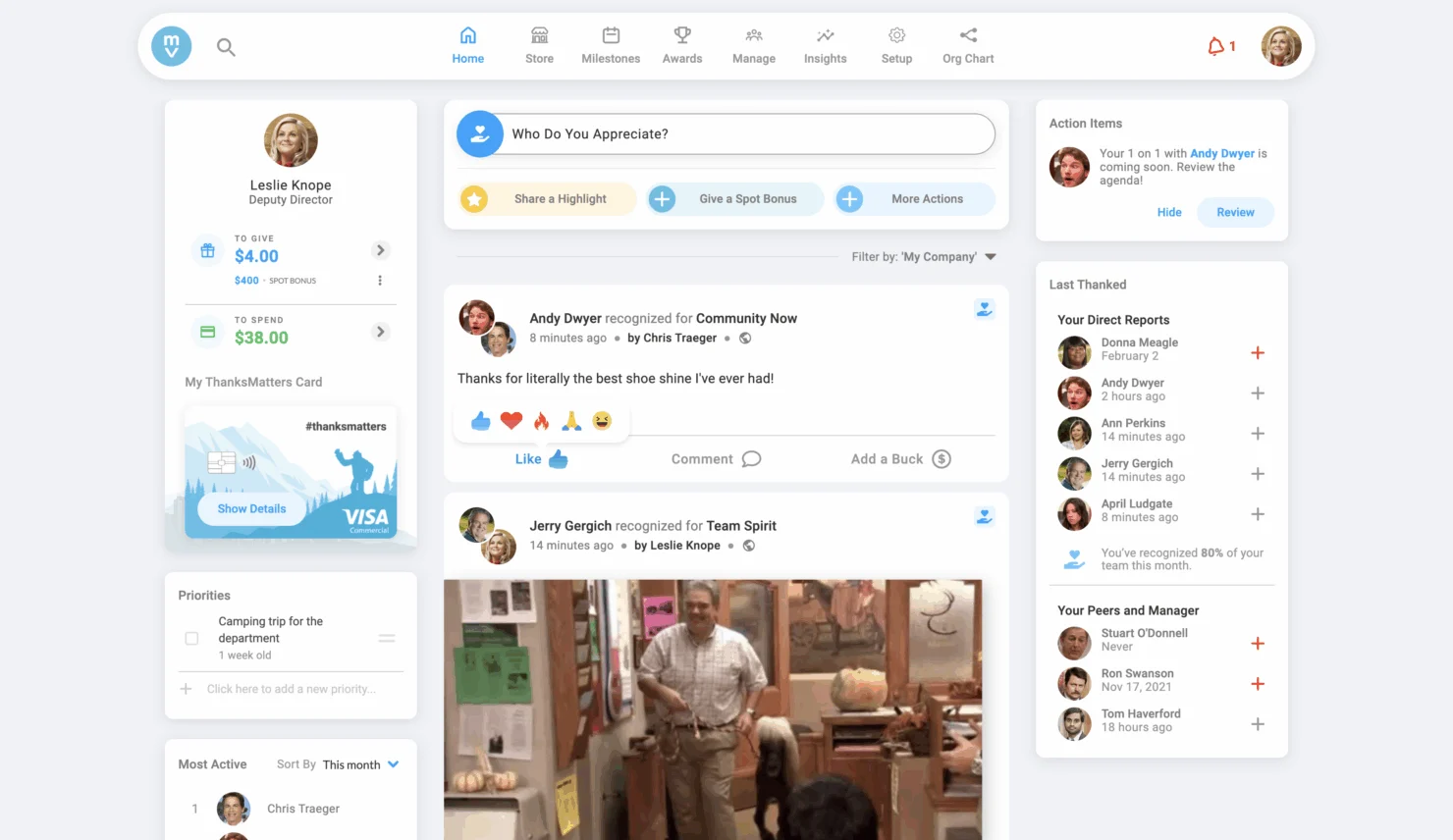
Motivosity is an employee recognition and engagement platform built around the principle that consistent, visible appreciation strengthens workplace culture. Its recognition system is its strongest and most developed feature, and it has expanded over time to include manager tools, engagement surveys, and community-building capabilities through its Lead module. Motivosity holds a 4.7/5 rating on G2 based on over 3,200 reviews and supports 70+ languages, making it well-suited for global teams.
Key Features include:
- Peer-to-peer recognition with a public social feed
- ThanksMatters Visa debit card redeemable in over 140 countries
- Rewards marketplace covering gift cards, Amazon, PayPal, and Venmo
- Automated milestone and anniversary recognition
- 1-on-1 management and manager scorecards via the Lead module
- Succession planning and coaching tools
- Engagement surveys with pulse check capabilities and eNPS
- Org chart view and personality profile integration
- Integrations with BambooHR, Workday, UKG, ADP, Paylocity, Slack, OKTA (SSO), and Microsoft Teams
Pros: "I love that we can nominate team members for awards easily, as well as recognize teammates to give recognition where it is due." - Capterra Review
- Best-in-class recognition experience with a broad, global rewards catalog
- Social-style feed makes recognition visible and culturally reinforcing
- Strong fit for distributed, sales-driven, or high-turnover teams where morale is a priority
- Personality profiles and community features support team cohesion
- Supports 70+ languages for global organizations
Cons: "Motivosity has minimal reward options, and this limited the international market. The planning for Motivosity can be expensive and less transparent." - G2 Review
- No dedicated performance review module; formal appraisal workflows are not supported
- Goal-setting is basic and not built for structured OKR frameworks
- Microsoft Teams integration is not native; it does not operate as an embedded Microsoft 365 experience
- Custom pricing with a $3,000 minimum annual spend makes it harder to evaluate without a sales call
- AI capabilities are limited compared to platforms purpose-built for performance management
- Onboarding carries an additional one-time implementation fee starting at $1,000
Teamflect vs Motivosity: Feature Comparison
While both platforms aim to improve the employee experience, they prioritize different pillars of HR management. To choose the right one, you need to look past the marketing language and examine how their specific modules handle daily operations like goal tracking, manager check-ins, and data reporting.
Below is a detailed breakdown of how Teamflect and Motivosity compare across their core functional areas.
Performance Reviews
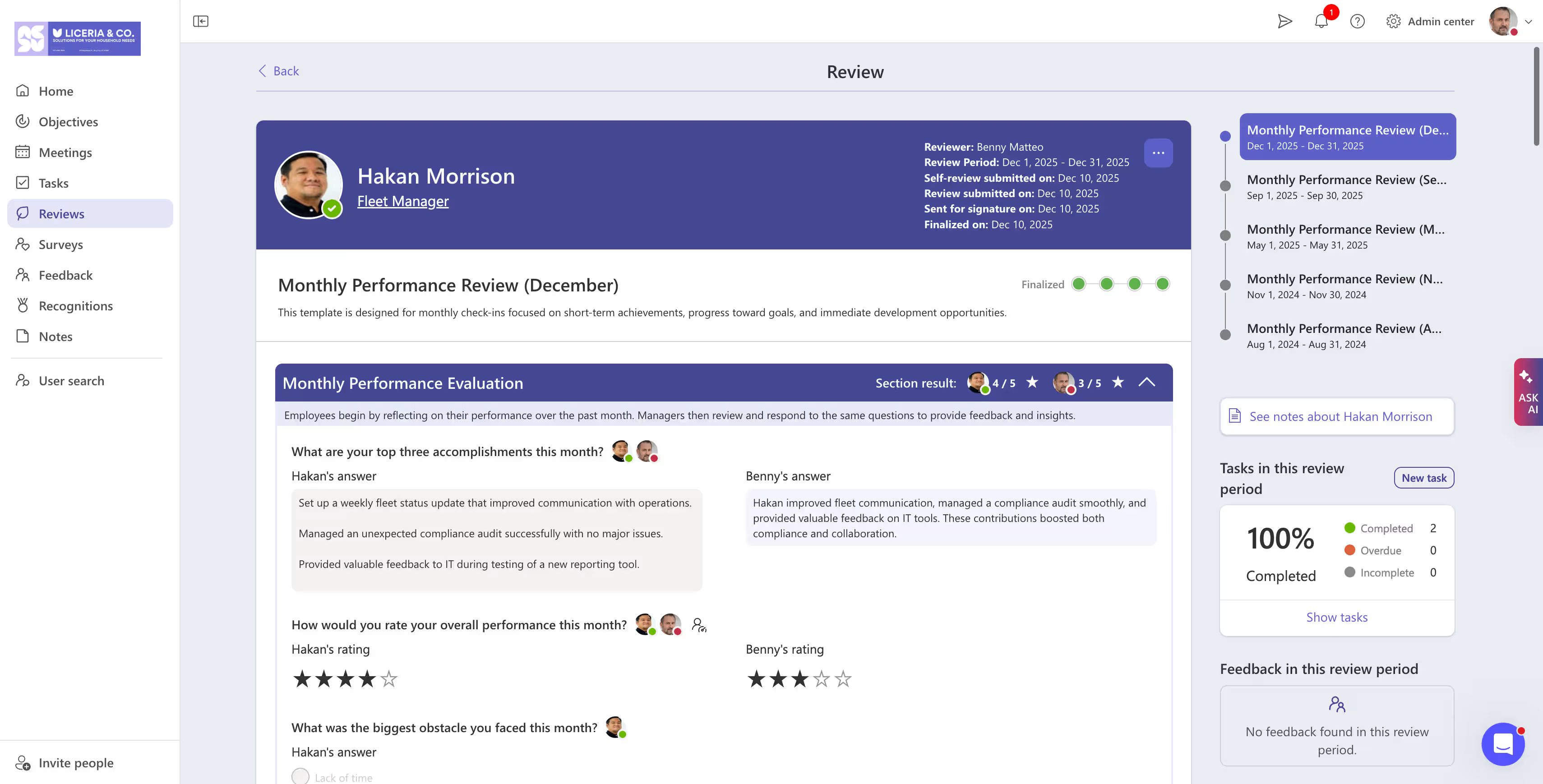
Teamflect offers a full review engine with customizable templates, automated review cycles, 360-degree input, self-assessments, and manager ratings, all within one workflow. Review results feed directly into the 9-box talent grid and can be enriched with real-time goal completion data, survey scores, and feedback history. Teamflect vs Culture Amp offers another useful look at how Teamflect compares across performance reviews, engagement, and people management.
A structured review process also matters for reducing performance review bias. Defined criteria, consistent documentation, and multiple sources of feedback can help ensure that ratings reflect an employee's performance rather than a manager's subjective tendencies.
Motivosity does not include a dedicated performance review module. It focuses on recognition and engagement, with some performance-adjacent features available through its Lead module, such as manager scorecards and 1-on-1 tools. Organizations that need structured, automated review cycles will find Motivosity falls short here.
Verdict: Teamflect is the clear choice for teams that need a complete, automated performance review process.
Recognition and Engagement
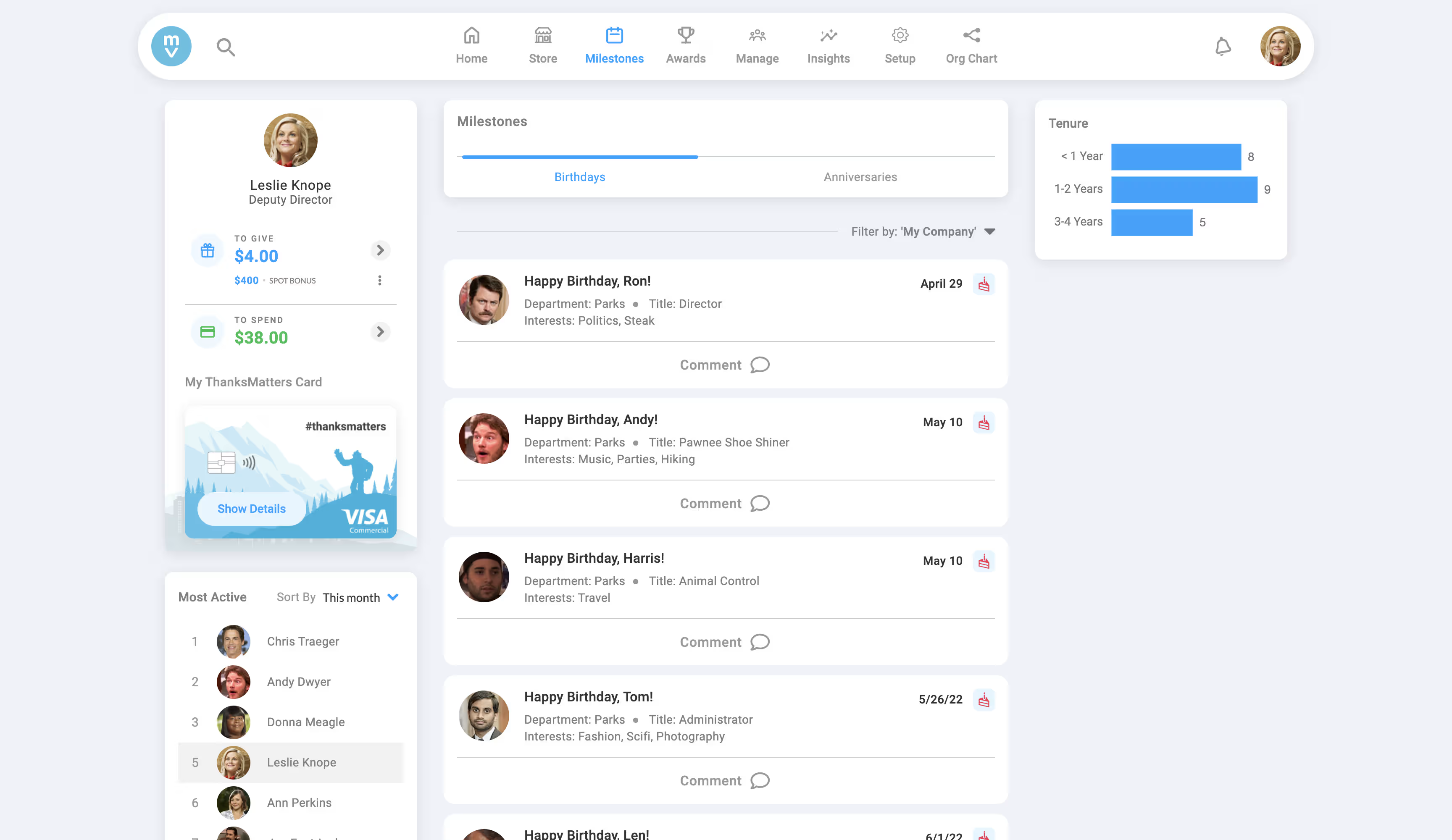
This is Motivosity's strongest ground. Its peer-to-peer recognition system is well-designed, social by nature, and tied to a flexible, global rewards catalog. Employees give and receive recognition through a public feed, and the ThanksMatters Visa card makes reward redemption tangible and genuinely useful. Automated milestone recognition, badges, spot bonuses, and company-funded community features round out a mature recognition program. Motivosity reports measurable outcomes including a 36% reduction in employee turnover and a 196% increase in eNPS among its customer base.
Teamflect includes a solid recognition module with customizable badges, points-based rewards, custom reward catalogs, and leaderboards. Recognition is delivered inside Teams, so it is visible without requiring employees to open a separate application. It covers the essentials well, though the breadth of the rewards marketplace does not match Motivosity's extensive global catalog. For peer-to-peer recognition and engagement, Bonusly is worth a look.
Verdict: Motivosity leads on recognition depth and rewards variety. Teamflect covers recognition effectively for Teams-first organizations, but if recognition programs are the primary driver of your decision, Motivosity's offering is more mature.
Goals and OKRs
Teamflect supports cascading goals from the company level down to individual contributors. Employees can view their goals directly in Teams, check in on progress, link related tasks, and see how their work connects to broader team and organizational objectives. Goal data feeds into performance reviews automatically, so there is no manual re-entry at appraisal time.
Motivosity offers basic goal-setting within its Lead module, but the functionality is limited. Some users have flagged the character limit for goal documentation as a frustration when trying to capture detailed priorities. Cascading goal frameworks and OKR structures are not a primary feature of the platform.
Verdict: Teamflect wins for organizations that rely on structured OKR frameworks and want goals connected directly to their review cycles.
Feedback and 1-on-1s
Teamflect structures 1-on-1 meetings with shared agendas, private and public notes, check-in forms, integrated goal visibility, and feedback exchange, all surfaced directly in the Teams meeting interface. Follow-up tasks can be assigned and tracked from within the same meeting record.
Motivosity's Lead module includes 1-on-1 management tools with coaching and manager insight features. Managers get access to scorecards and team dashboards. The depth of the meeting management and feedback tracking experience is not as tightly integrated into daily workflow as Teamflect's, but the Lead module is well-regarded by users for helping structure regular manager conversations.
Verdict: Both platforms offer 1-on-1 tools, but Teamflect's integration with the Teams meeting experience gives it a practical edge for Microsoft 365 users.
AI Capabilities
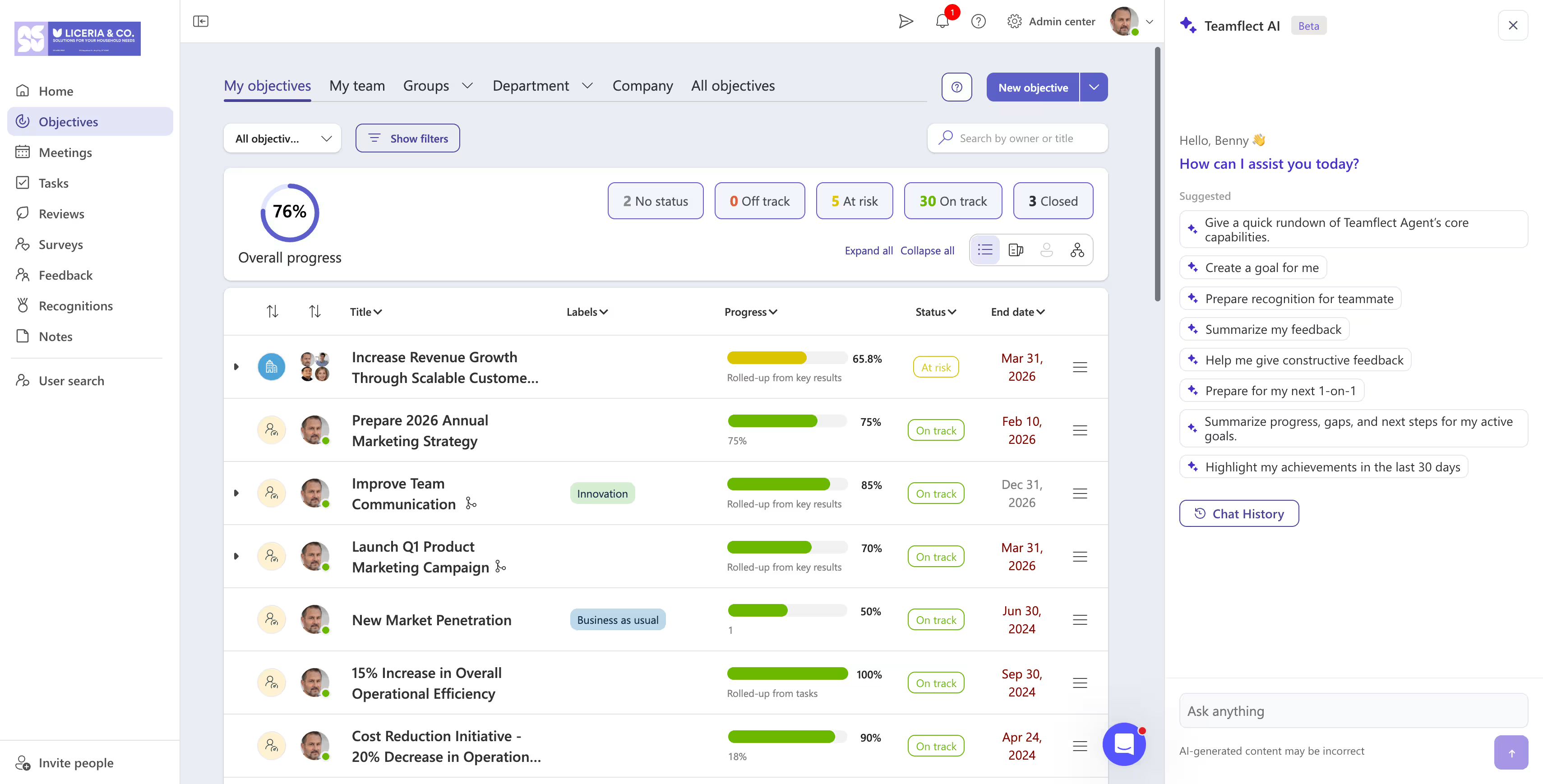
Teamflect's AI Agent is a meaningful differentiator. It draws on the employee's actual performance data, goals, and feedback history to help managers prepare for meetings, generate review comments, suggest development goals, and provide coaching insights. It is accessible within Teams, meaning managers can interact with it in the same environment where they do the rest of their work.
Motivosity does not offer a comparable AI layer at this stage. Some automation exists within the platform for milestone recognition and survey scheduling, but there is no AI assistant or AI-driven coaching capability built into the product.
Verdict: Teamflect leads on AI, and it is not a close comparison at this point in time.
Reporting and Analytics
Teamflect offers dashboards at the employee, manager, and organizational level. Its Power BI integration allows HR teams to build detailed workforce analytics reports beyond what standard dashboards provide. Data exports are available from the admin center, and usage analytics are built into the platform to help HR track adoption rates.
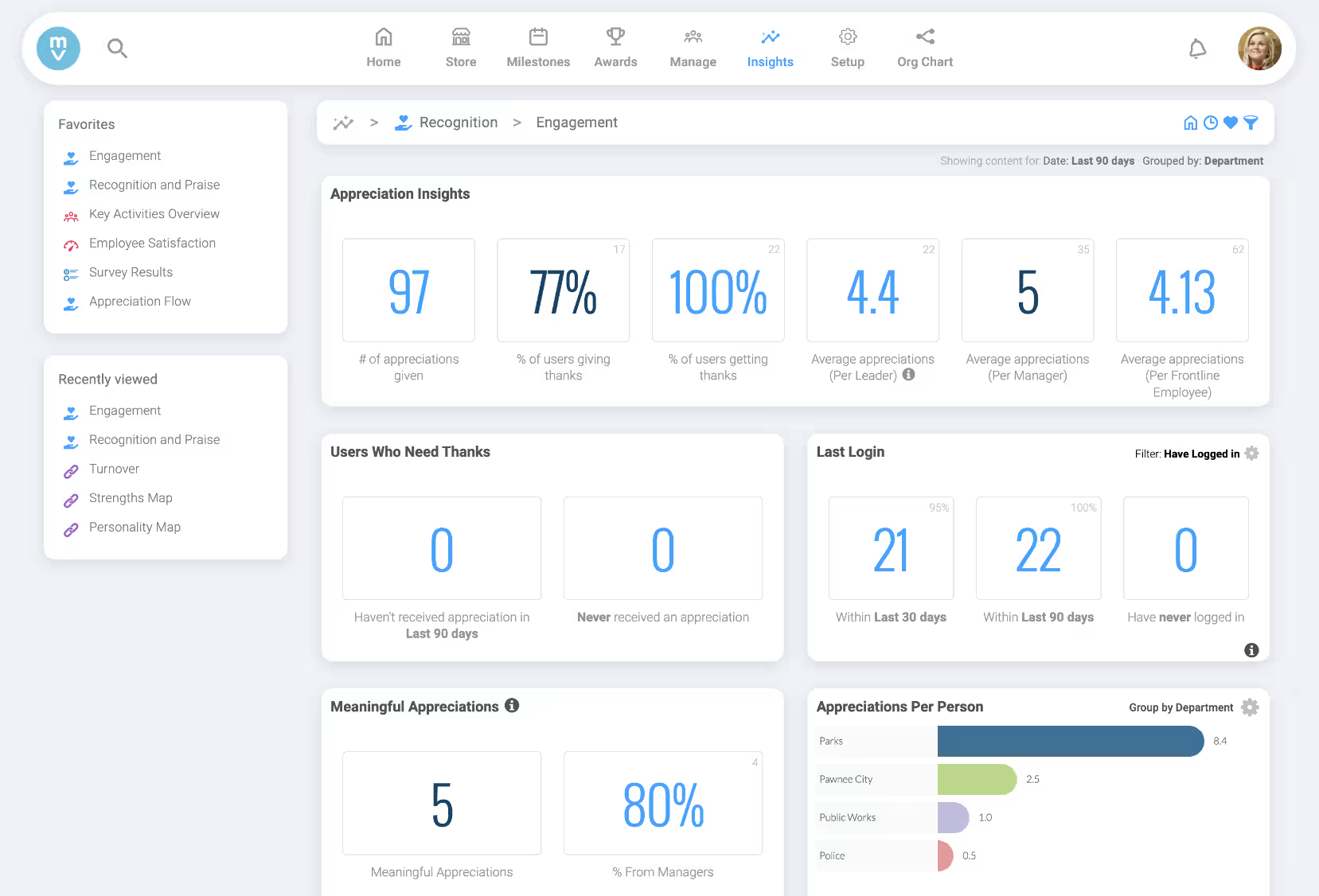
Motivosity provides engagement analytics, recognition tracking, and survey reporting. The reporting tools are functional and visible in real time, though some users have noted that deeper reporting capabilities require additional effort to build out. There is no native Power BI integration.
Verdict: Teamflect offers more robust analytics infrastructure, particularly for HR leaders who need to report on performance trends across the organization. When it comes to engagement related analytics, however, Motiviosity is the winner, providing more informative and easier to digest reports.
Pricing Comparison
Teamflect's pricing is transparent and publicly listed:
- Free (up to 10 users, all core features included)
- Essential: $7/user/month (billed annually); includes analytics and dedicated support
- Professional: $11/user/month (billed annually); adds talent management, advanced integrations, and Power BI
Motivosity uses custom pricing that requires a sales conversation. Based on third-party procurement data, the key pricing details are:
- Minimum annual spend: $3,000
- Per-user rates: approximately $3–$4/user/month, though this varies based on modules selected
- One-time implementation fee: starting at $1,000 for 60 days of onboarding support
- No free plan available; a free trial is offered
For a 100-person team, Teamflect's Professional plan runs $1,100 per month. Motivosity's comparable cost would range from approximately $300 to $400 per month on per-user fees alone, but with a narrower feature scope that does not include performance reviews, structured OKRs, or AI-assisted coaching. Organizations that need those capabilities alongside recognition would need to pair Motivosity with additional tools, which increases total cost of ownership.
Why Organizations Choose Teamflect Over Motivosity
While Motivosity offers a strong foundation for social recognition, many HR leaders find that a specialized engagement tool is not enough to manage the full employee lifecycle. Organizations looking for a more holistic, data-driven approach often lean toward a solution that unifies performance, growth, and daily workflows.
Here is why many companies select Teamflect as their primary platform:
- Native Microsoft 365 integration: Teamflect operates fully inside Teams and Outlook. No separate logins, no additional tools, no context switching.
- Complete performance management in one platform: Reviews, OKRs, feedback, 1-on-1s, surveys, recognition, career pathing, and task management are all included. Motivosity requires a separate module for manager tools and lacks performance reviews entirely.
- Faster implementation and higher adoption: Because Teamflect lives where employees already spend their day, rollout is quicker and adoption rates are higher than platforms that require behavioral change.
- AI-driven insights: The Teamflect Agent provides real, data-grounded assistance to managers and employees, a capability Motivosity currently does not offer.
- Transparent, scalable pricing: Starting at $7 per user per month with a free plan for teams up to 10 people, Teamflect is accessible for organizations of all sizes without a minimum spend requirement.
Which Tool Is Right for You?
Both Teamflect and Motivosity are well-reviewed platforms with loyal user bases. They do, however, serve different primary needs.
Motivosity is a strong choice for organizations where employee recognition is the central priority, particularly those with distributed, global, or sales-focused teams that benefit from a rich, social-style rewards experience. With a 4.7/5 G2 rating and over 3,200 reviews, Motivosity has proven its value in the recognition space. If your goal is a dedicated recognition program with a broad global rewards catalog and multi-language support, Motivosity is worth serious consideration.
Teamflect is the better fit for organizations using Microsoft 365 as their primary work environment and looking for an all-in-one performance management solution. It covers the full employee performance cycle, from goal-setting and continuous feedback through formal reviews and career development, without requiring employees to leave the tools they already use. For HR leaders who need both recognition and performance management in a single, adoption-friendly platform, Teamflect offers more comprehensive coverage.
Final Thoughts
Choosing between Teamflect and Motivosity comes down to your primary organizational goal. If your mission is to build a culture centered on social recognition and a robust, global rewards marketplace, Motivosity offers a specialized experience that is difficult to beat. It excels at making employees feel seen through a peer-to-peer lens.
However, for organizations looking to consolidate their entire performance management cycle, from OKRs and 1-on-1s to automated reviews and AI-assisted coaching, Teamflect is the more comprehensive solution. Its native integration with Microsoft 365 eliminates the friction of jumping between apps, ensuring that performance tracking stays woven into the actual flow of work.
Ultimately, if your team lives in Microsoft Teams and you need a data-driven approach to growth and accountability, Teamflect provides the structure and visibility required to move the needle on productivity.
FAQs
What is the main difference between Teamflect and Motivosity?
Teamflect is a full performance management platform built natively inside Microsoft 365. It covers reviews, OKRs, feedback, meetings, recognition, and career development in one place. Motivosity is primarily an employee recognition and engagement platform with a 4.7/5 G2 rating, with additional manager tools available through a separate module. Organizations that need structured performance reviews and goal management will find Teamflect more complete.
Which is more affordable, Teamflect or Motivosity?
Teamflect is more straightforward on pricing. It starts at $7 per user per month, with a free plan for teams of up to 10. Motivosity uses custom pricing with a $3,000 minimum annual spend and a one-time $1,000 implementation fee, making it harder to evaluate without a sales conversation. For small and mid-size organizations, Teamflect's pricing structure is generally more accessible.
How do I migrate from Motivosity to Teamflect?
Start by exporting your recognition records, employee data, and any engagement survey history from Motivosity before canceling your subscription. Teamflect's implementation team supports onboarding through personalized training sessions and welcome kits, and every plan includes a dedicated Customer Success Manager to guide the transition. Because Teamflect connects with Microsoft Entra ID, employee data sync is handled automatically for organizations already on Microsoft 365, which reduces the manual setup effort considerably.