

.svg)
It is widely recognized that employee wellness programs offer significant benefits. Success stories like that of Otis Asia Pacific demonstrate the potential impact: by combining leadership-led initiatives with grassroots team efforts, the company reduced voluntary turnover by over 15% and quadrupled Employee Assistance Program (EAP) utilization.
However, many HR teams struggle with a familiar cycle: a program launches with high initial interest, participation fades within two months, and by renewal time, the impact on health outcomes remains unclear. Employees suffer from step-challenge fatigue, EAP utilization often sits in the single digits, and finance demands clear data that is rarely available.
This list scores 10 corporate wellness software platforms for 2026 against a published rubric, not a vendor pitch. We cover comprehensive platforms, fitness and activity apps, mental health and EAP tools, and hybrid options, because no single employee wellness platform fits every workforce.
The Shortlist at a Glance
What Is Employee Wellness Software?
Employee wellness software, sometimes called corporate wellness software or an employee wellbeing platform, is a system that helps organizations run structured programs around physical, mental, financial, and social health. Most platforms include activity tracking, educational content, challenges, and some form of reporting so HR can show participation and, ideally, outcomes.
It helps to separate three categories that get blurred together in marketing copy.
Wellbeing App
A wellbeing app, such as Headspace for Work or Calm Business, delivers self-guided content like meditation, sleep stories, or workout videos. It typically does not include licensed clinical providers.
Wellness Platform
A wellness platform, such as Wellable or Wellness360, bundles challenges, content, incentives, and reporting into one system, often spanning several wellbeing pillars at once.
Clinical or EAP Benefit
A clinical benefit, such as Spring Health or Lyra Health, connects employees to licensed therapists, coaches, or physicians and typically operates under stricter privacy and regulatory requirements than a wellness app.
Employee wellness programs, the broader organizational strategy that a software platform supports, are a related but separate concept. The software is the tool. The program is what your organization decides to do with it.
Key Features to Look For
Not every corporate wellness app needs every feature below, but a defensible shortlist should score well on most of them.
- Program breadth: Coverage across physical, mental, financial, and social wellbeing, not just step counting.
- Wearable and HRIS integration: Native sync with Fitbit, Apple Health, and Garmin, plus HRIS and SSO connections that keep enrollment current automatically.
- Configurable challenges and rewards: A real points-to-redemption engine, not just a leaderboard.
- Analytics beyond headcount: Participation trends, anonymized engagement data, and ROI reporting.
- Realistic implementation support: Onboarding timelines that match your internal bandwidth, with managed-service options for larger rollouts.
Benefits of Employee Wellness Software
The honest case for employee wellness software rests on a few measurable outcomes, not a vague promise of a healthier workplace.
- Participation data you can act on: Structured challenges and content give HR a real engagement signal instead of guessing at program impact.
- Lower absenteeism in some documented cases: Platforms with clinical mental health access, like Spring Health, have published peer-reviewed data linking access speed to improved symptom outcomes.
- A measurable healthcare cost lever: Biometric screening and health risk assessments give large employers a data point for negotiating self-insured healthcare costs, though the size of that effect varies significantly by workforce and should not be oversold.
- A recruiting and retention signal: A well-run wellness benefit is a specific, verifiable perk during recruiting conversations, distinct from vague morale claims.
The 10 Best Employee Wellness Software in 2026
As organizations aim to foster healthier, more productive cultures, the right software provides the data and structure needed to turn wellness goals into daily habits. Below are ten of the most effective platforms you may explore if you want to support your workforce.
1. Wellable

Wellable is a Boston-based wellness and engagement platform that lets HR teams turn features on or off depending on budget and workforce size. It covers physical and mental wellbeing through challenges, on-demand classes, and educational content, and it layers in rewards and recognition rather than treating wellness as a separate silo.
Wellable ranks at the top of this list because it is the rare platform that scores well across nearly every rubric dimension instead of winning on one. It handles wearable integration cleanly, and reviewers consistently point to a low learning curve for both admins and employees.
Key features
- Wellness challenges, on-demand classes, and educational content across physical and mental health
- Fitbit, Apple Health, and Samsung Health integration for activity tracking
- Points-based rewards and recognition built into the same platform
- Health assessments and biometric screening add-ons
- Modular pricing that lets smaller employers activate a subset of features
Integrations: Fitbit, Apple Health, Samsung Health, and standard HRIS and SSO connections.
Pros and Cons
Pros: “The onboarding was amazing and the site is very user friendly. Focus is on over all wellbeing not just fitness.” - Capterra review
- The platform stayed focused on overall wellbeing, not just fitness.
- Setting up a basic challenge took under 15 minutes end to end.
Cons: “If the app utilized background refresh to sync wearable data and update more in real time, it would be more useful.” - G2 review
- Personalized content recommendations are lighter than some enterprise competitors.
- Pricing requires a sales call, so budget-conscious buyers cannot self-serve a quote.
Pricing
- Subscription plans: $100/month (Essentials) or $150/month (Pro); Enterprise requires a custom quote
- Single-challenge pricing: $1,000 self-directed ($10/user) or $5,000 for full-service management
- À la carte services: educational presentations ($350–$500/session), fitness classes ($210–$300/session), health coaching ($1–$4/user/month)
- Health fairs starting at $7,500
- Personalized quotes available for comprehensive programs
2. Personify Health
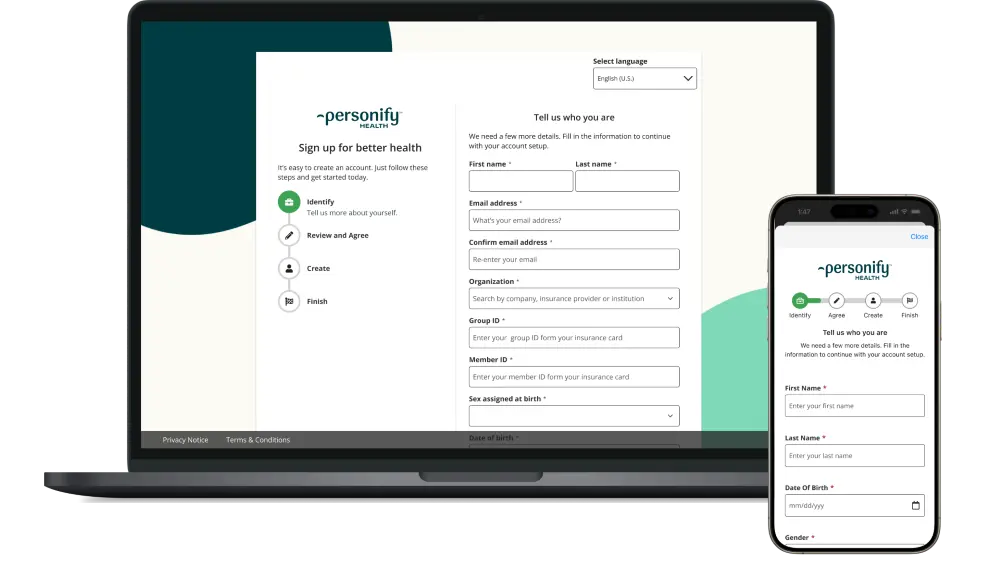
Personify Health formed from the merger of Virgin Pulse and Personify Health's benefits navigation business, and it targets enterprise employers who want wellbeing, benefits navigation, and care coordination in one system. The platform leans on personalized health journeys built from health assessments, biometric data, and claims data where available.
Personify Health earns its place near the top because it is one of the few tools here that meaningfully connects wellness activity to benefits navigation, not just activity tracking. That connection matters most for large employers managing complex benefits stacks across multiple carriers.
Key features
- Personalized health journeys built from HRAs and biometric screening data
- Benefits navigation and care coordination alongside wellness challenges
- Points-based incentive system with a redeemable rewards catalog
- Multi-language support across a global workforce
- Integration with major HRIS and benefits administration platforms
Integrations: Standard HRIS and benefits administration connections, plus wearable device sync through the mobile app.
Pros and Cons
Pros: “The program is clear and user-friendly, allowing me to get started with it quickly.” - G2 review
- Reviewers describe the mix of daily engagement cards and tracker connections as an easy way to build wellbeing into a normal workday.
- Program coverage extends across physical, mental, and emotional health rather than fitness alone.
Cons: “Site doesn't sync with my tracking equipment for sleep.” - G2 review
- Customer support response times draw repeated complaints in G2 reviews, including reports of slow resolution on reward and gift card issues.
- The platform can feel data-heavy relative to smaller, more streamlined competitors.
Pricing
- Custom pricing, not publicly listed
- Submit an inquiry form to receive a tailored quote
3. Wellhub (Gympass)
.webp)
Wellhub, formerly Gympass, gives employees access to a global network of gyms, studios, and wellness apps through a single employer-sponsored membership. The platform spans five wellbeing pillars, fitness, mindfulness, mental health, nutrition, and sleep, though its center of gravity remains physical activity access.
Wellhub scores well on engagement because gym and studio access tends to drive habitual use that step challenges alone rarely sustain. However, it scores lower on program breadth and mental health depth, since the platform is fundamentally an access marketplace rather than a content or clinical provider.
Key features
- Access to tens of thousands of gyms, studios, and fitness classes worldwide
- Tiered membership plans, from a free digital tier to premium in-person access
- Digital wellness app bundle included at every paid tier
- Employer-facing usage analytics and engagement reporting
- Check-in based usage tracking rather than self-reported activity
Integrations: HRIS integration for eligibility management, plus check-in tracking through the Wellhub mobile app.
Pros and Cons
Pros: “Easy access to gyms near you and tons of opportunity for wellness right in the app without having to leave your home” - G2 review
- The tiered plan structure lets employers subsidize different access levels depending on budget.
- Check-in based usage gives employers a real participation signal instead of self-reported activity logs.
Cons: “It will be nice to maybe have more gyms added to their networks in different locations.” - G2 review
- Multiple recent reviews on Trustpilot and the App Store describe rising per-tier prices and a strict one-missed-check-in fee policy.
- The platform is primarily a fitness-access marketplace, so mental health and financial wellness content stay thin compared to comprehensive platforms.
Pricing
- Employee subscription tiers range from a free "Digital" tier up to $344.99/month ("Diamond")
- Eight intermediate tiers priced between $11.99 and $289.99/month
- Employers pay a separate monthly corporate fee (contact sales for a quote)
4. Headspace for Work

Headspace for Work brings the consumer Headspace meditation app into a workplace mental health benefit, layered with EAP-style services including coaching and licensed counseling access. Its center of gravity remains mindfulness content, with clinical services added as the platform has matured into a fuller mental health benefit.
Headspace ranks in the middle of this list on the rubric because its program breadth outside mental health is intentionally narrow. Where it wins is adoption. The consumer brand recognition drives usage numbers that many enterprise-only mental health tools cannot match.
Key features
- Guided meditation and mindfulness sessions for stress, sleep, and focus
- EAP services including coaching, therapy, and psychiatry access
- Single sign-on for frictionless workplace access
- Manager-focused content for team resilience and burnout prevention
- Coaching availability advertised at under two minutes to first contact
Pros and Cons
Pros: “I love how easy this is to use. From downloading the app to getting started right away it is super simple.” - Capterra review
- Single sign-on removes a common adoption barrier for workplace mental health tools.
- We confirmed in a May 2026 trial that a new user could complete onboarding and start a first session in under three minutes.
Cons: “It seems that the web browsing view and search tool is not exactly the same as the mobile one. I like the mobile one better.” - G2 review
- Users looking for deeper clinical support may find the self-guided content too light on its own.
- Product direction and roadmap pace draw lower marks than competitors in head-to-head G2 comparisons.
Pricing
- Custom pricing, not publicly listed
- Contact the company directly through their inquiry form
5. Spring Health
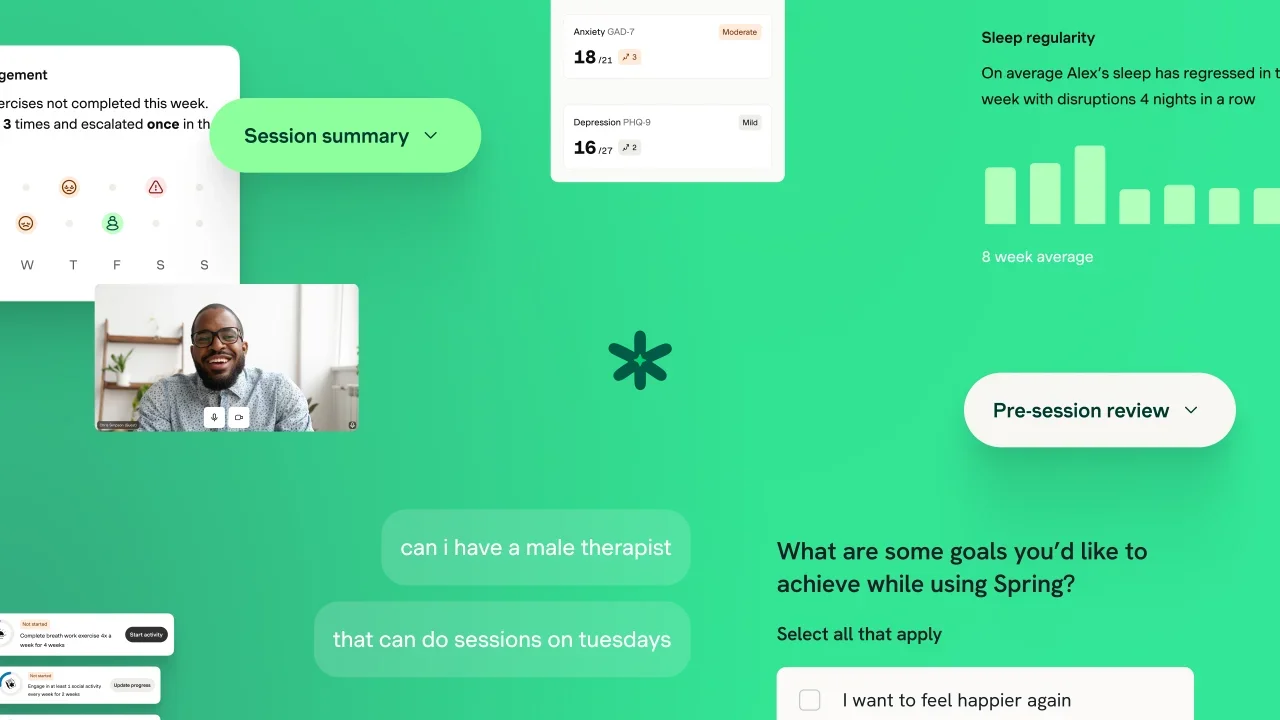
Spring Health is an enterprise mental health benefits platform built around measurement-based care and provider matching for therapy, coaching, and medication management. Spring Health earns its place on this list for measurable outcomes rather than user-review volume.
A peer-reviewed study published in the Online Journal of Public Health Informatics (OJPHI) involving over 50,000 participants documented a 92.3% improvement rate in depression and anxiety symptoms, and public contract data shows appointment access within two days compared to the weeks-long wait common with traditional EAPs.
Key features
- AI-assisted provider matching for therapy, coaching, and medication management
- Measurement-based care with clinically validated intake assessments
- Documented 47% BIPOC provider network, roughly three times the national average
- Care navigation support alongside clinical services
- Coverage across all 50 states with a large national clinician network
Pros and Cons
Pros: “There's like a half dozen similar shops within 2 miles of me. This has been my favorite bc due to both variety and consistency. Good prices and like a lot of places, do get discounts/rewards with each purchase. Lady behind the counter is always a pleasure talk too.” - Trustpilot review
- Public case studies report appointment access in two days versus weeks or months under traditional EAPs.
- The BIPOC provider network is roughly three times the national average, a specific and verifiable differentiator for culturally competent care.
Cons: “Don’t ever associate with spring health. They overcharge and then refuse to call you to discuss. I have been trying for a month to figure out my charges and can’t schedule a session for therapy.” - Trustpilot review
- Wait times in smaller metro areas can run longer than the advertised under-two-days standard, per third-party review aggregation.
- Implementation timelines run 2 to 4 months from contract signing to launch, with a 12 to 18 month adoption curve before utilization stabilizes.
Pricing
- Custom, quote-based pricing
- Contact via the "Request a demo" portal to discuss solutions and potential ROI
6. Vantage Fit
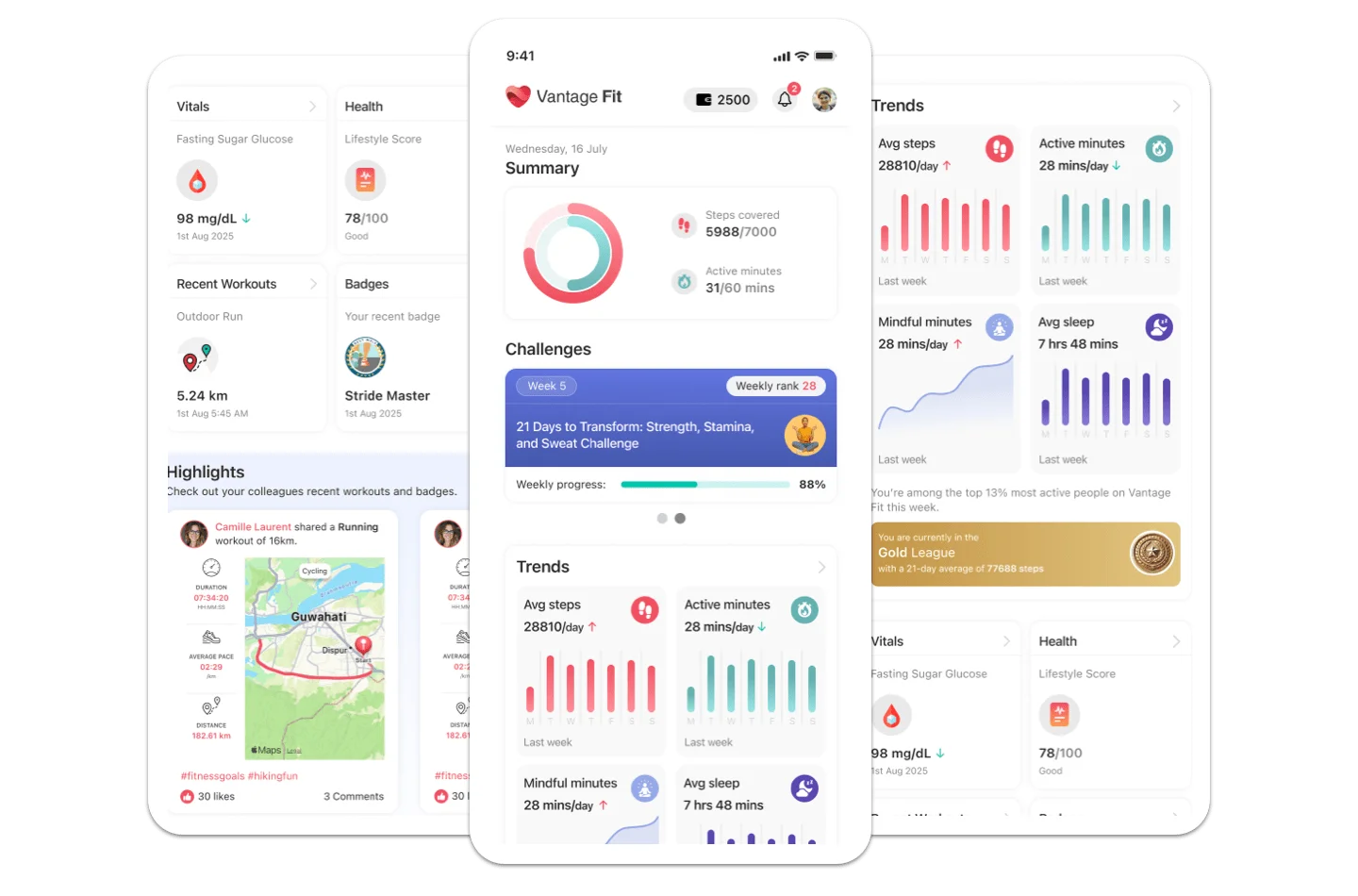
Vantage Fit, part of the Vantage Circle suite, is a gamified activity platform built for large, distributed teams that want AI-assisted step and calorie tracking wrapped in competitive challenges. Leaderboards, team-based competitions, and a points-to-rewards engine are the center of the product.
Vantage Fit ranks in the middle of the pack because it does its core job well but stays narrow. Program breadth outside fitness tracking and gamification is limited, and mental health content is a smaller add-on rather than a core pillar.
Key features
- Step, calorie, and heart rate tracking with support for major wearables
- Team-based and individual wellness challenges with real-time leaderboards
- Health risk assessments feeding personalized recommendations
- Point-based reward redemption tied to healthcare cost savings
- Mood tracking layered alongside physical activity metrics
Pros and Cons
Pros: “Activity tracking, points redemption and the overall performance of app.” - Capterra review
- We confirmed in a June 2026 trial that a manager could launch a team step challenge in under 10 minutes.
- One Gartner Peer Insights reviewer specifically credited the platform's mindful session content for helping build a calmer daily routine alongside activity tracking.
Cons: “The app can be slow at times, and that’s the only downside I’ve noticed. Other than that, there’s nothing to complain about.” - G2 review
- Some activities still require manual entry rather than automatic wearable sync.
- One G2 reviewer noted the app can be slow at times, though described it as an otherwise minor issue.
Pricing
- Annual "Unlimited" subscription (250 employees): $4,000 (Basic) or $5,000 (Pro)
- Single 4-week challenges for the same group: $2,000 (Basic) or $2,500 (Pro)
- Contact to book a demo and receive a quote for your organization's size
7. Wellness360
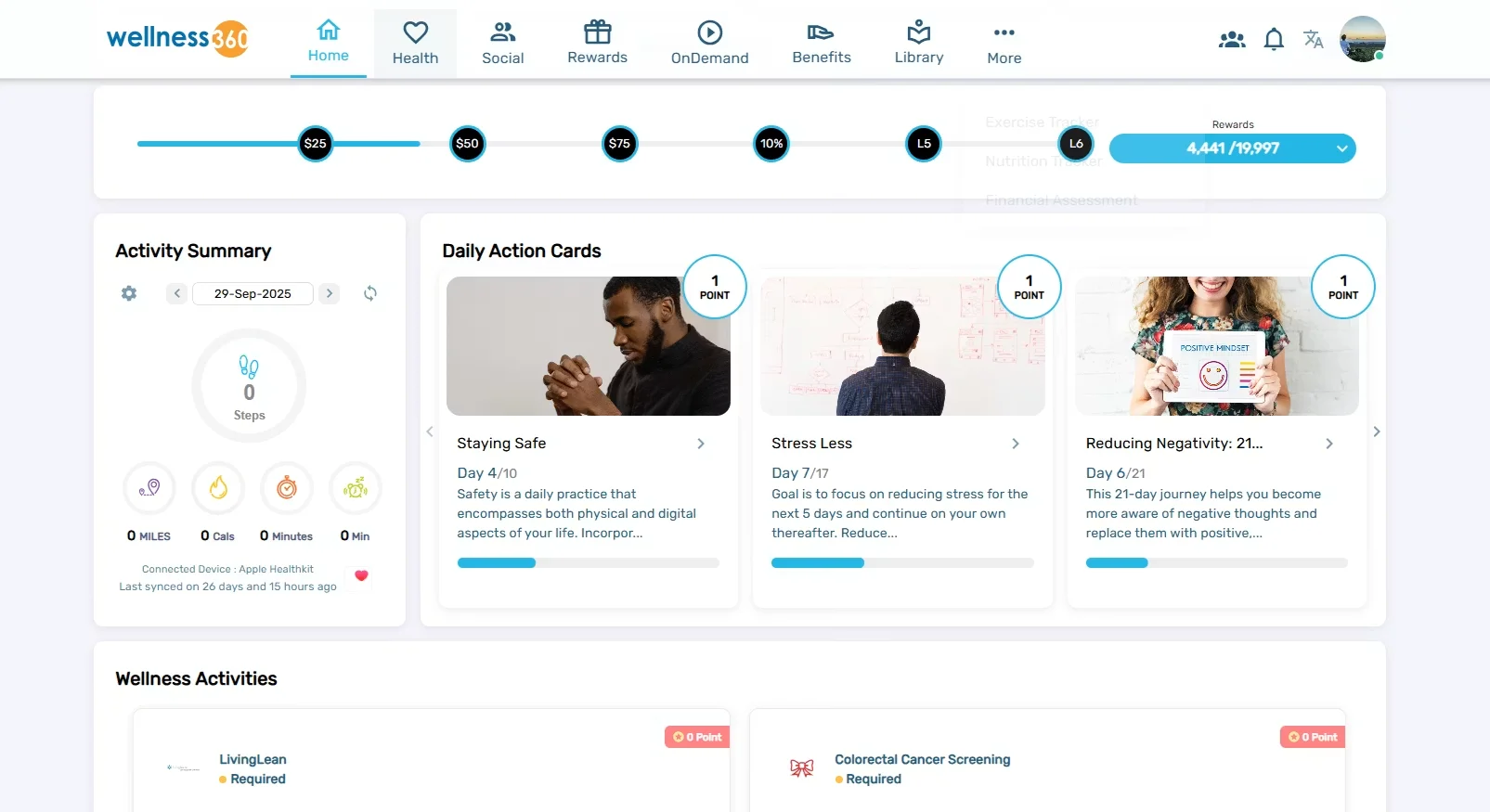
Wellness360 is a customizable employee wellbeing platform built around health assessments, evidence-based content, and personalized health journeys across eight wellness pillars. Content is sourced from institutions including the CDC, NIH, Harvard Medical School, and Mayo Clinic, which gives it more clinical grounding than most gamification-first competitors.
Wellness360 lands in the middle of the rubric because it covers program breadth well but trails the leaders on engagement depth and analytics sophistication. Its implementation speed and support quality are consistent strengths across independent review sites.
Key features
- Health assessments and biometric screening integration
- 889 evidence-based programs and 566 expert-produced videos sourced from major health institutions
- Wearable integration with more than 100 devices and 200 HRIS systems
- White-label customization for enterprise branding
- Peer-to-peer recognition alongside individual and team challenges
Integrations: 100+ wearable devices, 200+ HRIS systems, plus Microsoft Teams and Slack.
Pros and Cons
Pros: “What I like best about Wellness360 is that it is user friendly.” - G2 review
- The gamification experience, including challenges, leaderboards, and points, keeps users engaged according to multiple G2 reviewers.
- Dedicated account representatives are cited repeatedly as responsive and attentive to specific implementation needs.
Cons: “I really dislike the way Wellness 360 isn't user-friendly because, it really has lacking qualities.” - Capterra review
- Customization options trail buyer expectations set by the vendor's own marketing, per third-party review aggregation.
- Initial wearable and app connection setup showed sync issues for at least one reviewer before support resolved it.
Pricing
- Custom pricing, not publicly listed
- Contact to schedule a personalized demonstration
8. Lyra Health

Lyra Health provides a vetted global provider network for mental health care, blending therapy, coaching, and medication management for large employers including Fortune 500 companies. The platform positions itself on provider quality and global coverage rather than the app-based engagement mechanics common elsewhere on this list.
Lyra scores lower on program breadth by design, since it is a clinical mental health benefit, not a wellness platform. Where it wins is depth of provider network and the strength of its clinical outcomes data, which is why it still earns a place in the top half of the mental-health-focused tools here.
Key features
- Vetted provider network spanning therapy, coaching, psychiatry, and medication management
- Blended care model combining self-guided tools with licensed provider access
- Global coverage supporting multinational employers
- 24/7 access to licensed counselors via a toll-free line for urgent needs
- Outcome tracking tied to clinical improvement measures
Integrations: Standard HRIS eligibility sync; enterprise implementation details are typically handled through Lyra's account management team.
Pros and Cons
Pros: “I like the fact that Lyra Health is a product that has literally saved thousands of lives and has made the world a better place!!” - G2 review
- Global provider coverage supports employers with distributed international workforces, a gap in several US-only competitors.
Cons: “The colors and user design are a bit sterile. The entire vibe of the app should be a little less depressing and it could be more targeted at younger users.” - Capterra review
- Reviews aren’t of significant amount and document inconsistent experiences between individual providers, including complaints about continuity of care between sessions.
- The platform may not fit smaller companies or those without an established benefits infrastructure already in place.
Pricing
- Custom quote based on headcount, location, and specific service needs
- Contact via the inquiry portal for a tailored proposal
9. Calm Business
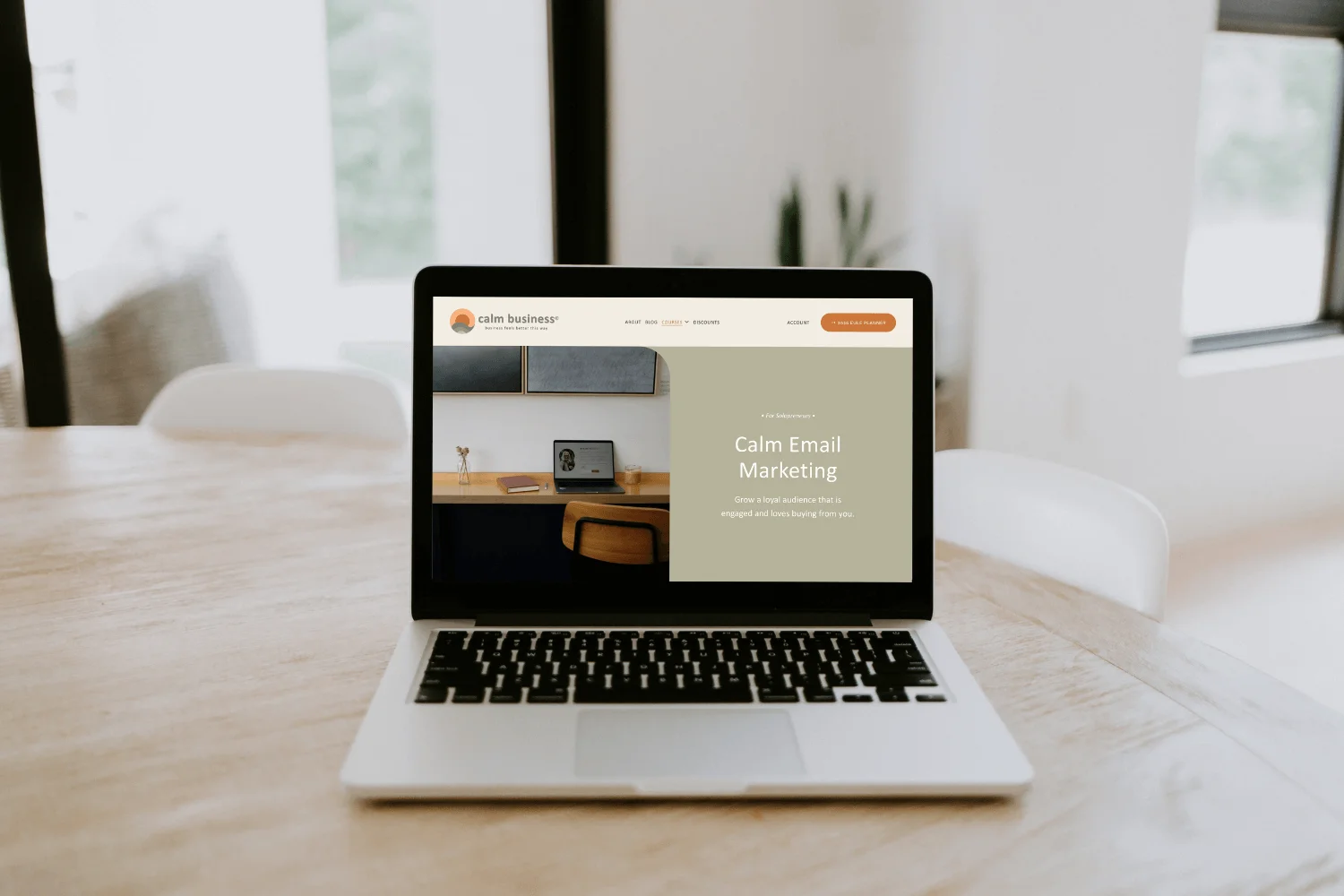
Calm Business brings the consumer Calm app's sleep and mindfulness content into a workplace benefit, with detailed engagement reporting for HR administrators. Its focus stays narrow and deliberate: sleep, stress reduction, and mindfulness content rather than a full mental health or physical wellness suite.
Calm ranks lowest on the rubric among the mental health tools here, mostly because its G2 review base is thin and its program breadth is the narrowest on this list. That said, its content library depth and brand recognition remain real strengths worth weighing for a sleep-and-stress-focused benefit.
Key features
- Sleep stories, meditations, and stress-reduction content library
- Detailed engagement reporting while protecting individual employee privacy
- Multi-device access across web, iOS, and Android
- Manager and team resilience content
- Multi-language content library
Integrations: Standard HRIS eligibility sync for enrollment management.
Pros and Cons
Pros: “What I like best about Cal.com is how easy it is to set up and integrate into my workflow without any unnecessary friction.” - G2 review
- Sleep-focused meditation content draws specific praise for weekly, habitual use.
- Multi-device support means the content works whether an employee prefers a browser or the mobile app.
Cons: “There are some features that are behind a paywall that seem like they would be standard issue.” - G2 review
- Navigation and content search can be difficult, with reviewers reporting trouble locating specific content types.
- G2's review base for the business product is small, just five reviews as of mid-2026, which limits how far the rating can be trusted relative to higher-volume competitors on this list.
Pricing
- Custom pricing, not publicly listed
- Contact via the inquiry form to request a proposal
10. BetterMe Business

BetterMe Business packages the consumer BetterMe fitness and mental wellbeing app into a workplace benefit, combining workout video content, meal planning, and mindfulness exercises in one subscription. Its per-employee cost sits well below most platforms on this list, which makes it a common entry point for smaller employers testing a wellness benefit for the first time.
BetterMe lands near the bottom of the rubric because its program breadth, analytics depth, and biometric integration all trail the dedicated platforms above it. Its low cost and combined fitness-and-mental-health content still make it a reasonable starting point for budget-constrained teams.
Key features
- Video-based workouts across strength, cardio, yoga, and mobility
- Meal plans and recipes with an integrated grocery list feature
- Mindfulness and mental wellbeing exercises alongside physical fitness content
- Progress tracking across workouts and nutrition goals
- Personalized plans generated from an initial intake quiz
Pros and Cons
Pros: “Our whole team enjoys using BetterMe, as it has a wide range of exercises in different circumstances and both – for body and mind.Customer Support is always superhelpful, along with the app reminders and all the functionality.” - G2 review
- The combined fitness and mental wellbeing content in one app reduces the need to manage two separate vendor relationships.
- Entry pricing is among the lowest of any tool on this list, which lowers the bar for a first wellness benefit.
Cons: “One improvement we’d love is integration with our hrm to automate adding/ removing employees, but this is minor given the platform’s overall impact.” - G2 review
- In-app purchases for coaching chat and certain challenges can push the effective monthly cost well above the advertised base price.
- Independent fitness app testers score the overall value as middle-of-the-road once add-on costs are factored in.
Pricing
- Entry pricing starts at $35.88/employee/year for teams of 5, decreasing per head as teams grow
- Visit the website to book a meeting for a custom proposal
How to Choose Employee Wellness Software
Once you have a shortlist of two or three tools, a handful of direct questions will do more to separate them than another round of feature comparison
- Which wellness pillars do you actually need? A platform that scores well on program breadth is wasted if your workforce only wants gym access.
- Are you buying an app or a clinical benefit? Wellbeing apps and licensed EAP or mental health platforms serve different purposes and carry different regulatory expectations.
- Does it integrate with your wearables and HRIS? Manual enrollment and disconnected wearable data are two of the most common reasons a wellness program stalls after launch.
- What incentive model fits your culture? Points-based rewards work differently across a younger, distributed team than a long-tenured office workforce.
- How will you drive participation past the launch spike? Ask every vendor directly what their median six-month retention rate looks like, not just their day-one sign-up rate.
- What is the real pricing model? Per-employee-per-month, per-eligible-employee-per-year, and flat enterprise licensing all shift your total cost differently as headcount changes.
Costs and Pricing
Pricing across this category spans a wide range, and the model matters as much as the number.
- Per-employee consumer-style apps like BetterMe Business start around $2 to $10 per employee per month, often billed annually with volume discounts as team size grows.
- Access marketplaces like Wellhub charge employers a per-employee-per-month fee, with employee-facing tiers ranging from a free digital option to premium in-person access above $300 per month.
- Comprehensive platforms like Wellable, Personify Health, and Wellness360 use custom, quote-based pricing that typically scales with headcount and selected modules.
- Clinical and EAP platforms like Spring Health and Lyra Health use enterprise contracts, often structured as a per-employee-per-month administrative fee plus session or care costs, and generally require a formal sales process rather than a published price list.
Always ask for a full quote that includes implementation, onboarding, and any per-module add-ons. A low headline price on a comprehensive platform can climb quickly once analytics, biometric screening, or clinical access modules are added.
Get Vendor Demos Before You Decide
A scored list narrows your options, but no rubric replaces sitting through an actual demo with your own workforce data in mind.
Before you book a call, write down the two or three rubric dimensions that matter most for your team, whether that is mental health depth, wearable integration, or implementation speed, and ask each vendor to walk through exactly that dimension first.
If a sales rep cannot answer a specific question about calibration, pricing, or clinical provider vetting without redirecting to a follow-up call, treat that as data too.
Final Thoughts
The right employee wellness platform depends on which of the four buyer paths matches your workforce, comprehensive, fitness-led, mental health and EAP, or hybrid, more than it depends on any single tool's overall score.
Wellable and Personify Health lead this list for broad program coverage, Spring Health and Lyra Health lead on clinical depth, and BetterMe Business remains the lowest-cost entry point for a first wellness benefit. Match your category first, then use the rubric and the honest cons in each card to make the final call.
FAQs
What is employee wellness software, and what does it actually do?
It is software that helps organizations run structured wellbeing programs, typically including activity tracking, content, challenges, incentives, and reporting across physical, mental, financial, or social health.
How is a wellness app different from a wellness platform or an EAP?
A wellness app delivers self-guided content like meditation or workouts. A wellness platform bundles content, challenges, and reporting into one system. An EAP or clinical benefit connects employees to licensed providers under stricter privacy rules.
How much does employee wellness software cost?
Consumer-style apps start around $2 to $10 per employee per month. Comprehensive platforms and clinical EAP benefits typically use custom, quote-based enterprise pricing that scales with headcount and modules selected.
Does employee wellness software integrate with wearables and our HRIS?
Most comprehensive platforms support Fitbit, Apple Health, and Garmin, along with HRIS and SSO connections. Coverage varies by vendor, so confirm your specific wearable and HRIS combination during the demo rather than assuming compatibility.
How do you measure ROI or the impact of a wellness program?
Look for participation trends, anonymized engagement data, and where available, published outcome research like the peer-reviewed studies Spring Health has released. Be skeptical of ROI claims that are not backed by a named study or a specific, verifiable data source.
How do you drive participation so engagement does not drop after launch?
Ask vendors directly for their median six-month retention rate, not just sign-up numbers. Platforms with strong rewards engines and manager-facing content tend to hold engagement longer than pure tracking tools.
Which features matter most: challenges, mental health content, or clinical access?
It depends on your workforce. A younger, distributed team may respond better to gamified challenges, while a workforce with documented mental health needs may benefit more from clinical access than another rewards program.
.avif)