

.svg)
When companies reach the 200 to 2,000-employee mark, HR and RevOps leaders often find that their initial lightweight goal-tracking tools fail to handle cross-departmental demands. This friction is compounded by a lack of operational discipline: middle-market firms often overlook the substantial amount of working capital tied up in inefficient processes, with public company data showing a four-fold performance gap between the 25th and 75th percentiles.
Organizations caught in this transition need better visibility without the bloat of six-figure enterprise suites that demand months of implementation. That is, leadership requires board-ready roll-up views, while managers need to align team results with broader strategy.
This list identifies 10 platforms capable of scaling alongside your organization, providing the necessary rigor to improve performance and capital efficiency without forcing mid-size teams into enterprise-scale costs or timelines.
What to Look for in OKR Software for a Mid-Size Company
Five criteria matter most once a company outgrows a single-team tool.
1. Cross-departmental alignment
At mid-size scale, the job shifts from tracking one team's goals to aligning many. Look for platforms that cascade OKRs across departments and flag where goals conflict or duplicate, since that's the problem spreadsheets and starter tools cannot solve.
2. Leadership-grade analytics and reporting
Leadership wants OKR progress it can act on in a board or executive meeting. Dashboards, progress roll-ups, and confidence scoring matter more here than they do at the team level.
3. Integration with your existing stack
Mid-size companies already run an HRIS, a work tool such as Slack or Teams, and often a separate performance platform. OKR software that syncs with these, instead of becoming another silo, drives the adoption that makes OKRs stick.
4. Scalability without enterprise overhead
A tool should scale from a few hundred employees to a few thousand without the six-figure cost, long implementation, or dedicated admin headcount that enterprise strategy suites demand.
5. Adoption and ease of use
OKR programs fail on adoption more often than on features. At mid-size scale nobody can hand-hold every team, so the platform needs to be usable without formal training or already embedded in a tool employees open daily.
Get Your Shortlist Ready Before You Book a Demo
Before a sales call, make sure to scan the comparison table below, then jump straight to the two or three entries that match your department count and existing tech stack.
Top 10 OKR Software for Mid-Size Companies in 2026
For organizations in this growth stage, the priority is to implement a framework that forces accountability and clarity without requiring a dedicated enablement team or months of technical onboarding.
The following list identifies the ten most effective OKR software solutions for mid-size companies this year.
1. Workboard
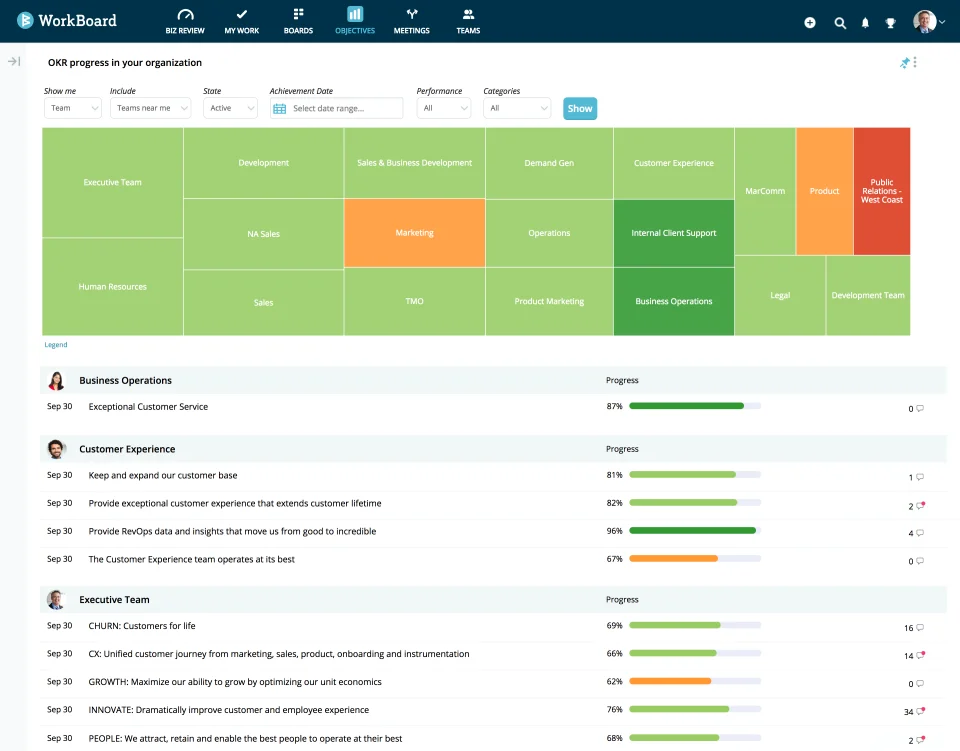
Workboard treats OKRs as a discipline in its own right rather than a module bolted onto a broader HR suite. Following its absorption of Quantive, the platform now anchors the pure-play end of this category, giving mid-size companies a system built specifically for alignment, strategy execution, and leadership reporting rather than reviews or engagement surveys. For a company that wants OKRs as its own system of record, not a side feature, Workboard is the strongest starting point on this list.
Key features
- Cascading OKRs from company strategy down to individual key results
- AI-generated executive briefs summarizing team progress automatically
- Cross-functional "dynamic teams" for shared key results across departments
- Meeting integration linking cadence calls directly to OKR updates
- Confidence-level scoring on key results for early risk detection
Integrations: Connects with Slack, Microsoft Teams, Workday, Salesforce, and major project management tools through native and API-based sync.
Pros and Cons
Pros: "The easy way in use it and the high user experience" - Capterra review
- Strategy alignment across teams is stronger than in most standalone OKR tools, per multiple G2 reviewers
- AI-generated briefs cut the manual reporting work leadership otherwise has to chase down each week
Cons: "The interface can feel a bit complex at first, and it takes some time to get used to all the features. Making it beginner friendly would make it so easy." - G2 review
- Onboarding takes longer than lighter-weight OKR tools, a real cost for teams without a dedicated OKR administrator
- Best suited to organizations that can support a formal rollout rather than a self-serve setup
Pricing
- Free trial available
- Full pricing requires a sales conversation for teams above the entry tier
2. Workpath
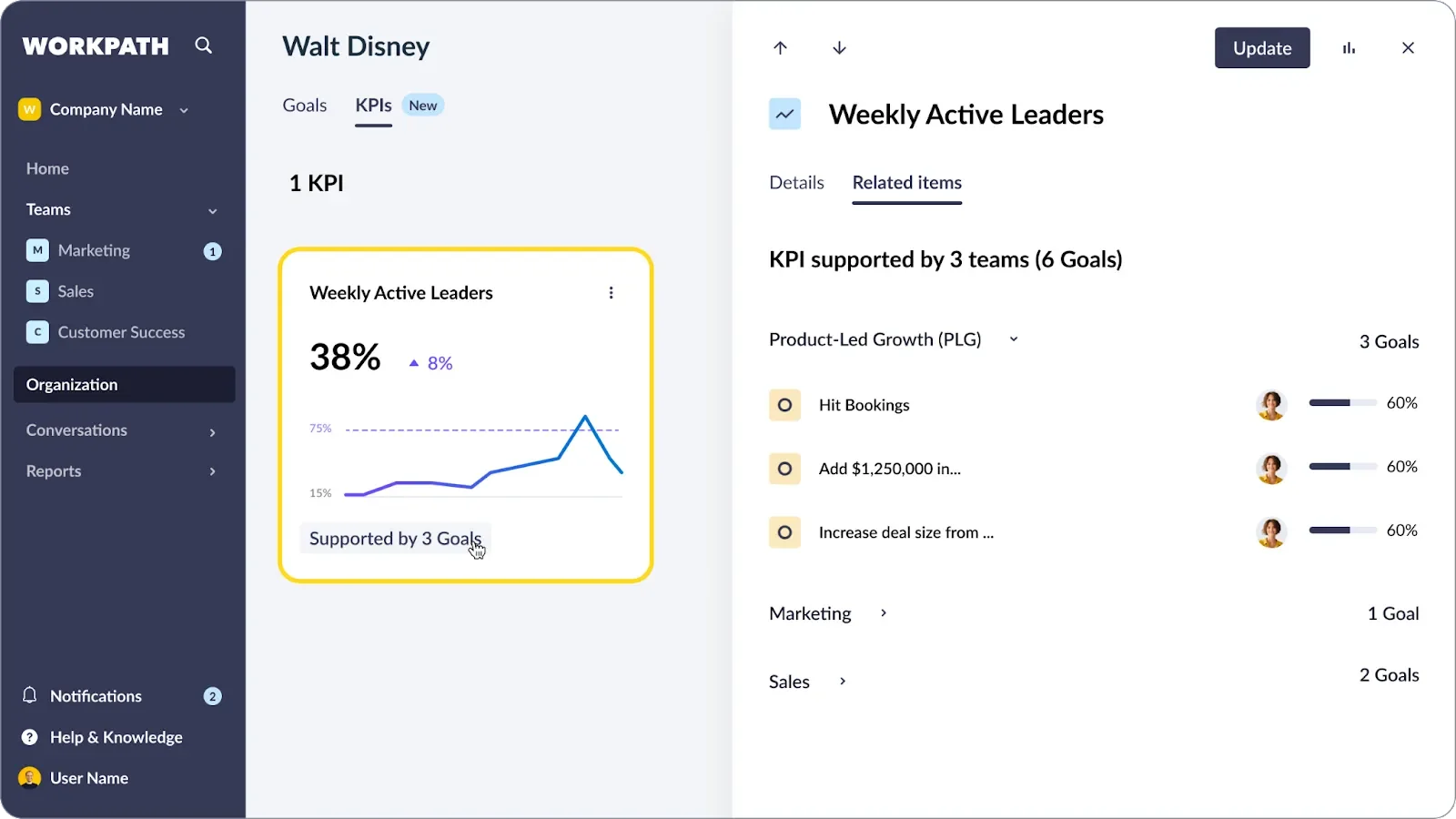
Workpath is the leading EU-headquartered strategy execution platform in this category, built in Munich with GDPR-compliant data residency and ISO 27001 and TISAX certification baked into the product. For mid-size companies with European operations, data sovereignty requirements, or a preference for a pure OKR execution engine over an all-in-one HR suite, Workpath is a strong standalone alternative to Workboard.
Key features
- OKR and KPI tracking within a single analytics suite
- Weekly check-in workflows structuring team and individual progress conversations
- Support for multiple frameworks, including OKRs, Hoshin Kanri, and SAFe
- Dependency mapping across departments to surface where goals conflict
- Executive dashboards for adapting focus, budget, or structure mid-cycle
Integrations: Syncs with Slack, Microsoft Teams, Jira, and common HRIS platforms; API access supports custom connections.
Pros and Cons
Pros: "Workpath provides clear view and transparency of different levels of targets within the organization." - G2 review
- European data residency removes a compliance barrier that US-headquartered competitors cannot match
- Multi-framework support gives mid-size companies room to grow past pure OKRs later without switching platforms
Cons: "The analytics suite is rather complex and needs some time until it displays correct data, it could be a bit better visualized, e.g. less complexity per report." - Capterra review
- Reporting depth comes with a learning curve that smaller HR teams should budget time for
- Pricing is quote-only, which slows early-stage budget planning compared to platforms with published rates
Pricing
- No published per-user pricing
- 14-day free trial, no credit card required
- Full cost depends on a custom quote based on headcount and modules selected
3. Teamflect
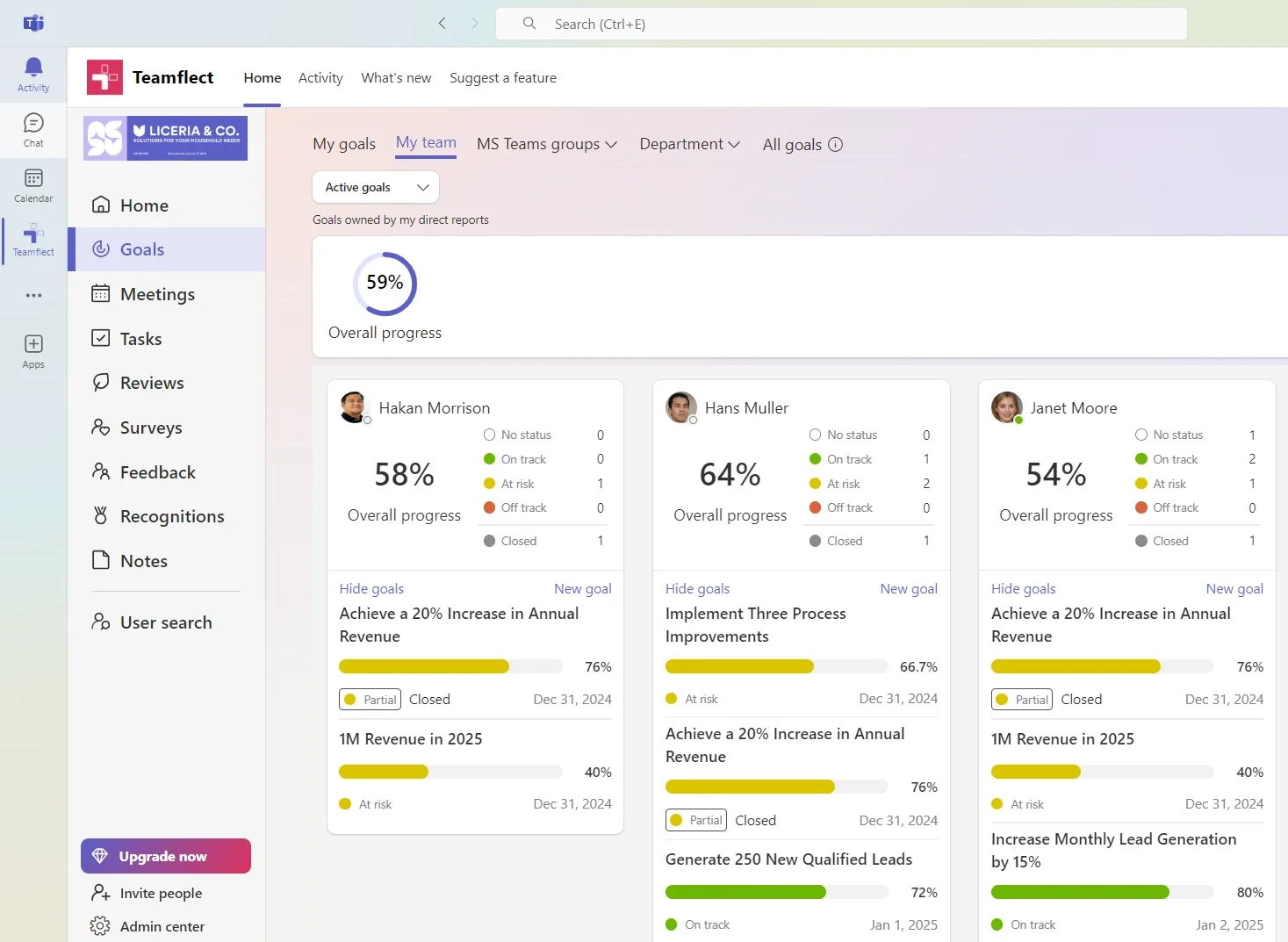
Teamflect runs OKRs, check-ins, and reviews natively inside Microsoft Teams and Outlook, which changes the adoption math for any company already standardized on Microsoft 365. Its Enterprise plan adds the security and governance layer that enterprise IT actually asks for: Entra ID single sign-on, data residency controls, and admin-level governance built on Microsoft's own stack. For mid-size-to-enterprise organizations scaling OKRs across departments while satisfying IT's security checklist, that combination is difficult to match outside the Microsoft ecosystem.
Key features
- OKRs and check-ins running natively inside Teams and Outlook
- 9-box grid and readiness views connecting OKR completion to talent decisions
- Entra ID single sign-on and data residency controls on the Enterprise plan
- Manager dashboards surfacing at-risk goals before quarter-end
- AI-assisted goal writing and review summaries
Integrations: Native to Microsoft Teams and Outlook, with SSO through Microsoft Entra ID and connections to major HRIS platforms for employee data sync.
Pros and Cons
Pros: "I've been very happy with how regularly new features and updates are released. Additionally, I've been pleased with the Reviews module as it has streamlined our employee reviews processes." - G2 review
- The free tier for up to 10 users removes procurement friction for a department-level pilot before a company-wide rollout
- Reporting and analytics run deep enough to track OKR progress, review completion, and manager-level trends without exporting data to a separate BI tool
- Native Teams deployment means no separate login, which is the single biggest driver of adoption across this category
Cons: "On Integrations, it works best within the Microsoft ecosystem, so it may feel limiting for companies using a wider mix of third-party tools." - G2 review
- Requires a Microsoft account, so organizations outside the Microsoft 365 ecosystem lose the native-adoption advantage the rest of this entry is built around
- No core HR features like payroll, so teams still need a separate HRIS for compensation and compliance even after adopting Teamflect
Pricing
- Free Starter tier for up to 10 users
- Essential: $7/user/month
- Professional: $11/user/month
- Enterprise: custom-priced, includes Entra ID and data residency features
4. Leapsome
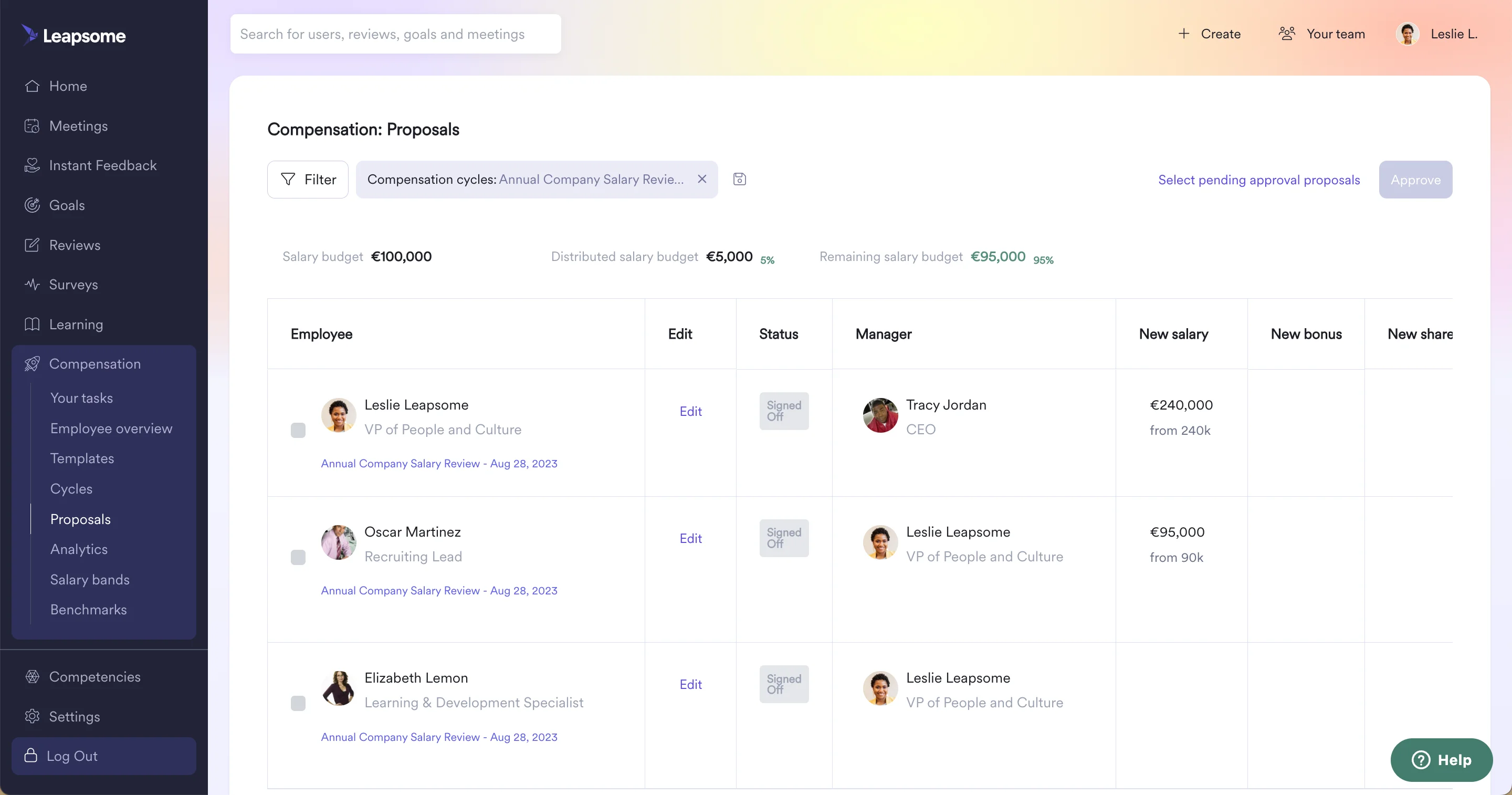
Leapsome combines OKRs with performance reviews, engagement surveys, and learning inside a single system, which suits mid-size companies trying to consolidate their people-tool stack rather than buy point solutions for each function. Its 4.8/5 G2 rating, drawn from more than 1,800 reviews, is the highest of any platform on this list.
Key features
- OKR tracking connected directly to performance review cycles
- Engagement surveys with benchmarking against industry data
- Learning paths tied to individual development goals
- Manager dashboards spanning goals, reviews, and engagement in one view
- European infrastructure supporting GDPR-focused data residency requirements
Integrations: Connects with Slack, Microsoft Teams, BambooHR, Workday, and major SSO providers.
Pros and Cons
Pros: "Leapsome has been great to work with! I've enjoyed the platform very much and it's super simple to use!" - Capterra review
- Consolidating OKRs, reviews, and engagement into one platform reduces the vendor count mid-size HR teams have to manage
- The genuine OKR-to-review integration means key result completion actually informs performance conversations, not just a shared login
Cons: "Adding quick links and clearer visual indicators would really help. I also think separating pending actions for myself versus my peers into separate windows would improve the overall experience." - G2 review
- Feature breadth creates navigation complexity before the workflow becomes familiar to new managers
- Custom-only pricing complicates early budget planning for teams comparing published rates elsewhere
Pricing
- No published per-user pricing
- Demo required to receive a custom quote based on module selection and headcount
5. Betterworks
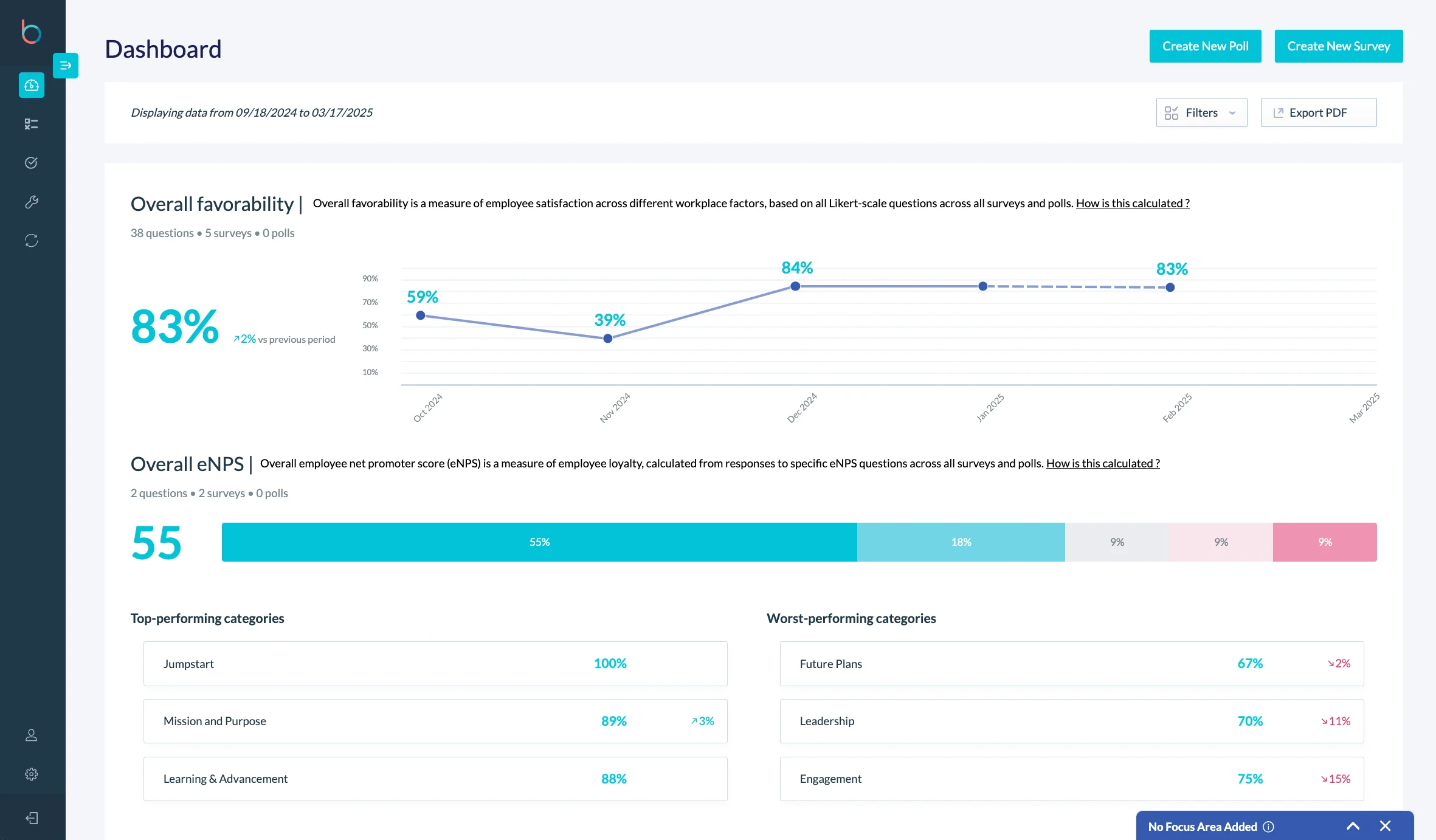
Betterworks connects company-wide OKR cascading to a calibration module that several reviewers single out as the strongest in this category. It suits mid-size companies scaling toward enterprise that want goals and formal performance calibration inside a single system rather than two separate tools passing data back and forth.
Key features
- Cascading OKRs from company objectives down to individual goals
- Calibration workflows with side-by-side rating comparisons across managers
- AI-assisted goal writing and mid-cycle progress nudges
- Modular pricing across Goals, Performance, and Engagement products
- Real-time dashboards for HR without requiring analyst support
Integrations: Native connections to Microsoft Teams, Slack, and Outlook, plus HRIS sync for employee data.
Pros and Cons
Pros: "The look at feel gives an overall impression of ease and professionalism with the minimalist coloring and font style. All the icons are easy to locate and understand." - G2 review
- The calibration module gives mid-size companies a defensible, data-backed process for rating consistency across departments
- Modular product structure lets teams start with Goals and add Performance or Engagement later without a full platform switch
Cons: "Some of the interface isn't as intuitive initially, and it can take time for support to respond when you have questions about configuration in review cycles." - Capterra review
- No published pricing and no self-serve trial, which means every evaluation starts with a sales call
- Third-party pricing estimates place enterprise deployments between $8 and $15 per user per month, a real budget line at 500 or more employees
Pricing
- Standard Performance plan: $8/user/month
- Performance + Talent Intelligence plan: $9/user/month
- Custom enterprise pricing available for global organizations
6. Lattice
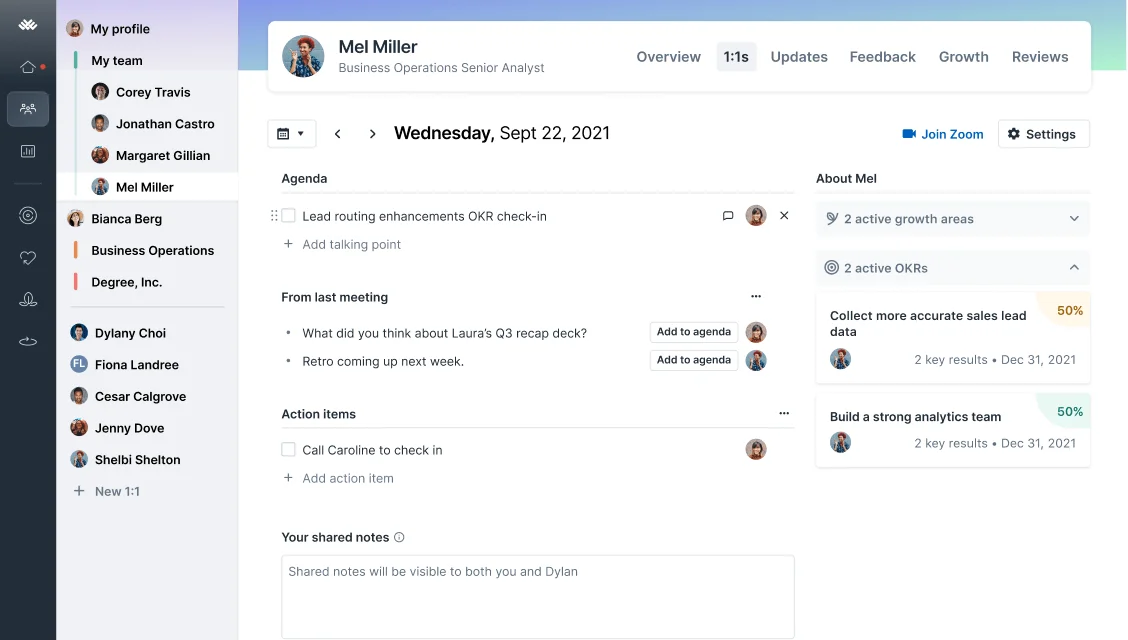
Lattice's OKR module lives inside one of the most established performance management platforms in the mid-market, giving HR teams goals connected to reviews, one-on-ones, and engagement without a separate standalone OKR login. Its 4.7/5 G2 rating, from more than 4,000 reviews, reflects a large and mature user base.
Key features
- OKR and goal tracking bundled with core performance reviews
- One-on-one meeting agendas tied to live goal progress
- AI-generated review summaries and draft suggestions based on goal data
- Engagement surveys and compensation planning as separate add-on modules
- 22 verified integrations, including Workday, BambooHR, and Okta
Integrations: Connects with Slack, Microsoft Teams, Workday, Rippling, BambooHR, ADP, and Okta.
Pros and Cons
Pros: "The workflows and onboarding templates. They were easy to use and easy to create and personalize. Great support team to work with." - Capterra review
- Onboarding templates cut setup time for HR teams running their first structured OKR cycle
- Modular pricing lets mid-size companies start with just Performance and Goals before adding Engagement or Compensation
Cons: "I think Lattice could be more feature-rich. Some sort of anonymous company forum would be awesome and add a lot of value in my opinion." - G2 review
- Combining Performance, Goals, and Engagement modules approaches $20 per seat per month, competing with HRIS-first platforms on total cost
- A $4,000 annual minimum spend can be a real barrier for organizations at the smaller end of the mid-size range
Pricing
- Modular pricing starting with a $13/seat/month Foundations package
- Individual base products: $4 to $10 per seat/month
- Optional add-ons: $4 to $6 per seat/month
- Custom quotes for enterprise clients based on scale
7. Perdoo
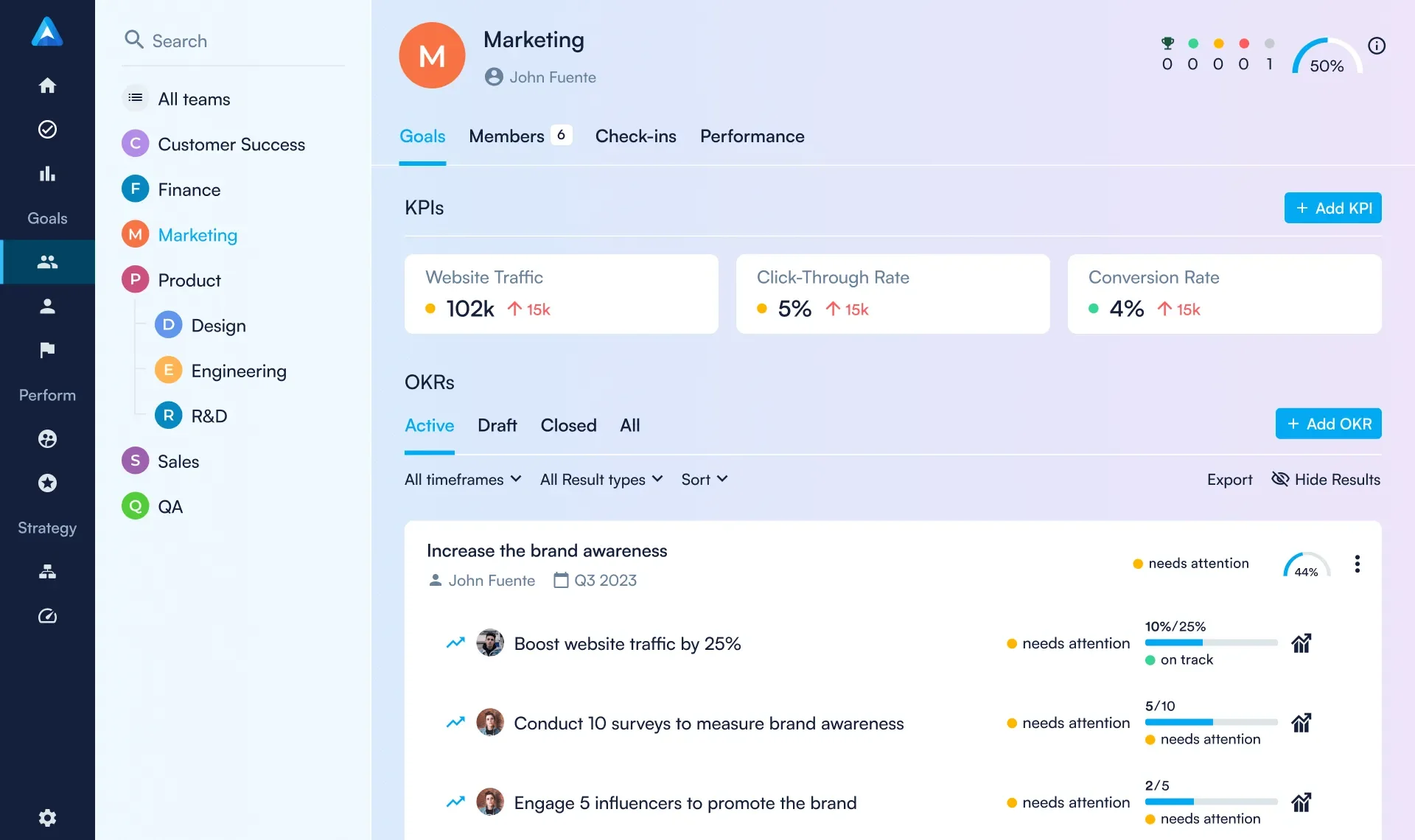
Perdoo pairs quarterly OKRs with a visual strategy map, helping mid-size companies link short-term goals to multi-year direction without a separate strategy planning tool. Its clean interface and straightforward methodology make it a common pick for teams new to formal OKR programs.
Key features
- Strategy Map visualizing how individual goals connect to company direction
- KPI boards tracking growth metrics alongside OKRs in one view
- Home dashboard compiling goals, teams, and direct reports in a single screen
- Check-in prompts driving regular progress updates
- Free tier available for smaller teams piloting the methodology
Integrations: Connects with Slack, Microsoft Teams, Jira, HubSpot, and Salesforce, with API access for custom builds.
Pros and Cons
Pros: "It provides a clear structure for setting a strategic agenda for a company." - Capterra review
- The Strategy Map gives leadership a visual link between quarterly OKRs and the company's longer-term direction that few competitors offer natively
- A genuine free tier lets teams pilot the methodology before committing budget
Cons: "The main area for improvement would be the pricing model. It would be helpful if the subscription plans included a certain number of users by default, rather than charging for every individual user." - G2 review
- The mobile app trails the desktop version in feature depth, a real limitation for distributed teams
- Per-user pricing without a bundled-seat option can add up faster than expected as headcount grows
Pricing
- Free plan for up to 5 users
- Premium tier: $7.20/user/month
- Supreme tier: $8.80/user/month
- Volume discounts available; additional 10% off for annual billing
8. Profit.co

Profit.co pairs a deep, templated OKR methodology with task management and performance review features, giving mid-size companies a structured rollout framework rather than a blank canvas. Its 4.7/5 G2 rating across 471 reviews and 4.8/5 Capterra rating reflect one of the largest verified review bases among pure OKR-first platforms in this list.
Key features
- Wizard-guided OKR creation with templates for faster rollout
- Task management integrated directly into key result tracking
- Custom Power BI reporting and integration engine for advanced dashboards
- Support for 12 languages, useful for multi-region mid-size teams
- 24/7 customer support with dedicated OKR coaching services
Integrations: Connects with Slack, Microsoft Teams, Jira, Salesforce, and HubSpot, plus a custom integration engine for less common tools.
Pros and Cons
Pros: "I liked that it is designed specifically for the OKR framework and makes managing goals much easier." - Capterra review
- The templated, wizard-driven setup shortens the learning curve for teams running their first structured OKR cycle
- Multi-language support makes this a stronger fit than most competitors for mid-size companies with distributed, multi-region teams
Cons: "Custom Power BI integration/reporting requires DAX queries, which adds a bit of technical complexity." - G2 review
- Advanced reporting depends on Power BI and DAX query skills that most mid-size HR teams do not have in-house
- Feature breadth introduces a real learning curve, per multiple reviewers, before teams feel fully comfortable navigating the platform
Pricing
- Custom Enterprise pricing tailored to organizational needs
- Proposals built by selecting primary modules and add-ons
- Volume-based rates, dedicated support, and specialized deployment options available
9. Peoplebox
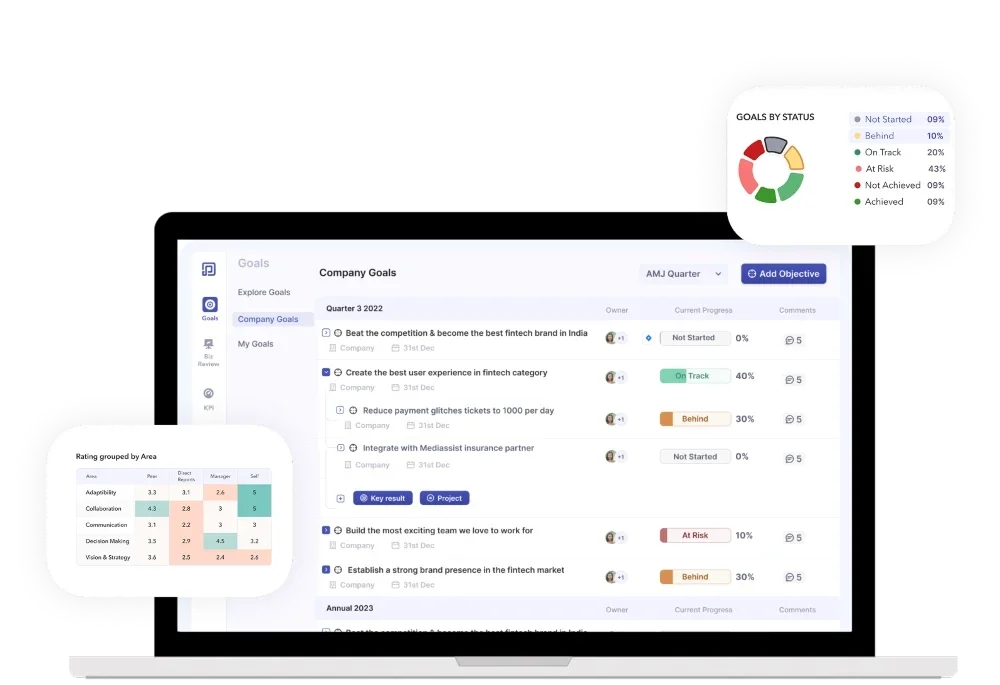
Peoplebox brings OKRs and performance alignment into the tools employees already use daily, syncing progress automatically through more than 50 native integrations rather than relying on manual updates. For mid-size companies where adoption is the primary concern, automatic sync removes one of the most common reasons OKR programs stall.
Key features
- OKR progress pulled automatically from Jira, Salesforce, and HubSpot data
- One-on-one meeting tools with shared agendas and action tracking
- 360-degree feedback and calibration workflows alongside OKR tracking
- Business review templates for recurring leadership check-ins
- AI-assisted workflows keeping plans and updates synchronized
Integrations: More than 50 native integrations, including Slack, Microsoft Teams, Jira, Salesforce, and HubSpot.
Pros and Cons
Pros: "Easiest way to define and executing goals." - Capterra review
- Automatic progress sync from tools like Jira means managers spend less time chasing manual status updates
- Native Slack and Teams embedding drives daily use without requiring a separate login habit
Cons: "Small glitches like API issues, system failure. They can add a notification button which allows managers to get notification once a particular phase is completed." - G2 review
- Integration reliability issues surface periodically, per multiple reviewers, which is worth testing directly during a pilot
- Pricing transparency is limited beyond the published entry tiers, so enterprise-level costs require a direct sales conversation
Pricing
- Performance Management plan: $8/employee/month, billed annually
- Optional modules: Individual Development Plans ($3/employee/month), Engagement ($2/employee/month), 360-Degree Reviews ($8/employee/month), Compensation ($5/employee/month)
10. Synergita
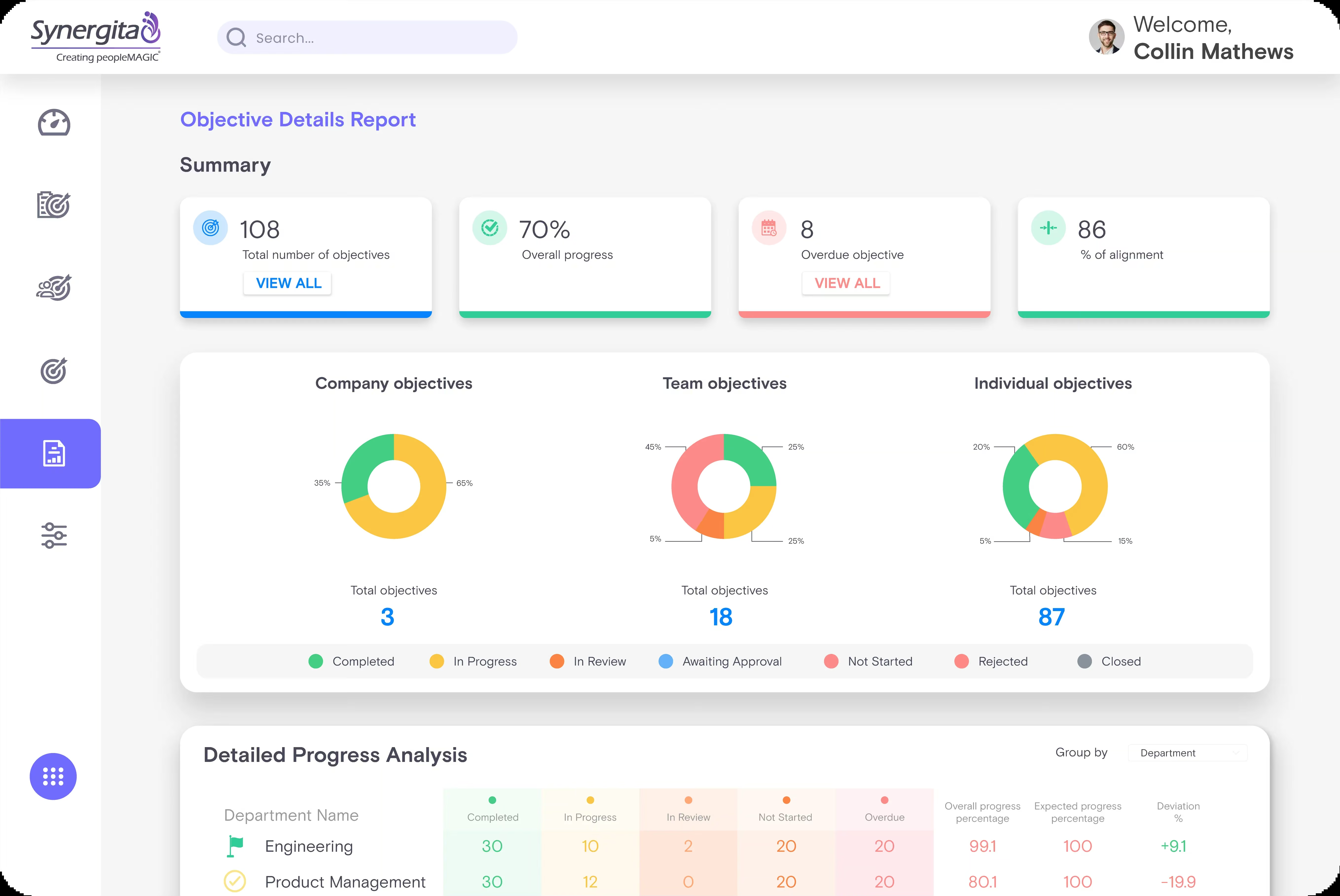
Synergita combines OKR management with performance and engagement features at one of the lowest published price points in this category, making it a practical option for cost-conscious mid-size companies scaling their first formal goal-setting program.
Key features
- Top-down and bottom-up OKR alignment models
- Tree-view cascading OKRs with real-time progress tracking
- Jira integration auto-updating key results from linked tasks
- 360-degree feedback and continuous performance review tools
- Tiered plans (OKR Starter, Lite, Growth) priced by feature depth
Integrations: Connects with Jira, common HRIS platforms, and standard payroll systems.
Pros and Cons
Pros: "It's more flexible and useful for the company" - G2 review
- Tiered pricing starting at $3 per user per month is the most budget-friendly published rate on this list
- The 1-day self-service setup for the OKR module gets a pilot running faster than most competitors here
Cons: "Additional features could be added to it to make it more useful such as audio support etc." - Capterra review
- Integration options are narrower than category leaders, a real limitation for companies with a complex existing tech stack
- The interface trails newer competitors in visual polish, according to multiple reviewers
Pricing
- Engage tier: $2/user/month
- Perform tier: $4/user/month
- Perform Plus tier: $7/user/month
- All tiers billed annually, scaling in functionality from basic feedback to advanced reviews and career development
How to Choose the Right OKR Software for Your Team
Selecting the right platform requires balancing organizational scale, existing tech stacks, and specific operational needs. To determine what to look for in an OKR software, consider how each tool aligns with your team's current structure and long-term goals.
- If you're an organization with 500 or more employees running complex, multi-department strategy execution, Workboard or Workpath give you the deepest pure-play OKR functionality without an all-in-one HR suite attached.
- If you're a 200 to 500 person team consolidating your people-tool stack, Leapsome or Lattice connect OKRs directly to performance reviews and engagement, cutting the vendor count you have to manage.
- If your organization is on Microsoft 365 and needs OKRs to live where your team already works, Teamflect removes the separate-login problem that slows adoption everywhere else on this list.
- If budget is the primary constraint and you're piloting your first formal OKR program, Synergita or Perdoo's free tiers give you a real starting point before a larger spend.
Final Word
Workboard earns the top spot on this list because it treats OKRs as a discipline in its own right, with the strategy execution depth and leadership reporting that scale from mid-market into enterprise without losing focus along the way. Workpath and Teamflect follow close behind for the same reason, each winning a specific, defensible use case rather than trying to be everything to everyone.
For further reading, our performance management software roundup and employee engagement software list cover the adjacent categories most mid-size OKR buyers evaluate alongside this one.
.png)