

Quick Verdict
Many teams introduce OKRs with a spreadsheet, a quarterly planning meeting, and good intentions. The hard part starts afterward. For instance, keeping goals current, connecting them to active projects, and giving leaders a clear view of what is moving and what is stuck.
Profit.co is built for that more demanding version of execution. It brings planning frameworks, project work, check-ins, and performance workflows into one environment, which makes it compelling for complex organizations but potentially excessive for teams that simply need a clean place to track quarterly goals.
This software review examines how Profit.co handles that trade-off, from its depth of configuration to the practical limits of its all-in-one approach.
What Is Profit.co?

Before comparing features, it helps to understand that Profit.co is not limited to quarterly OKRs. It positions itself as a results-management and strategy-execution platform for organizations that need to connect goals with day-to-day work.
Profit.co is a cloud-based platform for OKR management, strategic planning, project and portfolio management, employee engagement, and performance management. It supports several planning approaches, including OKRs, Balanced Scorecard, Hoshin Kanri, and strategy roadmaps.
The platform is designed around a few connected layers:
- Company and team strategy
- Objectives, Key Results, KPIs, and initiatives
- Tasks, projects, and portfolio-level execution
- Weekly check-ins, dashboards, and reports
- 1:1s, reviews, feedback, recognition, and engagement data
For example, a product organization could connect an annual strategic priority to a quarterly OKR, link the Key Results to Jira work, use weekly check-ins to report progress, and bring that activity into manager 1:1s or review cycles. That is the core idea behind Profit.co: keep strategy, execution, and performance from living in separate tools.
Key Features
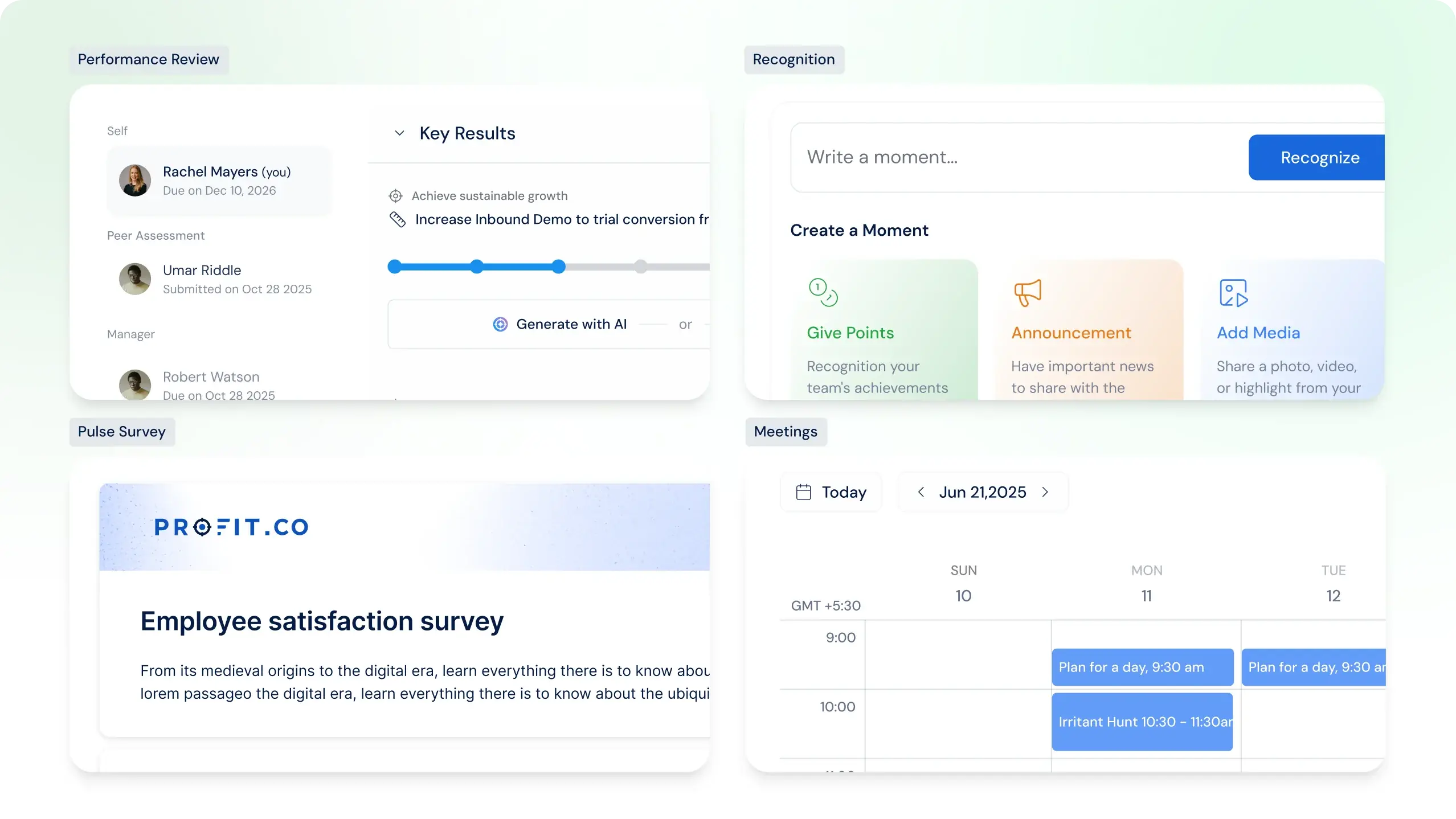
Profit.co covers far more ground than a standard goal tracker. The features below are the ones most likely to shape a buying decision.
1. OKRs and Goal Alignment
Profit.co supports company, department, team, and individual OKRs, with tools for alignment, cascading, check-ins, scoring, and progress reporting. Teams can also use several planning frameworks rather than being locked into one version of OKRs.
The platform is particularly useful for organizations that need formal goal-setting rules, templates, owners, approvals, and visibility across multiple departments.
- Goal alignment and cascading
- Configurable scoring and progress tracking
- KPI tracking and dashboards
- AI-assisted OKR drafting and review
2. Strategy and Frameworks
Profit.co extends beyond OKRs with tools for strategy roadmaps, Balanced Scorecard, Hoshin Kanri, and X-Matrix planning. This gives leaders more options when quarterly goal-setting is only one part of a broader strategic process.
That flexibility is a real differentiator, although teams that only need straightforward OKRs may find the number of available frameworks unnecessary.
3. Projects and Portfolios
The project and portfolio management layer connects initiatives, tasks, resources, and project milestones to the goals they support. This helps leaders see whether a strategic priority is moving because of actual project work rather than relying only on manual progress updates.
Profit.co can also connect Jira activity to Key Results, which is useful for product and engineering teams that want work completed in Jira to inform OKR progress.
- Tasks, projects, and portfolio views
- Initiative-to-OKR alignment
- Resource and timesheet options
- Jira-linked progress updates
4. Check-Ins and Reporting
Weekly check-ins are central to the platform. Employees can update progress, note blockers, and provide confidence levels, while managers use dashboards and status reports to see where work is falling behind.
Slack and Microsoft Teams integrations help bring check-ins and notifications into tools people already use, which can reduce the friction of maintaining a regular cadence.
5. Performance and Engagement
Profit.co includes performance reviews, 1:1s, continuous feedback, peer recognition, pulse surveys, and engagement tools. The advantage is that managers can reference goal progress and project work during performance conversations instead of reconstructing activity manually.
It is a substantial performance layer, but it does not replace a complete HRIS for payroll, benefits, recruiting, or employee-record management.
- Performance reviews and calibration options
- 1:1s and continuous feedback
- Recognition and rewards
- Pulse surveys and engagement reporting
6. AI and Integrations
Profit.co promotes AI Agents for OKR writing, review support, performance workflows, and strategy execution. The practical value is strongest when teams already have a clear operating process and use AI to speed up administrative work rather than define strategy for them.
The integration catalog is broad, with native connections and Zapier-based options for workflow, HR, CRM, BI, and collaboration tools.
- Slack and Microsoft Teams
- Jira and Jira Data Center
- Salesforce, HubSpot, and Zapier
- Workday, Office 365, Google Workspace, Power BI, and Tableau
Pros and Cons
Profit.co is feature-rich and well regarded by users, but its best qualities can also introduce complexity. The right fit depends on how much process and configuration your organization can support.
Pros
“The tool is very intuitive & really helps to put in our OKRs and execute them in a well-defined manner, even tuned for niche industries like education excellence. Their support in the Implementation phase & training they provide is tailor-made based on our industry & the team also supports us on both concept & product.” – G2 reviewer
“What I like most is the data and the platform’s adaptability. I use it across the board, both as a super user and as a candidate, and it works well in each role. Being able to customize it to the needs of the business is especially valuable.” – G2 reviewer
These are the areas where Profit.co stands out most during evaluation.
- Broad Strategy-Execution Coverage: Profit.co combines OKRs, strategy frameworks, KPIs, projects, performance management, and engagement in one connected platform.
- Strong OKR Configuration: Teams can tailor goal types, scoring, alignment, workflows, dashboards, and reporting to match how the organization actually runs its planning cycle.
- Project-to-Goal Visibility: Project and portfolio tools make it easier to connect initiatives and task execution to the Key Results they are meant to move.
- Built-In Performance Layer: Reviews, 1:1s, feedback, recognition, and engagement features are more developed than what most standalone OKR tools include.
- Large Integration Ecosystem: Connections to Jira, Slack, Teams, HR systems, CRMs, BI tools, and Zapier reduce the need to maintain updates manually.
- Strong User Ratings: Profit.co holds a 4.7/5 rating on G2 from 495 reviews and a 4.8/5 rating on Capterra from more than 225 reviews.
- Free Evaluation Options: The vendor offers a permanent free plan and a 30-day trial with access to the full platform, without requiring card details.
Cons
“Improvement in the dashboard is something that I would highlight. More insights as the Program Manager will make the job easier & the profit team promised they are working on it.” – G2 reviewer
“When executives ask detailed questions during reviews, it's hard to get into the specifics without navigating multiple screens. It would be better to click directly into initiatives to see the related notes, updates, and documents.” – G2 reviewer
The following limitations are worth weighing before committing to a rollout.
- Can Feel Overbuilt for Simple OKR Programs: Teams looking for a basic goal tracker may not need strategy frameworks, project management, performance tools, and multiple configuration layers in the same product.
- Initial Interface Can Feel Busy: Capterra reviewers note that the number of options and details on screen can make the interface feel confusing at first.
- Setup Requires Process Discipline: The platform rewards organizations that define their goal cycles, ownership, scoring rules, and reporting expectations before rollout. It is less suited to a casual, self-serve implementation.
- Pricing Is Not Fully Transparent: Profit.co publishes a free plan and free trial, but paid costs are quote-based and depend on modules, users, bundled purchases, and deployment requirements.
- Not a Full HRIS: The performance module is robust, but organizations still need another system for payroll, benefits, and core employee-record administration.
- Feature Adoption Can Be Uneven: Most teams will not need every module. Buying a broad platform without a clear rollout plan can leave project, engagement, or performance features underused.
First-Hand Evaluation
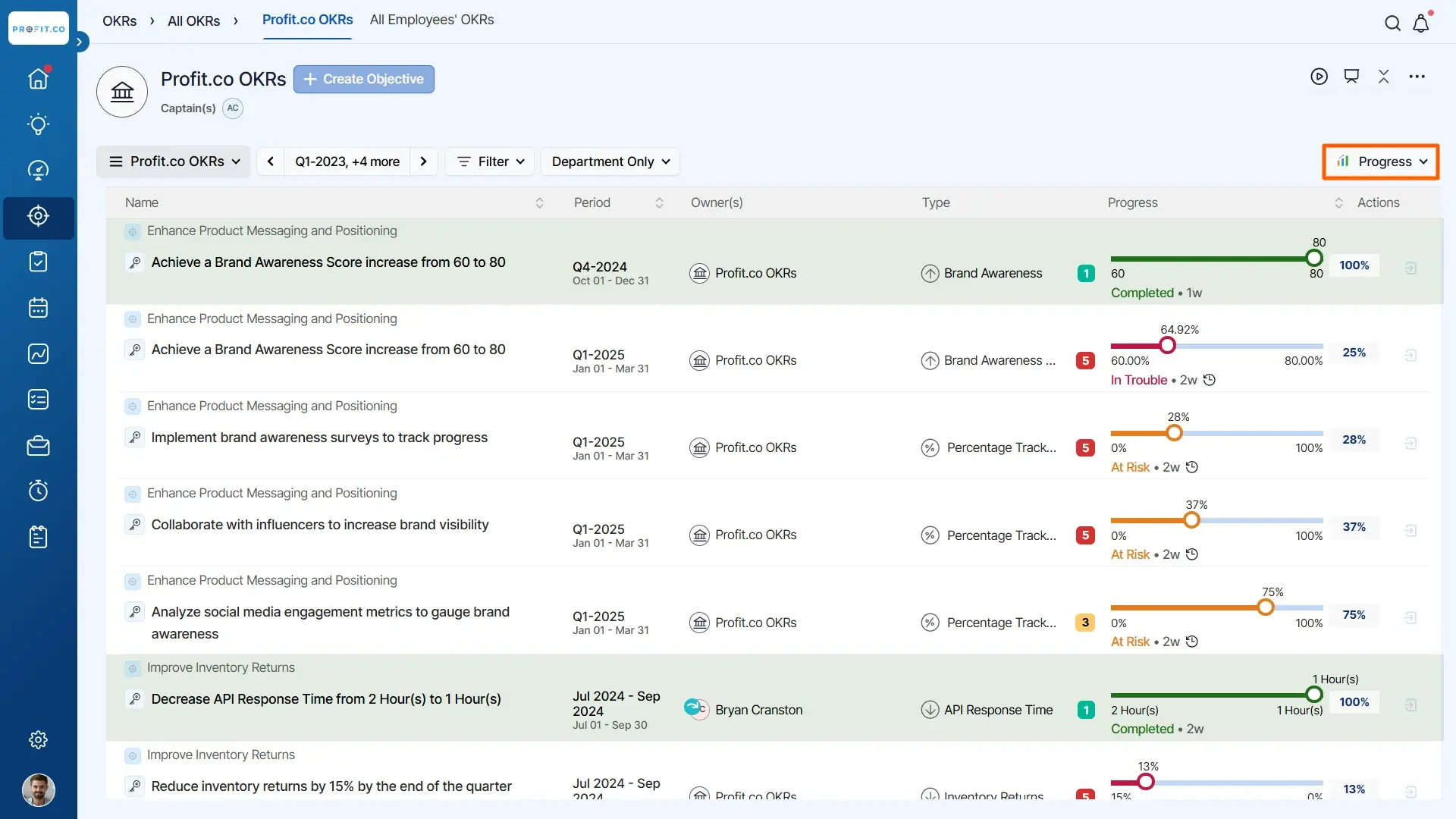
We tested Profit.co through its 30-day free trial, which provides access to the full platform without requiring card details. The product is clearly more ambitious than a basic OKR tool, so the first setup feels best suited to a team that already knows how it wants to run its planning cycle.
- OKR Setup: Creating objectives, Key Results, owners, and check-in cadences was straightforward, but the number of settings makes the platform feel more structured than lightweight OKR tools.
- Strategy Tools: The support for frameworks such as Balanced Scorecard and Hoshin Kanri gives leadership teams more ways to organize planning. It is useful depth, though teams that only use OKRs may not touch these tools.
- Project Links: Connecting project work to goals is one of the platform’s strongest ideas. The Jira integration is particularly helpful for keeping Key Result progress connected to real delivery work.
- Performance Features: The 1:1s, feedback, review, and recognition tools fit naturally alongside OKRs. They are useful for organizations that want managers to use measurable work, not memory alone, during performance conversations.
Pricing and Plans
Profit.co offers a permanent free plan with unlimited users and unlimited OKRs, plus a 30-day trial with full platform access. Paid enterprise pricing is custom and depends on selected modules, user count, and deployment requirements.
Profit.co’s enterprise plans include modules for OKR management, strategy, project and portfolio management, performance, and engagement. Ask for a written quote that separates software licensing, implementation, training, integrations, and professional services before comparing it with simpler OKR products.
Our Rating
We scored Profit.co across the areas buyers are most likely to weigh during an evaluation.
Best Use Cases
Profit.co is most valuable when an organization needs its breadth. Teams should evaluate it against the operating process they want to build, not just the number of available features.
Profit.co is a strong fit for:
- Mid-market and enterprise organizations that want OKRs, strategic planning, projects, and performance management in a connected platform.
- Teams that need to link Jira projects, initiatives, and tasks directly to company or department-level goals.
- Organizations using formal strategic frameworks such as Balanced Scorecard, Hoshin Kanri, or strategy roadmaps alongside OKRs.
- HR and people teams that want goal progress, 1:1s, feedback, reviews, and engagement data to sit closer together.
- Companies with dedicated operations, PMO, HR, or strategy owners who can configure and govern the platform.
Look elsewhere if:
- You only need simple quarterly OKRs and do not want the administrative overhead of a broader platform.
- You need native payroll, benefits, recruiting, or core HR record management.
- Your team does not have the time to define goal-setting rules, ownership, scoring, check-in cadence, and rollout governance.
- Transparent self-serve pricing is a non-negotiable requirement before contacting a vendor.
- You want a lighter-weight experience for a small team with few cross-functional dependencies.
Alternatives and Competitors
These alternatives are worth evaluating depending on whether your priority is lightweight OKRs, strategy alignment, performance management, or enterprise planning.
- Perdoo: A stronger fit for teams that want a strategy-map-led OKR platform with a simpler approach to goals, KPIs, and check-ins.
- Lattice: Better for organizations where performance management, employee engagement, and compensation planning matter more than project portfolio management.
- Betterworks: Worth considering for larger organizations that need deep performance reviews, calibration, and HRIS integration alongside OKRs.
- WorkBoard: A better match for enterprise strategy execution and transformation programs that require advanced planning and executive-level visibility.
- 15Five: A lighter option for teams focused on manager effectiveness, employee engagement, check-ins, and continuous performance conversations.
Final Verdict
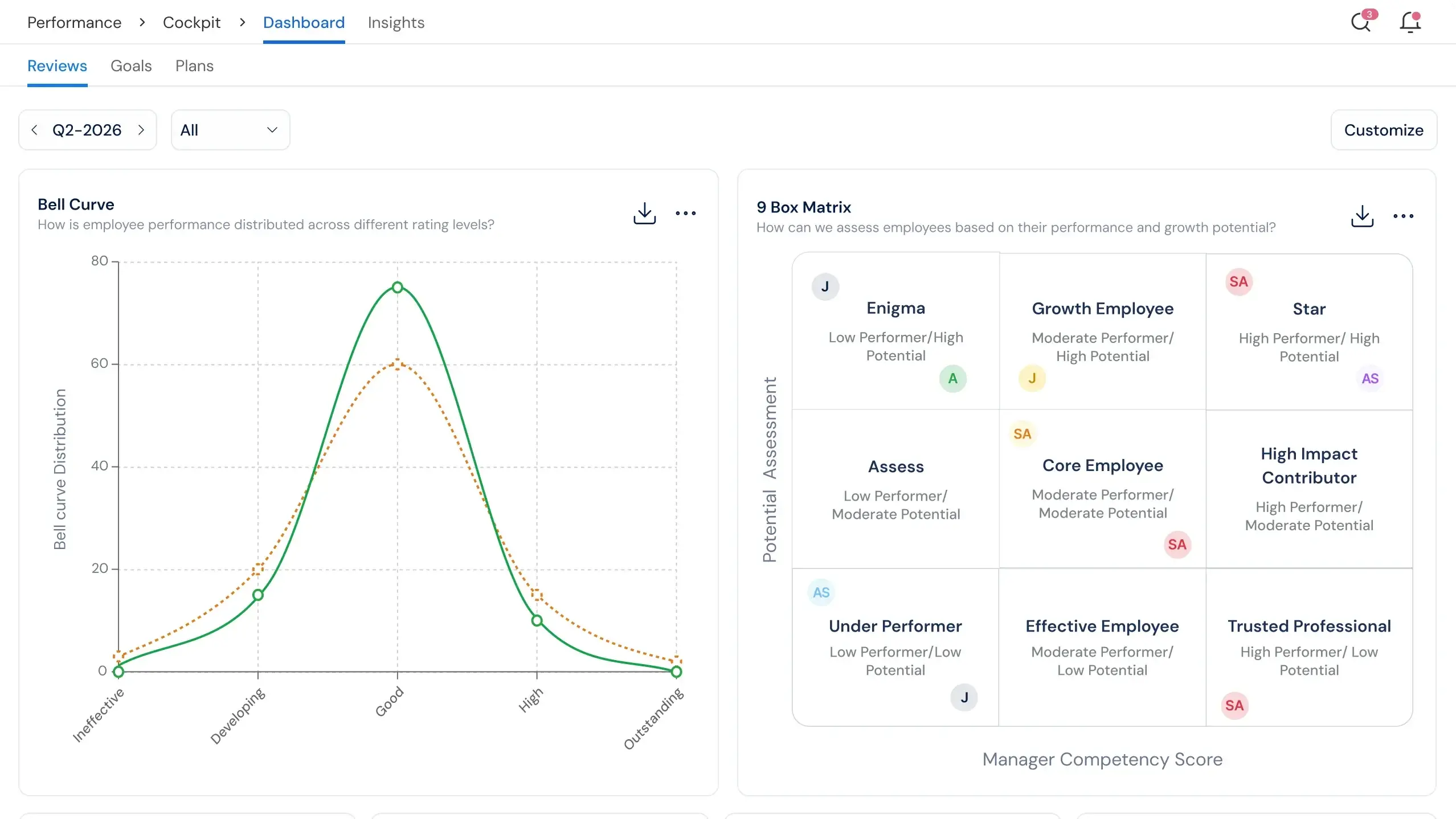
Profit.co is one of the stronger choices for organizations that want to connect strategy, OKRs, projects, and performance management in one platform. Its depth is a genuine advantage when teams need formal planning, execution visibility, and cross-functional accountability.
The trade-off is complexity. Small teams or first-time OKR users may find the platform heavier than necessary, while organizations with a clear operating rhythm and dedicated administrators are more likely to benefit from its full feature set.
Choose Profit.co if you need a broad strategy-execution system rather than a simple goal tracker. Consider Perdoo, Lattice, or 15Five if you want a more focused approach to OKRs, performance management, or manager development.