

.svg)
Most enterprise performance review cycles look fine from the top and broken from the bottom. 90% of leaders say their processes are working, but only 55% of employees agree, according to the 2024 Performance Enablement Report. Every tool here is evaluated against six enterprise-specific criteria. If you're running reviews for under 500 employees, our general performance review software guide is the better starting point.
What Makes Performance Review Software Enterprise-Grade
These five criteria separate a genuine enterprise platform from a mid-market tool wearing an enterprise label.
1. Calibration Depth
This is where most enterprise review cycles quietly break down. Without distribution visibility across your full population and outlier detection by manager or department, you have no way of knowing whether your ratings reflect performance or just which manager wrote them.
2. Security and Compliance
SOC 2 Type II, GDPR, SSO/SAML, encryption at rest and in transit, and regional data hosting are the baseline. That is, if a vendor can't produce its trust documentation quickly, it won't clear your IT and legal review , and you'll find that out after you've already spent three months evaluating it.
3. HRIS Integration and Write-Back
Most tools claim HRIS integration. What they don't always tell you is whether that integration actually writes ratings back to the system of record, or just reads from it. Without write-back, someone on your team is reconciling data at the end of every cycle.
4. Cycle Configurability
Enterprise organizations run several review types at once: annual reviews, quarterly check-ins, mid-cycle reviews for new hires, separate processes for executives. Platforms that can't handle that without a full re-configuration will cost your team time every single cycle.
5. Completion at Scale
Completion rate is where the gap between theory and practice shows up. The tools that actually move the number embed reviews into platforms employees already use, surface who's falling behind before the deadline, and escalate automatically. Documented rates from a real enterprise customer are worth more than anything a vendor tells you in a demo.
How We Evaluated Each Platform
To rank the 10 best enterprise performance review platforms for 2026, we scored every tool against the criteria above. Final positions reflect fit for enterprise buyers, not a single best overall winner.
1. Independent Review Evidence
G2 and Capterra ratings are verified as of August 2026. Review volume matters here. A 4.8 from 40 reviewers and a 4.7 from 4,000 are not the same signal, and we weighted both rating and volume accordingly.
2. Write-Back Specificity
Every platform on this list claims HRIS integration. We checked which ones actually write final ratings, goal statuses, and development data back to the system of record automatically and for which specific connectors that bidirectionality is confirmed, not just claimed.
3. Calibration Functionality
A calibration session checkbox is not calibration. We looked for distribution curve analytics, 9-box placement, and demographic filtering that actually function across large, distributed manager populations and noted where these depend on plan or configuration.
4. Pricing Transparency
We recorded what each vendor publishes, what anonymized contract data suggests, and where there is no reliable public figure at all. Quote-only is noted as such. Estimates are flagged as directional, not verified.
5. Implementation Realism
Vendor claims about implementation timelines and support are not the same as buyer experience. We weighted what reviewers on G2 and Capterra reported about onboarding, configuration complexity, and ongoing admin burden, not what the sales deck said.
Enterprise Performance Review Software at a Glance
Ratings and review counts are from G2, verified August 2026, and are subject to change.
The Rankings: Top 10 Enterprise Performance Review Platforms
Enterprise performance review software brings feedback, goals, calibration, and review-cycle data into one structured workflow for large organizations.
The right platform depends on your HRIS, workforce complexity, and whether your priority is integration, configuration, or manager adoption. Here are 10 enterprise-ready options to consider in 2026.
1. Workday
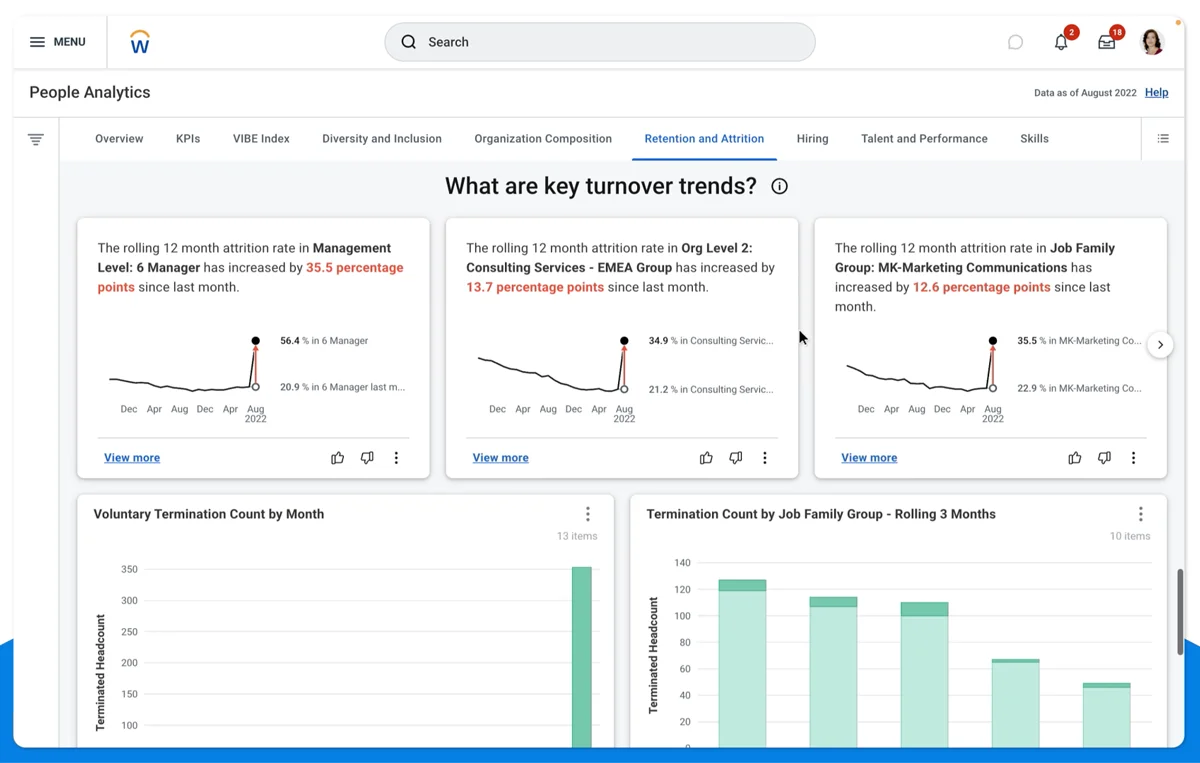
Some reviewers report that Workday's performance review module requires many clicks and feels less intuitive than other modules in the platform. If your HRIS is already Workday, the integration value is real. Ratings, goals, and development data are where compensation and succession already live, with no write-back to maintain.
Key Features
- Performance reviews fully connected to HCM, payroll, compensation, and succession in a single system
- Calibration sessions with distribution views and manager-level rating analytics
- 9-box placement and talent review workflows built into the platform
- Continuous feedback and goal management connected to the annual cycle
- SOC 2 Type II, ISO 27001, GDPR, and regional data hosting across major geographies
- AI-assisted performance summaries and manager coaching recommendations
Pros and Cons
Pros: "Intuitive, ever-evolving and created with individuals that use the system in mind, versus a developer or technical person. With that in mind, Workday delivers a simple design for integrating multiple vendors and systems to create a primary point of entry for both end users and system administrators." – G2 reviewer
- True single system of record, with ratings flowing into compensation and succession without any export
- No integration maintenance between review data and HCM data
- Calibration tooling is mature and built for large, complex organizations
Cons: "Workday has many partners like Peakon and HireRight that exist outside of the native Workday platform and that creates complex user experiences for the add on tools." – G2 reviewer
- Performance review module receives significantly more UX criticism than the core HCM platform
- Configuration requires Workday-certified expertise, which adds cost and dependency
- Implementation timelines vary significantly by scope, modules, integrations, and internal readiness
Pricing
- Quote-only, structured per-employee-per-month
- Varies by module selection, headcount, and negotiated terms
- Implementations add substantial professional services cost. Confirm directly with Workday
2. SAP SuccessFactors
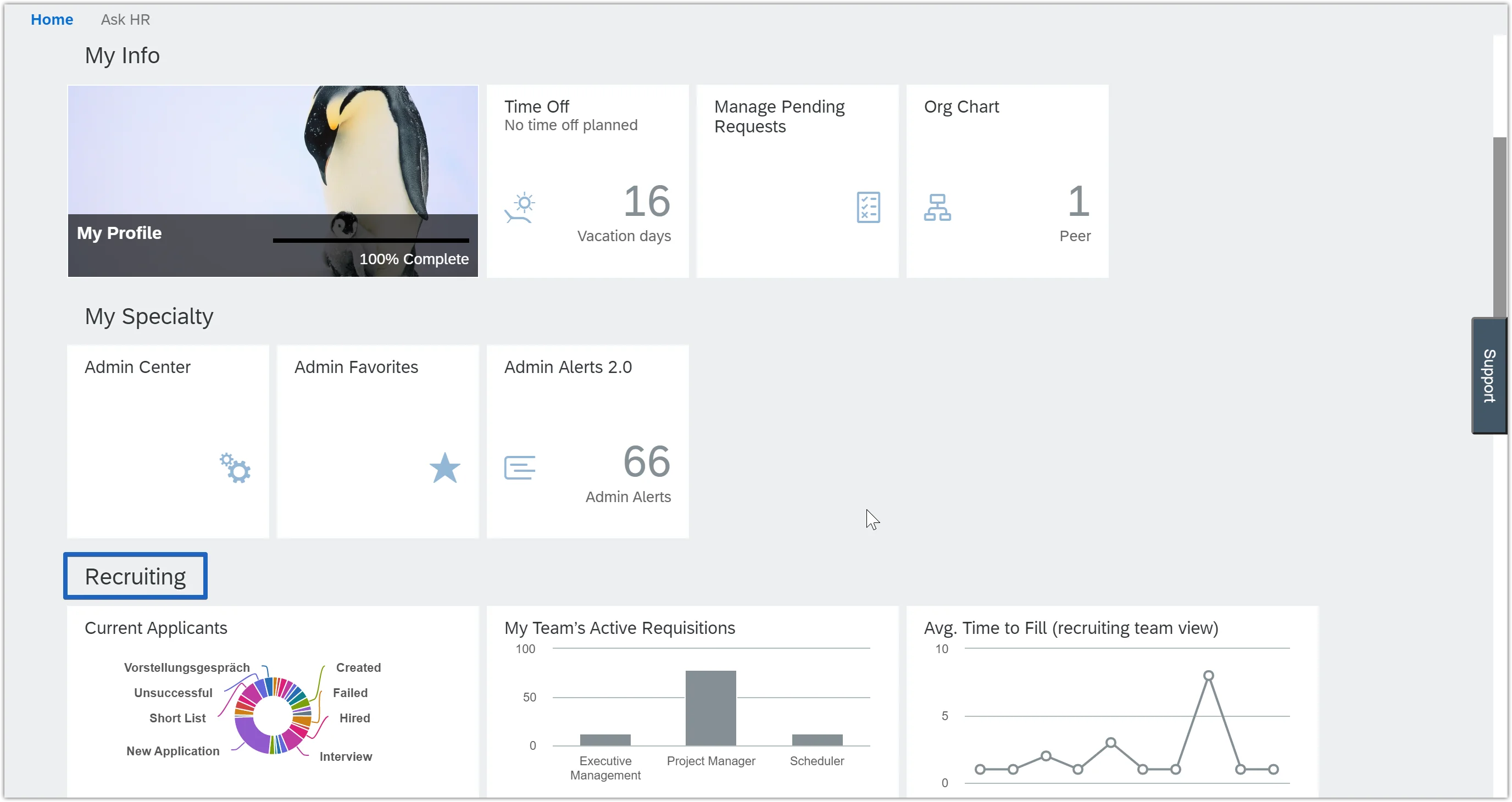
If your system of record is SAP, SuccessFactors keeps performance data where business decisions happen. Where it pulls ahead of Workday is global reach. SuccessFactors supports 100+ country localizations across its HCM suite. The depth of payroll, employment-law, and compliance coverage varies by country and module. Verify specific market coverage for the Performance and Goals module with SAP.
Key Features
- Broad country localization coverage across the HCM suite; payroll and local compliance depth varies by country and module
- Performance and Goals module with continuous feedback, calibration sessions, and 9-box talent reviews
- Joule AI assistant for HR workflows; confirm availability of specific performance review writing and manager coaching capabilities within the Performance and Goals module with SAP
- Succession and development planning connected to review outcomes within the same suite
- SOC 2, ISO 27001, GDPR, regional data centers across major geographies
- Bidirectional integration with SAP ECC and S/4HANA for compensation and org data
Pros and Cons
Pros: "What I like best about SAP SuccessFactors HCM is its ability to manage the entire employee lifecycle in one platform, from recruitment and onboarding to performance management and learning. The user interface is intuitive and easy to navigate, which helps employees and managers complete HR tasks quickly without extensive training." – G2 reviewer
- Broad country localization coverage for global HR operations; payroll and local compliance depth varies by country and module
- Joule AI assistant adds meaningful review workflow support that rivals newer platforms
- Proven at very large enterprise scale (100,000+ employees)
Cons: "The user interface is generally functional, but some modules can feel complex and require multiple clicks to complete simple tasks. New users may face a learning curve, especially when navigating advanced features and configurations." – G2 reviewer
- UI inconsistencies across modules create a fragmented experience at the individual level
- Integrating non-SAP tools requires middleware and ongoing technical maintenance
- Licensing, implementation, and maintenance costs are among the highest in the category
Pricing
- Quote-only, structured by module and headcount
- Typically requires SAP-certified implementation partners, which adds to total cost
- Confirm current pricing directly with SAP
3. Teamflect
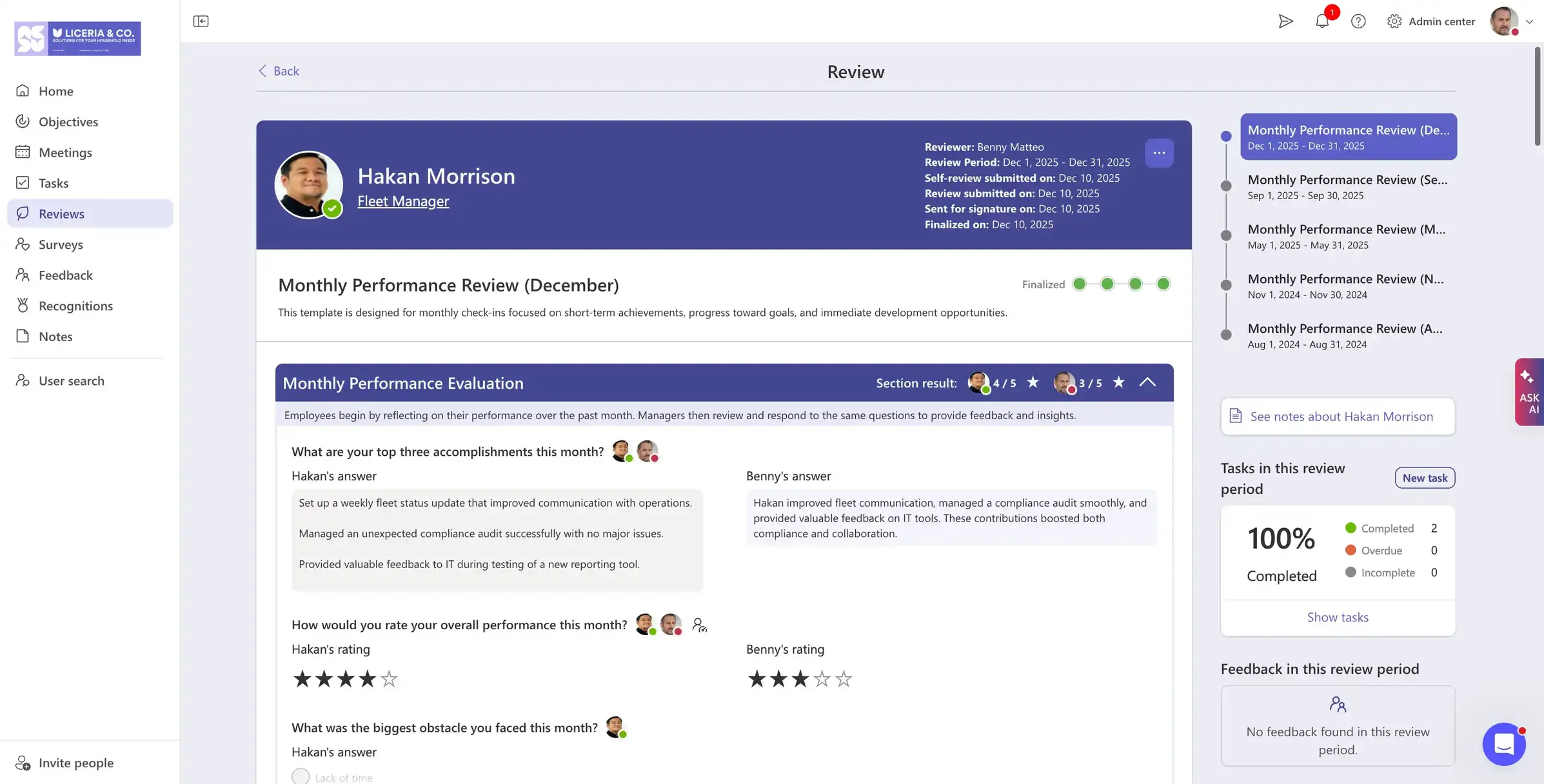
Teamflect earns third place because adoption is where most enterprise review platforms fail, and Teamflect integrates closely with Microsoft Teams and Outlook. Without that integration you will not get the native-workflow advantage. As an all-in-one performance management platform with one of the strongest performance review modules in the Microsoft 365 ecosystem, Teamflect offers customizable review templates, competency frameworks, 9 box talent grids, bulk review calibration, advanced analytics, and more.
Key Features
- Close integration with Microsoft Teams and Outlook, supporting reviews, feedback, and 1:1s within those tools
- Nine-box talent grid, succession planning, and individual development plans
- Configurable review cycles with customizable templates, rating scales, and question sets
- Goals and OKRs that seamlessly connect with performance appraisals
- 360-degree feedback with embedded peer and upward review workflows
- BYOK encryption, dedicated infrastructure, and Azure data residency options for enterprise security
- AI-assisted goal writing, feedback summaries, and review drafting built into the workflow
Pros and Cons
Pros: "I love Teamflect's HRIS integration capabilities. It synced with our Workday HCM platform right out of the box, pulling our global organizational charts, reporting structures, and user attributes automatically. The analytics dashboard is good." – G2 reviewer
- Its Microsoft Teams integration may support adoption for organizations already standardized on Microsoft 365
- Nine-box, IDPs, and succession-planning features available; verify inclusions with Teamflect for your specific plan
- Enterprise security options including BYOK, dedicated infrastructure, and Azure data residency (verify availability on your plan with Teamflect)
Cons: "On Integrations, it works best within the Microsoft ecosystem, so it may feel limiting for companies using a wider mix of third-party tools." – G2 reviewer
- Teamflect is designed around Microsoft Teams and Microsoft 365. Organizations outside that ecosystem may receive less value from its native-workflow advantage
- Does not include core HR features like payroll or compliance. A separate HRIS is required
Pricing
- Starter: Free for up to 10 users with full functionality
- Essential: $7/user/month (billed annually)
- Professional: $11/user/month (billed annually)
- Enterprise: Custom Quote
4. Betterworks
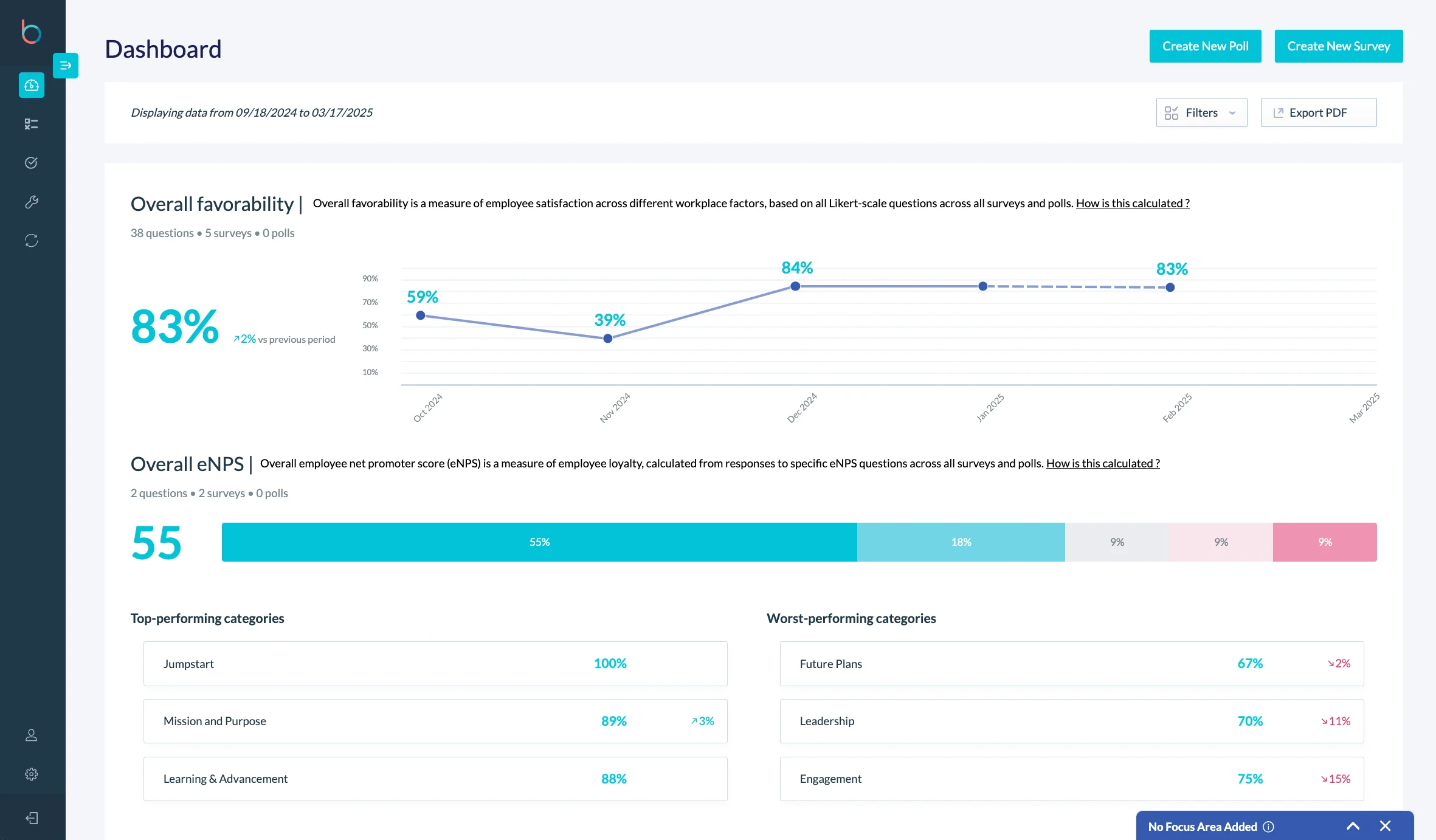
If calibration defensibility is your primary requirement, Betterworks offers calibration features including distribution views, 9-box placement, and demographic filtering, subject to plan and configuration. Bidirectional write-back to Workday and SuccessFactors means ratings return to the system of record automatically.
Key Features
- Calibration module with distribution curves, 9-box placement, and demographic filtering for bias detection (verify availability on your plan and data configuration)
- Bidirectional integration with Workday and SAP SuccessFactors for automatic rating write-back
- Continuous performance management with OKR tracking connected to review outcomes
- Configurable review cycles supporting concurrent types by population or business unit
- Manager coaching recommendations and AI-assisted feedback generation
- SOC 2 Type II, GDPR, SSO/SAML, and role-based access controls
Pros and Cons
Pros: "Betterworks offers a modern interface for tracking goals, sharing feedback, and collaborating with others. Also I really appreciate the AI tools to enhance feedback texts, this is maybe my major advantage. In addition I never had issues with performance - the system seems to be stable and scalable." – G2 reviewer
- Betterworks offers calibration features including distribution views, 9-box placement, and demographic filtering, subject to plan and configuration
- Bidirectional HRIS write-back eliminates end-of-cycle manual reconciliation
- Demographic filtering for bias detection available in the calibration workflow; verify availability on your specific plan and data configuration with Betterworks
Cons: "I feel the user interface could be a little more user-friendly, some features take time to load, and the navigation can occasionally feel confusing. A cleaner layout and simpler workflows would make it more efficient, the graphics as well." – G2 reviewer
- Smaller G2 review base than category leaders makes third-party evidence more limited
- Pricing is quote-only with no published tiers. Total cost of ownership requires a vendor conversation
- Configuration complexity is higher than lighter review tools; internal admin expertise required
Pricing
- Quote-only
- Pricing is quote-only with no published tiers
- Confirm current pricing directly with Betterworks
5. Cornerstone OnDemand

Cornerstone solves a problem the platforms above it do not: connecting performance outcomes directly to learning assignments in the same system. If an employee gets a development goal in their review, Cornerstone can surface the specific course to address it, managed by the same HR team, no export required.
Key Features
- Performance reviews directly connected to learning content in the Cornerstone LMS
- Succession planning and talent review workflows built into the performance module
- Goal tracking with career path alignment across large, distributed workforces
- Calibration sessions and 9-box talent reviews within the performance suite
- Broad global reach across countries and languages; verify current coverage for the Cornerstone Performance module specifically with Cornerstone
- SOC 2 Type II, ISO 27001, GDPR compliance, and regional data hosting
Pros and Cons
Pros: "I like the goal-tracking feature that allows employees and managers to review progress throughout the year instead of waiting for annual appraisals. The system also makes it easy to record achievements, share feedback, and maintain performance history in one place. This helps make performance discussions more objective and transparent." – G2 reviewer
- Genuine performance-to-learning connection within a single enterprise platform
- Succession planning integrated with review outcomes without a separate tool or data export
- Proven at very large scale: 7,000+ customers, 140 million users, 186 countries
Cons: "The user interface could be more intuitive for occasional users. Some appraisal workflows involve multiple screens and approvals, which can make the process longer than necessary. Faster report generation and a more mobile-friendly experience would also improve usability." – G2 reviewer
- UI complexity consistently cited in reviews, with multiple screens required for common tasks
- Implementation is a significant undertaking; organizations without dedicated internal admins will struggle
- G2 review count for Cornerstone Performance specifically is limited compared to other enterprise platforms
Pricing
- Quote-only, structured by module and headcount
- Total cost of ownership includes implementation and ongoing administrative overhead
- Confirm current pricing with Cornerstone directly
6. Lattice
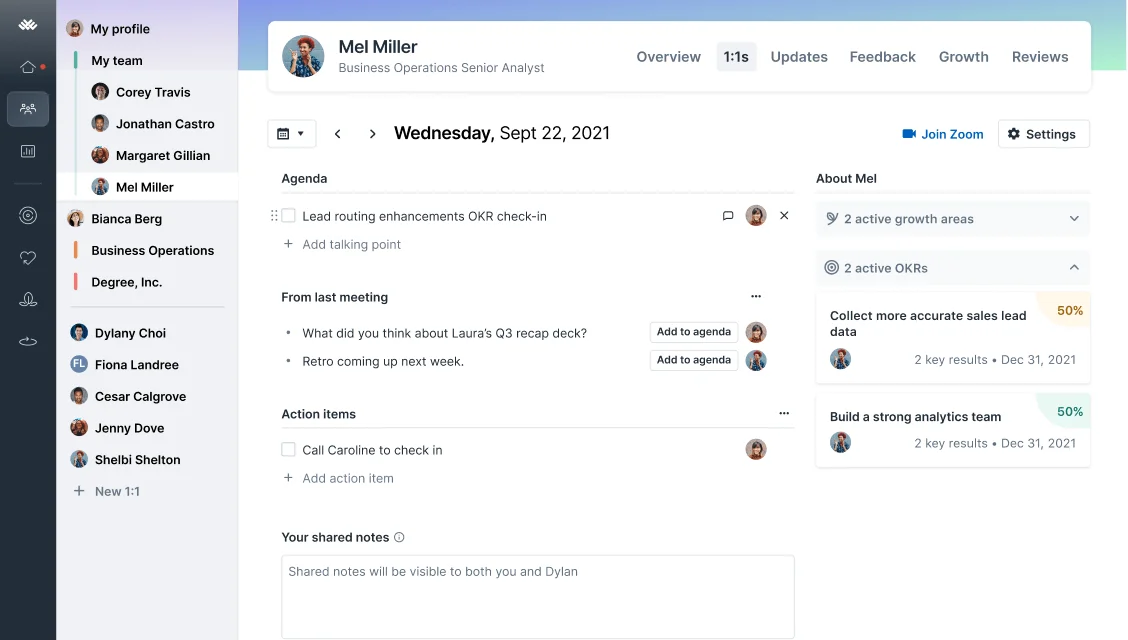
Lattice had the largest G2 review count among the purpose-built platforms included in this comparison as of August 2026, making it one of the more independently evidence-backed options here. Performance ratings connect directly to compensation planning and career development in the same platform, and the succession planning features connect to review outcomes. Bidirectional HRIS integration with Workday, SuccessFactors, and HiBob is a published capability.
Key Features
- Configurable review cycles with customizable templates, rating scales, and question sets by population
- Calibration view with manager distribution analytics and 9-box placement
- Compensation management connected to review outcomes within the same platform
- Goal and OKR management integrated with the annual review cycle and continuous feedback
- HRIS integration with Workday, SuccessFactors, HiBob, and others (bidirectional write-back depth varies by connector and configuration. Verify for your specific HRIS)
- AI-powered review writing, feedback summaries, and performance insights
Pros and Cons
Pros: "We use Lattice mainly for goal tracking, and the OKR feature is really helpful. You can set goals at the company, team, and individual level and clearly see how everything is connected." – G2 reviewer
- Largest independent review base of any dedicated performance platform on this list
- Compensation and career development connected to review outcomes without an additional tool
- AI review writing assistance is among the more mature implementations in the category
Cons: "A few areas for improvement include limited flexibility in custom reporting/analytics, occasional integration constraints with third-party tools, and pricing that could be more modular for smaller teams." – G2 reviewer
- Some review cycle configurations may require manual follow-up; verify automated reminder availability for your specific cycle setup with Lattice
- HRIS integration custom field sync has documented limitations for some configurations
- Admin complexity increases meaningfully when running many concurrent review types
Pricing
- Performance module starts at $10/person/month (published); $4,000/year minimum contract applies regardless of headcount
- Enterprise pricing varies by module selection and headcount
- Confirm current pricing with Lattice directly
7. Culture Amp
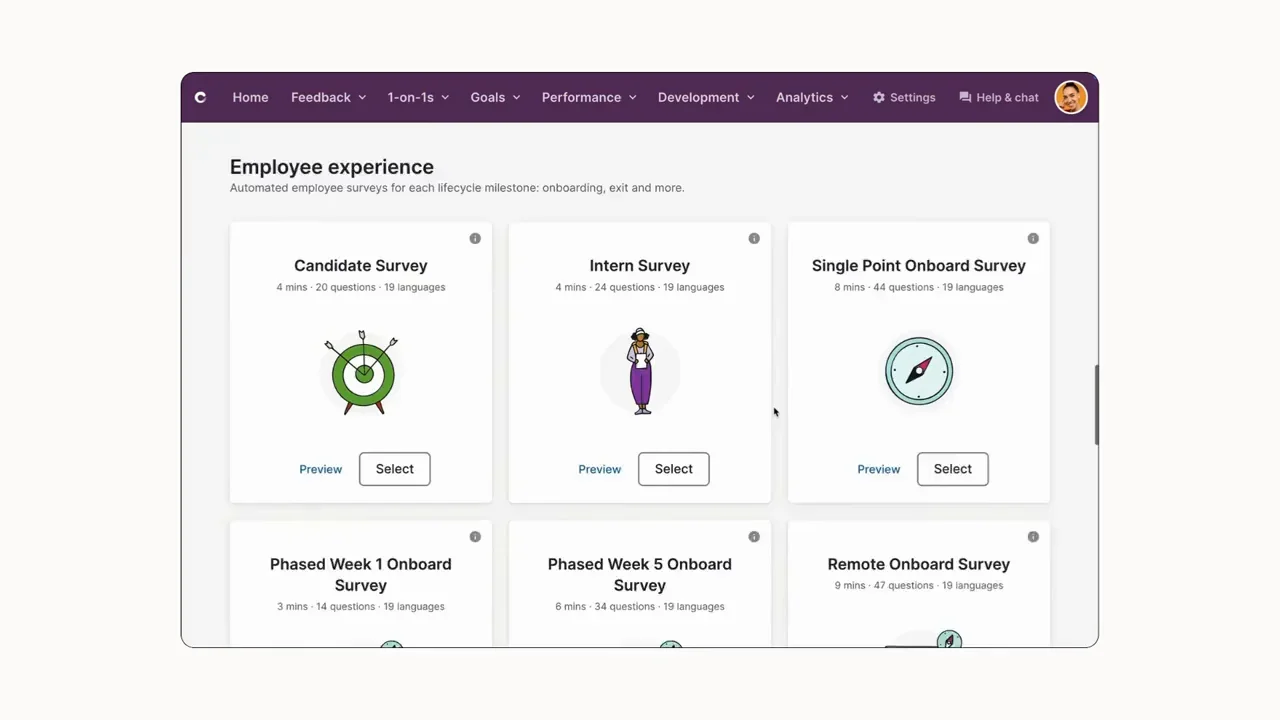
Culture Amp aggregates engagement and survey data across its customer base, enabling benchmarking of engagement scores against similar organizations by industry, size, and geography. Verify the specific scope of performance review benchmarking with Culture Amp. The platform also connects reviews directly to engagement surveys, so you can surface correlations between engagement data and performance outcomes within the platform.
Key Features
- External benchmarking data across the Culture Amp customer base by industry, size, and geography
- Performance reviews directly connected to engagement survey data in the same platform
- Calibration sessions with distribution views and manager analytics
- Goal management and continuous feedback within the review workflow
- AI-powered survey comment summaries and performance insights
- HRIS integration with Workday, SuccessFactors, BambooHR, and others
Pros and Cons
Pros: "As a HR leader who has designed and conducted employee surveys for many years, I highly value Culture Amp’s balance of sophisticated capability and ease of use. The platform is intuitive for both system administrators and our employees, which drives strong participation." – G2 reviewer
- External benchmarking data, primarily for engagement surveys, is a differentiator of the Culture Amp platform among tools on this list
- Performance-to-engagement connection surfaces correlations between engagement signals and review outcomes
- AI survey summarization is mature and reduces HR analysis time significantly
Cons: "It's not necessarily a dislike, because it's consistent with other HRIS providers -- but that all of the different elements are separate and priced as such. It is a benefit when you're starting out or new users to build it and invest accordingly, but sometimes it feels like when everything is separate and priced per product -- it affects the value perception." – G2 reviewer
- Performance review configurability is less flexible than dedicated review platforms
- Platform value compounds most when both engagement and performance modules are active together
- Bidirectional HRIS write-back experience varies by integration. Verify for your specific configuration
Pricing
- Quote-only, priced per person per month
- Enterprise pricing varies by module selection and headcount
- Confirm current pricing at cultureamp.com
8. PerformYard
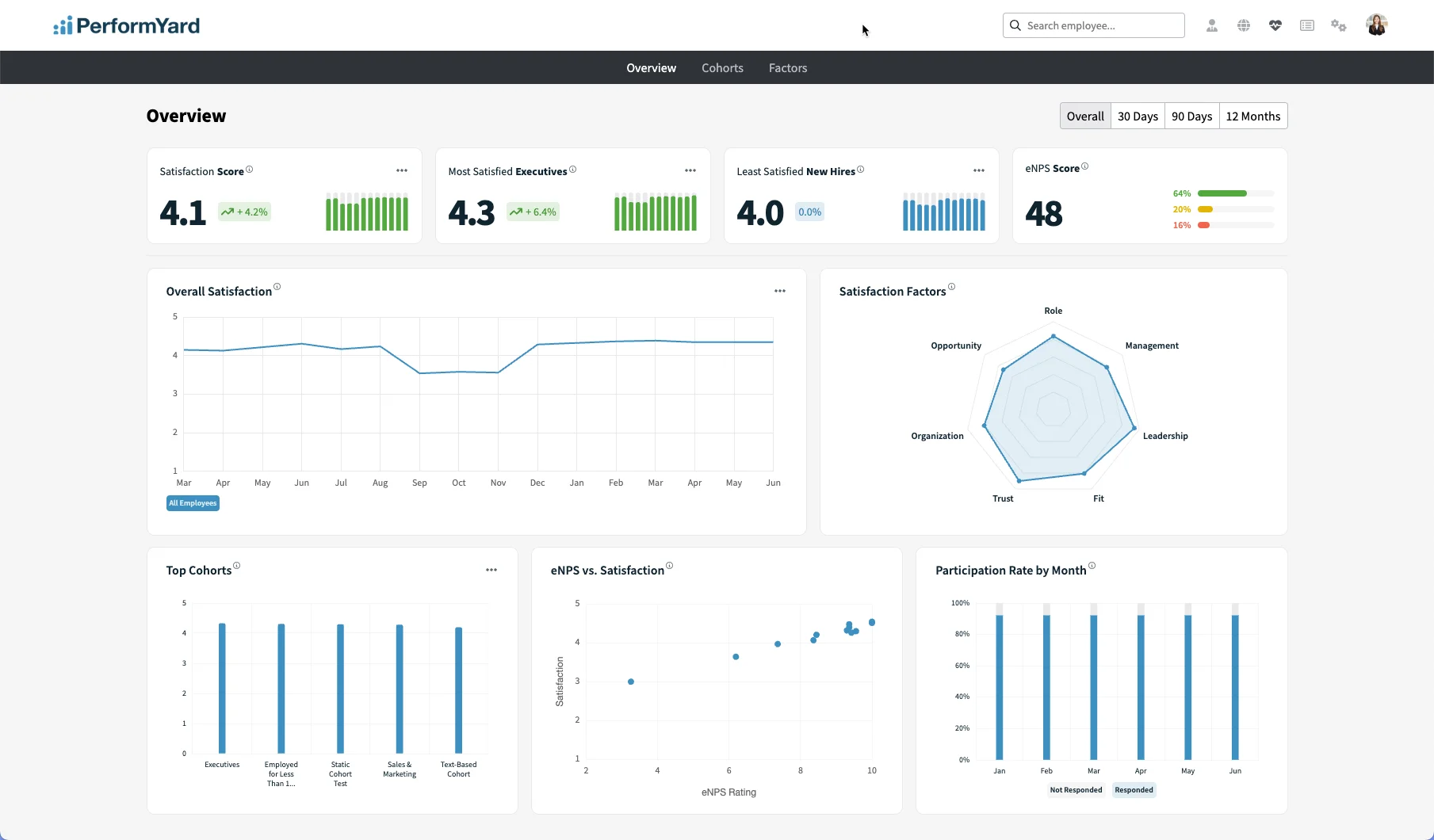
PerformYard is the platform to reach for when your industry requires documentation that can survive an audit. Federal contractors, healthcare organizations, and financial services firms running OFCCP-exposed reviews need configurable documentation and audit trails that support formal record-keeping requirements. Assess OFCCP compliance fit with legal counsel before committing. It supports a wide variety of concurrent review cycle types within a single deployment.
Key Features
- Configurable documentation and audit trails for organizations with formal record-keeping requirements (assess OFCCP compliance fit with legal counsel)
- Highly configurable concurrent review cycle types: narrative, rating-scale, project-based, and continuous
- Manager completion dashboards with automated reminders and escalation paths
- 360-degree feedback integrated into the review cycle with configurable visibility controls
- HRIS integration with Workday, BambooHR, ADP, and others
- SOC 2 Type II, GDPR, SSO/SAML compliance
Pros and Cons
Pros: "What I like most about PerformYard Performance Management is how it makes performance tracking structured, transparent, and continuous, instead of feeling like a once-a-year review. It helps managers and employees align goals clearly, share ongoing feedback, and track progress in real time." – G2 reviewer
- Configurable audit documentation and record-keeping for organizations with formal compliance requirements; assess OFCCP fit with legal counsel
- Broad review cycle configurability, supporting multiple concurrent cycle types within a single deployment
- 4.7/5 G2 rating across 1,217 reviews is among the highest evidence-backed scores in the category
Cons: "One potential drawback of PerformYard Performance Management is that, like many structured performance systems, it can feel time-consuming if it isn’t integrated smoothly into daily workflows. Some users may also find there’s a learning curve before they can fully adopt the platform." – G2 reviewer
- Calibration module is less developed than Betterworks for distribution curve analytics
- Positioned primarily as mid-market. Very large enterprises with complex calibration needs may outgrow it
- HRIS write-back capabilities vary by integration. Verify bidirectionality for your specific system
Pricing
- Starts at approximately $5-10/person/month depending on feature selection
- Enterprise pricing varies by headcount and configuration
- Confirm current pricing at performyard.com
9. Engagedly
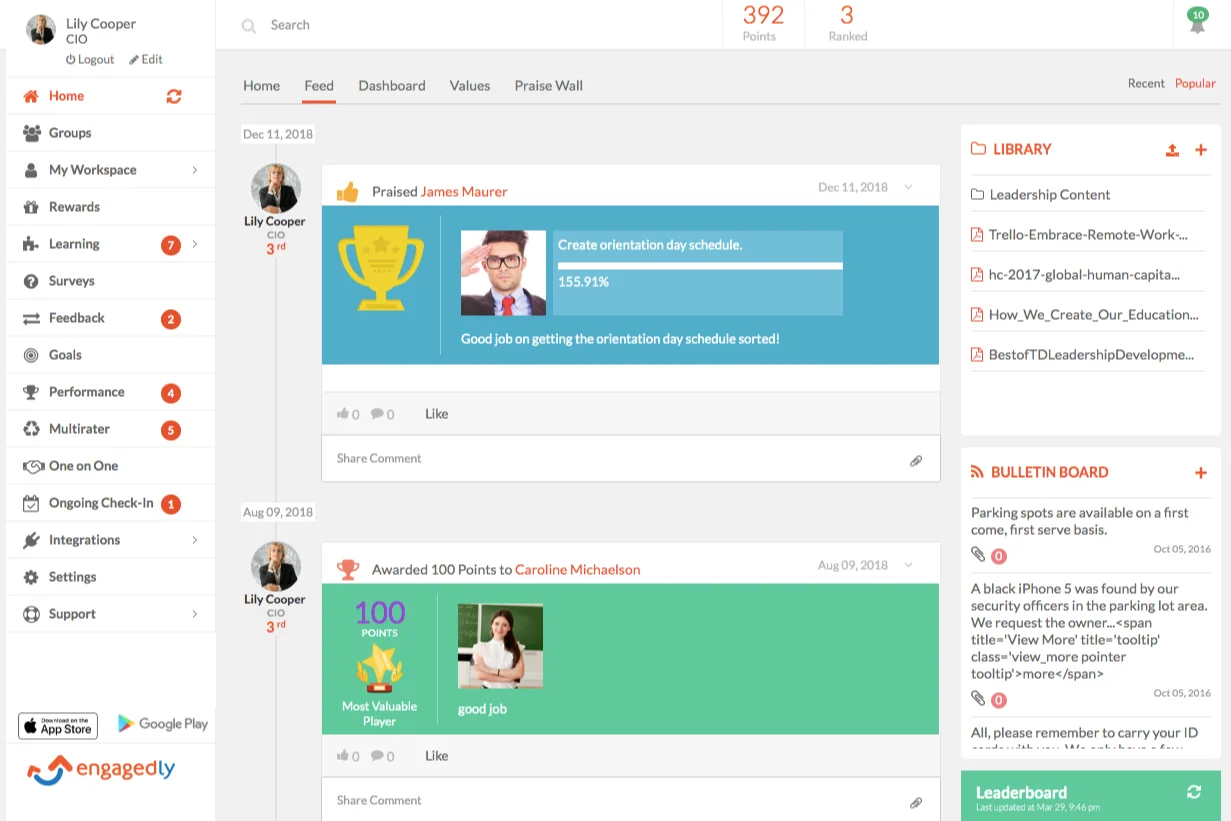
Engagedly has the broadest functional scope of any purpose-built platform on this list: reviews, calibration, 9-box, a built-in LMS, and real-time recognition in one system. Without that breadth you are maintaining more vendor relationships than you need to.
Key Features
- Performance reviews, 9-box calibration, succession planning, and built-in LMS within the platform (feature availability varies by package. Verify which modules are included in your plan)
- Real-time recognition and continuous feedback connected to the annual review cycle
- OKR and goal management with alignment from individual to company level
- Manager coaching and development tools within the review workflow
- HRIS integration with major platforms including Workday and BambooHR
- SOC 2 Type II, GDPR, SSO/SAML compliance
Pros and Cons
Pros: "I use Engagedly for performance management and goal tracking, and I really like how user-friendly it is for both the staff and me as the admin. It makes the performance and goal tracking processes easier because everything is integrated and in one place." – G2 reviewer
- Widest functional scope of any purpose-built platform on this list, covering reviews, LMS, succession, and recognition in one system
- 9-box and calibration available without an additional module purchase
- Built-in LMS eliminates one vendor relationship for organizations managing training and performance together
Cons: "There's a lot of screens in the goals module. It's not always clear where things should be. The goals module used to be better in my opinion before the upgrade. Marissa and AI is a helpful feature but needs some reworking." – G2 reviewer
- Individual modules are less deep than specialized tools, particularly LMS and OKR management
- Configuration complexity is documented, particularly for multi-approval workflows
- UI still receives more negative feedback than top-rated platforms in the category
Pricing
- Performance reviews module starts at $5/user/month (billed annually); $7,500/year minimum contract
- Enterprise pricing varies by module selection and headcount
- Confirm current pricing at engagedly.com
10. Leapsome
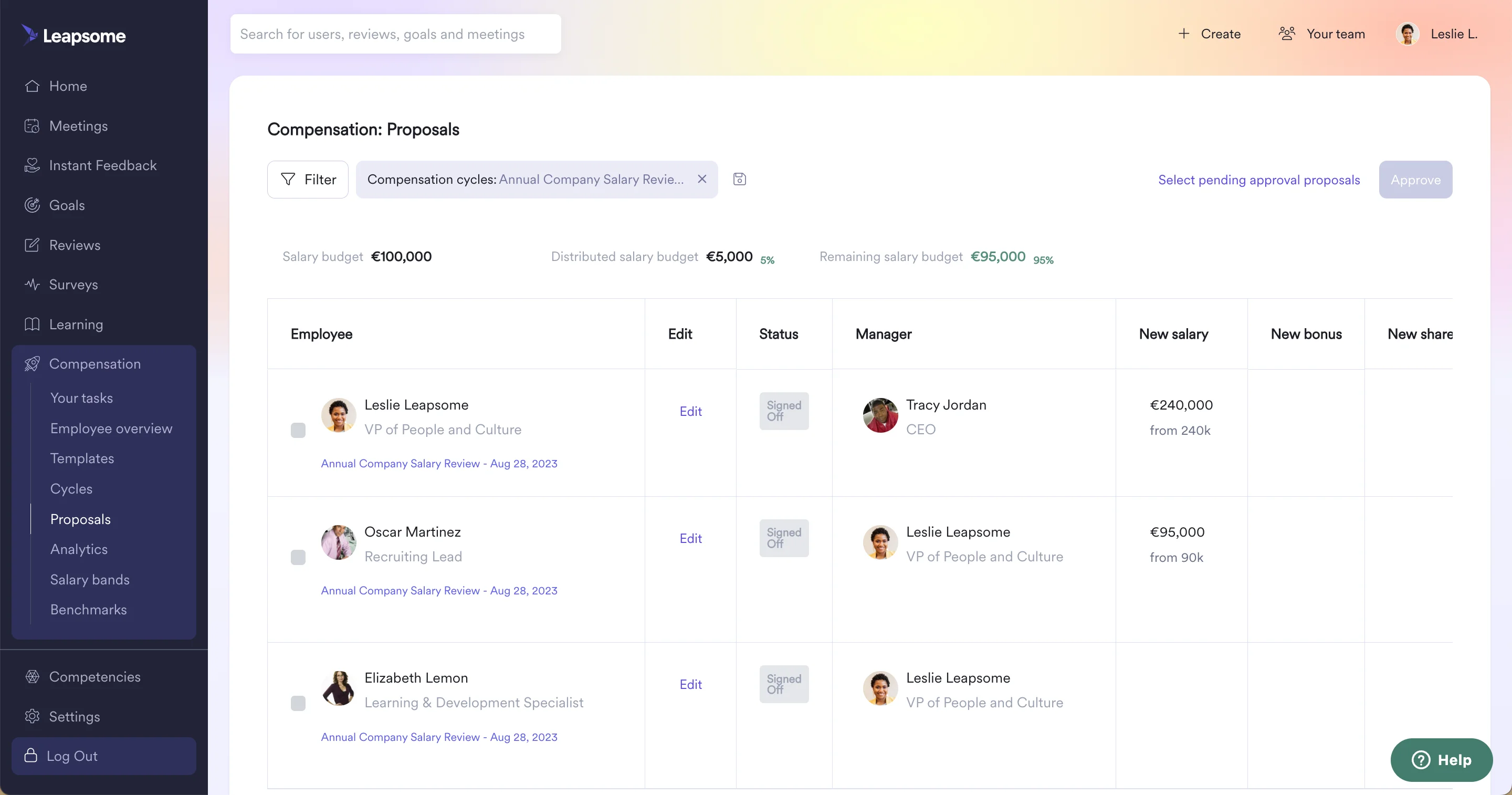
Leapsome has the highest G2 rating of any platform on this list, at 4.8 across more than 2,000 reviews. If independent user satisfaction data matters to your procurement process, that is the strongest signal here. The modular architecture means you can start with reviews and expand into learning, compensation, and engagement without switching vendors. Organizations at the larger end of the enterprise scale (10,000+ employees) should verify configuration depth and global org-structure support with Leapsome before committing.
Key Features
- Modular architecture: deploy reviews, goals, engagement, learning, and compensation independently or together
- Calibration sessions with distribution views and manager analytics
- AI-assisted review writing, goal suggestions, and performance summaries
- Learning paths and development plans connected to review outcomes within the same platform
- HRIS integration with Workday, SuccessFactors, HiBob, and others (bidirectional write-back depth varies by connector and configuration. Verify for your specific HRIS)
- SOC 2 Type II, ISO 27001, GDPR, and regional data hosting
Pros and Cons
Pros: "The meeting tracking is solid, and the company information is well-organized and intuitive. It is easy to understand and integrates seamlessly into our daily workflows. Furthermore, customer support has been consistently responsive. While the initial implementation can be challenging, once you become accustomed to it, the platform becomes a powerful tool." – G2 reviewer
- Highest G2 rating of any platform on this list, at 4.8/5 across more than 2,000 reviews
- Modular architecture lets you expand from reviews into learning, compensation, and engagement without switching vendors
- Strong GDPR and regional data hosting posture for European enterprise deployments
Cons: "I would like more options for giving praise and managing the team. Additionally, I am still receiving notifications for canceled or one-time meetings. The calendar integration can be temperamental, as these removed or single-instance events continue to appear." – G2 reviewer
- Organizations at 10,000+ employees should verify configuration depth and global org-structure support with Leapsome before committing
- Pricing is quote-only; total cost of ownership requires a vendor conversation
- Implementation complexity increases at larger headcounts. Timeline and resource requirements should be verified early
Pricing
- Modular pricing starts at $3/user/month (billed annually); enterprise pricing is custom and varies by headcount and modules selected
- Confirm current pricing at leapsome.com
How to Choose Enterprise Performance Review Software
The right platform depends on two honest answers: what your primary enterprise requirement actually is, and whether your team has the resources to implement and administer it. For a broader framework, our performance management software guide covers the full picture.
- If your HRIS is Workday or SAP and keeping data in a single system of record matters more than review experience, those platforms belong at the top of your shortlist. The integration value is real. The UX friction is also real.
- If calibration defensibility is the primary requirement Betterworks and Teamflect offer calibration features including distribution views, 9-box placement, and bulk review calibration.
- If your organization is standardized on Microsoft 365 Teamflect would be a good choice. Its Microsoft Teams integration may support adoption for organizations already standardized on Microsoft 365.
- If performance outcomes need to drive learning assignments in the same system, Cornerstone is among the few platforms on this list that connects performance outcomes directly to learning assignments within the same system at enterprise scale.
- If engagement and performance data need to live in the same analytical view, Culture Amp's external benchmarking combination is not matched by other platforms here.
Whatever shortlist you build, verify HRIS write-back for your specific configuration, model total cost at your actual headcount including implementation, and run a pilot in one business unit before committing the whole organization.
Final Words
There's no single best enterprise performance review platform, only the right one for your situation. And more often than not, the teams that pick the wrong tool aren't making a bad call on features. They're solving the wrong problem entirely. Without a clear answer to whether you're dealing with an integration gap, a calibration gap, or an adoption gap, any platform you pick is a guess.
To narrow it down, pick two or three platforms from this list that match your actual procurement profile, not an ideal one. You should ask each vendor for a reference customer at your headcount running your specific HRIS stack. Also, verify write-back for your exact configuration, not a generic integration diagram. Lastly, get implementation cost alongside licensing before you compare anything else.