.svg)
Culture Amp and 15Five show up on the same HR software shortlists often enough that the comparison feels obvious. Both cover employee engagement and performance management. Both have solid G2 scores and recognizable customer logos. But the similarity ends there.
Culture Amp was built around organizational psychology and the science of listening at scale. 15Five was built around the weekly check-in and the belief that manager behavior drives performance outcomes. Choosing between them is less about features and more about what problem you are actually trying to solve: measurement depth or workflow embedment.
This comparison breaks down where each platform wins, where it falls short, and which context makes each the right call.
Culture Amp Overview
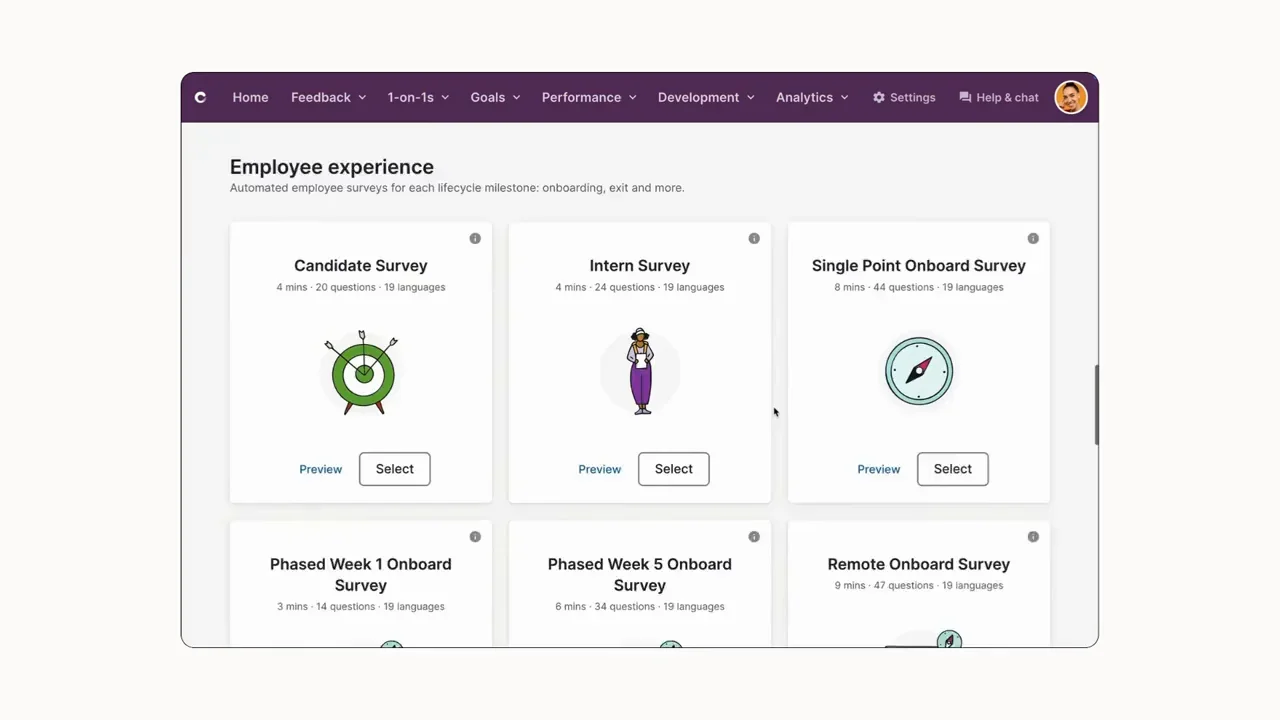
Culture Amp is an employee experience platform built on scientifically validated survey content developed with organizational psychologists. It draws on benchmark data from more than 6,500 organizations, giving HR teams a reference point that few competitors can match. Canva, McDonald's, and Etsy are among its customers. The platform was built to measure employee experience with precision and translate that data into organizational insight, which makes it a strong fit for HR teams that lead with analytics.
Key Features
- Engagement, lifecycle, and pulse surveys with science-backed templates
- Industry benchmarking against data from 6,500+ organizations
- Performance Insights module covering 360-degree feedback, goals, and 1:1 conversations
- People analytics with driver analysis, heatmaps, and retention predictions
- Post-survey action planning workflows
- People Scientist advisory support on higher-tier plans
Pros
“We've been happy with the tool after running one large company-wide survey and a couple of smaller ones. Culture Amp works hard to make sure employee data is kept confidential.” — Capterra reviewer
- Reviewers consistently praise the robust reporting capabilities, which allow HR teams to dive into survey results for actionable insights.
- The platform offers strong baseline data that adds credibility when presenting workforce findings to leadership.
Cons
“The main limitation we've run into with engagement surveys is that the platform is strong on the what but can leave you without enough of the why.” — G2 reviewer
- While the insight generation is strong, the platform lacks robust tooling to help managers follow through on those findings.
- Buyers frequently encounter pricing opacity during their initial research phase.
- Lower-tier subscription plans offer restricted access to on-demand customer support.
- Users across multiple review platforms note that the pricing structure can feel expensive relative to the value delivered.
15Five Overview
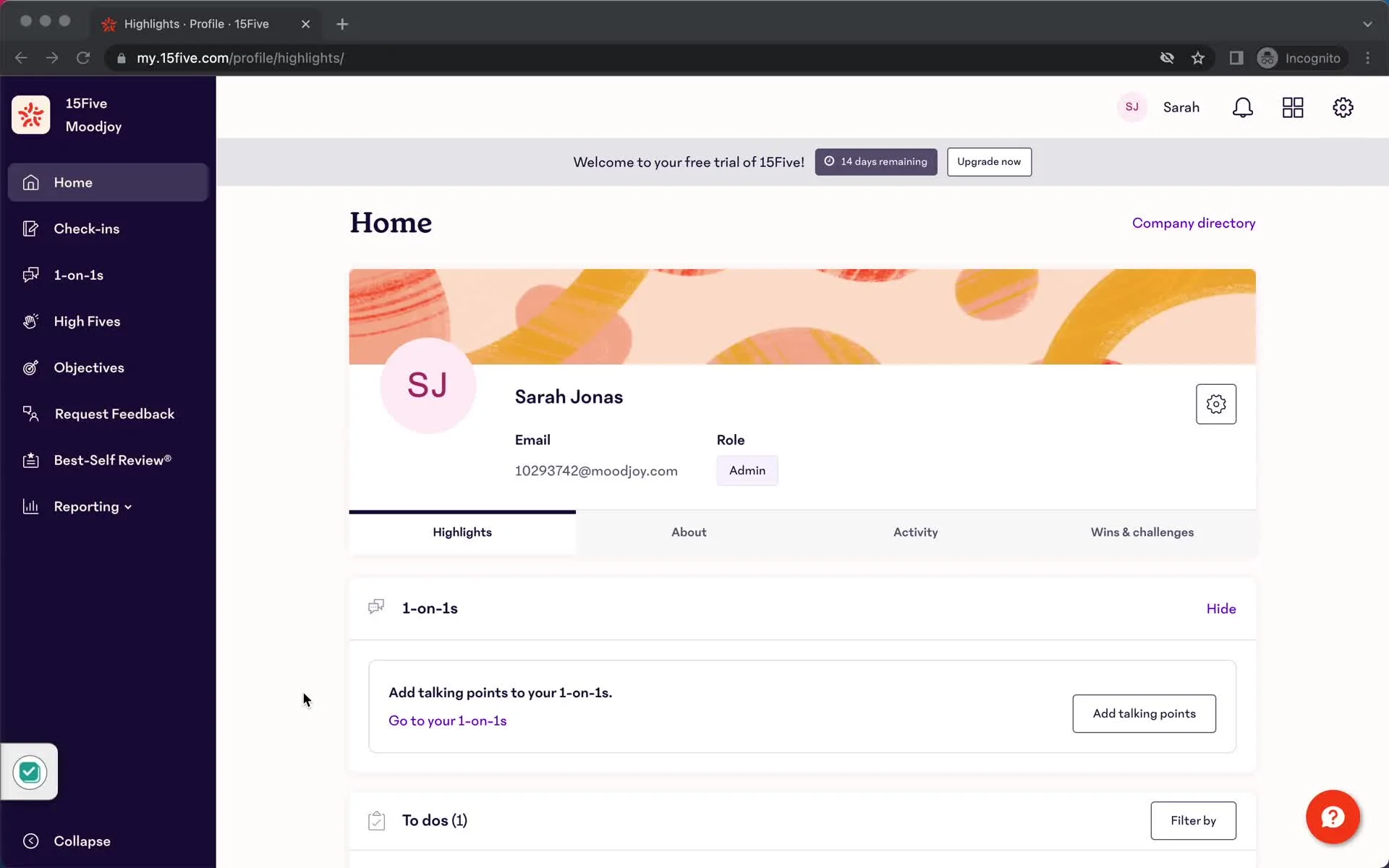
15Five is an employee engagement and performance management platform built around a structured weekly check-in cadence. The name comes from the founding concept: a 15-minute commitment from the employee, a 5-minute review from the manager. It takes a strengths-based approach grounded in positive psychology, focusing on what employees do well and what support they need, rather than tracking performance gaps.
Key Features
- Structured weekly check-ins with async updates and manager acknowledgment
- Best-Self Review methodology: performance reviews built on positive psychology
- OKR and goal tracking integrated into the weekly check-in workflow
- 1:1 meeting management with shared agendas and action item tracking
- High Five peer recognition built into the weekly workflow
- Engagement and pulse surveys with manager-level dashboards
- Manager effectiveness scoring with data-driven indicators
- AI-assisted review summaries and coaching insights
Pros
“With 15Five, we were able to make the workflow and update tasks very smooth, and we were able to manage the weekly, monthly, and yearly functional goals more easily than ever before.” — Capterra reviewer
- The platform achieves strong engagement rates, avoiding the common software abandonment issue that plagues the performance management category.
- Features like weekly check-ins preserve team alignment across remote or distributed setups without slipping into micromanagement.
Cons
“Although the core functionality is excellent, we’ve occasionally run into situations where an advanced customization or reporting option was locked behind a more expensive version.” — G2 reviewer
- The platform lacks an industry benchmarking dataset, making it difficult for teams that need external context for their survey results.
- The weekly check-in routine can feel repetitive and quickly turn into a bureaucratic checkbox exercise if teams do not fully commit to the methodology.
- Multiple reviews highlight that the mobile experience lags noticeably behind the desktop interface.
Pricing Comparison
The transparency gap between these two platforms is a meaningful editorial point, as 15Five is considerably more transparent in its pricing than Culture Amp.
15Five publishes its entry-level pricing. The Engage plan starts at $4/user/month and covers engagement surveys, pulse surveys, and basic check-ins. The Perform plan, which adds performance reviews, OKRs, and 360-degree feedback, is available in the Perform plan priced at $11/user/month. A bundled Total Platform option covers engagement, performance, and compensation for $16/user/month. Annual billing is required for published rates, and a free trial is available.
Culture Amp does not publish any pricing. All figures require a sales conversation. Third-party sources place costs at around $7 to $20 per user per month depending on company size and modules chosen. No free trial is available before purchase.
For comparable feature sets, both platforms land in a similar price band once modules are bundled. The difference is that 15Five buyers can build a budget estimate before talking to a sales team. Culture Amp buyers cannot. That asymmetry disadvantages organizations doing early-stage research, regardless of where the final contract lands.
Culture Amp vs 15Five: Feature Comparison
Choosing between Culture Amp and 15Five depends on whether you need deep organizational analytics or daily managerial execution. The following breakdown compares how these distinct product philosophies handle core features, based on user feedback and platform capabilities.
Engagement Surveys and Benchmarking
This is Culture Amp's clearest advantage. Its survey library is built on validated frameworks developed with organizational psychologists, and the benchmark dataset, covering more than 6,500 organizations across industries, gives HR teams a reference point that most competitors cannot offer.
When a CHRO asks "how does our engagement compare to peer organizations in our industry?", Culture Amp can answer that question with real data. 15Five has engagement surveys and pulse tools, but no equivalent benchmarking infrastructure.
For organizations where external comparison is a core requirement, such as regulated industries, public-facing companies, or HR teams presenting to boards, this gap matters significantly.
Verdict: Culture Amp wins on survey depth and benchmarking.
Performance Management and Reviews
15Five's Best-Self Review format and the weekly check-in workflow are its defining strengths. Questions in the review cycle are designed to surface strengths and development areas rather than score gaps, and the ongoing check-in cadence means review cycles build on a documented performance history rather than starting from scratch. 15Five vs Betterworks compares the two on OKR alignment and manager coaching.
Culture Amp's Performance Insights module covers reviews, goals, and 1:1 conversations, but G2 reviews and analyst commentary consistently treat it as secondary to the platform's core listening and analytics capability. Teams that need performance management to feel like a natural workflow, not a periodic event, will find 15Five the more purposeful tool here. People analytics is another area worth checking, Teamflect vs Culture Amp shows how the two platforms differ.
Verdict: 15Five wins on workflow-led performance management.
Manager Experience and Adoption
Tool adoption is where performance management software most often fails in practice. 15Five's weekly check-in is embedded into the working rhythm by design. Managers interact with it as part of normal operations, not as an HR-imposed reporting task.
Culture Amp is primarily an HR-led platform. Managers engage with it when HR initiates a survey or review cycle, but it does not generate consistent day-to-day touchpoints the way 15Five does. For organizations where low manager participation has killed previous performance initiatives, the structural difference here is meaningful.
Verdict: 15Five leads on manager adoption. G2 ratings consistently reflect this across multiple review cycles.
People Analytics and Reporting
Culture Amp's analytics layer is the most mature in this comparison by a significant margin. Driver analysis identifies which engagement factors are most likely to affect retention. Heatmaps surface demographic and team-level patterns. Retention predictions flag flight risk before it becomes attrition.
15Five's reporting is solid and manager-facing, but it does not approach Culture Amp's depth on the organizational analytics side. For HR teams that need to present workforce data to a CFO or board with statistical backing, Culture Amp is the better-equipped tool.
Verdict: Culture Amp leads on analytics depth and enterprise reporting.
Insight-to-Action Workflow
This is where the philosophical difference between the two platforms is most visible. Culture Amp excels at measurement. The documented weakness, raised by multiple G2 and Capterra reviewers, is the gap between data and follow-through.
Generating an insight is not the same as driving manager behavior change, and Culture Amp's tooling on the action side is comparatively light relative to the analytics layer. 15Five does not produce the same depth of data, but it embeds action into the weekly workflow by design: check-ins, 1:1 agendas, and goal tracking are part of the same operational cadence.
Organizations that have a measurement problem should consider Culture Amp. Organizations that already have engagement data and need managers to act on it will likely get more consistent follow-through from 15Five.
Verdict: Tied, with context. Culture Amp wins if the problem is measurement. 15Five wins if the problem is execution.
Choose Culture Amp If …
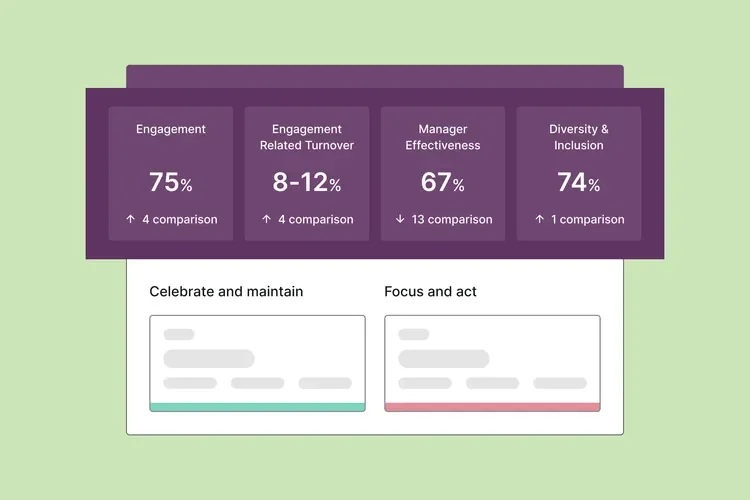
- Industry benchmarking against thousands of peer organizations is a primary requirement and your HR team will use that data for leadership reporting or board presentations
- Your HR function leads the people strategy and needs a platform with advanced analytics, driver analysis, and retention predictions to support those decisions
- You have a dedicated HR team capable of translating survey data into structured action plans, since the platform rewards teams that can operationalize the insight
- Science-backed survey methodology carries weight in your context, whether due to regulatory environment, organization size, or executive expectation
- Pricing transparency is not a constraint in your procurement process and you are comfortable scoping cost through a vendor conversation
Choose 15Five If …
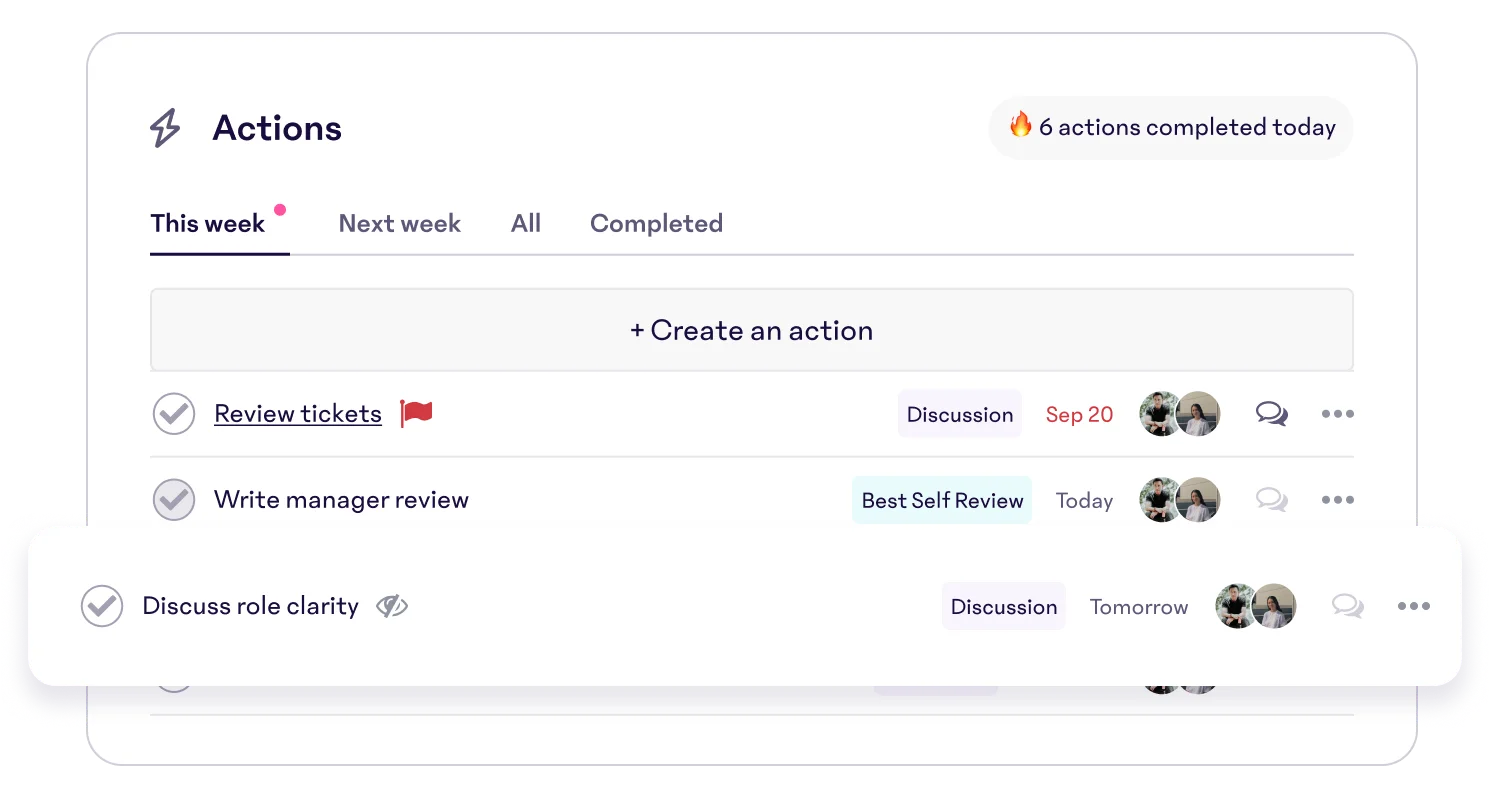
- Manager adoption has been a persistent challenge; you need a tool that embeds into daily workflows rather than sitting outside them
- Continuous performance management matters more to your organization than annual survey depth: weekly check-ins, regular 1:1s, and OKR tracking are the outcomes you are buying for
- Transparent, published pricing is important for your procurement process and you want to build a budget estimate before engaging a sales team
- Your workforce is distributed or remote-first, and the async check-in cadence addresses time-zone coordination issues your current tools have not solved
- You are a 50- to 500-person organization where Culture Amp's enterprise pricing and survey infrastructure are more than your current needs require
Final Verdict
Culture Amp and 15Five are genuinely different tools that happen to share a category label. Culture Amp is the right call for HR-led organizations that need measurement depth, industry benchmarking, and a strong analytics layer to inform strategic decisions.
Meanwhile, 15Five is the right call for manager-first cultures, particularly distributed teams and organizations under 500 employees, where consistent workflow adoption and continuous feedback matter more than survey sophistication.
Ultimately, if your primary question is "how do we compare to our industry?", choose Culture Amp. If your question is "how do we get managers to actually use this?", choose 15Five.