


.svg)
Most HR teams suffer from a visibility problem, not a skills gap. When talent remains hidden, companies miss employees perfectly suited for internal opportunities, leading to burnout and unnecessary hiring costs. This lack of transparency also hinders succession planning, a critical area where HR leaders report that deep knowledge of organizational culture (50%) is one of their most important considerations.
An internal talent marketplace closes this gap by matching employees to roles, projects, and mentorships based on skills rather than titles. By continuously identifying candidates who meet your performance and cultural benchmarks, it keeps critical talent from leaving.
This ranking covers the 10 best internal talent marketplace platforms for 2026, compiled from hands-on demos, real user reviews, and verified vendor documentation.
If you want to skip directly to the top 10 and see how each platform stacks up on pricing, ease of use, and scalability, jump straight to our ranking of the best talent marketplace software.
Comparison at a Glance
Scope note: this list covers internal talent marketplaces, meaning software that matches existing employees to opportunities inside the organization. It doesn’t cover freelance or contractor hiring marketplaces, which solve a different problem for a different buyer.
What Is an Internal Talent Marketplace
An internal talent marketplace is software that matches existing employees to opportunities inside the organization, roles, short-term projects, mentorships, and learning, based on skills rather than job title or tenure. It runs continuously, not just during an annual reorg, and it gives employees visibility into moves they would otherwise never hear about.
This is a distinct category from a few adjacent ones worth telling apart:
Talent Marketplace vs. Skills Management
Skills management software focuses on capturing and tracking what skills exist across a workforce. A talent mobility platform takes that same skills data and actively matches it to open opportunities. Many vendors on this list do both, but the distinction matters when evaluating a tool built for one purpose only.
Talent Marketplace vs. Career Pathing
Career pathing software shows an employee where a role could lead over time. An opportunity marketplace surfaces what is actually open and matched to them right now. The two work best together, which is why several platforms here (Fuel50 and Teamflect in particular) bundle both.
Talent Marketplace vs. HCM or HRIS
Your HRIS is the system of record for employee data. A talent marketplace, whether standalone or built into your HCM suite, is the layer that turns that data into active matching. Workday and SAP Success Factors both offer native marketplace modules for exactly this reason.
Internal vs. External
This list covers internal talent marketplaces only. Freelance and contractor hiring marketplaces solve a related but different problem: sourcing outside talent rather than mobilizing the people already on payroll.
Key Features to Look For
A handful of capabilities separate a genuine talent mobility platform from a repackaged job board.
- AI-driven skills inference that updates from real work activity, not a static profile filled out once
- Opportunity types beyond open roles, including gigs, short-term projects, and mentorships
- Manager and HR governance tools, so mobility does not turn into a free-for-all
- Career pathing visualization that shows employees a realistic route, including lateral and non-linear moves
- Analytics that go past activity counts, covering internal fill rates, mobility trends, and skills-gap closure
Benefits of an Internal Talent Marketplace
The case for this category rests on a few measurable outcomes, not a general promise of workforce agility.
- Lower external hiring costs, since roles get filled from inside before a req goes external
- Better retention, particularly among employees who would otherwise leave to find growth elsewhere
- Faster response to skills gaps, since existing capability becomes visible instead of hidden inside a single department
- Broken-down silos, giving departments visibility into skills that would otherwise stay locked to one team
- Workforce agility, letting the organization redeploy people toward priority work without a formal reorg
How to Choose an Internal Talent Marketplace
Picking the right platform comes down to a handful of honest questions, not a feature checklist. Work through these before the first vendor call.
How good is the skills ontology, really?
Ask whether skills are curated by people with workforce-measurement expertise or generated purely by algorithm from resumes and job titles. Both approaches work, but they carry different accuracy trade-offs, and the vendor should be able to explain which one they use without deflecting.
How wide is the opportunity breadth?
Some platforms match only to open roles. Others match to gigs, projects, mentorships, and learning as well. If your goal is deeper mobility than a glorified internal job board, confirm the opportunity types before signing.
Is the agentic AI shipping today, or on a roadmap?
Several vendors now offer proactive, conversational career guidance. Ask for a live demo of the feature working in production, not a slide describing where it is headed.
Will managers support this, or block it?
A marketplace only works if managers let people move. Ask the vendor how their governance and approval flows turn managers into advocates rather than gatekeepers.
Does it connect cleanly to your HCM system of record?
If you already run Workday or SAP SuccessFactors, confirm honestly whether their native marketplace closes the gap, or whether a dedicated platform is worth the added integration.
What does it take to seed enough opportunities to matter?
A marketplace with three open roles will not get used. Ask what a realistic rollout plan looks like for reaching critical mass in the first 90 days.
10 Best Talent Management Software in 2026
Nowadays, the shift toward skills-based hiring and workforce planning has transformed how companies hire, retain, and develop their staff. Modern software now prioritizes data-driven insights, helping HR leaders move away from static job descriptions toward fluid, agile talent deployment.
The following ranking highlights the top 10 talent management platforms for 2026.
1. Gloat
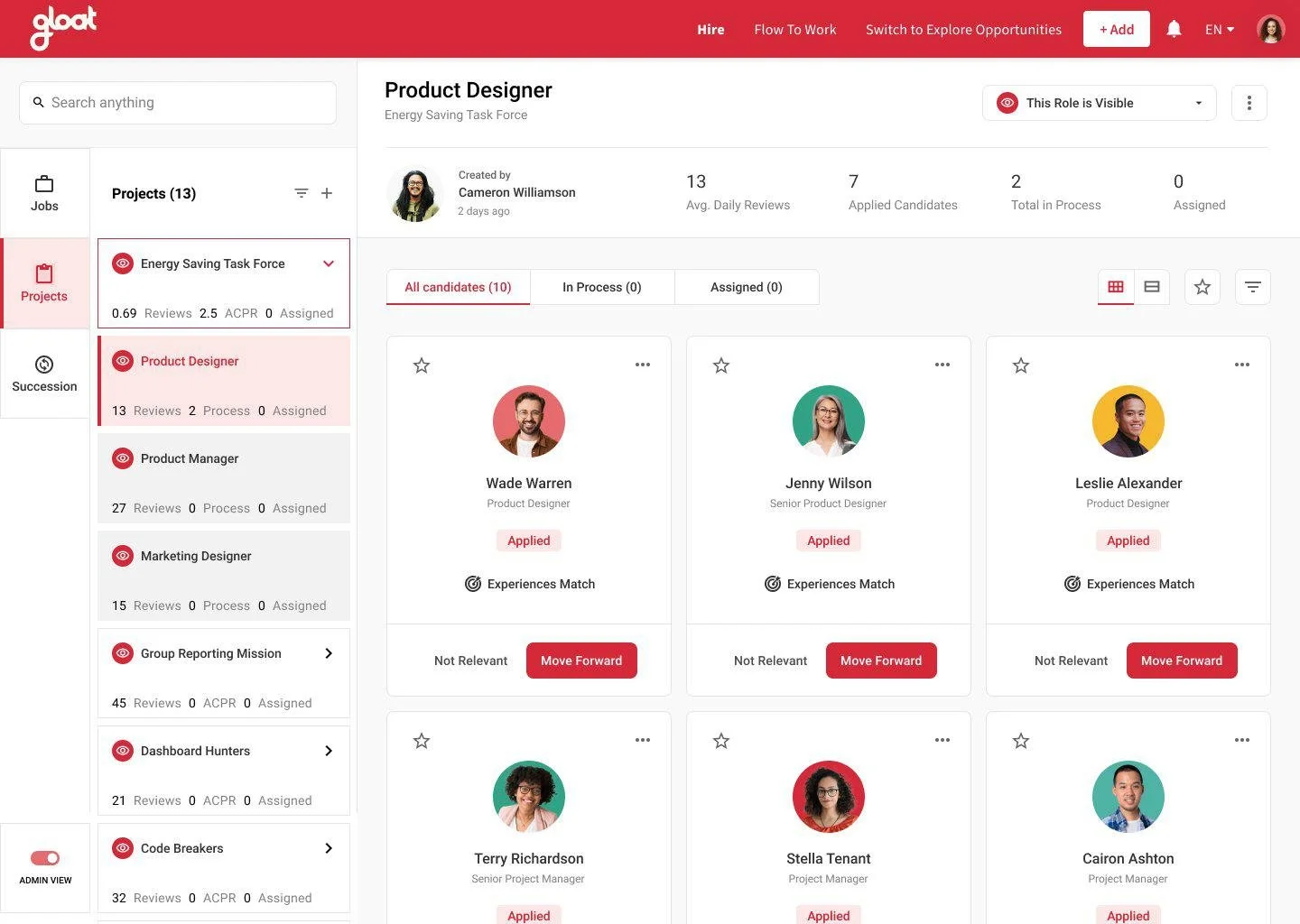
Gloat is the platform most HR leaders picture when they hear "internal talent marketplace," and for good reason. It was one of the first vendors to combine open roles, gigs, projects, and mentorships into a single AI-matched experience, and it remains the deepest option on this list for organizations that want every opportunity type in one place.
Gloat's Workforce Graph, its underlying skills database, updates continuously as employees work rather than relying on a once-a-year self-assessment.
Integrations: connects to major HRIS and HCM platforms, plus LMS and LXP systems for learning recommendations. Full integration documentation is provided during the sales process rather than published openly.
Key features
- AI matching across roles, gigs, projects, and mentorships, not just open positions
- Mosaic, a work-orchestration layer that breaks large initiatives into tasks and staffs them with best-fit employees
- Skills Landscape, showing employees how their current skills line up against role requirements
- Manager dashboards with team skills visibility and development gaps
- Recruiter tools that search the internal pipeline before a role goes external
Pros and Cons
Pros: "Gloat has a fantastic user interface and user experience, which minimises the employee effort to log their experience, skills and development goals." - Capterra review
- The AI-driven skills graph updates from real work activity, not just a static self-reported profile
- Recruiters can search the internal talent pool directly instead of defaulting to an external req
Cons: "For now, InnerMobility is only available in English, which for us as a global company is not ideal. Gloat is working on releasing InnerMobility in French, Spanish and Mandarin in the near future." - Capterra review
- Language coverage lags behind some multilingual competitors, a real constraint for global rollouts
- Integration with existing HR systems takes real setup time, per multiple user reports
Pricing
To obtain pricing details for the Gloat platform, you must submit a request through their sales team. The company does not publish specific costs online, so you will need to complete their demo form to connect with a representative who can provide a quote based on your organization’s requirements.
2. Fuel50
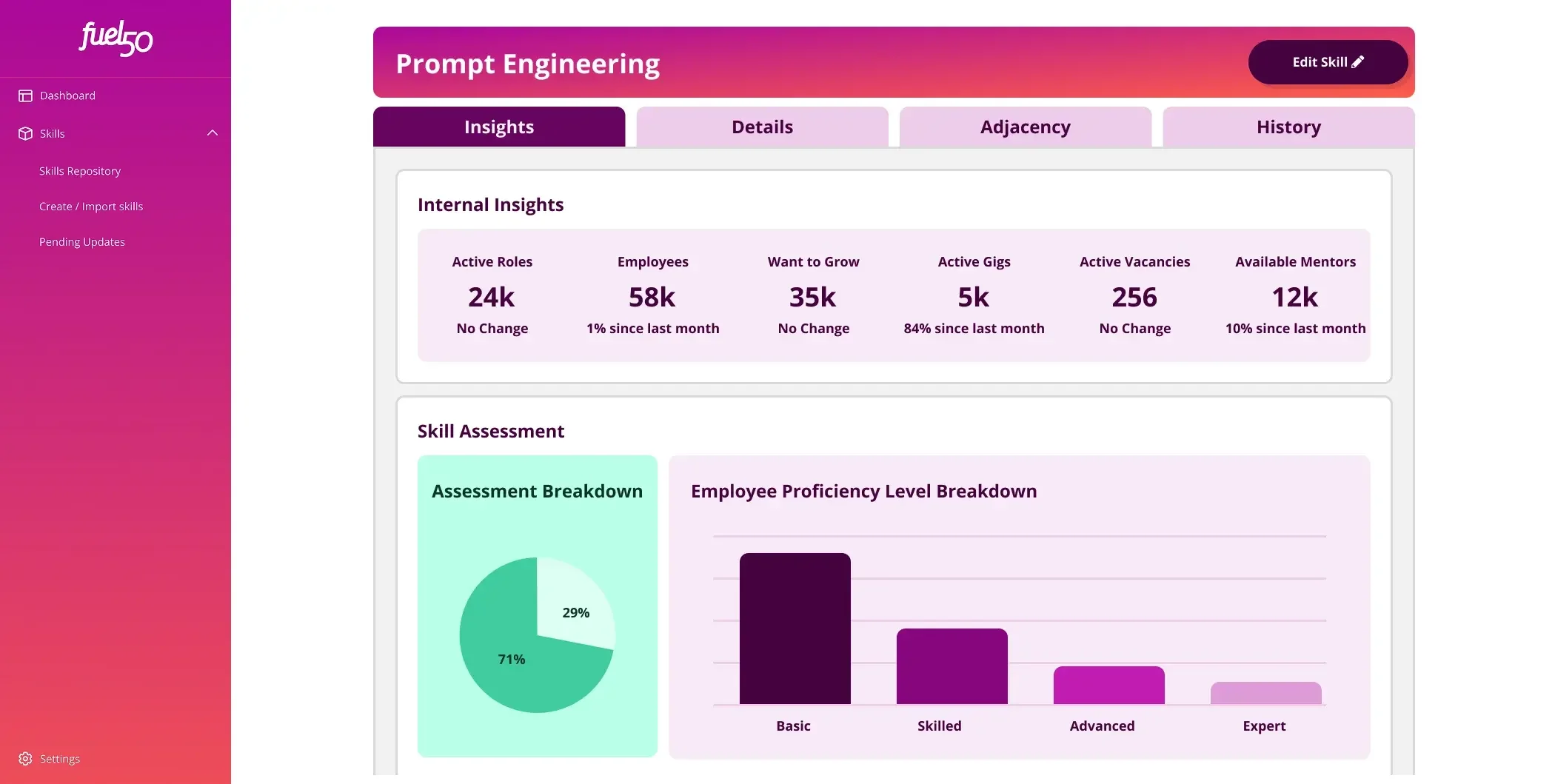
Fuel50 starts from a different question than most of this list. Instead of asking what skills an employee already has, it asks where they want to go, then works backward to the roles, gigs, and learning that close the gap. That aspiration-first design comes from the platform's roots in career-development research rather than pure matching algorithms, and it shows in how the product is built.
Integrations: connects to major HRIS platforms and delivers its Career Advisor Agent natively inside Microsoft Teams. Available in 13 languages.
Key features
- A three-dimensional skills ontology with proficiency levels, curated by organizational psychologists
- Career Advisor Agent, an AI guide embedded in Microsoft Teams that answers career questions and proactively surfaces opportunities
- Non-linear career path visualizations, including lateral moves the org chart would not suggest
- Gig and stretch-assignment postings tied to specific skill and proficiency requirements
- Bias-tested, explainable AI with a public position against black-box recommendation logic
Pros and Cons
Pros: "Just getting started with exploring the platform, so far it seems to have what I was looking for in 1 place. Learning how it will integrate with our other platforms." - Capterra review
- The Career Advisor Agent is one of the few agentic career-guidance features in this category actually running in production, not on a roadmap
- Skills recommendations tie directly to development actions, not just a gap score
Cons: "We had trouble implementing Gigs several years ago, but that was mainly due to internal issues with the time commitment for a gig host. However, this was before gigs went through a redesign." - G2 review
- Navigation depth means some core actions, like reviewing your own skill profile, take more clicks than they should
- Gig-hosting still depends on manager time commitment, which can bottleneck rollout regardless of platform redesign
Pricing
Fuel50 does not provide standardized public pricing, as their costs are customized based on organizational size, module selection, and scale. While some reports suggest estimates around $6 to 10 per employee per month, you must contact their sales team for an accurate quote tailored to your business needs.
3. Eightfold AI
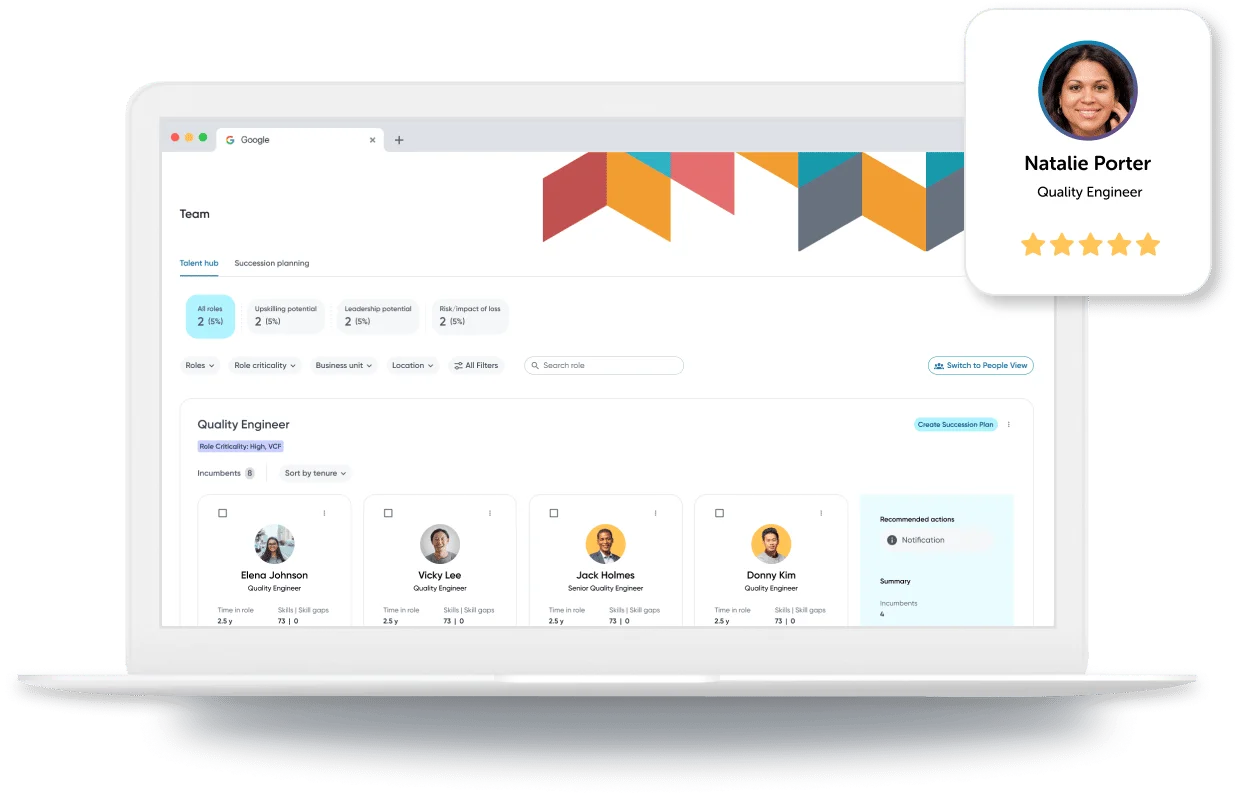
Eightfold takes the broadest scope on this list. It is a talent intelligence platform first, one that spans external recruiting, internal mobility, and workforce planning on the same skills graph, with the internal marketplace functioning as one module rather than the whole product. That breadth is exactly why organizations already running Eightfold for recruiting often extend it into internal mobility rather than buying a second vendor.
Integrations: bi-directional sync with major ATS, HRIS, VMS, and LMS platforms, including Workday and SAP SuccessFactors.
Key features
- Deep-learning skills inference drawn from career history, not just declared skills
- Smart Apply, a streamlined application flow for both internal and external roles
- Bias-reduction tools, including profile anonymization during screening
- Predictive workforce planning that models skill gaps and attrition risk before they hit
- Agentic AI features for continuous candidate and opportunity screening
Pros and Cons
Pros: "Ease of applying to Jobs using Eightfold Smart Apply." - G2 review
- Skills inference from full career history reduces the manual profile-building burden on employees
- Analyst recognition from IDC MarketScape and the Fosway 9-Grid reflects sustained category leadership, not a single good year
Cons: "Although it is a great overall too, I found that it is not very versatile when it comes to customization and setup." - Capterra review
- Limited configuration flexibility compared to platforms built specifically around internal mobility workflows
- Enterprise pricing and multi-month implementation put it out of reach for organizations under roughly 2,000 employees
Pricing
Eightfold AI does not publish public pricing, as they provide custom enterprise quotes based on your company size, module selection, and implementation needs. Industry reports estimate costs between $7 to $10 per employee per month, with annual contracts frequently ranging from $50,000 for mid-market firms to over $500,000 for large enterprises.
4. 365Talents
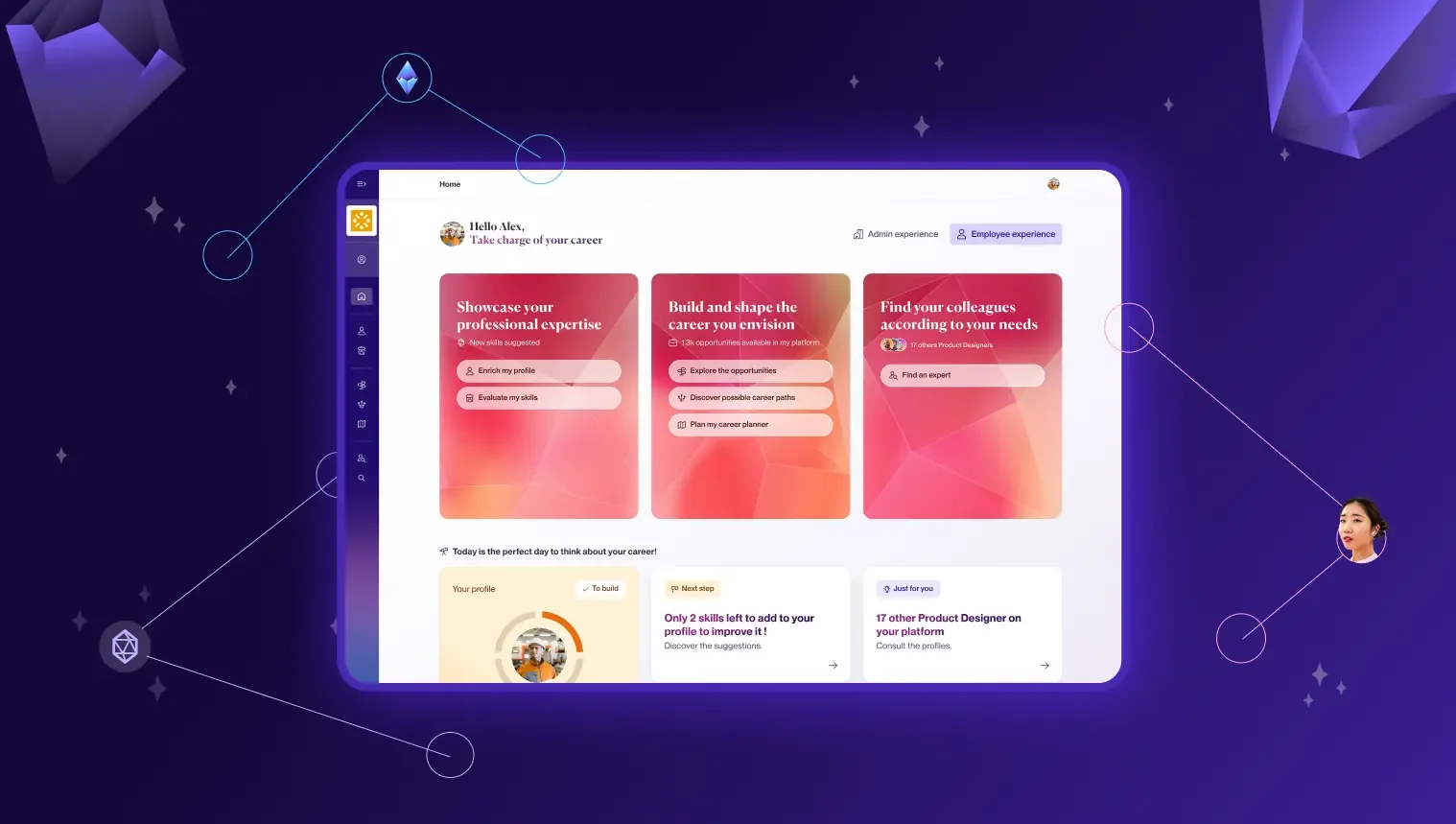
365Talents built its reputation in Europe, and that shows in two ways: genuine multilingual support built into the platform rather than added as a translation layer, and a data architecture designed around GDPR from the start rather than retrofitted for compliance. The platform pairs AI-driven skills detection with human validation, so an employee's profile is not left entirely to an algorithm's guess.
Integrations: more than 100 HR tool connections, spanning HRIS, LMS, and ATS systems, including SAP, Workday, and Oracle.
Key features
- AI-powered skills detection paired with human-in-the-loop validation
- Job creation tools that use generative AI to draft skills-based postings in minutes
- Internal candidate search by skill, expertise, or geography with match explanations
- Workforce intelligence dashboards tracking skills gaps by department over time
- Support for 45 or more languages at the platform level
Pros and Cons
Pros: "Very easy to use and implement with an excellent reporting tool for the end recipient to use and develop." - Capterra review
- Reporting depth stands out even among reviewers who compare it against larger competitors
- Genuine multilingual support removes a real barrier for European and global rollouts
Cons: "What I dislike is that 365 doesn't have the option to send WhatsApp messages or SMS texts." - G2 review
- Outreach channels are limited to in-platform and email, a gap for organizations used to SMS-based employee communication
- Opportunity types skew toward roles and skills matching, with less depth in gigs and mentorships than category leaders
Pricing
365Talents does not publish pricing, as costs are customized based on company size, specific use cases, and integration requirements. Since their solutions often integrate with Docebo, final quotes are highly dependent on the scope of your deployment. You must book a personalized demo to receive a proposal tailored to your organization’s needs.
5. Reejig

Reejig positions itself differently from every other tool on this list. Instead of leading with the marketplace experience, it leads with an independently audited "Ethical Talent AI," a distinction the company backs with annual third-party fairness audits rather than a marketing claim alone. The Opportunity Marketplace itself sits on top of that audited layer, matching people to roles, gigs, and succession pipelines.
Integrations: connects to major ATS, CRM, HRIS, and LMS platforms, including SmartRecruiters, SAP, and Workday.
Key features
- Independently audited Ethical Talent AI, verified annually by outside institutions
- Work Context Graph mapping every job, task, and workflow at the enterprise level
- Personalized career pathways recommending roles for hiring now, step-up moves, and future possibilities
- Talent Communities that group internal and external candidates by skill and job family
- Workforce Intelligence dashboards tracking redeployment and reskilling outcomes
Pros and Cons
Pros: "Candidate Sourcing, it makes resourcing better and gives an overarching view of the market as well as candidates we may have missed in the past." - G2 review
- The audited AI approach gives HR and legal teams a defensible answer when asked how matching decisions get made
- Talent Communities surface candidates that a standard keyword search would have missed
Cons: "It might be annoying to have to switch platforms to converse when a profile lacks contact information. I hope LinkedIn and Reejig continue to work together to improve mail nudging." - G2 review
- Contact-information gaps in some profiles force a workflow detour into a separate tool
- No published pricing and no free trial, consistent with the rest of the enterprise pure-plays on this list
Pricing
Reejig does not publish pricing, as costs are customized based on your organization's size, module selection, and contract scope. Actual pricing is highly variable and depends on your specific implementation needs. Contact their sales team directly for a personalized quote.
6. Teamflect
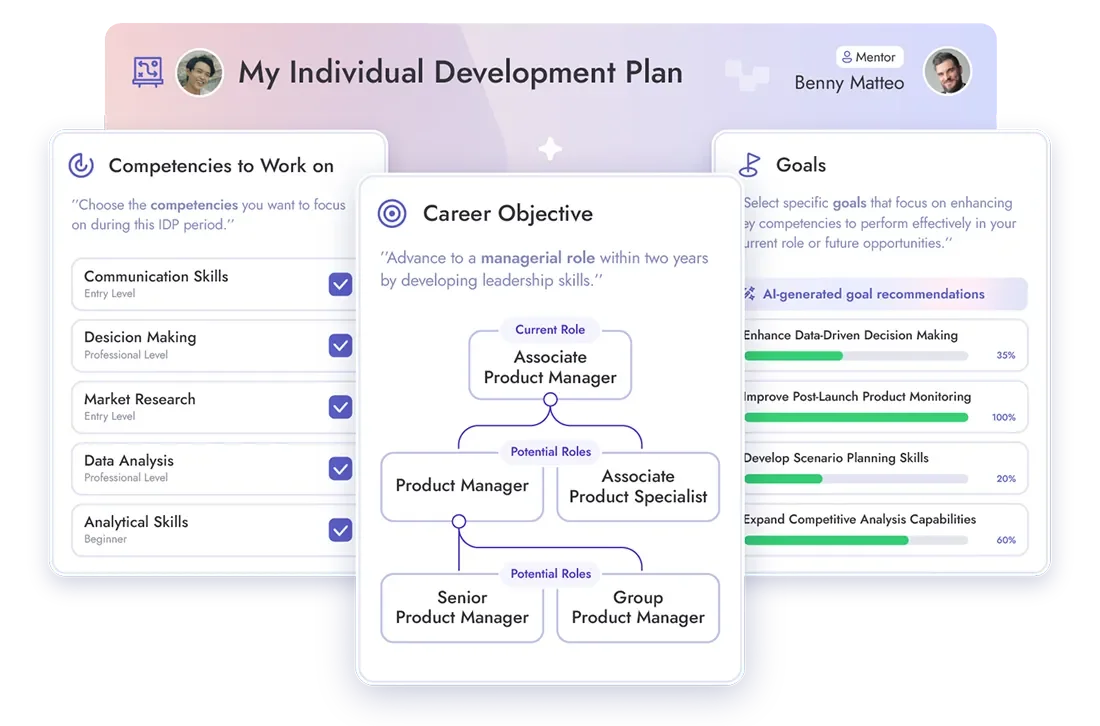
Teamflect runs career development natively inside Microsoft Teams, which changes the adoption math more than any single feature does. Career paths, individual development plans, competency tagging, and nine-box succession views live in the same sidebar where employees already check messages, instead of a separate portal most people forget exists.
For organizations already standardized on Microsoft 365, that removes a real adoption barrier the rest of this list still has to work around.
Integrations: native to Microsoft Teams and Outlook, connects to major HRIS platforms for employee data sync, and supports SSO through Microsoft Entra ID.
Key features
- Career path templates with competency tagging inside Teams
- An internal job board where employees browse and apply to openings matched to their profile
- Individual development plans linked directly to 1:1 meeting cadence
- Nine-box succession and readiness views
- Manager dashboards surfacing flight-risk and readiness signals
Pros and Cons
Pros: "It is so simple to use, easy to read and ensures easy but meaningful feedback for everyone involved." - Capterra review
- The free tier for small teams removes the usual procurement friction for a pilot
- We confirmed in our June 2026 demo that individual development plans can tie directly to a manager's recurring 1:1 without leaving Teams, which is not standard across this category
Cons: "Тhe access levels can be improved/enhanced. It would be great if we could grant admin access just for a specific module, like giving access to one of our team members just for the recognition or career modules." - G2 review
- Being Teams-native cuts both ways: outside the Microsoft 365 ecosystem, the sidebar-adoption advantage disappears and the tool can feel bolted on rather than built in
- No core HRIS functionality, so payroll, benefits, and compliance still require a separate system even after adopting Teamflect
Pricing
Teamflect features a free Starter tier for up to 10 users, with Essential ($7/user/month) and Professional ($11/user/month) plans, plus custom Enterprise options. Annual billing brings a 22 percent savings, and non-profits can get up to 60 percent off. No extra fees apply for support or training.
7. Workday Talent Marketplace
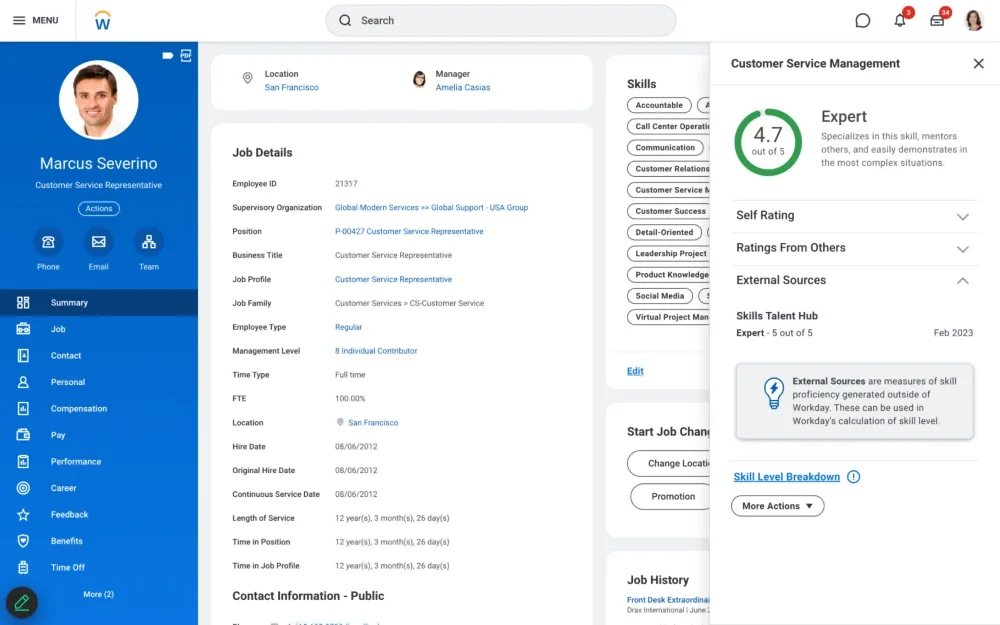
Workday's marketplace, branded Career Hub and built on Workday Skills Cloud, gives existing Workday customers a path to internal mobility without adding a new vendor to the stack. Skills Cloud infers and manages skills data across the entire HCM suite, and Career Hub surfaces internal job recommendations based on that same data.
Integrations: natively unified with the full Workday HCM suite, including payroll, recruiting, and learning. Third-party connections run through Workday's Integration Cloud.
Key features
- Career Hub, a talent marketplace suggesting roles based on Skills Cloud data
- AI-driven job recommendations for both internal candidates and new hires
- Manager Insights Hub for proactive career guidance conversations
- Augmented analytics with narrative explanations of workforce risk and opportunity
- Networking suggestions based on skill similarity between employees
Pros and Cons
Pros: “That it is easy to access, know and see all your pending activies. In that way you can be more easily on time on each of your tasks." - Capterra review
- One data model across HR, payroll, and talent removes the integration overhead a standalone marketplace would add
- Skills Cloud's inference layer benefits from years of data already sitting inside Workday for existing customers
Cons: "The user interface can feel clunky and unintuitive. It often requires too many clicks through multiple menus just to find a specific evaluation form or update a simple goal." - G2 review
- Marketplace-specific matching and opportunity breadth trail purpose-built platforms like Gloat or Fuel50
- Only a realistic option for organizations already committed to the broader Workday HCM suite
Pricing
365Talents does not disclose public pricing, as costs are customized based on organizational size, specific modules, and implementation scope. Because the platform often integrates with Docebo, final quotes depend on your deployment scale. You must book a personalized demo to receive a proposal tailored to your specific workforce needs.
8. SAP SuccessFactors Opportunity Marketplace
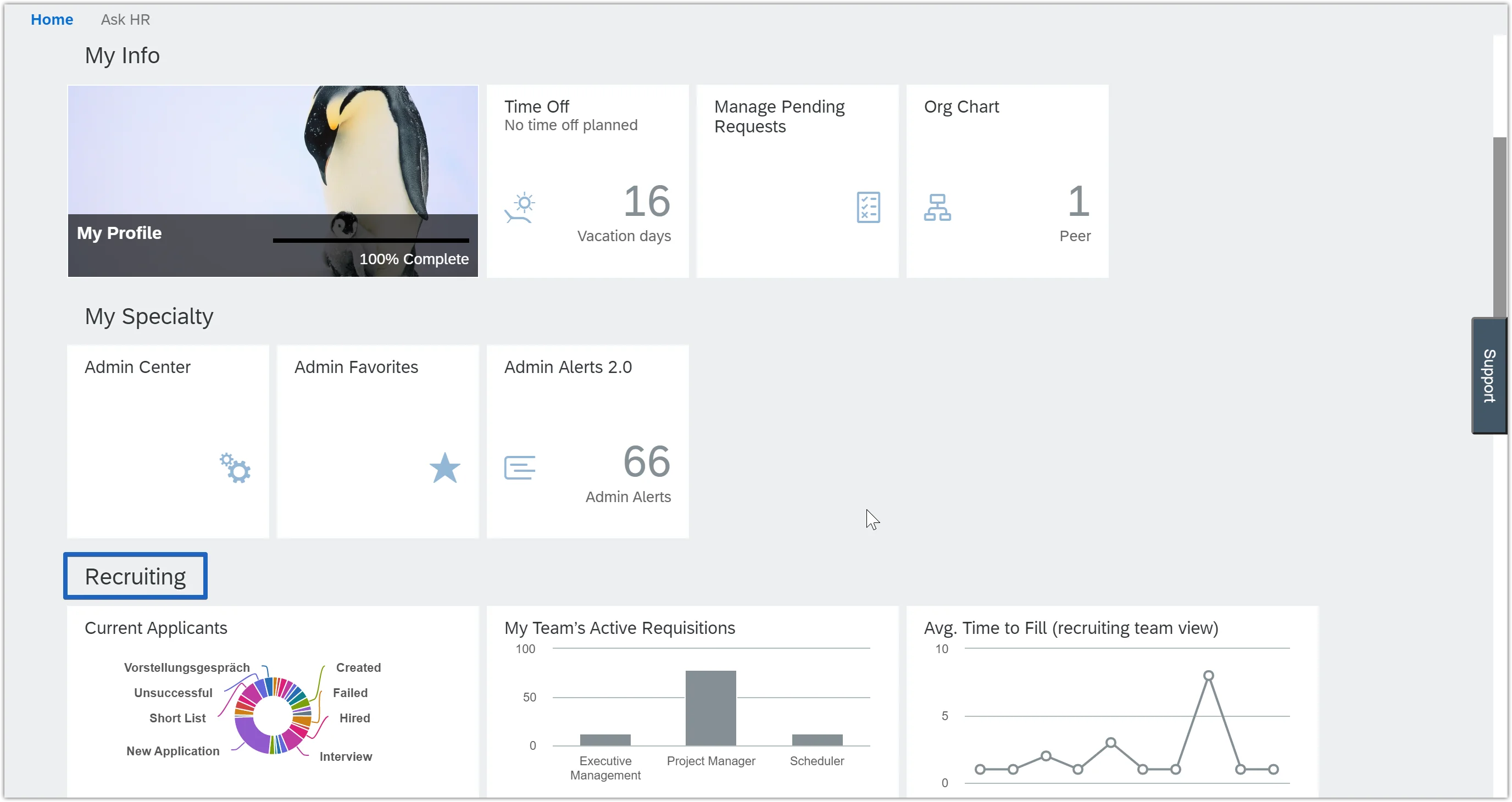
SAP's Opportunity Marketplace pulls opportunities from across the SuccessFactors suite, recruiting, learning, succession planning, and career development, into a single feed of role, project, learning, and mentorship recommendations. It is part of the newer Career and Talent Development bundle, not a separate purchase.
Integrations: built natively into the SAP SuccessFactors HCM Suite, drawing data from Recruiting, Learning, and Career Development Planning modules.
Key features
- AI-generated opportunity recommendations pulling from Learning, Succession, and Development modules
- Assignment creation for temporary internal work like project tasks and fellowships
- Growth Portfolio tracking bookmarked, in-progress, and completed opportunities
- Configurable job-level and geographic filters for open-role recommendations
- Mentor matching generated from the same skills data as job recommendations
Pros and Cons
Pros: "SAP SuccessFactors HXM Suite simplifies the process of hire till retire, helps easily onboard the candidates, manage their profiles and then termination is done on the same tool." - Capterra review
- End-to-end coverage from hire to retirement means no separate system for lifecycle data
- Recommendations get more accurate as more of the suite is adopted, since the underlying skills model is shared
Cons: "SAP SuccessFactors comes at a higher price when compared to other products on the market. But this is usually expected out of SAP, where pricing is always on the higher side on any product." - G2 review
- Pricing sits above most dedicated marketplace competitors, consistent with SAP's broader enterprise-suite positioning
- Recommendation quality depends on reaching a minimum volume of tracked activity and active users, which takes time to build
Pricing
SmartRecruiters for SAP SuccessFactors is priced at $4.66 per user per month. The SmartRecruiters Winston module costs $500.00 per month, charged in blocks of 100 hire transactions per year. Both offerings require a one- to three-year contract commitment with auto-renewal terms.
9. Cornerstone

Cornerstone's Talent Marketplace connects internal opportunities directly to its learning content, so an employee who spots a skills gap can move straight into a course without leaving the platform. That connection between learning and mobility is Cornerstone's clearest differentiator, and it reflects the company's roots as a learning management platform first.
Integrations: part of the Cornerstone Galaxy platform, with connections to ADP, UKG, and other major HRIS providers.
Key features
- Direct links from identified skill gaps to relevant learning content
- AI-powered opportunity suggestions for projects, gigs, mentors, and roles
- Workforce insight dashboards showing skills distribution across departments
- Non-linear job progression paths based on skills rather than hierarchy
- Broad language support across more than 50 languages
Pros and Cons
Pros: "Reliable workflows, intuitive charts, strong reporting, and dependable support that keeps clinics going." - Capterra review
- The tie between learning content and mobility recommendations reduces the gap between spotting a skill need and closing it
- Reporting depth and reliability draw consistent praise even from reviewers comparing it to more specialized tools
Cons: "Sometimes when I open the web it is slow but I am not sure if it is because of the PC which I am working with at work." - G2 review
- Marketplace depth is lighter than purpose-built platforms, since it functions as one module inside a broader suite
- Base platform pricing runs $6 to $10 per employee per month, with the marketplace module added as a custom quote
Pricing
Cornerstone does not publish pricing, as their integrated talent and learning solutions require custom quotes based on your organization's size, module selection, and specific business needs. You must contact their sales team directly via their website to receive a tailored proposal.
10. Nestor
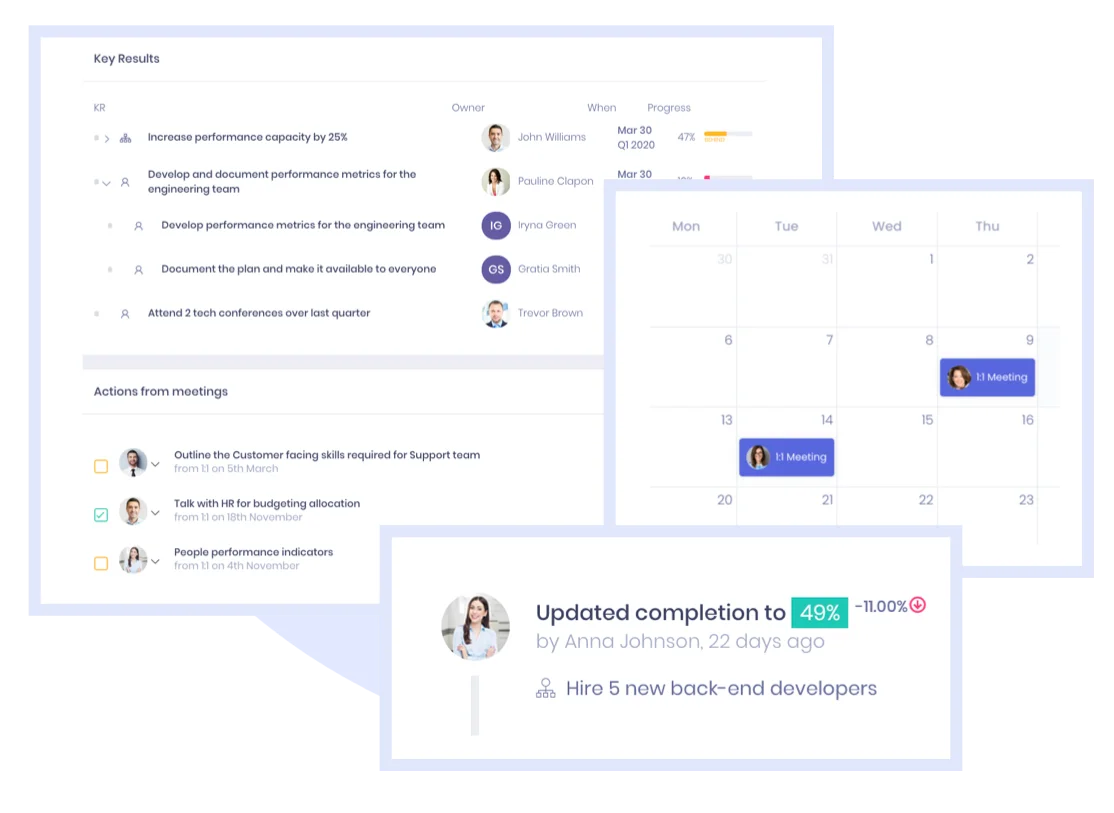
Nestor is the most accessible pure-play on this list for organizations that are not yet enterprise-scale but still want AI-driven skills matching rather than a generic HRIS module. Its skills library covers more than 20,000 entries, and its modular pricing structure, which scales by employee count and feature set, gives mid-market teams a way in without committing to a full enterprise contract from day one.
Integrations: native connections to ADP, Bob, Deel, Namely, Oyster, Justworks, Microsoft Teams, Slack, and LinkedIn Learning, with an open API for custom setups.
Key features
- A market skills library of more than 20,000 entries, refreshed with AI-generated suggestions
- Talent and Opportunity Marketplace matching employees to gigs, projects, and roles by skill fit percentage
- Goals, OKRs, and 360 feedback built into the same platform as the marketplace
- Customizable nudges automating reminders for skills reviews and opportunity check-ins
- A competency framework builder for organizations defining their own models
Pros and Cons
Pros: "They are understanding, kind and explain everything patiently so you can understand this program. This platform facilitates performance assessments." - G2 review
- Fast, guided implementation compares well against the multi-month rollouts common at the enterprise end of this category
- Skills, performance, and marketplace features in one platform mean fewer systems for a lean HR team to manage
Cons: "While Nestor can be a great solution to fill roles, the success of talent management initiatives relies on having a clear and well-structured approach for mapping and assessing skills." - G2 review
- Match quality depends on the organization building a clear skills taxonomy first, which is real setup work regardless of how easy the platform is
- Opportunity breadth and brand recognition trail the more established enterprise pure-plays on this list
Pricing
Nestor offers three tiers Essentials (up to 150 users), Premium (150 to 500 users), and Enterprise (500+ users) with pricing available only upon request. Because costs are fully customized based on your organization's specific scale and feature requirements, you must contact their team for a personalized quote.
Costs and Pricing
Pricing honesty matters more in this category than almost any other on TopHRSoftware. Because most of these options are enterprise tools sold through a sales process rather than a self-serve checkout, finding clear numbers can be a challenge.
How these platforms approach pricing generally falls into three distinct tiers:
Quote-Only Enterprise Platforms
Gloat, Fuel50, Eightfold AI, 365Talents, Reejig, Workday Talent Marketplace, SAP SuccessFactors Opportunity Marketplace, and Cornerstone do not publish public rates.
Pricing typically scales based on total headcount, chosen feature sets, and the scope of implementation. For these eight, plan on a dedicated sales conversation rather than a simple pricing page.
Transparent and Modular Options
- Teamflect: The clear exception regarding transparency, offering internal-mobility features on a free tier for up to 10 users, with paid plans starting at $7 per user per month.
- Nestor: Sits between the two extremes. While it does not publish a fixed rate, its modular pricing scales predictably by employee count and feature mix, making it more approachable for mid-market budgets than the full enterprise pure-play
Start Building Your Shortlist
The right platform on this list depends entirely on two things: how much marketplace depth your organization actually needs, and which HCM system you are already committed to. A 300-person company evaluating Gloat is probably over-buying. A 10,000 person enterprise trying to run mobility through a basic job board is under-buying. Match the tool to your actual scale before you book a single demo.
Frequently Asked Questions
What is an internal talent marketplace, and how does it work?
It is software that uses skills data to match existing employees to open roles, projects, gigs, and mentorships inside their own organization, updating continuously as employee skills and business needs change.
How is a talent marketplace different from skills management or career pathing software?
Skills management tracks what skills exist. Career pathing shows where a role could lead over time. A talent marketplace actively matches current skills to opportunities available right now. Several vendors combine all three.
Is a talent marketplace the same as a freelance or gig hiring platform?
No. This list covers internal talent marketplaces, which mobilize existing employees. Freelance and contractor marketplaces source outside talent for short-term work, a related but separate category.
How much does internal talent marketplace software cost?
Most of the category is enterprise, quote-only software, with pricing scaled to headcount and feature set. Teamflect is the notable exception with published per-user pricing, and Nestor offers more predictable modular pricing without a fixed public rate.
Do we need a dedicated marketplace if we already have Workday, SAP, or Microsoft 365?
Not always. Workday, SAP SuccessFactors, and Teamflect all offer native mobility features inside systems many organizations already run. A dedicated platform earns its cost when you need opportunity breadth, gigs, projects, and mentorships alongside roles that the native module does not cover.
How do you get managers to support internal mobility instead of blocking it?
Look for governance tools that give managers visibility into team skills gaps and a structured approval flow, rather than a system that lets employees disappear into another department with no notice.
What does it take to launch one successfully?
Enough seeded opportunities to make the marketplace worth opening from day one, a realistic skills taxonomy already in reasonably good shape, and a rollout plan that treats adoption as an ongoing effort rather than a one-time launch event.
.avif)