
.avif)

.svg)
Finding the right succession planning software is not just an HR checkbox. It is one of the more consequential decisions a people team can make. When a key leader leaves unexpectedly, the absence of a clear pipeline does not just slow things down. It can erode team confidence, interrupt client relationships, and put strategic initiatives on hold.
The good news is that the market for succession planning tools has matured considerably. Whether you need a comprehensive HCM suite or a focused, lightweight platform that slots into your existing workflows, there are solid options across every price point and org size.
This guide covers the 10 best succession planning software platforms worth your attention in 2026. For each tool, you will find an honest look at what it does well, where it falls short, what real users are saying, and how it is priced.
If you are also evaluating broader performance management capabilities alongside succession planning, take a look at our performance management guide for additional context on what to prioritize.
What to Look for in Succession Planning Software
Before running a demo or requesting a quote, it helps to know which features actually matter. Not every platform approaches succession planning the same way. Key features and considerations include:
- Visibility into Talent Pipelines: The platform must provide a comprehensive view of future leadership, focusing on identifying high-potential employees and tracking their readiness.
- Data Integration: Core insights should link directly to existing performance and engagement metrics to ensure a holistic view of each candidate.
- Essential Visualization Tools: Look for a 9-box grid to map performance against potential, along with individual development plans tied to specific goals.
- Automated Updates: The software should sync with your HRIS and performance management systems. This prevents data silos and ensures employee information stays current without manual entry.
- User Adoption: Choose a platform that fits into existing workflows. Connectivity with communication tools like Microsoft Teams or Slack helps maintain engagement after the initial launch.
- Pricing Transparency: Verify that critical analytics and development tools are included in your chosen price tier, as these features are often restricted to premium plans.
For a deeper breakdown of evaluation criteria, check out our guide on what to look for in OKR Software, which covers many of the same structural questions around adoption, integration, and total cost of ownership.
10 Best Succession Planning Software in 2026
Identifying the right succession planning software is a critical move for organizations looking to secure their future leadership. The following tools represent the top solutions for building a resilient, data-backed talent pipeline.
1. UKG Pro: A Comprehensive HCM Suite

UKG Pro is a full-scale human capital management platform built for mid-size to enterprise organizations. Its succession planning module sits within a broader talent management suite that covers everything from performance reviews and career pathing to learning and development. For companies that want succession planning tightly connected to payroll, scheduling, and workforce analytics, UKG Pro offers a level of integration that few standalone tools can match.
The platform's succession tools allow HR teams to build talent pipelines at multiple levels of the organization, not just the C-suite. An N-box grid view helps visualize performance and potential, and managers can assign development plans and track readiness progress over time. The tool's strength lies in how well it connects succession data to the rest of the employee record.
Key Features
- Multi-level succession planning with flexible pipeline configuration
- N-box grid for talent assessment and readiness visualization
- Career pathing tied to development goals and performance data
- AI-powered retention forecasting to flag flight risks
- Integrated 1:1 meeting tools and performance review workflows
- Drag-and-drop reporting with cross-module data from payroll, HR, and time tracking
- 24/7 customer support and a dedicated community knowledge base
What Makes UKG Pro Stand Out
- One of the few platforms where succession planning, payroll, and workforce scheduling share a single data layer
- AI-driven tools for matching candidates to roles and predicting succession readiness
- Strong track record in complex industries including healthcare, retail, and hospitality
Pros
“Combines payroll functionality, tracking of services hours and benefits, organizational information into one place.” - G2 Review
- Highly capable succession and talent management module
- Strong integrations with major ERP and HRIS systems
- Broad feature set reduces the need for multiple standalone tools
- Reliable uptime and a large, active support community
Cons
“The mobile app tends to go down about once a month. It’s a bummer because when I rely on it for tasks and updates, suddenly losing access makes things a bit chaotic.” - Capterra Review
- Implementation can take 6 to 12 months for larger organizations
- Pricing is not public and can be significant for mid-market teams
- Advanced reporting requires technical skill to configure effectively
Pricing
- Subscription-based pricing, per employee per month; pricing not publicly listed
- Custom quotes required based on headcount, modules, and contract length
- No free plan or free trial; enterprise implementations typically involve extended onboarding timelines
2. Workday Adaptive Planning: A Strong Succession Planning Tool for Finance-Led Workforce Strategy
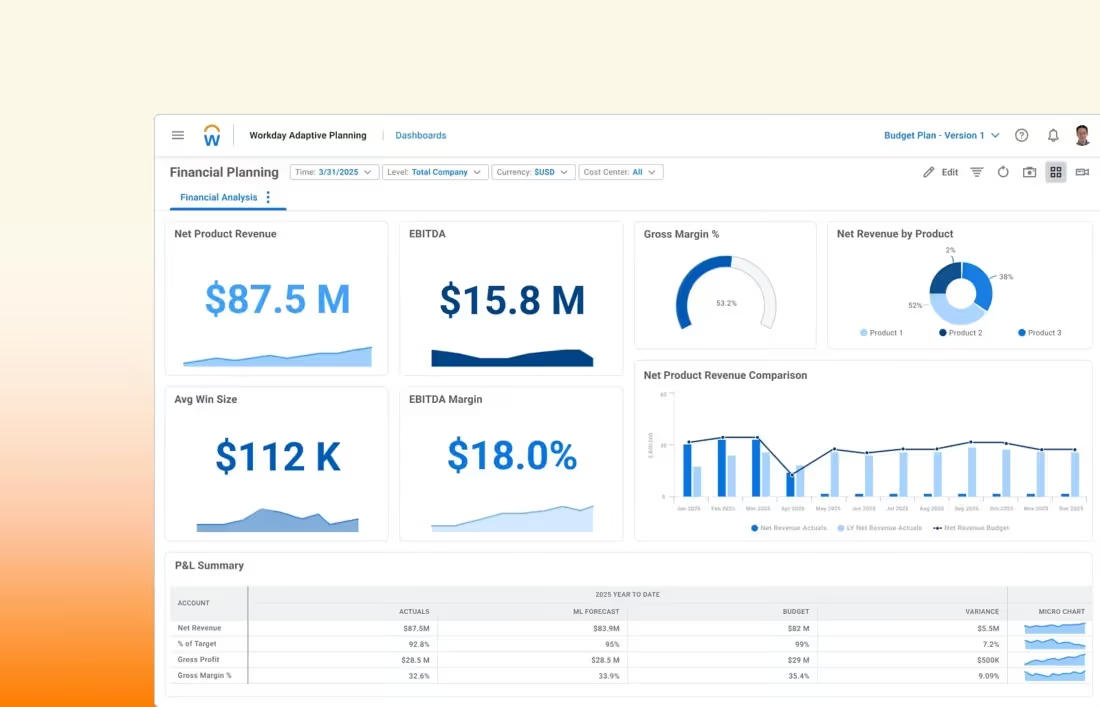
Workday Adaptive Planning started as a financial planning and analysis tool, and that heritage shows. It brings a level of modeling rigor to workforce planning that most dedicated HR platforms cannot match. For organizations where succession planning is closely tied to headcount budgets, scenario modeling, and financial forecasting, this platform offers a genuinely differentiated approach.
Teams can use driver-based modeling to simulate the workforce impact of leadership changes, retirement waves, or restructuring events. Its integration with Workday HCM makes it a natural fit for companies already in the Workday ecosystem, though it also connects to Oracle NetSuite, SAP, and Microsoft Dynamics.
Key Features
- Driver-based headcount and workforce planning models
- What-if scenario analysis for leadership transitions and restructuring
- Real-time collaboration with version control across planning stakeholders
- Multi-entity financial consolidation for global workforce data
- Native integration with Workday HCM and third-party ERPs
- AI and machine learning features for predictive forecasting
- Customizable dashboards for finance, HR, and executive reporting
Best For
- Mid-to-large organizations running succession planning alongside financial modeling
- Companies already on the Workday platform seeking a connected planning layer
- Finance-led HR teams that need scenario analysis and budget impact visibility
Pros
“Workday Adaptive Planning offers value for money, security, customer support, financial management, financial reporting, report generation, accountant, and tax.” - Capterra Review
- Exceptional versioning capabilities, rated 9.3 on G2
- Strong headcount planning features valued by workforce analysts
- Real-time collaboration reduces planning cycle time
- Quick implementation reported by multiple users
Cons
“The customer support team at Workday Adaptive Planning tends to be somewhat slow, which is disappointing. Additionally, the platform is not particularly budget-friendly, making it a less ideal choice for startups.” - G2 Review
- Reporting customization can feel rigid compared to newer analytics tools
- Performance slows on large models with complex calculations
- Customer support response times have been a recurring complaint
Pricing
- Workday Adaptive Planning does not list pricing publicly.
- Licensing is subscription-based and determined by package selection, product options, and number of seats.
- Contact Workday for a quote tailored to your organization.
- A free trial is available for 30 days.
3. Lattice: A People-First Platform with Connected Succession Planning
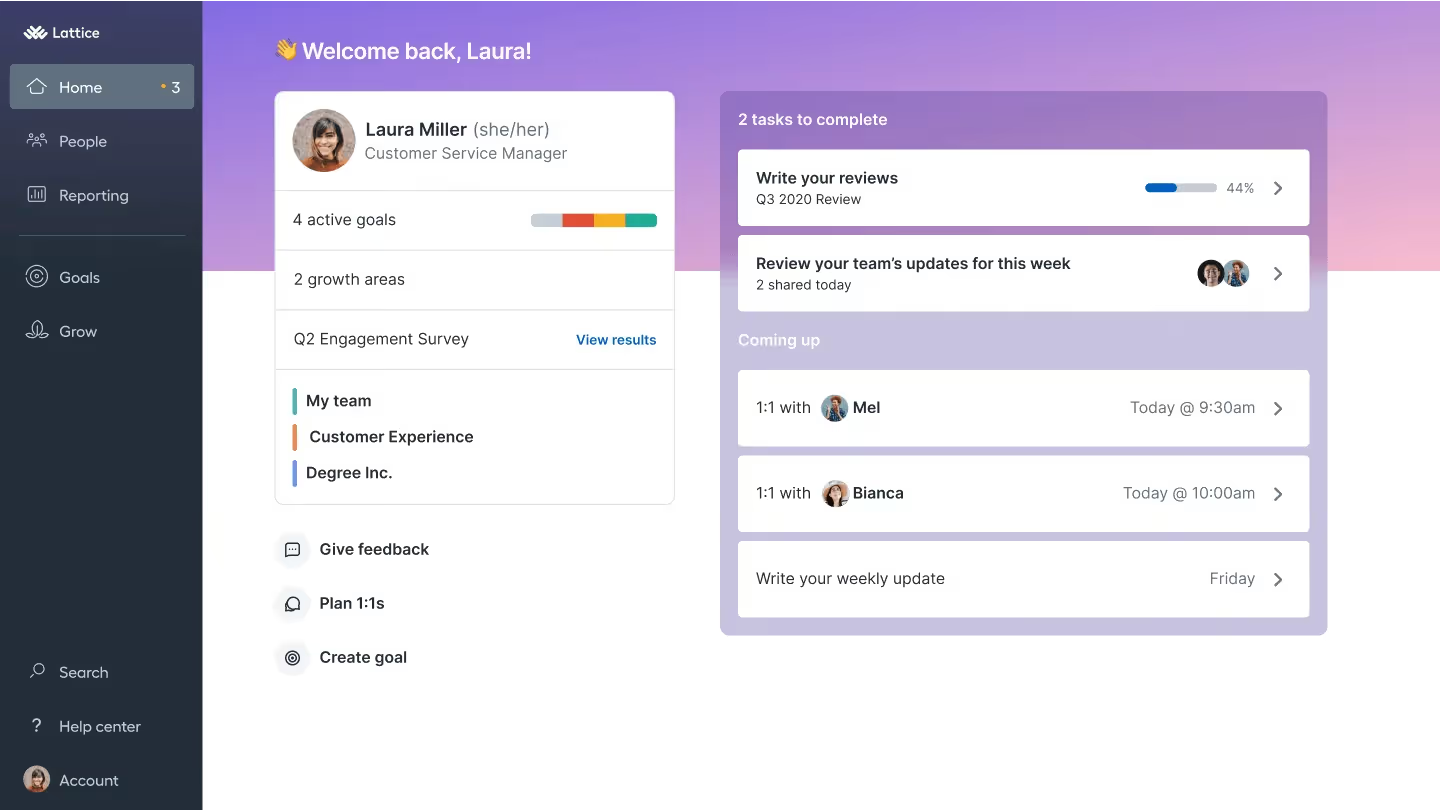
Lattice has grown steadily from a performance management tool into a broader people success platform. Its succession planning module, released in early 2025, connects directly to the platform's performance review data, calibration scores, and development plans. The result is a succession workflow that does not require HR to manually import data or reconcile records across systems.
For mid-sized companies that already use Lattice for performance reviews or OKRs, the addition of succession planning is a genuinely useful expansion. Readiness assessments, attrition risk fields, and AI-assisted review summaries all feed into a single view of who is ready for what, and when.
Key Features
- Succession planning module integrated with performance review and calibration data
- Talent reviews with attrition risk and succession readiness fields
- Individual development plans tied to career tracks and succession goals
- 360-degree feedback, self-assessments, and AI-assisted review writing
- Performance improvement plans (PIPs) for employees who need structured support
- Goal and OKR alignment from company level down to individual contributor
- Integration with Slack, Teams, Jira, and major HRIS systems
Best For
- Mid-sized companies with 100 to 1,000 employees
- HR teams that want succession built into their existing performance cycle
- Organizations looking to consolidate performance, goals, and succession in one platform
Pros
“Lattice is a helpful way to manage workflow questions, create weekly workflow summaries, and to manage meetings and agendas.” - Capterra Review
- Strong G2 rating of 4.7 based on over 4,000 reviews
- Modular pricing allows teams to start small and add features over time
- AI Agent provides always-on HR support and automates routine tasks
- Clean interface with broad integration support
Cons
“Nothing specific that comes to mind - though I sometimes do think if a tool for just performance review is worth spending money on. Why can't we achieve and automate this someway else.” - G2 Review
- Per-employee pricing can add up quickly for growing teams
- Some users report a learning curve during onboarding
- Enterprise-level customization requires higher-tier plans
Pricing
- Base price: $11/user/month
- Add-ons: $4 to $6/user/month
- Minimum annual agreement: $4,000
4. Teamflect: Best Succession Planning Software for Microsoft 365 Teams
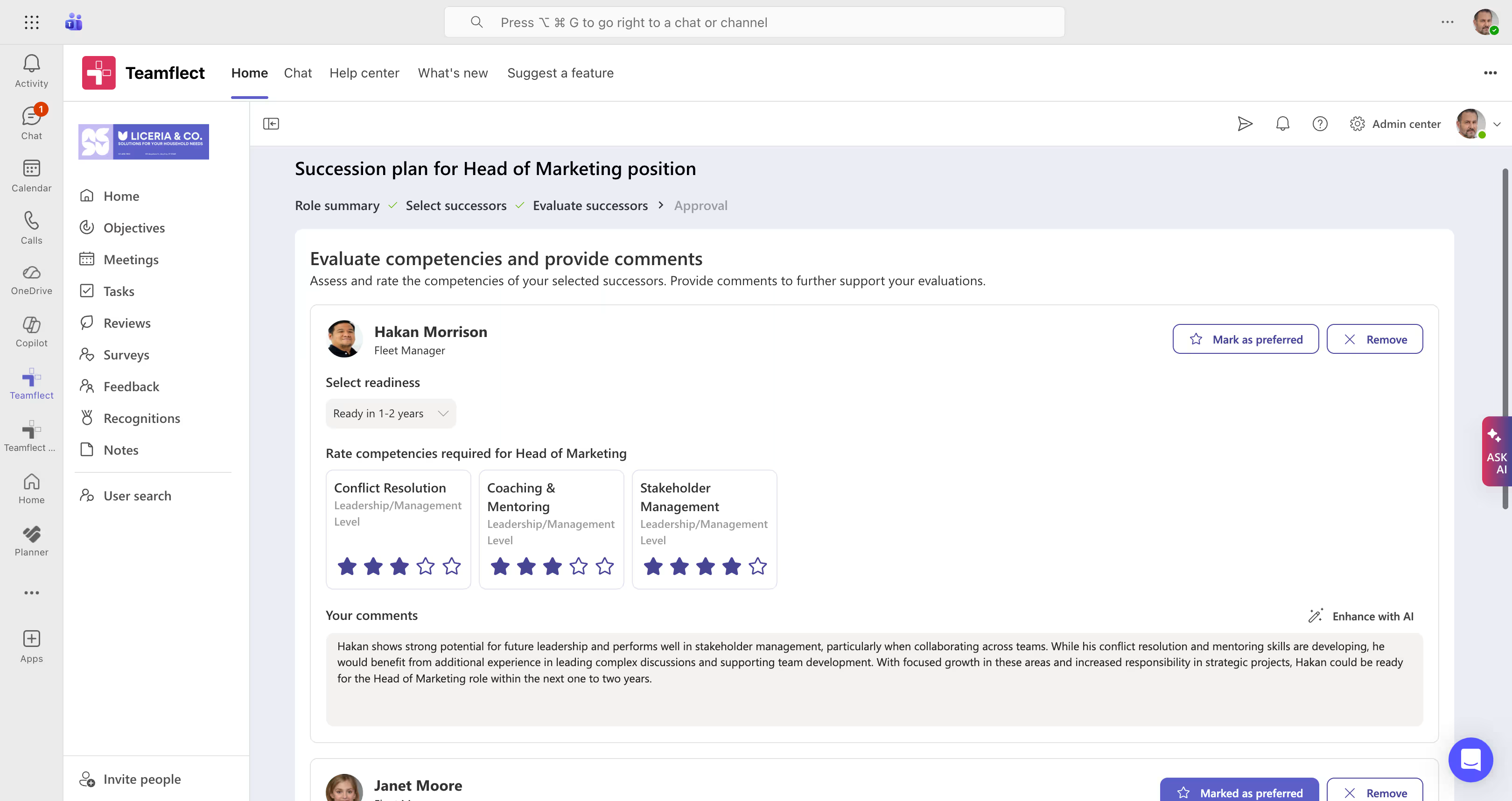
Teamflect is the strongest choice on this list for organizations running Microsoft Teams and Outlook as their primary work environment. Unlike most succession planning tools that require employees to log into a separate system, Teamflect lives directly inside Microsoft Teams. That means performance data, 1:1 notes, goals, and succession plans are all accessible within the same interface where people already spend their day.
For HR teams that have struggled with adoption on previous tools, this distinction matters more than it might seem on paper. Employees do not experience the platform as "another HR system." It is just part of Teams, and that changes how frequently they actually use it.
On the succession planning side, Teamflect gives HR teams a 9-box talent grid for visualizing performance and potential, tools for nominating succession candidates based on competencies and career paths, and individual development plans that connect directly to performance review outcomes. It also integrates with more than 200 HRIS systems, so your employee data stays current without manual imports.
Key Features
- Native Microsoft Teams integration with no separate login required
- 9-box grid for talent visualization and succession candidate identification
- Succession candidate nomination based on competencies, career paths, and performance
- Individual development plans (IDPs) tied to succession goals and career tracks
- 360-degree feedback with anonymous options and AI-generated summaries
- Performance review templates with customizable cycles and goal alignment
- Integration with Power BI for advanced reporting and talent dashboards
- Connection to 200+ HRIS platforms for automated employee data sync
- AI-powered assistance for managers writing reviews, setting goals, and generating insights
What Makes Teamflect Stand Out
- The only succession planning platform built natively inside Microsoft Teams, removing the extra-login barrier entirely
- Dedicated Customer Success Manager and free implementation support on every paid plan
- Fast deployment, with most organizations live within days rather than weeks
Pros
“Teamflect connects our team in a way no other software has. The ability to maintain schedules, meeting notes and agendas, set goals and objectives, and complete reviews has been exceptionally helpful.” - Capterra Review
- Free plan available for teams with fewer than 10 employees, with full features included
- Consistent product updates and responsive support team
- Strong adoption rates driven by native Teams experience
- Career pathing, internal talent marketplace, and IDPs included in the platform
Cons
- Requires Microsoft 365. Organizations that do not use Teams and Outlook as primary tools will not benefit from Teamflect's core advantage.
Pricing
- Free: Up to 10 users, includes performance reviews, goal tracking, surveys, and Teams integration
- Essential: $7/user/month (billed annually), adds analytics and premium support
- Professional: $11/user/month (billed annually), adds talent management and advanced integrations
- Nonprofits receive up to 60% off annual contracts
- 30-day free trials available for Essential and Professional plans
5. Oracle Taleo Cloud: A Full-Lifecycle Talent Platform
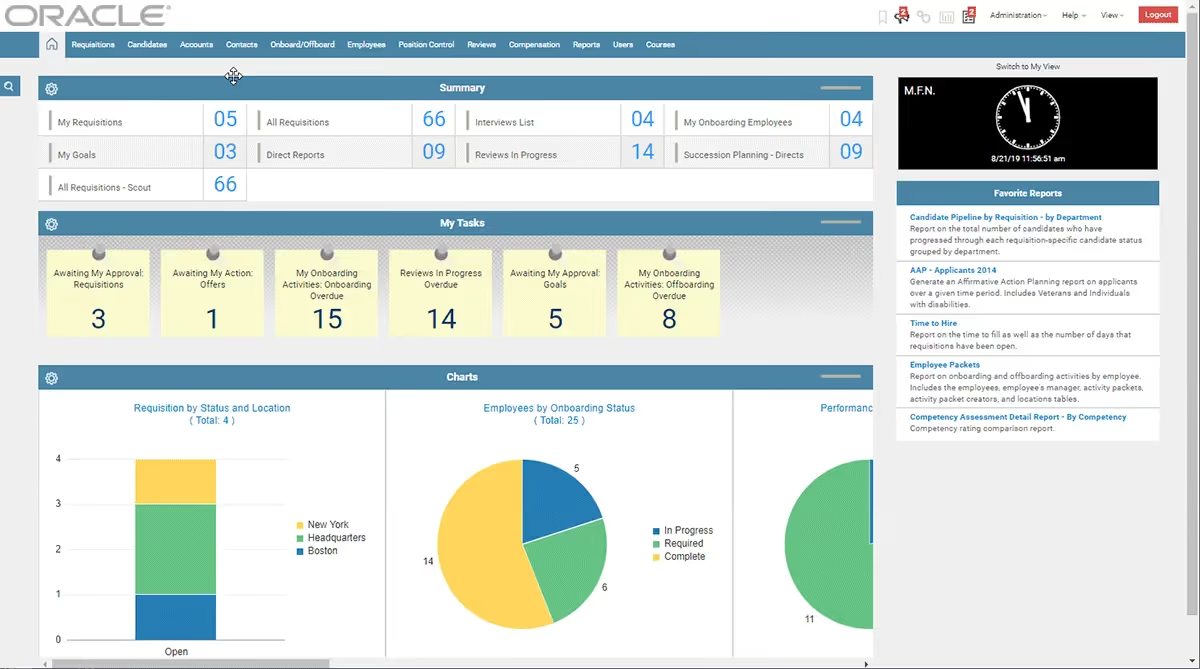
Oracle Taleo Cloud is built for large enterprises that need to manage talent across the full employee lifecycle, from recruiting through succession planning. Acquired by Oracle in 2012, Taleo sits within the Oracle HCM ecosystem and is particularly well-suited to organizations with complex compliance requirements, global hiring operations, and thousands of employees.
The succession planning module allows HR teams to map replacement candidates for critical roles, create development plans, and conduct talent reviews. Its real strength is scale. Taleo handles massive candidate databases and supports the kind of rigorous audit trails that regulated industries demand.
Key Features
- Succession planning with role mapping and candidate comparison tools
- Career development plans and goal alignment for succession candidates
- Performance review integration for talent review and succession decisions
- Applicant tracking across social media platforms and job boards
- eSignature and electronic performance review workflow
- Role-based access controls and compliance-ready audit trails
- Integration with Oracle HCM and major ERP systems via API
Best For
- Large enterprises with more than 3,000 employees
- Regulated industries including government, healthcare, and financial services
- Organizations already running Oracle HCM or ERP who want a connected talent suite
Pros
“Easy to use for applying to jobs. Candidate interview and recruitment process worked well and did not have issues so customer support wasn't needed. Not sure about value for money or security as I was only a user.” - Capterra Review
- Massive scalability for high-volume talent data
- End-to-end talent management from sourcing to succession
- Reliable uptime with very little reported downtime
- Strong compliance and security certifications, including SOC 2 Type II and ISO 27001
Cons
“Sometimes, there are two Taleo ID's of a candidate so it gets difficult to merge it and then proceed forward.” - G2 Review
- Clunky, dated interface that requires multiple clicks for basic tasks
- Steep learning curve with complex menu structures
- Reporting features are powerful but rigid without additional plugins
- Limited modern AI features compared to newer competitors
Pricing
- Oracle Taleo uses custom, per-user, per-month pricing determined by the number of users and modules selected.
- Contact Oracle's sales team for a quote.
6. PerformYard: A Flexible Performance and Succession Tool for Mid-Market Teams
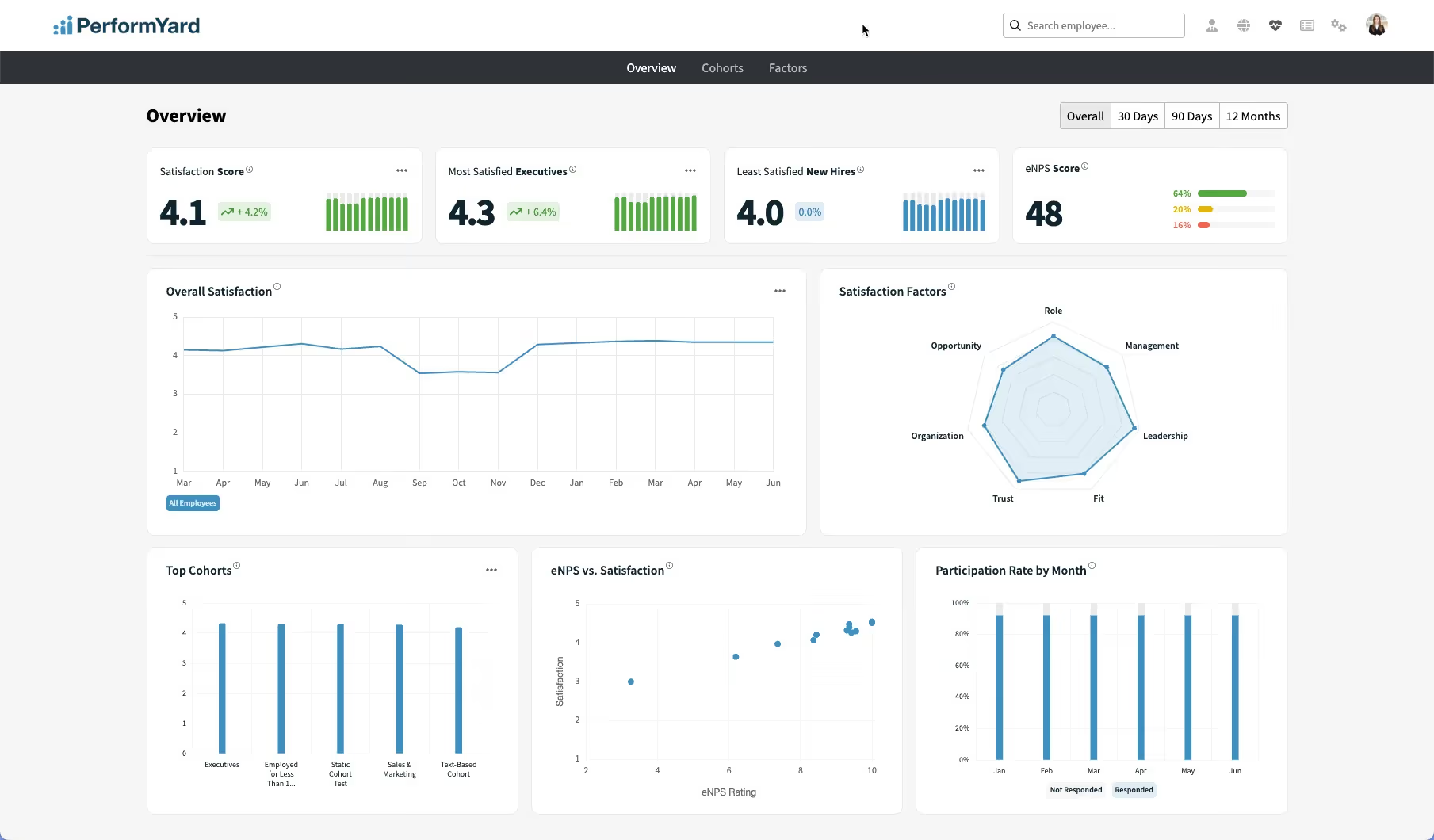
PerformYard takes a practical, review-first approach to succession planning. Rather than offering succession as a separate module, it weaves succession planning directly into its performance review workflows. HR teams can build custom frameworks that include long-term career development prompts, readiness indicators, and development goals alongside standard performance criteria.
That integration with the review cycle is PerformYard's clearest advantage. Succession data does not live in a separate tab that gets updated once a year. It gets refreshed naturally as part of every review, check-in, and goal update.
Key Features
- Automated 9-box grid generation from performance and potential ratings
- Customizable review cycles, including 360-degree, project-based, and quarterly options
- Goal management with cascading objectives aligned to succession readiness
- Continuous feedback and check-in tools for ongoing development tracking
- AI-assisted review comment rephrasing for tone and clarity
- Dedicated Customer Success Manager included on every plan
- Integration with major HRIS platforms including ADP, BambooHR, UKG, Workday, and Rippling
Best For
- Mid-market organizations that want succession built into their review process
- HR teams with specific or non-standard review workflows that need custom configuration
- Professional services firms that run project-based or competency-focused evaluations
Pros
“I’ve found it to be a great tool for tracking my goals, with graphs that clearly show my progress and the updates along the way.” - G2 Review
- Highly customizable review structures without vendor assistance
- Affordable pricing relative to its feature set
- Responsive customer support with dedicated success managers
- AI tools added in 2025 help improve review quality without heavy admin work
Cons
“It wasn't as customizable as I'd like, and it would sometimes be difficult to navigate and/or use. It became redundant when we switched talent management platforms.” - Capterra Review
- Contract terms can be restrictive, with some reviewers noting multi-year lock-in
- Limited integrations compared to full HCM suites
- Not a standalone HRIS, so it works best alongside an existing HR platform
Pricing
- PerformYard starts at $5 to $10 per user per month for Performance Management, billed annually.
- An Employee Engagement add-on runs an additional $1 to $3 per user per month.
- All plans include a dedicated Customer Success Manager.
7. HiBob: A Modern HRIS with Built-In Succession Planning

HiBob, widely known simply as "Bob," is a cloud-based HRIS with a strong focus on employee experience and people analytics. Its succession planning capabilities sit within a broader talent module that connects performance reviews, goal tracking, internal mobility, and workforce analytics in one system.
What sets HiBob apart from dedicated succession tools is how much it knows about each employee. Because it serves as the system of record for HR data, its succession planning draws on a richer set of inputs: career history, engagement scores, development milestones, and compensation data, all in one place.
Key Features
- Succession planning tied to HRIS data including career history and compensation
- Skill gap analysis and internal mobility tracking for talent development
- Performance calibration and review cycles with continuous feedback support
- Goal setting at team, department, and company levels
- Real-time analytics dashboards for HR leaders and managers
- Automated onboarding and lifecycle check-ins
- Global compliance support for distributed and international teams
- Integrations with Slack, Gusto, and major HR tools
Best For
- Mid-sized to large companies with distributed or international teams
- HR teams that want succession data connected to their core HRIS record
- Organizations that value analytics and workforce transparency
Pros
“Overall, we were very happy with the platform as it had minimal bugs and issues, was easy for users and administrators, and was intuitive, minimising any learning curve.” - Capterra Review
- Strong user ratings of 4.5 on G2 and 4.6 on Capterra
- All-in-one approach reduces the number of tools HR teams need to manage
- Particularly strong for global teams with multi-country compliance needs
Cons
“I don't like that it's a separate service. In my previous company we were using Remote as [a] salary company and it was better to handle everything [on] the same platform.” - G2 Review
- Pricing is custom and not transparent, which makes budgeting harder
- Initial setup for some integrations can be time-consuming
- Less suited to very small organizations that do not need full HRIS capabilities
Pricing
- Custom quote only; pricing depends on modules selected and contract length.
- Contact HiBob directly for a tailored quote.
8. Quantum Workplace: A Talent-Connected Succession Planning Platform

Quantum Workplace describes itself as an all-in-one HR platform that connects engagement, performance, and development data. Its succession planning tools are built on top of that connected data model, which means readiness assessments and development plans draw from the same pool of performance review scores, 1:1 conversation records, and engagement survey results.
The platform's 9-box talent review grid and successor readiness tracking are well-regarded, and its real-time dashboards give HR leaders visibility into the state of the leadership pipeline across the organization.
Key Features
- 9-box talent review grid for performance and potential assessment
- Successor readiness tracking with development plan assignment
- Succession planning integrated with 1:1s, performance reviews, and engagement data
- Goal management with cascading objectives tied to organizational strategy
- AI-generated summaries of open-ended survey responses
- Real-time dashboards for talent pipeline visibility
- Integrations with major HRIS and payroll platforms including ADP, Workday, and BambooHR
Best For
- Mid-sized to large organizations that want succession connected to engagement data
- HR teams already using Quantum Workplace for performance or engagement
- Companies that want a partner-style relationship with their HR software vendor
Pros
“Quantum Workplace has definitely been a learning curve but we are learning and improving on it everyday.” - Capterra Review
- Knowledgeable customer success team with a hands-on approach
- Strong analytics that surface talent patterns across teams and departments
- Good integration options with major payroll and HRIS platforms
Cons
“Cant schedule a meeting in teams alongside my Q1 check in right in the system.” - G2 Review
- Pricing starts at a higher annual minimum, which can limit fit for small teams
- Analytics depth can feel overwhelming without proper setup and training
- Not a replacement for a core HRIS system
Pricing
- Quantum Workplace uses custom pricing with a minimum annual contract.
- Contact Quantum Workplace for demo and quote.
9. Motivosity: A Recognition-First Platform with Succession Capabilities
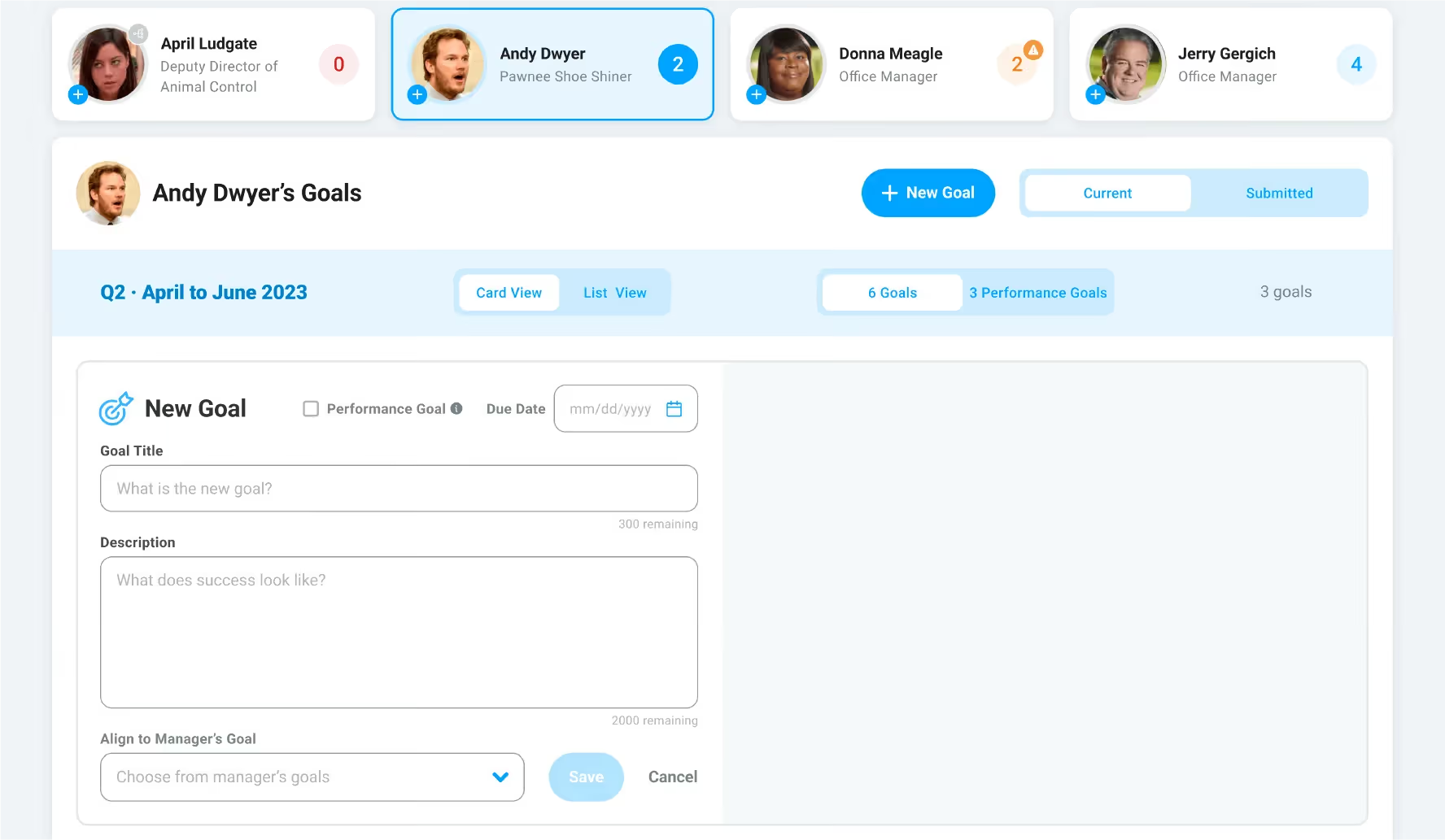
Motivosity was built around the idea that employee engagement starts with feeling appreciated. Its core product centers on peer-to-peer recognition, rewards, and community tools. Succession planning enters through the platform's Lead suite, which covers manager development, 1:1 management, coaching tools, and manager scorecards alongside succession planning features.
For organizations that want to connect leadership development with their culture and recognition programs, Motivosity offers a different kind of succession experience. Succession candidates are developed over time through ongoing manager coaching, structured 1:1s, and engagement data, not just through annual talent reviews.
Key Features
- Succession planning available within the Lead manager development suite
- 1:1 management with collaborative agendas and coaching tools
- Manager scorecards to track leadership effectiveness over time
- Peer-to-peer recognition with monetary rewards and public social feed
- Employee pulse surveys, eNPS, and community-building tools
- Org chart visualization for structure transparency
- Integration with Slack, Microsoft Teams, Workday, ADP, BambooHR, and Paylocity
- Lifestyle Spending Accounts (added 2025) for employee perks and wellness budgets
Best For
- Organizations that want succession planning connected to a broader recognition and culture program
- Companies investing heavily in manager development as a leadership pipeline strategy
- Mid-sized teams that value relationship-driven rather than data-driven succession approaches
Pros
“I love that we can nominate team members for awards easily, as well as recognize teammates to give recognition where it is due.” - Capterra Review
- Strong G2 rating of 4.7/5 based on thousands of reviews
- Average admin time is just 43 minutes per month, making it low-maintenance
- Recognition programs have measurable impact on retention and peer connection
- Transparent, customizable pricing with volume discounts
Cons
“The motivation works but sometimes it is a little behind in the accounting.” - G2 Review
- Succession planning is not the platform's primary function, so it is less feature-rich in that area compared to dedicated tools
- $3,000 minimum annual spend plus a one-time implementation fee
- Managing multiple recognition programs simultaneously can take ongoing effort
Pricing
- Motivosity requires a minimum annual commitment of $3,000 and charges a one-time implementation fee.
- Contact Motivosity for a custom quote and demo.
10. OrgChart: A Visual-First Succession Planning Tool Built Around Your Org Chart
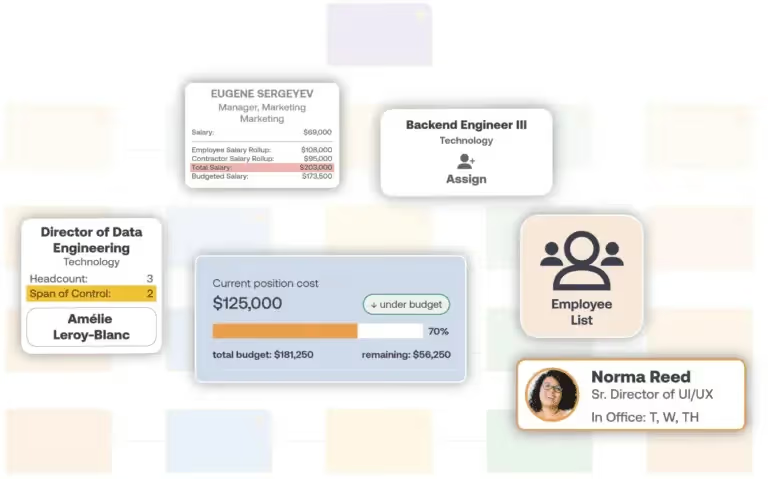
OrgChart is different from every other tool on this list. Where most succession planning platforms start with performance data or HR workflows, OrgChart starts with the org chart itself. It integrates with more than 50 HR systems to keep the chart automatically current, and then layers succession planning, workforce modeling, and what-if scenario tools on top of that live organizational view.
For HR teams that spend significant time managing org structure clarity, whether due to rapid growth, frequent acquisitions, or headcount planning cycles, OrgChart provides a level of visual precision that general HCM platforms rarely match.
Key Features
- Automated org chart sync with 50+ HRIS platforms, including Workday, SAP, Oracle, and Dayforce
- Succession planning with readiness tracking and candidate visualization
- What-if scenario modeling for restructuring, mergers, and growth planning
- Talent data overlay on org charts, including open positions, remote status, and headcount
- Drag-and-drop org redesign with real-time updates
- Publishable charts in PDF, PowerPoint, SharePoint, OneDrive, and Dropbox
- Flight risk alerts and succession gap flags via automated notifications
Best For
- Organizations managing complex, frequently changing org structures
- HR teams that need to plan workforce scenarios before decisions are finalized
- Companies with strict compliance or reporting requirements that need accurate org data
Pros
“I like being able to plan based on position, budget, and compensation.” - G2 Review
- Fast implementation, with most users going live quickly with support from the OrgChart team
- Earned 136 G2 badges throughout 2025, including Best Support and Best ROI
- Well-suited to organizations that need audit-ready workforce planning data
Cons
“It is hard to work on putting the pictures on the profiles. I have been trying but it seems to be more complicated than I wanted.” - Capterra Review
- Less suited as a standalone performance management or feedback platform
- Succession planning features are more visual and structural than development-focused
- Pricing based on employee count, which can rise quickly for larger organizations
Pricing
- Core: $105/month (billed annually)
- Plus: $157/month (billed annually)
- Pro: $263/month (billed annually)
How to Choose the Right Succession Planning Software
With ten solid options in front of you, the challenge is narrowing the field. Here are a few practical ways to approach the decision.
1. Start With Your Existing Tech Stack
If your organization runs on Microsoft 365, a platform like Teamflect that lives inside Teams will see much higher adoption than one that requires a separate login. If you are already on Workday HCM, Workday Adaptive Planning offers natural continuity. The best succession planning software is often the one your team will actually use.
2. Define What Succession Means at Your Organization
For some teams, succession planning means identifying backup candidates for five senior roles. For others, it means building deep development pipelines across dozens of positions at multiple levels. Tools like OrgChart excel at the structural, visual side of succession, while platforms like Lattice and PerformYard integrate succession more tightly into ongoing performance conversations.
3. Match the Tool to Your Team Size
Small businesses with fewer than 100 employees should prioritize tools that are quick to set up, affordable, and light on administrative overhead. Mid-market teams will benefit from richer analytics and HRIS integration. Enterprise organizations with complex org structures and global operations should look closely at UKG Pro or Oracle Taleo for the depth and scalability they require.
4. Consider How Succession Connects to Your Broader Performance Cycle
The most effective succession programs are not annual exercises. They are continuous, fed by regular performance data, development conversations, and engagement signals. Platforms that connect succession planning to reviews, 1:1s, and goals, rather than treating it as a separate module, tend to produce better long-term results.
5. Do Not Overlook Support and Implementation
A tool that is hard to set up or that leaves your team on their own after go-live is a risk, regardless of how good the features are. Ask vendors how they handle onboarding for organizations your size, and whether you will have a dedicated contact post-implementation.
Find the Right Succession Planning Software for Your Team
The tools on this list cover a wide range of approaches, from full-suite HCM platforms to focused, visual org planning tools. The right choice depends on how succession planning fits into your broader HR strategy, what tools your team already uses, and how much administrative overhead you are willing to carry.
For an overview of other useful tools for your organization, visit our employee engagement software or performance review software pages for additional comparisons and use case breakdowns.
FAQs
What is succession planning software, and does your organization need it?
Succession planning software helps organizations identify and develop internal talent to fill key leadership and critical roles when they become vacant. Most platforms include tools for assessing employee readiness, creating development plans, mapping career paths, and visualizing the talent pipeline through tools like a 9-box grid.
If your organization has ever been caught off guard by an unexpected departure, or if leadership transitions have historically been reactive rather than planned, then yes, a dedicated succession planning tool is worth the investment.
Even smaller teams can benefit from the structure and visibility that good software provides, particularly when those conversations are tied to everyday performance data rather than annual exercises done in isolation.
How much does succession planning software typically cost?
Pricing varies widely depending on the type of platform and the features included. Key factors that affect cost include the number of employees, the modules required (succession planning is often part of a broader talent management or performance suite), integration needs, and the level of support included.
How long does it take to implement succession planning software?
It depends significantly on the platform and the size of your organization. Teamflect can be set up and running in days for most teams, with minimal IT involvement due to its native Microsoft 365 integration.
PerformYard and Quantum Workplace typically take a few weeks with support from their customer success teams. Enterprise platforms like UKG Pro and Oracle Taleo Cloud can require 6 to 12 months for full implementation, including configuration, data migration, and user training.
A good rule of thumb: if a vendor cannot give you a realistic timeline estimate based on your team size, that is worth pressing them on before you sign.
.png)