.svg)
Most HR teams are not short on data. Turnover rates, time-to-hire figures, headcount reports, engagement scores: the numbers are there. The problem is what happens next. For many organizations, that data gets compiled into a slide deck, presented at a quarterly meeting, and filed away. It describes what already happened. It rarely shapes what comes next.
People analytics is the discipline that closes that gap. It takes the workforce data HR already collects and applies structure, analysis, and intent to it, turning historical records into forward-looking decisions. The market reflects how seriously organizations are taking that shift.
According to Research Nester, the people analytics market was valued at USD 9.85 billion in 2025 and is projected to reach USD 31.7 billion by 2035, growing at a 12.4% compound annual growth rate. That is not a passing trend. It’s a signal that industries worldwide are rebuilding around data as a core capability, and HR isn’t an exception.
This guide explains what people analytics actually means, how it differs from standard HR reporting, what it can do in practice, and how organizations can start building that capability without getting lost in the technical weeds.
What Is People Analytics?
People analytics is the collection, analysis, and practical application of workforce data to support better decisions about hiring, performance, retention, development, and workforce planning. The goal is not analysis for its own sake. It is to give HR leaders and business managers a clearer, more accurate picture of what is happening with their workforce and what is likely to happen next.
The term is sometimes used interchangeably with HR analytics or talent analytics. For most purposes, the differences are minor, but they are worth understanding, especially when evaluating software that uses each term to describe its capabilities.
People Analytics vs. Basic HR Reporting
HR reporting answers the question: what happened?
Turnover was 18% last year. Time-to-hire averaged 32 days. Headcount grew by 14% in Q3.
People analytics answers a different set of questions: why did it happen, who is at risk next, and what should we do about it?
A people analytics approach might reveal, for example, that turnover is concentrated among employees with two to three years of tenure in one particular department, that a predictive model flags 23 employees as flight risks in the next 90 days, and that the common factor is a lack of promotion within 18 months of hire.
The shift is from lagging indicators to leading ones. Reporting tells you where you have been. People analytics helps you decide where to go.
People Analytics vs. HR Analytics vs. Workforce Analytics
While these terms often overlap, they carry distinct nuances in scope and application. Understanding these differences helps align your data strategy with specific business goals.
People Analytics: The Holistic View
People analytics is the broadest term, covering the entire employee lifecycle from hire to exit. It focuses on human behavior and the drivers of organizational health. This approach is ideal for companies aiming to improve the overall employee experience, culture, and long-term retention.
HR Analytics: Functional Performance
HR analytics specifically measures the efficiency of the Human Resources department. Rather than tracking broad workforce trends, it focuses on the performance of HR processes. It is essential for leaders who need to demonstrate the operational value and fiscal responsibility of the HR function.
Workforce Analytics: Operational Efficiency
Workforce analytics is rooted in operations and finance, focusing on logistics and labor costs. It is most common in large-scale or shift-based industries where capacity planning is a primary concern. It answers practical questions about staffing levels and resource distribution.
What Can People Analytics Actually Do?
The clearest way to understand people analytics is through what it produces, not in theory, but in practice. Below are six of the most common and high-value applications HR teams use for today.
Attrition Prediction and Retention
People analytics can identify employees who are at risk of leaving before they resign. By combining engagement scores, tenure data, manager ratings, promotion history, and compensation relative to market rate, HR teams can build models that surface early warning signals.
Recruitment Improvement
Most organizations track time-to-hire. Fewer organizations track which sourcing channels produce hires who stay longer, perform better, and reach full productivity faster. People analytics shifts the focus from filling roles to filling them well.
Workforce and Succession Planning
People analytics allows HR leaders to model headcount needs 12 to 24 months ahead, based on business growth projections, expected retirements, skills gaps, and internal mobility patterns.
DEI Measurement and Accountability
Diversity, equity, and inclusion work benefits from the same discipline as any other area of workforce management: clear measurement, consistent tracking, and honest reporting. People analytics makes it possible to track representation, pay equity, promotion rates, and engagement scores across demographic groups.
Engagement and Performance Drivers
Org-wide engagement surveys produce averages. Averages obscure the team-level variation that actually matters for managers and HR business partners. People analytics can identify which management behaviors, team structures, or working conditions correlate with high engagement and strong performance.
Learning and Development Effectiveness
L&D investment is often evaluated on completion rates and participant satisfaction scores. Neither measure tells you whether the training actually changed performance. People analytics connects training data to post-training performance metrics, time-to-competency for new hires, and attrition rates following development programs.
The Four Levels of People Analytics Maturity
Not every organization is starting from the same place. This maturity framework helps HR teams assess where they currently sit and what the next stage of development looks like. Most HR functions fall into levels one or two, with level three becoming more accessible as AI tools and integrated HRIS platforms lower the technical barrier.
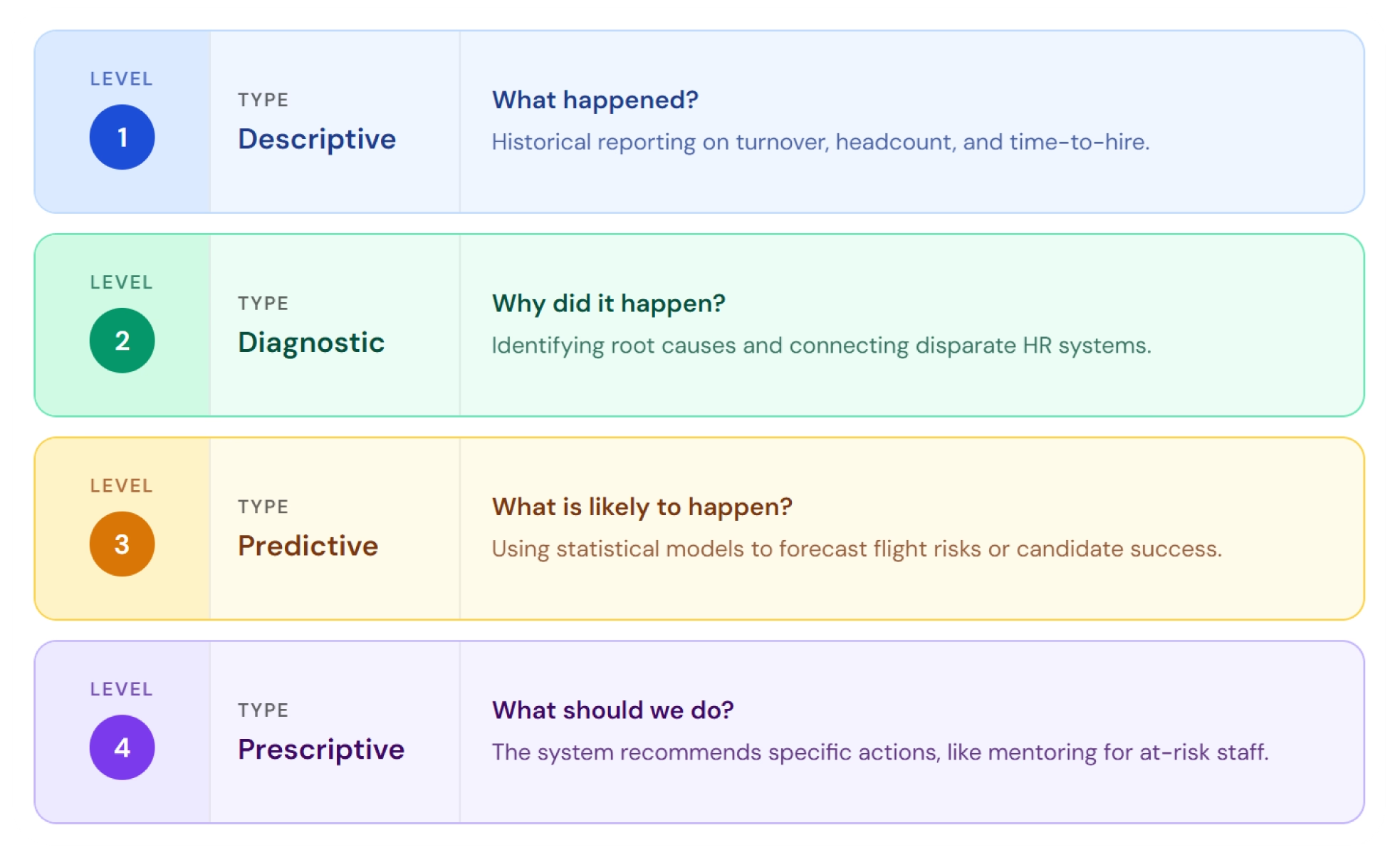
Level 1: Descriptive (What Happened?)
HR teams report on historical data. Headcount reports, turnover dashboards, and time-to-hire metrics are typical outputs. This is where most organizations begin, and many remain here indefinitely.
Level 2: Diagnostic (Why Did It Happen?)
Analysis moves beyond reporting to identify root causes. Why did attrition spike in Q3? Which managers have consistently higher turnover? This level requires data from more than one HR system, connected and comparable.
Level 3: Predictive (What is Likely to Happen?)
Statistical models and machine learning surface patterns and forecast outcomes. Who is likely to leave in the next 90 days? Which candidates are most likely to perform well in this role? This level requires clean, integrated data and a degree of analytical skill within the HR function.
Level 4: Prescriptive (What Should We Do About It?)
The most advanced level. The analytics system recommends specific actions, not just predictions. It might suggest assigning a flight-risk employee to a mentoring program or prioritising a particular sourcing channel for a specific role type. This level remains uncommon but is where the discipline is heading.
Benefits and Honest Limitations
People analytics offers real advantages for organizations that implement it well. It also carries risks that vendor marketing tends to underplay. Both are worth understanding before committing to a program or a platform.
Where People Analytics Delivers
People analytics transforms HR from a reactive administrative function into a proactive driver of success. By applying data science to workforce management, companies move beyond tracking past events to predicting and influencing future outcomes. This shift provides measurable advantages in four key areas.
Proactive Retention
Analytics identifies "flight risk" patterns in engagement, pay, and promotion history before an employee resigns. This allows managers to intervene with stay interviews or development shifts, saving the high costs of turnover and lost productivity.
Hiring Precision
Data-driven recruiting replaces intuition with evidence. By tracking which sourcing channels and screening methods produce the highest-performing long-term hires, teams can eliminate ineffective interview steps and focus budgets on what actually works.
Measurable DEI
Diversity and equity efforts become accountable through clear metrics. Analytics pinpoints where underrepresented groups drop out of the talent pipeline or face promotion gaps, turning DEI from a vague goal into a trackable business objective.
Strategic Influence
HR leaders gain a seat at the table by speaking the language of business. By reporting on human capital risk, labor forecasts, and ROI, HR aligns workforce strategy with broader corporate goals and justifies budgets with hard data.
Where People Analytics Falls Short
While the potential of people analytics is significant, implementation often hits practical and ethical walls. Identifying these limitations early allows organizations to build more resilient strategies and avoid common pitfalls that derail data initiatives. Success in this field requires acknowledging that technology alone cannot solve deeply rooted data, skill, or cultural gaps.
Data Quality Issues
Analytics is only as reliable as the information feeding it. Inconsistent data entry, fragmented systems that do not communicate, and missing record fields are the primary reasons projects fail to produce usable results. Without a clean, integrated foundation, even the most advanced tools will generate flawed or misleading conclusions.
Ethics and Privacy Risks
Workforce analytics projects are frequently jeopardized by data ethics concerns and under-managed privacy risks. A major failure mode is algorithmic bias, where software replicates historical inequities, such as recruitment tools that systematically disadvantage specific demographics. Organizations must actively audit their training data to prevent automating past prejudices.
Technical Skill Gaps
The statistical literacy required to distinguish a genuine signal from a data artifact is not yet widespread within HR teams. Many companies invest in sophisticated software before they have the internal capability to interpret the output correctly. This gap often leads to a reliance on automated dashboards without the human expertise needed to challenge or validate the findings.
The Insight-Action Gap
Generating data does not automatically result in organizational change. Many businesses build extensive infrastructure and uncover clear findings, yet fail to adjust their behaviors or processes. Closing the gap between a data output and a meaningful decision is a human and procedural challenge that software cannot solve on its own.
Legal and Global Complexity
Navigating international data laws, such as GDPR, adds significant legal friction to people analytics. Rules regarding employer data rights vary by country and are often inconsistently applied. Organizations that underestimate compliance requirements or misunderstand the "legitimate interest" basis for processing employee data risk severe legal and financial consequences.
How to Get Started with People Analytics
Starting a people analytics program does not require a dedicated data science team or a significant new technology investment. What it does require is a clear sense of what decision you are trying to improve.
Step 1: Start With a Business Question
Identify one decision your organization needs to make better. "Why are we losing people in the first 18 months?" is a more useful starting point than "we need a people analytics strategy." The question determines what data you need, not the other way around.
Step 2: Audit What You Already Have
Most HRIS platforms capture more usable data than HR teams realize. Before buying a dedicated analytics tool, map what your existing systems actually contain. You may be able to answer your first business question with data you already hold.
Step 3: Start With One Use Case
Attrition prediction and recruitment effectiveness are common first projects because the business case is clear, the relevant data is usually available, and the outcomes are measurable. Trying to build a comprehensive analytics program from day one tends to stall.
Step 4: Invest in Interpretation, Not Just Dashboards
A dashboard shows numbers. Analytics capability is the ability to ask the right question, read the output correctly, and communicate findings clearly to business leaders who are not HR specialists. That skill matters more than the platform.
Which Software Supports People Analytics?
Three categories of software make people analytics operationally practical. The right starting point depends on where your organization sits on the maturity framework above.
Dedicated platforms with people analytics capabilities are tools built for workforce analysis, predictive modelling, and organizational network analysis. They are best suited to mid-market and enterprise organizations with enough data volume and enough analytics headcount to use them effectively. Visier, ChartHop, and Crunchr are examples of platforms in this category.
HRIS platforms with built-in analytics offer descriptive and diagnostic reporting without requiring a separate tool. Modern HRIS platforms such as Workday, HiBob, and Rippling include analytics modules that cover the needs of organizations at maturity levels one and two. For most organizations, this is the right place to start.
Employee engagement platforms generate the engagement and performance data that feeds people analytics. Tools in this category are often the entry point for organizations building analytics capability around retention and engagement, because the data they produce is structured, comparable over time, and directly relevant to the questions HR leaders most frequently need to answer.
Ready to Put People Analytics to Work?
Understanding the discipline is the first step. The next is finding the right tools to support it in your organization.
If you are ready to evaluate dedicated platforms, our guide to the top people analytics software covers the leading options across different organization sizes and maturity levels.
If you are starting from your existing HR software and want to understand what analytics capability it already offers or its ability to scale towards enterprise, the top HR software for enterprises guide is a practical next step.
For organizations whose analytics program starts with engagement data, the guide to employee engagement software and the related buying guide on what to look for in engagement tools cover the key evaluation criteria.
If your interest in people analytics extends to hiring decisions specifically, the piece on skills-based hiring covers how data-informed approaches are changing how organizations define and assess the roles they recruit for.
.avif)