.svg)
Employee recognition is directly tied up to employee engagement. Gallup data show that well-recognized employees are 45% less likely to leave within two years. With highly engaged employees being more productive, it's then important that leaders use effective tools to improve daily work life and drive better business results.
This makes choosing the right recognition platform vital for employee engagement and retention. However, most employee recognition programs eventually fail, not because of bad intentions, but because the software is eventually ignored.
This guide provides a practical framework to help you evaluate software before a demo, ensuring you select a system that stays active and integrated rather than becoming a forgotten tab.
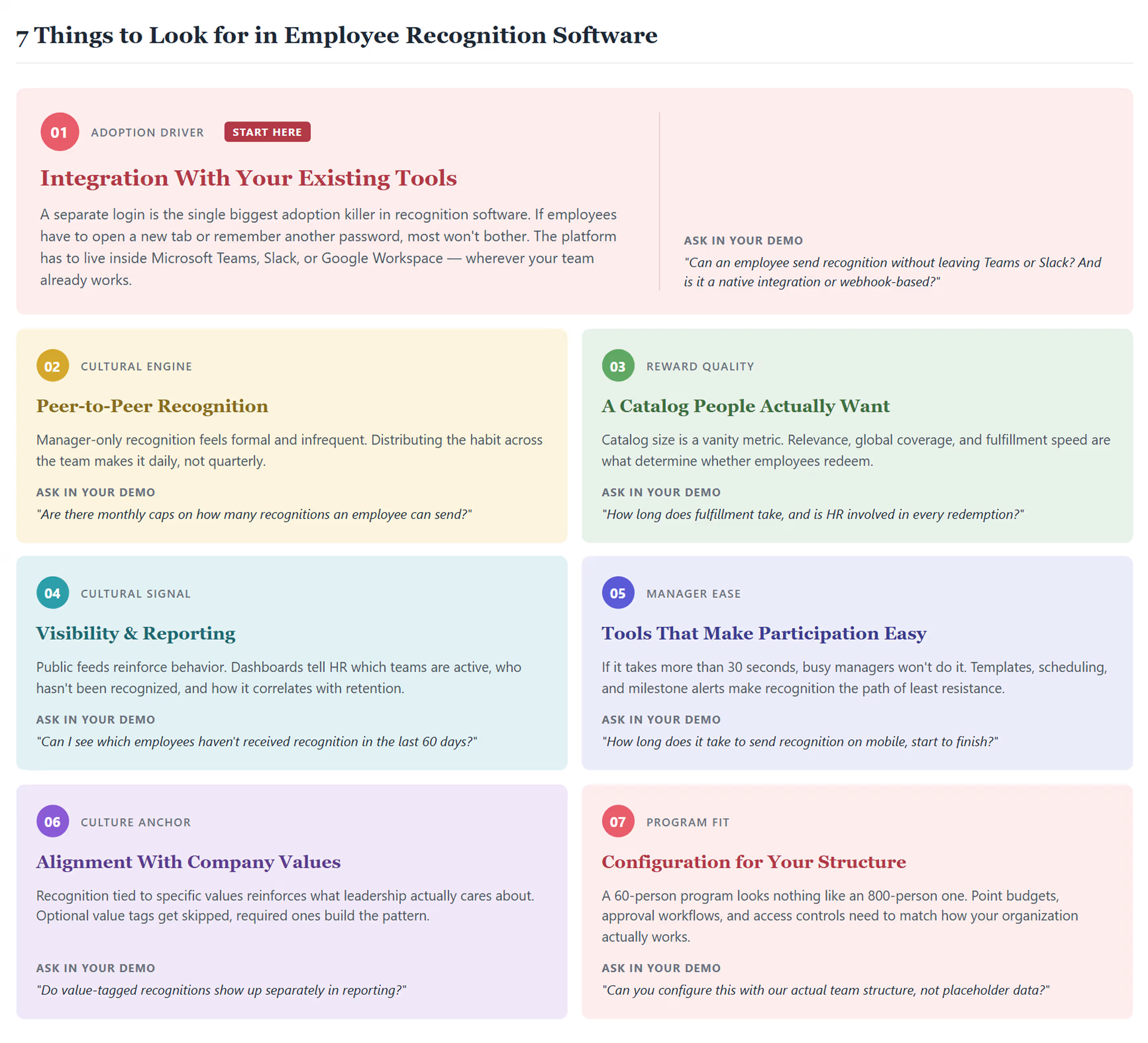
The 7 Things to Look for in Employee Recognition Software
Effective recognition programs drive a significant increase in productivity and culture. This impact depends on simple features that allow busy teams to use the tool regularly, rather than flashy extras. Prioritizing ease of use ensures the program sticks and delivers these business improvements.
Here are 7 things to consider:
1. Integration with the Tools Your Team Already Uses
The single biggest adoption killer in employee recognition platforms is requiring a separate login. If employees have to open a new browser tab, remember another password, or leave the app they're already in, most of them won't bother.
The best employee recognition software meets people where they work. For many organizations, that means integration with Microsoft Teams, Slack, or Google Workspace.
Platforms like Teamflect, Workhuman, Lattice, and Bonusly each offer varying degrees of native integration with these tools. Check whether recognition can be sent directly from within your communication platform, or whether the integration is limited to notifications only. Those are two very different things, and vendors don't always volunteer the distinction.
In your demo, ask: "Can an employee send a recognition message without leaving Microsoft Teams or Slack?" If the answer involves more than two steps, factor that friction into your adoption forecast.
2. Peer-to-Peer Recognition, Not Just Top-Down
Recognition that flows only from managers to employees tends to feel formal and infrequent. Peer-to-peer recognition software changes the dynamic by distributing that habit across the whole team.
When colleagues can acknowledge each other's contributions directly, recognition becomes a daily behavior rather than a quarterly event. It also reduces the pressure on managers to catch everything, which is especially valuable in larger or distributed teams.
Look for a platform where peer recognition is easy to give, visible to the broader team (with appropriate privacy settings), and tied to company values when relevant. Ask whether there are limits on how many recognitions an employee can give per month, since artificial caps tend to suppress the very behavior you're trying to build.
3. A Rewards Catalog That People Actually Want
Recognition without a meaningful reward component works for some organizations. For others, it falls flat. If your program includes a rewards element, the quality of the rewards catalog matters more than its size.
A recognition and rewards platform with thousands of redemption options sounds impressive. In practice, employees care whether the options are relevant to them. Look for a catalog that includes gift cards from well-known retailers, charity donations, experiences, and the option to customize rewards for your specific workforce. Global catalogs matter if you have employees outside the US.
In your demo, ask: The fulfillment process. A reward that takes three weeks to arrive or requires HR to manually process every redemption will undermine the program quickly.
4. Visibility into Recognition Activity
Recognition that happens privately is better than no recognition at all. But recognition that's visible to the broader team tends to have a stronger effect on culture. A public feed or activity wall, where shoutouts are shared across the organization or within teams, reinforces the behaviors you want to see repeated.
Check whether visibility settings are configurable. Some employees prefer not to be spotlighted publicly, and a good platform accommodates both preferences without making the default experience feel muted.
For HR and leadership, a different kind of visibility matters: reporting. Look for dashboards that show which teams are actively giving recognition, which employees haven't been recognized in an extended period, and how recognition activity correlates with engagement survey scores or turnover data.
5. Manager Tools That Make Participation Easy
If it takes more than 30 seconds to send a shoutout, busy managers won't do it. That's not a criticism of managers; it's just how time works when someone has a full calendar.
Employee appreciation software should make recognition the path of least resistance, not an extra task. Look for features like recognition templates, the ability to schedule recognition in advance, and milestone alerts (work anniversaries, birthdays, project completions) that prompt managers to act at the right moment.
In your demo, ask: About how long it actually takes to send a recognition from start to finish. Do it in the mobile version, too, since many managers will only engage via phone.
6. Alignment with Company Values
Recognition that's tied to specific company values does two things at once: it acknowledges an individual and it signals what the organization actually cares about. Over time, that pattern reinforces the behaviors and attitudes that leadership wants to see throughout the team.
Most employee recognition platforms support value tagging in some form. What varies is how prominently that feature is built into the recognition flow. On some platforms, selecting a value is optional and easy to skip. On others, it's a required step that keeps the connection between recognition and culture front and center. Recognition data can also inform performance reviews. Since subjective ratings are prone to recency, similarity, and other performance review bias, HR teams should weigh documented recognition alongside other performance evidence.
In your demo, ask: Whether value-tagged recognitions show up separately in reporting, since that data becomes useful when connecting recognition activity to performance reviews or engagement analysis.
7. Configuration Options for Your Program Structure
No two organizations run recognition programs the same way. A company with 60 employees has different needs than one with 800, and a company replacing a legacy platform has a different setup requirement than one starting from scratch.
Look for a platform that lets you configure point budgets by team or role, set approval workflows if your organization needs them, and control which employees have access to which parts of the product. The more your program structure deviates from a default setup, the more important configuration flexibility becomes.
Be specific in your demo: describe your actual program structure and ask the vendor to show you how it would be configured. Generic demos with placeholder data won't surface the gaps that matter to your organization.
Questions to Ask Before You Buy
These aren't feature questions. They're the kind of questions that reveal whether a platform will actually support cultural change or just add another tool to your stack.
What does your typical adoption rate look like at six months, and what are the common reasons it drops?
A vendor that can answer this honestly, with real data, has probably been through enough implementations to know what works. One that pivots immediately to success stories without acknowledging failure modes should give you pause.
How do you handle employees who don't have a company email or regular computer access?
Frontline workers, warehouse staff, and field employees are often excluded from recognition programs by default. If your workforce includes any of these roles, ask specifically how the platform serves them.
What does the onboarding process look like for managers, and how do you support adoption beyond the launch?
A well-run launch that receives no follow-up is one of the most common reasons programs stall after six months. Ask whether the vendor provides ongoing support, usage data, or structured check-ins after go-live.
Which features in this proposal require an upgrade to access?
Reporting dashboards, SSO, and advanced integrations are frequently locked behind higher tiers. Get the full picture before you agree to a number.
Can you connect us with a customer at our size who has been on the platform for at least 18 months?
Short-term references are easy to find. Long-term ones tell you whether the platform holds up after the novelty wears off.
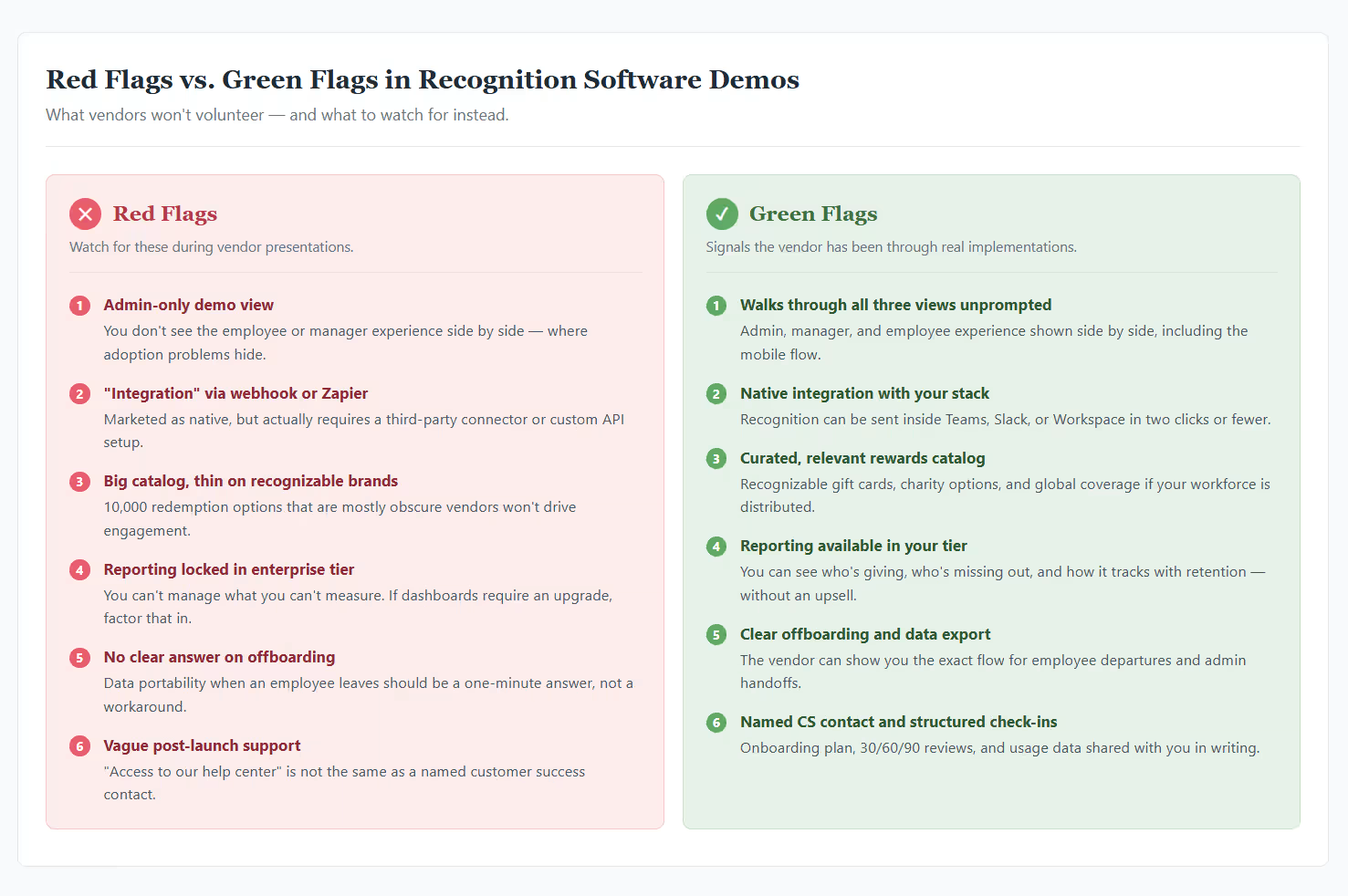
Red Flags in Demos
Watch for these during vendor presentations. Most of them won't be volunteered.
- The demo only shows the admin view: If you don't see the employee and manager experience side by side, ask for it. That's where adoption problems usually hide.
- Integrations described in the marketing materials turn out to be webhook-based or require a third-party connector: Ask specifically, "Is this a native integration or does it require Zapier or a custom API setup?"
- The rewards catalog is impressive in size but thin on recognizable options: A catalog with 10,000 items that includes mostly obscure vendors won't drive engagement.
- All the reporting features are in the enterprise tier: If you can't see recognition activity data without upgrading, you won't be able to manage the program effectively.
- The vendor can't show you what happens when an employee leaves the company: Data portability and offboarding processes are worth asking about before you sign anything.
- Support after implementation is vague: "You'll have access to our help center" is not the same as a named customer success contact. Clarify what post-launch support looks like in writing.
What Good Looks Like at 6 Months
Buying the software is the beginning, not the finish line. Setting clear expectations for what the program should produce, and when, is the part most buying guides skip.
Meaningful engagement improvements typically begin within three to six months of a well-run program. Deeper cultural change, the kind where recognition becomes a genuine daily habit across the organization, tends to take twelve to eighteen months.
At the six-month mark, look for these signals that the program is working:
- Recognition frequency: Are employees and managers using the platform consistently, or only during launch month?
- Coverage: Are recognitions distributed across the organization, or concentrated in a few teams?
- Redemption rates: If the program includes rewards, are employees actually redeeming them?
- Manager participation: Are managers giving recognition at a meaningful rate, or is the activity driven almost entirely by peers?
If recognition frequency is high but limited to a small subset of the organization, the program may be thriving culturally in one pocket and invisible everywhere else. That's a signal to investigate what's different in the engaged teams and whether those conditions can be replicated.
One metric worth tracking from the start: the percentage of employees who have received at least one recognition in the past 30 days. It's a simple number, but it tells you quickly whether the program is reaching the whole organization or just the visible few.
Next Steps
If you've worked through this framework and you're ready to start comparing specific platforms, the next step is building a shortlist based on consistent criteria. Our guide to the top rewards & recognition software covers the leading platforms evaluated against the criteria above.
If you're still working through the broader engagement picture, our employee engagement software list and employee engagement survey tools cover the adjacent categories worth considering alongside recognition.
For buyers connecting recognition to performance review cycles, our performance management software list is a useful companion.
.avif)