
.avif)
.avif)
.svg)
Selecting enterprise performance management software is difficult. While most platforms promise a total solution, the gap between a pitch and a functional product often surfaces only after a failed rollout.
The need for better tools is urgent: Gallup reports that only 2% of Fortune 500 CHROs believe their systems inspire improvement, while just 20% of employees find their reviews fair or motivating.
This guide analyzes 10 leading platforms for 2026 based on features, user feedback, and pricing. Whether you are replacing a legacy tool or starting from scratch, these insights will help you find a system that actually works.
Quick Note - If you are evaluating enterprise-grade HR software, make sure you visit our articl: What to look for in OKR software for Enterprises
We also made a video on the top 5 enterprise performance management tools:
What to Look for in Enterprise Performance Management Software
Prioritizing specific qualities is essential before evaluating different solutions. Platforms vary significantly in their architecture, and these distinctions become vital for long-term success once the initial setup is complete.
1. Core Feature Coverage
At minimum, your platform should handle performance reviews, goal setting, continuous feedback, and 1-on-1 check-ins. OKR tracking, 360-degree feedback, and employee engagement surveys are valuable additions. A tool that does five things well is more useful than one that does ten things poorly.
2. Integration With Your Existing Stack
A performance management platform that doesn't connect to your HRIS, payroll system, or communication tools will create extra work rather than reduce it. Check whether integrations are native or built through third-party connectors. Microsoft 365 users, in particular, will get significantly more mileage from a tool built natively within that environment.
3. Scalability
Systems effective for a small staff often falter as a company expands tenfold. Prior to making a selection, evaluate your projected size over the next few years to ensure the software's cost structure and functionality can accommodate that expansion.
4. Pricing Transparency
Many platform vendors tend to keep their rates hidden, complicating the financial planning process. It’s often wise to request a thorough list of features for every plan level to identify which functions are standard and which incur extra fees.
5. Adoption Potential
The most feature-rich platform fails if people don't use it. Check ease-of-use ratings on G2 and Capterra, and ask vendors about their average time-to-adoption for organizations your size.
10 Best Enterprise Performance Management Software in 2026
1. Rippling: A Unified HR and IT Platform with Strong Performance Tools
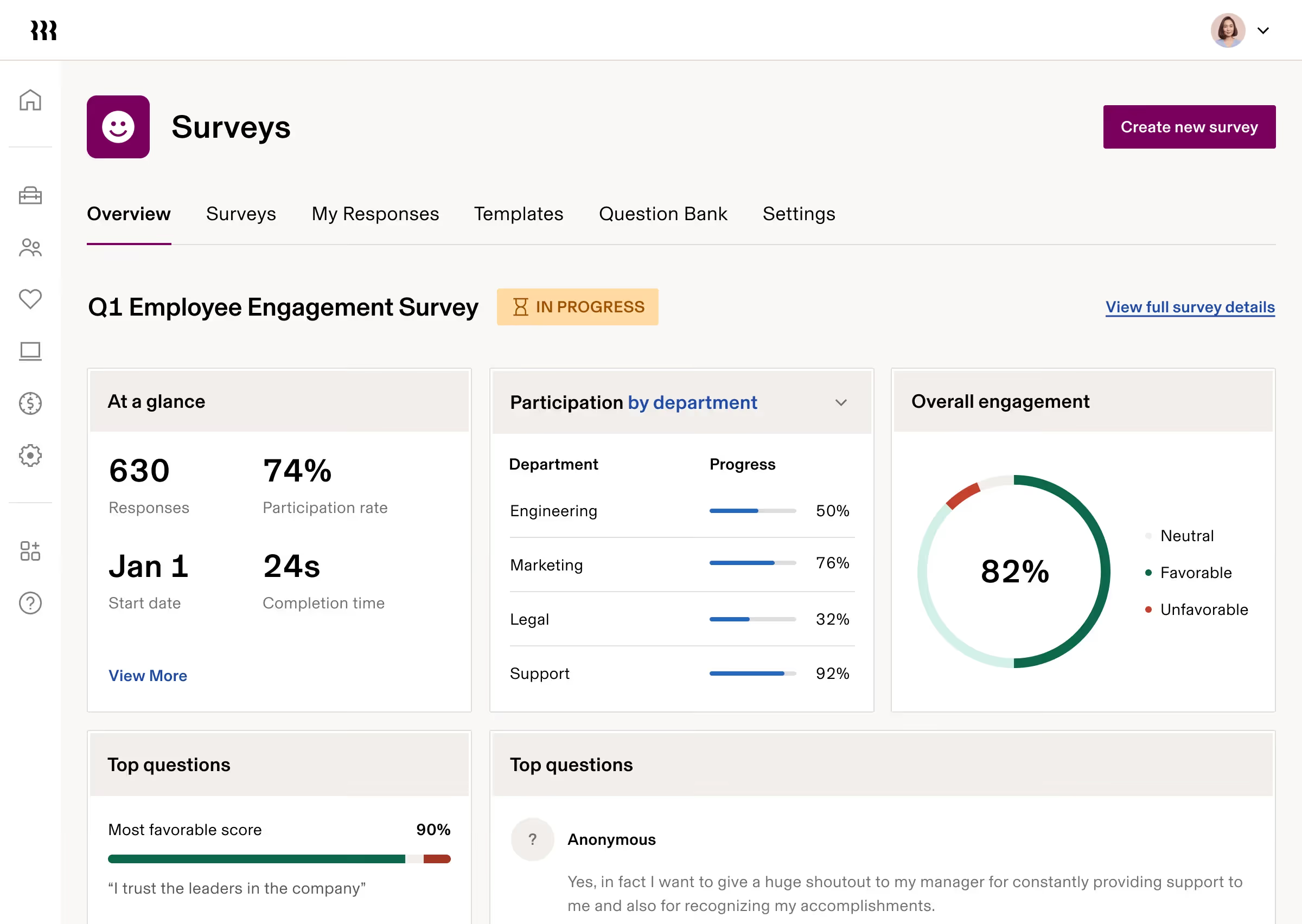
Rippling distinguishes itself from typical competitors by avoiding a siloed software design. Instead, it integrates personnel, salary, technology, and financial data into one cohesive system. This centralized architecture provides a significant advantage for reporting, as having all staff information in a single location ensures more dependable and thorough insights.
For fast-scaling organizations that want to consolidate their tech stack, Rippling is a compelling option. The performance management module handles goal setting, continuous feedback, and review workflows, and it integrates naturally with the rest of the platform.
Key Features
- Unified HR, payroll, IT, and finance data within one platform
- Goal setting and performance review workflows with manager dashboards
- Workflow Studio for building custom HR automations without code
- Automated onboarding and offboarding across payroll, device access, and benefits
- Compliance reporting for multi-state and international environments
- 650+ third-party integrations
- Custom report builder with configurable dashboards
Best For
- Growing companies that want HR, IT, and payroll under one roof
- Mid-market and enterprise teams managing remote or hybrid workforces
- HR and IT teams comfortable managing a modular, configuration-heavy platform
Pros
"What I have liked most about Rippling is the feasibility for the application both online and through cellular use. I have loved how easy it is to navigate the application as I work remotely for my job." - Capterra Review
- Minimize administrative burdens by streamlining repetitive tasks for various departments
- Scalable; built to grow alongside your company
- Robust regulatory tools designed for teams operating across different states or international borders
- Good user interface that’s easy to understand for employees outside the human resources department
Cons
"I think Rippling could provide more upfront knowledge about potential blockers, like limitations to EOR salaries." - G2 Review
- Custom pricing requires a sales conversation with no publicly listed rates
- Initial setup can feel complex given the breadth of the platform
- Customer support quality has been inconsistent for international payroll
Pricing
- Custom quote for different products including Platform, HCM, IT, and Spend
- No free plan or free trial; demo available on request
2. Teamflect: Best Enterprise Performance Management Software for Microsoft 365 Teams
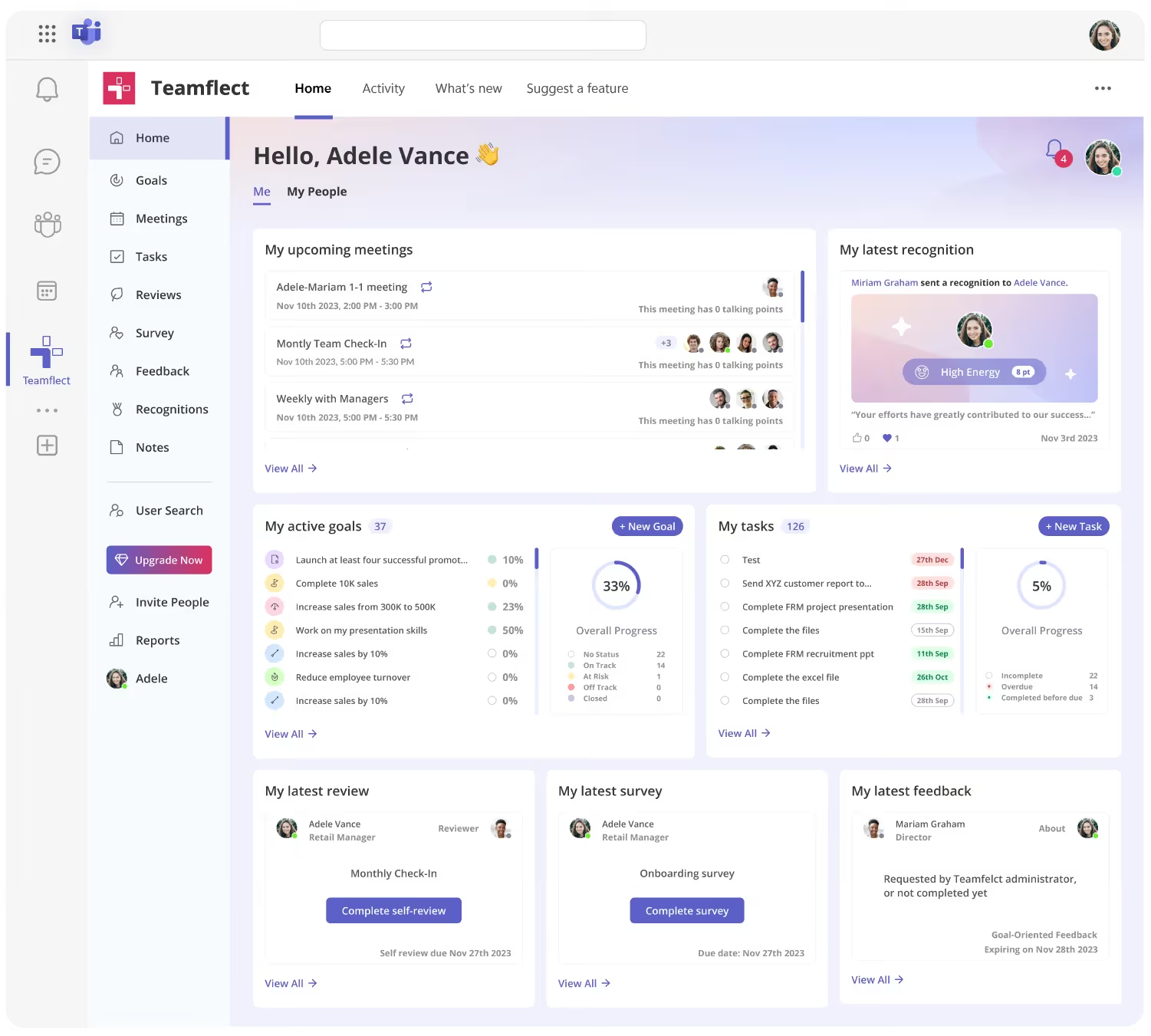
Teamflect is the only performance management platform built entirely within Microsoft Teams and Outlook, making it a perfect fit for Microsoft 365 users. Because of its native integration, performance management lives inside existing workflows, removing engagement hurdles brought by multiple logins through external apps. With 200+ HRIS integrations and Microsoft-partner security, it also automates data management without compromising safety.
The platform is an all-in-one software that handles the full performance cycle, including OKRs, 360-degree feedback, and talent grids. It also provides leadership with Power BI analytics.
That being said, it has a glaring weakness in not offering Core HR capabilities such as payroll and leave management. The reason it ranks this high on our list is because this evaluation strictly focuses on performance management.
Key Features
- Performance management happens entirely within Outlook and Teams to eliminate the need for switching applications or managing separate accounts.
- Company-wide goals connect directly to personal daily tasks with real-time progress monitoring.
- Flexible templates allow for the creation and deployment of various review formats ranging from seasonal check-ins to project wrap-ups.
- The standard Teams chat interface serves as the primary tool for collecting input from peers and direct reports.
- Shared agendas, synced notes, and integrated action items improve the quality and organization of one-on-one meetings.
- Interactive Power BI dashboards provide leadership with deep insights and high-level workforce data.
- Smart suggestions assist managers in writing review summaries and establishing clear objectives.
- Employee potential is mapped against current performance to identify future leaders and assist in succession planning.
What Makes Teamflect Stand Out: Industry leading Enterprise security features
During our research into performance management platforms for enterprises, we found Teamflect's enterprise plan offers features unique security features such as:
- Custom data residency anywhere in the world
- Customer-managed encryption keys (Bring Your Own Key encryption)
- Dedicated cloud infrastructures for enterprise users
Pros
"It is simple and linked to teams which allow people to move within the one platform." - G2 Review
- High participation levels because the platform lives where employees already spend their workday
- Comprehensive talent management in one hub: objectives, evaluations, peer input, and awards
- Significant price reductions for charitable organizations, offering up to 60% savings on yearly plans
- Full access to premium tiers for a month at no cost to test the fit before committing
Cons
“Lacks document approval management for goals and KPIs.” - Capterra Review
- Requires a Microsoft 365 environment; less reliable as a standalone platform outside that ecosystem
- Doesn't offer the Core HR features many of the other tools on this list do.
Pricing
Teamflect offers three tiers with 22% annual billing discounts and 60% off for non-profits.
- The Starter Plan: Free for up to 10 users .
- The Essential Plan: $7 per user/month.
- The Professional Plan: $11 per user/month.
- The Enterprise Plan: Custom Quote
3. HiBob HRIS: A Well-Rounded Platform with Built-In People Analytics

HiBob is an advanced HRIS system that centers its design around the employee experience. It provides analytics, engagement tools, performance reviews, and other HR functions all in one location.
HiBob distinguishes itself through user-friendly, visual reporting that makes personnel data actionable for everyone, not just HR. For global expansion, its built-in international legal support and multi-currency features provide a distinct advantage.
We actually compared HiBob to other top of the line performance management and HRIS platforms. Click the articles below for more detailed comparisons if you're interested in learning more about HiBob:
Key Features
- Tailored review structures from customized appraisal timelines incorporating comprehensive 360-degree input and individual self-evaluations
- Regionalized personnel management processes
- Strategic pay oversight with tools for equitable distribution, salary bracketing, and fairness audits
- Unified software linking that bridges the gap between core records and external recruitment, accounting, or wage disbursement systems
- Operational insight panels for staff trends and organizational health
- Programmed sequences allow handling of the entire lifecycle of employment
- Frequent check-ins, peer appreciation programs, and internal social groups that drive employee engagement and boost morale
Best For
- Midmarket businesses employing between 100 and 1,000 people
- Businesses with multinational or dispersed teams
- HR departments looking to incorporate engagement and analytics capabilities within their main HRIS
Pros
"It's a good tool for all the HR-related topics, such as requesting time off, uploading/reviewing/signing all the necessary documents, conducting performance reviews and 1-on-1 meetings." - Capterra Review
- Highly intuitive interface that drives strong adoption across all levels
- Solid people analytics with customizable KPI dashboards
- Strong integration with payroll, ATS, and communication tools
- Well-suited to globally distributed teams
Cons
"Sometimes I find it difficult to create custom reports. With the column picker, it can be hard to tell which column I actually need, since there are so many options available." - G2 Review
- Lack transparency; quote-based payment structure that’s available upon request
- Companies with unique internal processes may find the primary implementation phase challenging
- Premium data insights and high-level reporting functions often necessitate supplemental fees
Pricing
- Variable cost structure; final expenses determined by your chosen feature set and the duration of the service agreement
- Free trial available; reach out to the HiBob team for more information
4. Lattice: A Structured Option for Performance-Focused HR Teams
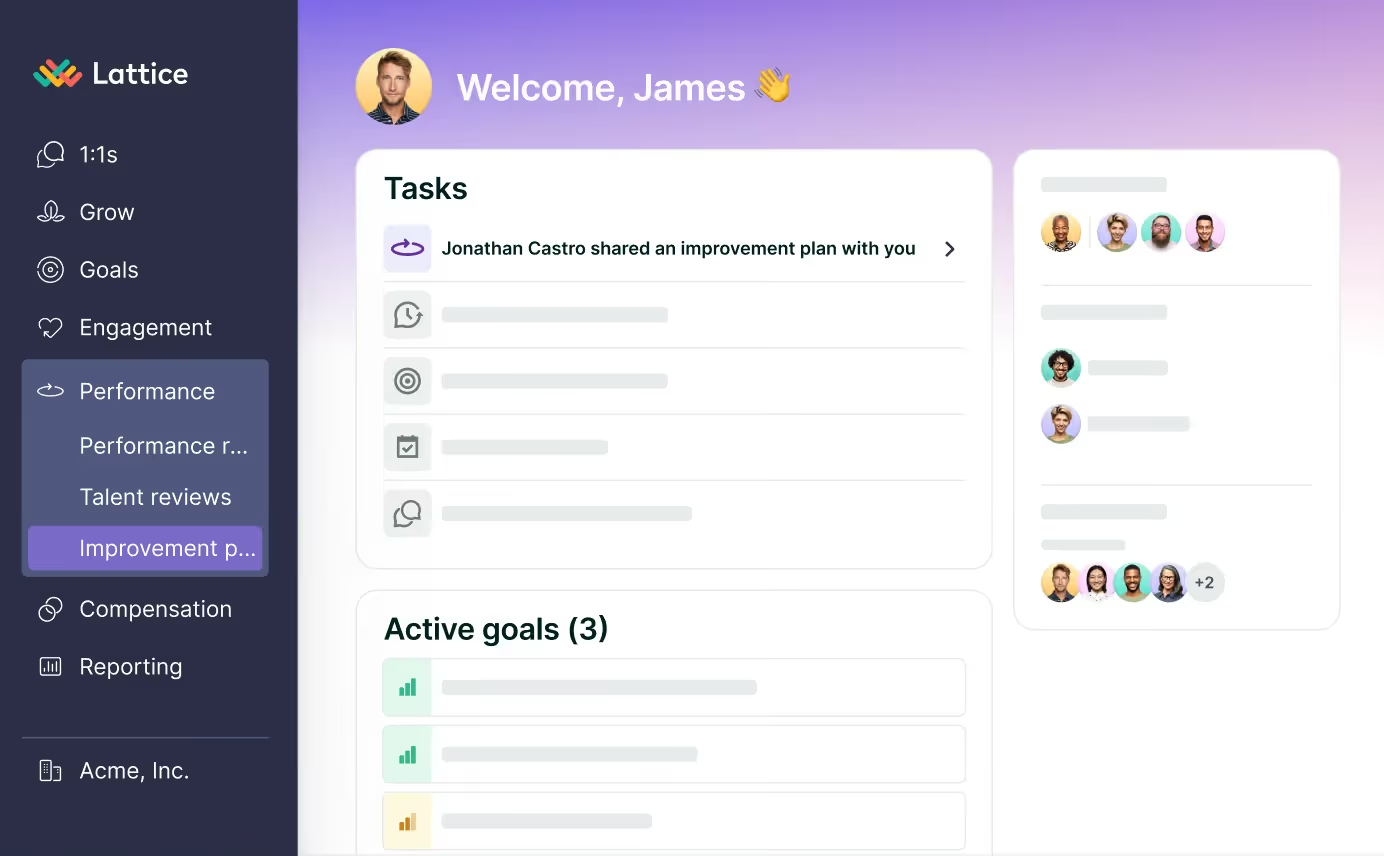
Lattice is a platform for people strategy and performance management that integrates OKR tracking, employee engagement surveys, salary planning, and performance reviews into a single system. It’s a popular choice for mid-sized tech firms and rapidly expanding businesses aiming to establish a culture of achievement grounded in hard data.
One of Lattice's more useful capabilities is the connection it draws between engagement and performance data. This allows HR leaders to determine if increased satisfaction leads to better business outcomes, providing evidence to support human capital initiatives during executive discussions. The interface is clean and most users find it approachable after initial setup.
Key Features
- Adaptable evaluation workflows allows you to set up tailored assessment periods featuring holistic feedback, such as self-assessments and peer-to-peer insights
- Strategic alignment framework allows for measurable OKR tracking
- Pulse and sentiment analysis capabilities for gauging workplace satisfaction and employee engagement
- Data-driven visualizations that track long-term patterns in productivity and staff involvement
- Dedicated utilities to standardize scoring and eliminate bias across different leadership styles and department
- Collaborative check-ins with pre-set discussion prompts and documented follow-up tasks
- Seamless integration with communication apps like Slack or Teams and other related software
Best For
- Mid-market businesses with 50–1,000 workers
- HR departments concentrated on creating organized performance and feedback initiatives.
- Businesses that wish to use the same system for both OKRs and performance reviews
Pros
"I liked how intuitive the high-level layout of Lattice is. I specifically really like the 1:1 capability and got really comfortable in that format. I also think their 360 review capability is awesome." - Capterra Review
- Success metrics link straight to appraisals, providing meaningful background for every assessment
- Offers the most flexible evaluation framework available for mid-sized organizations
- Access robust analytics to measure internal morale against standard sector performance
- Benefit from a proactive account management group and quick-turnaround technical assistance
Cons
"Some of the filters are not as robust as I would love. I'd like to have a lot more filters and in-depth filters to get certain responses for my surveys." - G2 Review
- High costs may make this option inaccessible for a small business or an organization with limited financial flexibility
- May need substantial initial tailoring and input before its practical benefits are fully realized
- Lacks native salary processing or primary employee record-keeping, requiring a different third-party solution
Pricing
- Monthly base fee: $11 per user
- Add-ons: $4–$6 per user per month
- Minimum yearly contract: $4,000
5. Workday HCM: A Comprehensive Suite for Large Enterprises

Workday HCM is one of the most established enterprise HR platforms in the market. It combines HR, payroll, talent management, workforce planning, and analytics in a single cloud-based system. For large organizations with complex compliance requirements and global operations, Workday's depth is hard to match.
The platform is best understood as a full HCM suite rather than a dedicated performance management tool. Its performance management module handles goals, continuous feedback, and review workflows, but it sits alongside payroll, benefits, recruitment, and learning in a much larger platform. That breadth is valuable for organizations that want a single system of record.
Key Features
- Unified HR, payroll, and benefits on a single platform
- Performance management with goal-setting, continuous feedback, and review workflows
- AI-driven sentiment analysis for employee retention insights
- Workforce planning with headcount modeling and scenario analysis
- Talent acquisition and onboarding with structured workflows
- Advanced people analytics with customizable dashboards
- Global payroll capabilities across select countries with partner integrations
Best For
- Large enterprises with 1,000 or more employees
- Organizations operating across multiple countries with complex compliance needs
- HR teams that want performance, payroll, and analytics in a single system of record
Pros
"I like Workday's layout and design along with its ease of use. The user experience is fairly good with most things being intuitive." - Capterra Review
- Comprehensive feature coverage across the full employee lifecycle
- Strong analytics with workforce planning and labor cost visibility
- Well-established compliance tooling for multi-jurisdiction environments
- Trusted by large enterprises globally
Cons
"New features and new integrations can be tough and generally require a third party or SME." - G2 Review
- Implementation is complex and typically requires dedicated project management and outside consultants
- Pricing is not publicly listed and can be significant for smaller organizations
- The interface, while functional, can require more clicks than users expect to navigate common tasks
Pricing
- Custom pricing based on organization size, modules, and contract terms
- No free plan or free trial; demo available through sales
6. Leapsome: An AI-Powered People Platform with Modular Flexibility

Leapsome is an all-in-one people enablement platform that combines performance management, employee engagement, learning and development, and compensation tools in a single system. Its modular structure means organizations can start with the features they need most and expand over time.
The platform has put significant investment into AI-assisted workflows, including tools that help managers write better feedback, summarize reviews, and track goal progress more precisely. For HR teams that want a modern, adaptable platform without locking into a rigid structure from day one, Leapsome is worth a close look.
Key Features
- Configurable performance review cycles including annual, project-based, probation, and 360-degree reviews
- OKR and goal tracking with visual dashboards and auto-progress syncing with tools like Jira
- Engagement, eNPS, onboarding, and exit surveys with real-time analytics
- Continuous feedback tools for peer praise and growth suggestions
- Learning management module for employee development and training tracking
- Compensation management with salary review workflows
- AI-powered review assistant for feedback phrasing and historical data insights
Best For
- Mid-market companies with 50 to 500 employees
- HR teams that want modular flexibility and room to expand capabilities over time
- Organizations prioritizing continuous feedback and structured development alongside performance reviews
Pros
"I like how Leapsome makes it easier to manage people and conduct year-end reviews. It's convenient because I can send a review and appraisal of a person at any time. The initial setup was easy." - G2 Review
- Broad feature coverage across performance, engagement, and learning in one system
- Intuitive interface that most users find approachable after initial setup
- AI tools that save managers time during review cycles
- Strong customer support and dedicated onboarding resources
Cons
"The breadth of features means it works best when teams take time to embed it properly into their processes." - Capterra Review
- The volume of features can feel overwhelming for teams that haven't clearly defined their use cases first
- Microsoft 365 integration is less deep than native solutions, which matters for Teams-heavy organizations
- Advanced modules and enterprise support require higher-tier pricing
Pricing
- Custom pricing based on modules selected and company size
- Free trial available; no permanent free plan
- Contact Leapsome for a quote
7. Quantum Workplace: A Solid Suite for Engagement-Driven Organizations

Quantum Workplace is a performance management and employee engagement platform that brings together reviews, goal tracking, feedback, recognition, and surveys in one place. It's a practical choice for organizations that want centralized visibility into both performance and engagement without managing multiple separate tools.
One practical strength is the platform's structure: everything from review cycles to engagement surveys connects in a single profile view, which gives managers and HR teams a cleaner picture of each employee over time. Its tutorials are well-regarded by users, and the onboarding process is generally described as straightforward.
Key Features
- Performance reviews with configurable templates and rating scales
- Goal and OKR tracking with upline visibility for managers
- Continuous feedback and peer recognition tools
- Employee engagement surveys with trend analytics
- 1-on-1 meeting tools with agenda tracking
- Recognition and rewards module
- Integrated reporting across engagement and performance data
Best For
- Mid-market organizations looking to combine performance management and engagement in one platform
- HR teams that want a straightforward implementation with good manager-facing tools
- Companies replacing disconnected point solutions with a single, consolidated system
Pros
"I like the fact that you have all aspects of performance management in one platform, from reviews, to ranking, surveys, feedback and more. It's easy to use and navigate between the different areas within a profile. It offers visibility to upline. The tutorials are done well and easy to understand." - Capterra Review
- Broad feature coverage in a single, well-organized interface
- Strong upline visibility for managers and HR leadership
- Good onboarding support with accessible tutorials
- Continuous feedback and recognition tools built into the same system
Cons
"I did think that it may have been nice to receive email reminders that tasks were pending or needed to be completed or finalized, rather than having to rely on my own memory." - G2 Review
- Automated reminder functionality is limited compared to some competitors
- Pricing is not publicly listed, which requires a sales conversation before budgeting
- Some advanced reporting features may require configuration support
Pricing
- Custom pricing; contact Quantum Workplace directly for a quote
- No publicly listed starting price, free plan, or free trial
8. Culture Amp: A Data-Driven Choice for Engagement and Performance

Culture Amp has built its reputation on employee engagement measurement. It serves more than 6,500 companies and holds one of the largest employee datasets available, which powers its benchmarking tools. When your organization wants to compare engagement or performance metrics against industry peers, Culture Amp's data depth is genuinely hard to match.
The platform is modular. You can purchase Engage, Perform, and Develop separately or as a bundle, which works well for organizations that want to start in one area and expand later. That said, costs can climb when multiple modules are added, and the platform works best for companies with at least 200 employees.
Key Features
- Engagement surveys with industry benchmarking and real-time dashboards
- Performance review workflows with 360-degree feedback and customizable templates
- OKR and goal tracking with individual and team-level visibility
- Diversity, equity, and inclusion measurement through specialized survey modules
- Action planning tools that assign follow-up tasks based on survey results
- Text analytics and AI-powered insights for open feedback
- Integrations with HRIS, payroll, and communication platforms
Best For
- Mid-size and enterprise organizations with 200 or more employees
- HR teams that prioritize employee engagement data and cultural measurement
- Companies that want to benchmark engagement scores against industry peers
Pros
"Easy to use and navigate, with a clear and intuitive flow. The added Employee Skills Coach section is a valuable feature that enhances the overall experience." - Capterra Review
- Industry-leading benchmarking powered by a large employee dataset
- Strong action planning tools that tie survey results to tangible follow-up
- Well-designed interface with good adoption from both employees and managers
- Dedicated people science team that helps organizations use data effectively
Cons
"It is not as user friendly as other similar platforms." - G2 Review
- Pricing is quote-based and can be expensive; smaller teams often find better value elsewhere
- Customization across surveys, reporting, and performance workflows is more limited than some users expect
- Not a natural fit for teams under 200 employees given the pricing structure
Pricing
- Custom pricing; modules include Engage, Perform, and Develop
- No free plan or free trial; contact Culture Amp for a tailored quote
9. UKG Pro: An Enterprise HCM Suite with Workforce Management Depth

UKG Pro is a comprehensive Human Capital Management suite built for larger organizations with complex workforce needs. It combines payroll, time and attendance, HR, talent management, and learning in a single system. For companies operating across multiple states or managing large hourly workforces, UKG Pro's compliance depth and workforce analytics are notable strengths.
The platform's employee self-service tools are well-regarded by users, and its time-off and payroll data visibility is consistently praised. It's more of a full HCM suite than a purpose-built performance management platform, but organizations already using UKG for workforce management will find the performance tools a natural extension.
Key Features
- Enterprise payroll with multi-jurisdiction tax compliance
- Time and attendance management with automated labor law enforcement
- Performance management with 360-degree feedback and goal tracking
- Talent acquisition, onboarding, and succession planning
- Learning management system with AI-driven content recommendations
- People analytics and workforce planning dashboards
- Compensation management and pay equity analysis
Best For
- Large enterprises with 500 or more employees and complex compliance requirements
- Organizations managing large hourly or shift-based workforces
- Companies that want HR, payroll, and performance tools from a single vendor
Pros
"The platform is user-friendly and easy to use, with a straightforward interface that makes it simple to get started." - G2 Review
- Industry-recognized compliance tooling for complex regulatory environments
- Strong employee self-service for time-off, schedules, and personal data
- Highly scalable for organizations with thousands of employees across multiple locations
- Broad feature coverage across the full HR and workforce lifecycle
Cons
"Sometimes the employees complain that they are not able to login. Also as a manager I struggle to login if Outlook email is open." - Capterra Review
- Login and mobile app reliability issues have been flagged in user reviews
- Implementation is complex and typically requires dedicated project management resources
- Custom reporting has a steep learning curve for new users
Pricing
- Subscription-based pricing per employee per month; not publicly listed
- Custom quotes required based on headcount, modules, and contract length
- No free plan or free trial; enterprise implementations typically involve extended onboarding
10. ADP Workforce Now: A Reliable Option for Payroll-Linked Performance Management

ADP Workforce Now is one of the most widely adopted HR and payroll platforms for established mid-size and large organizations. Its performance management capabilities are not its primary selling point, but they integrate directly with the payroll and HR data that already lives in the system. For organizations already on ADP that want to add structured reviews and goal tracking without switching vendors, that continuity has real value.
Payroll accuracy is consistently praised in user reviews, and the compliance reporting tools are particularly useful for organizations operating across multiple states or regulated industries.
Key Features
- Automated payroll processing with tax filing across all US states
- Performance management with goal tracking, 1-on-1 tools, and review templates
- Benefits administration and open enrollment management
- Time and attendance tracking with mobile clock-in
- ADP Assist: AI tools for payroll anomaly detection and compliance validation
- 350+ certified third-party integrations
- Workforce cost analytics linking compensation to headcount data
Best For
- US-based mid-market companies already using ADP for payroll
- Organizations with 50 to 750 employees that want performance tools integrated with payroll
- HR teams that prioritize compliance reporting and payroll accuracy above all else
Pros
"I liked the onboarding process, the steps were all very straightforward and easy to navigate for the most part." - Capterra Review
- Industry-leading payroll accuracy and compliance depth
- Broad integration library for connecting existing HR tech stacks
- Scalable across business sizes with modular add-ons
- Trusted by a large base of mid-market and enterprise organizations
Cons
"The only thing is the mobile experience. I can't submit a time-off request through the mobile, which would be nice to be able to do." - G2 Review
- Interface is functional but dated compared to more modern competitors
- Pricing is opaque; add-on modules can significantly increase total cost
- Customer support quality is inconsistent at lower account tiers
Pricing
- Custom pricing; contact ADP directly for enterprise quotes
- No free plan or free trial
Start Your Performance Management Search Right
Choosing the right enterprise performance management software is a long-term decision. Getting it right from the start saves you a painful migration and, more importantly, the erosion of trust that comes when a tool gets rolled out and quietly ignored.
Here are five practical questions to work through before you finalize your shortlist.
1. What does your day-to-day workflow actually look like?
If your team lives in Microsoft 365, a platform built natively inside Teams will always outperform one that requires a separate login. Or if your team uses Slack as its main communication channel, a tool with streamlined Slack integration will surely outperform the rest.
2. How large is your team, and where is it headed?
A platform that works well for 80 employees may not handle 800. Check whether pricing scales reasonably, whether features stay available as you grow, and whether the vendor has customers at your projected size running the tool successfully.
3. What do you actually need on day one versus six months in?
Many organizations overinvest in features they won't use for months. Start with a clear list of must-haves: performance reviews, goal setting, 360-degree feedback, and 1-on-1 management. Add engagement and compensation tools once the core is running well.
4. What is your real budget, including add-ons?
Several platforms on this list have headline prices that climb once you add advanced reporting, HRIS integrations, or implementation support. Build your quote to reflect what you actually need, not just the base tier.
5. How much implementation support can you realistically provide?
Some tools require significant configuration before they deliver value. Others are ready within days. If your HR team is stretched, the implementation burden should weigh heavily in your evaluation.
Frequently Asked Questions
What is enterprise performance management software, and why does it matter?
Enterprise performance management software helps organizations plan, track, and improve how their people perform. That covers performance reviews, goal setting and OKR tracking, continuous feedback, 1-on-1 check-ins, and employee engagement measurement.
Without a centralized tool, these functions tend to live in spreadsheets, email chains, or disconnected apps, creating inconsistency, compliance risk, and a lot of administrative overhead. The right platform brings them together so HR leaders and managers can make informed decisions without spending hours chasing data.
How much does enterprise performance management software typically cost?
Costs vary widely based on team size, features, and vendor. Entry-level tools start around $6 to $7 per user per month. Mid-market platforms with broader capabilities typically run $10 to $15 per user per month. Enterprise solutions are generally quote-based, with per-employee costs that vary significantly depending on the modules selected.
Implementation fees, add-ons for advanced analytics or integrations, and annual versus monthly billing all affect the final number. Always ask for an itemized breakdown before comparing options.
How long does it take to implement enterprise performance management software?
Implementation timelines depend heavily on platform complexity, team size, and how much data migration is involved.
Simpler tools like Teamflect and Leapsome can be up and running within a few days to a couple of weeks for most teams. Mid-market platforms like HiBob and Lattice typically take four to eight weeks for a full rollout. Enterprise platforms like Workday HCM and UKG Pro often require several months of dedicated implementation work, particularly when custom workflows and compliance configurations are involved.
A useful question to ask any vendor: what is the average time-to-first-review-cycle for a company your size? That answer tells you more about real-world setup expectations than any general estimate.