

.avif)
.svg)
Employees are increasingly taking control of their professional growth. Recent data highlights this shift, showing that the share of workers willing to leave their roles due to limited opportunities for skill-building jumped from 29% in 2024 to 41% in 2025.
Despite this clear signal, many organizations still manage growth through fragmented, informal channels: career discussions buried in spreadsheets, isolated messages, or succession plans locked away in a single director’s memory.
The following list identifies 10 career management platforms designed to replace that ambiguity with clarity. These tools provide centralized structures for building career paths, defining competency frameworks, tracking individual development plans, supporting internal mobility, and ensuring succession visibility.
What Is Career Management Software?
Career management software is a category of HR technology that helps organizations formalize how employees move, grow, and advance internally, covering career paths, competency frameworks, individual development plans, internal mobility, and succession planning in one connected system.
It is distinct from a learning management system, which focuses on delivering and tracking training content rather than mapping where that training leads. It also differs from a general HRIS, which manages employee records, payroll, and compliance but typically lacks the pathing, mobility-matching, and succession tooling this category specializes in.
Career development software and career pathing software are closely related terms, often used interchangeably with career management software, though career pathing software sometimes refers more narrowly to the visualization and route-mapping piece of the category. A career management system is simply another name for the same software category, most often used in enterprise procurement contexts.
Key Features to Look For
A complete career management platform should cover the following ground, whether through one tool or a combination of a few from this list.
- Career paths: Visual, branching routes showing both lateral and vertical moves, not a static org chart.
- Competencies: A skills and competency library mapped to roles, with proficiency levels rather than binary checklists.
- Individual development plans: IDPs tied directly to identified gaps, with goal tracking that managers actually use in 1:1s.
- Internal mobility: Matching between employee skills and open roles, gigs, or projects, ideally AI-assisted at scale.
- Succession planning: 9-box or equivalent readiness views that go beyond a spreadsheet a single director maintains alone.
- Analytics: Skills-gap and mobility reporting that's exportable and usable in a board or leadership conversation, not just a dashboard screenshot.
Benefits of Career Management Software
Adopting a structured platform transforms professional growth from a series of disjointed conversations into a measurable business advantage. Here’s how these tools produce high-value outcomes for both the employee and the enterprise:
1. Retention
Employees who can see a credible path forward are less likely to leave for a lateral move elsewhere. The exit-interview pattern described at the top of this article is the exact gap these tools are built to close.
2. Internal Mobility Over External Hiring
Filling a role internally is typically faster and cheaper than an external search, and it reinforces to the rest of the organization that growth is possible without leaving.
3. Succession Readiness
A formal 9-box or readiness view means a critical departure doesn't leave a leadership gap discovered for the first time during the resignation conversation.
4. Engagement
Career conversations grounded in real data, rather than vague annual check-ins, tend to land better with employees and give managers something concrete to work from.
Top 10 Career Management Software in 2026
Selecting the right talent management software is a high-stakes decision that dictates how an organization identifies, develops, and retains its workforce. In today’s competitive hiring environment, businesses can no longer rely on static performance reviews or disconnected spreadsheets. Instead, effective human capital strategy requires tools that bridge the gap between individual growth and organizational objectives.
1. TalentGuard

TalentGuard is a competency-based talent management platform built specifically around career pathing, and it shows. Where most of the tools on this list bolt career development onto a performance suite, TalentGuard starts from the competency model and builds pathing, succession, and certification tracking outward from it.
It serves mid-market and enterprise organizations, typically 500 to 10,000 employees, with a particular fit for industries managing certification or compliance-tied career tracks.
Key features
- Competency-based career pathing with branching lateral and vertical routes
- Succession planning with readiness scoring
- Individual development plans tied to identified skill gaps
- Certification tracking integrated with career progression
- 360-degree feedback feeding into pathing recommendations
Integrations: ADP Workforce Now, Bridge LMS, WorkRamp, and broader HRIS/ATS connectors through TalentGuard's partner network.
Pros and Cons
Pros: “Career progression automation, as well as succession planning, 2 elements that have bottom line impact and drive the sustainability of a business.” - Capterra review
- High-touch customer success is a recurring theme across reviews, with implementation support cited specifically for configuring career models.
- Competency libraries support both internal pathing and external certification compliance in the same record.
Cons: “The UI/UX still needs improvement. I did hear from our HR that the cost is quite a bit. There are quite a bit of integration issues as well. Hoping to see these resolved soon.” - G2 review
- Pricing opacity makes early budget planning difficult; there is no published rate to benchmark against.
- Limited global language support compared to competitors serving multinational workforces.
Pricing
- Custom pricing; no published rate
- Complete the contact form and select your current budget stage (from initial exploration to approved budget) to request a demo and pricing details
2. Teamflect

Teamflect runs career development natively inside Microsoft Teams, which changes the adoption math more than any single feature does. Paths, IDPs, competency tagging, and 9-box succession views live in the same sidebar where employees already check messages, instead of in a separate portal most people forget exists. For organizations already standardized on Microsoft 365, that removes a real adoption barrier the rest of this list still has to work around.
Key features
- Branching career paths with competency mapping inside Teams
- Individual development plans connected to role-related competencies
- 9-box talent grid that can be added inside performance reviews
- Skills and competency library shared across performance and career modules
- Succession plans with AI assisted successor selection
Integrations: Native to Microsoft Teams and Outlook; connects to major HRIS platforms for employee data sync; SSO through Microsoft Entra ID.
Pros and Cons
Pros: “It is so simple to use, easy to read and ensures easy but meaningful feedback for everyone involved.” - Capterra review
- The free tier for small teams removes the usual procurement friction for a pilot.
- We confirmed in our 9 June 2026 demo that IDPs can be tied directly to a manager's recurring 1:1 without leaving Teams, which is not standard across this category.
Cons: “As with any comprehensive tool, it takes time to fully explore and configure all modules to match internal processes, especially in a larger organization. When expanding to new countries, aligning global standards with local specifics requires careful setup. However, with the support of the Teamflect team, these challenges are manageable.” - G2 review
- Career features sit inside a broader performance suite rather than functioning as a standalone pathing engine
- Requires a Microsoft 365 environment; it is not viable for Google Workspace or Slack-first organizations.
Pricing
- Free Starter tier for up to 10 users
- Essential: $7/user/month
- Professional: $11/user/month
- Custom Enterprise options available
- Annual billing saves 22%; non-profits get up to 60% off
- No extra fees for support or training
3. Lattice
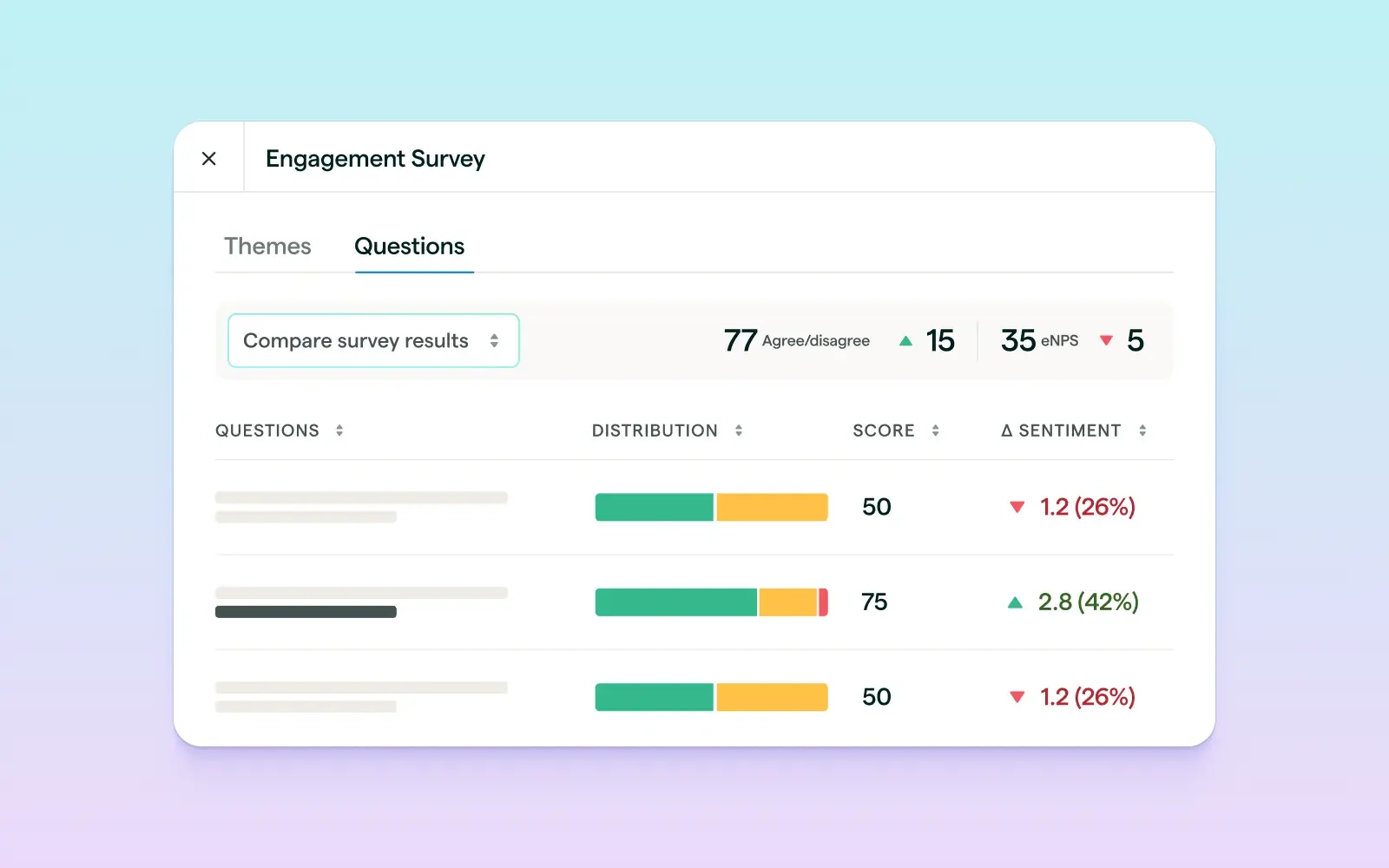
Lattice approaches career development as an extension of performance management rather than a standalone discipline. Its Grow module adds competency matrices, growth plans, and career tracks on top of the core review and goal-tracking system, which makes the most sense for organizations that already run performance cycles in Lattice and want career conversations to flow out of that same data.
Key features
- Grow module: competency matrices, growth plans, and career tracks
- Individual development plans tied to performance review cycles
- Career vision tools for employee-driven goal setting
- Development analytics layered on top of performance data
- OKR and goals module shared across performance and career tracking
Integrations: Slack, Microsoft Teams, Workday, BambooHR, ADP, and SSO/SCIM support.
Pros and Cons
Pros: “The software has very reliable analytics and reporting features. Availability of customizable templates which makes standout amongst other similar tools Ease of use and availability of real-time vendor support services.” - Capterra review
- Real-time vendor support is consistently mentioned across reviews as faster than category peers.
- Career data shares the same record as performance review data, so managers aren't reconciling two systems during calibration.
Cons: “Some reviews can come across as promotional or biased, which makes it harder to fully trust every rating. Sponsored listings also sometimes seem more prominent than organic results, and that can affect how easy it is to find genuinely relevant options.” - G2 review
- Career pathing exists as an add-on to a performance suite, not as a standalone pathing engine; organizations that want career development as the primary system should look at TalentGuard instead.
- The $4,000 annual minimum makes Lattice a poor fit for organizations under roughly 35 employees.
- Internal mobility and talent-marketplace matching are not part of the platform at all.
Pricing
- Modular, per-seat pricing starting at $11/month (Foundations package)
- Base products: Performance ($8/seat), Goals & OKRs ($8/seat), Engagement ($4/seat)
- Optional add-ons: Compensation (+$6/seat), Grow (+$4/seat)
- Custom quotes for enterprise-level organizations
4. Culture Amp
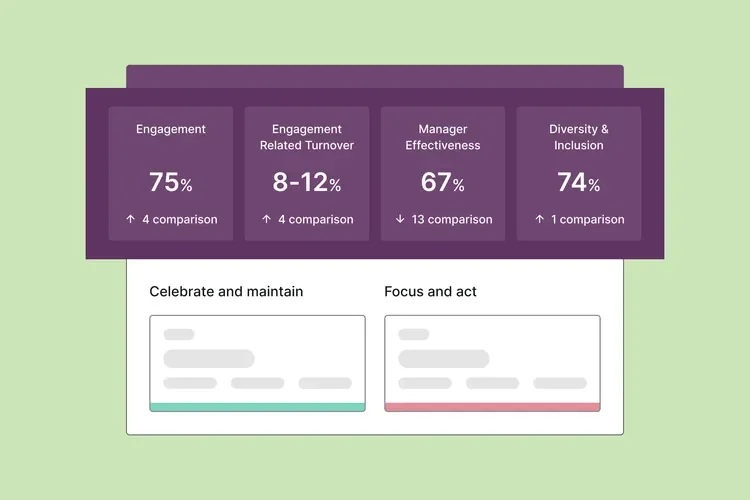
Culture Amp built its reputation on employee engagement surveys, and its Develop module extends that same philosophy into career growth: employee-driven development plans informed by engagement and sentiment data rather than a top-down competency framework. That makes it a strong fit for organizations where retention insight and career development need to share the same data layer.
Key features
- Develop module: career path frameworks tied to engagement data
- Individualized growth plans informed by survey and sentiment results
- Competency mapping shared with the performance module
- AI-generated summaries of open-ended survey comments
- Year-over-year engagement and development trend tracking (with reported limitations, see Cons)
Integrations: Major HRIS platforms such as BambooHR and Paylocity via API, SSO, and a developer-accessible API for custom implementations.
Pros and Cons
Pros: “Easy to use for the team and employees, AI summary of comments from the survey is invaluable. Customer service is great. Gives us great insights into what our employees are thinking.” - Capterra review
- Develop ties career growth directly to engagement insight, which is useful for organizations treating retention and career pathing as one problem rather than two.
- Strong analytics and benchmarking carry over from the core engagement product.
Cons: “Yeah. I would love to be able to see review scores more than just once, like, compare the same review year over year or to be able to compare a survey when you might even change questions or whatnot. As well as the one on one feature to be updated.” - G2 review
- No internal mobility or talent-marketplace functionality.
- Pricing is opaque and reportedly steep at scale, with some enterprise customers reporting tens of thousands of dollars annually.
Pricing
- Custom, quote-based enterprise pricing only
- Contact sales directly for pricing on the Engage, Perform, and Develop suite
5. Leapsome
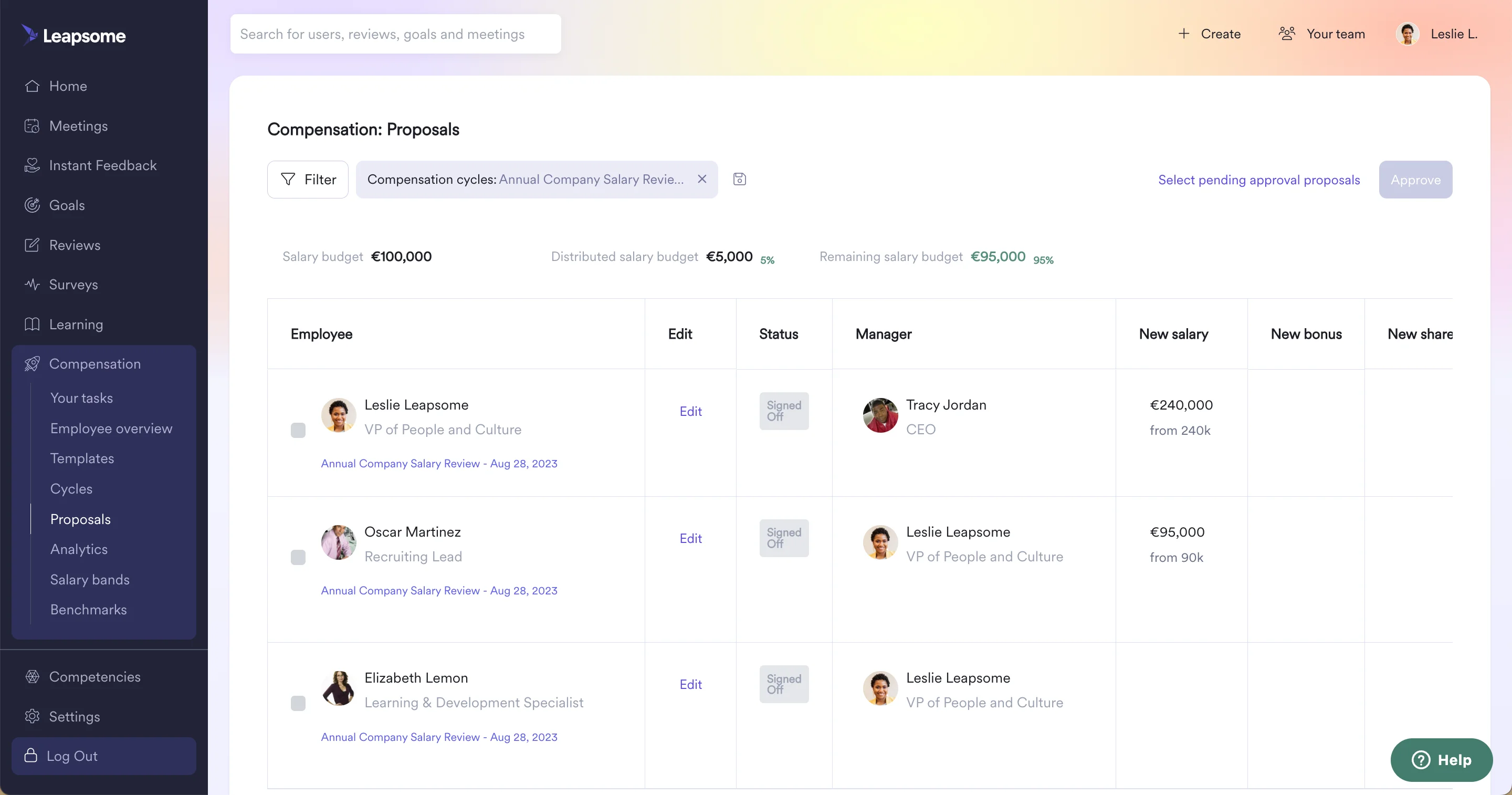
Leapsome's pitch is breadth: performance reviews, OKRs, engagement surveys, and learning paths under one modular pricing structure, with career and competency frameworks woven through all of it. The learning integration is the standout here, since development plans can route directly into assigned learning content rather than sitting as a static document.
Key features
- Career and competency frameworks combined with assigned learning paths
- Customizable review templates evaluated against a development framework
- 360-degree feedback feeding into competency assessments
- AI-assisted review drafting using historical performance data
- People analytics dashboard spanning performance, engagement, and learning
Integrations: Broad HRIS connector library; modular architecture allows teams to add OKRs, compensation, or learning separately.
Pros and Cons
Pros: “Leapsome has been great to work with! I’ve enjoyed the platform very much and it’s super simple to use!” - Capterra review
- Learning paths tied to development plans are genuinely useful, not just a checkbox integration, according to multiple independent reviews.
- Modular pricing lets smaller teams start with one workflow and expand without a full platform migration.
Cons: “The review process can sometimes feel repetitive, particularly when completing feedback for multiple team members. Streamlining similar questions and reducing duplication would make the experience more efficient and user-friendly.” - G2 review
- Navigation and data export, especially around review history, draw repeated complaints from users trying to act on data quickly.
- No internal talent marketplace or mobility matching.
- Goal management requires manual updates in the absence of a syncing API, according to independent reviews.
Pricing
- Modular platform combining HRIS, performance, and growth tools
- Custom pricing based on specific needs
6. Fuel50
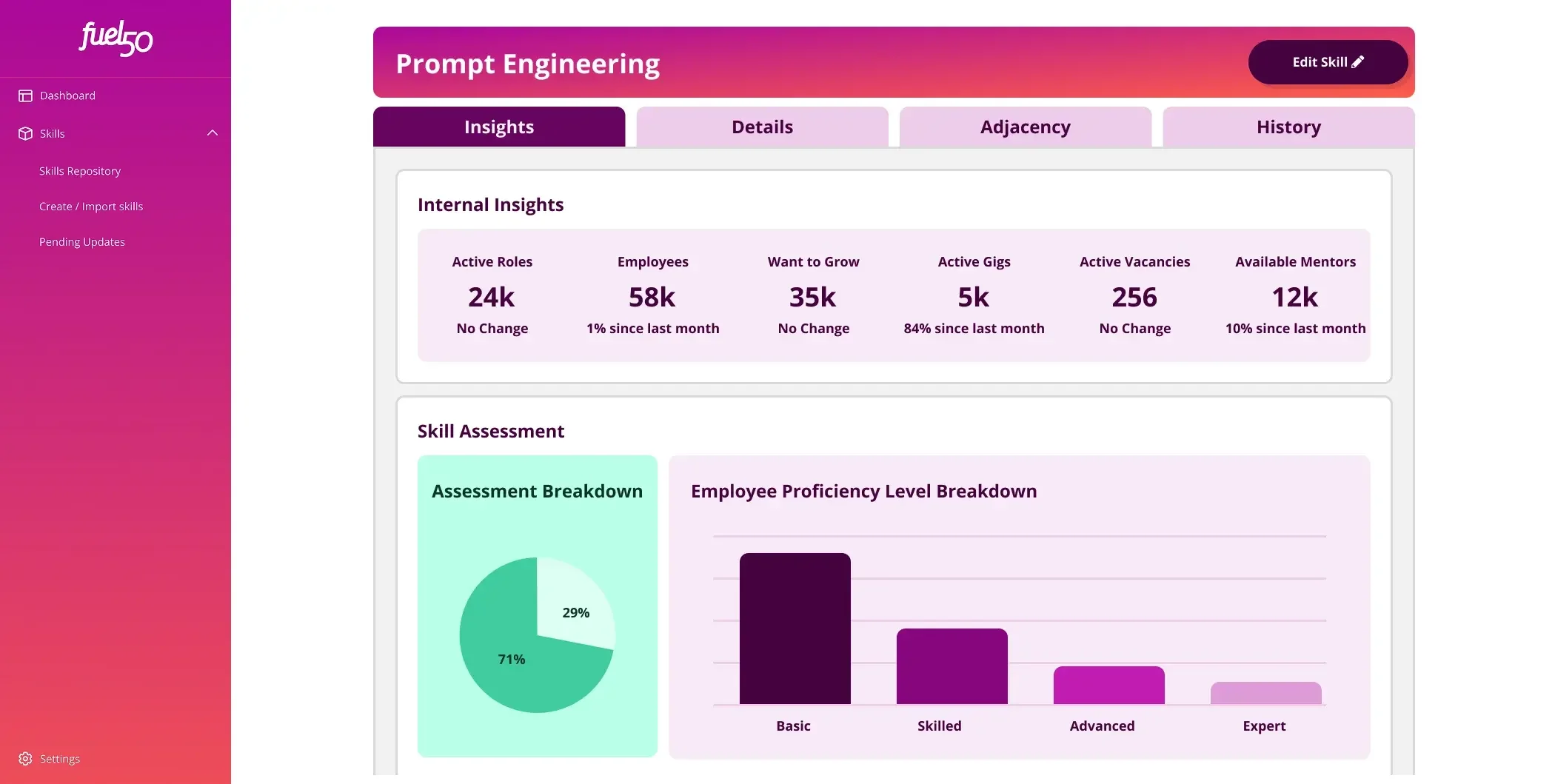
Fuel50 is an AI-powered talent marketplace built around a skills engine, and it is the strongest pure-play pathing and mobility tool on this list outside of TalentGuard.
Where TalentGuard leads with competency depth, Fuel50 leads with AI-driven matching between employee skills and internal opportunities, gigs, and projects, configurable enough to plug into an existing HRIS and LMS ecosystem rather than replace it.
Key features
- AI-powered skills-to-opportunity matching across gigs, projects, and roles
- Automated workforce architecture mapping
- Hyper-personalized career journey recommendations
- Predictive workforce planning and skills-gap analytics
- Mentor matching through a dedicated FuelMentor module
Integrations: Cornerstone LMS, Degreed, Oracle Fusion Cloud HCM, Oracle Taleo, SAP SuccessFactors, and Workday HCM.
Pros and Cons
Pros: “Context for our use is a partner in an HRIS and Learning Ecosystem where we needed a very solid skills engine. It fit that need very well and was highly configurable to our specific use cases which were diverse and complex.” - Capterra review
- Implementation support is repeatedly praised, with one reviewer specifically crediting the Fuel50 team for walking a small HR team through a full career pathway buildout.
- Visual, employee-facing design makes career journeys easier for non-HR staff to navigate without training.
Cons: “We had trouble implementing Gigs several years ago, but that was mainly due to internal issues with the time commitment for a gig host. However, this was before gigs went through a redesign.” - G2 review
- Setup can become overwhelming given the depth of configuration available; some reviewers report over-customizing the initial deployment and seeing user abandonment as a result.
- No mobile app support as of this writing, a real gap for organizations with a distributed or frontline workforce.
- Succession planning and 9-box functionality are not a core part of the platform.
Pricing
- Modular subscription bundles, from foundational data to full workforce transformation
- Custom-quoted based on selected modules
- Requires direct consultation with sales team
7. Gloat
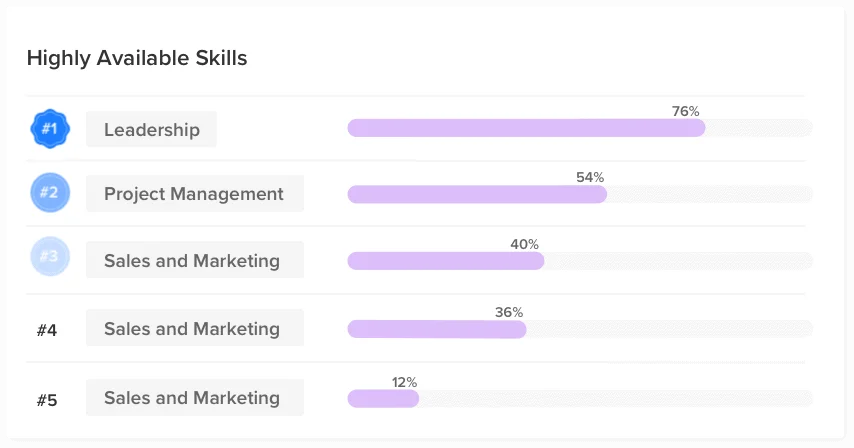
Gloat was one of the first internal talent marketplaces on the market, and it remains an enterprise-grade choice for organizations that want AI-driven mobility matching at scale. Its InnerMobility product connects employees to internal roles, projects, and gigs using a matching engine built specifically for large, complex workforces.
Key features
- AI-driven matching engine for internal roles, projects, and gigs
- Talent marketplace designed around employee-initiated exploration
- Workforce skills mapping at enterprise scale
- Manager-facing dashboards for mobility and retention signals
- Configurable for project-based, gig-based, or full-role mobility
Integrations: Enterprise HRIS and ATS platforms; built for large-scale, multi-system environments.
Pros and Cons
Pros: “Gloat's talent marketplace tool was one of the first on the market. It was designed with the employee in mind.” - G2 review
- Strong fit for organizations that have already outgrown simpler mobility tools and need enterprise-scale matching logic.
- Built specifically to handle the complexity of large, multi-region workforces rather than retrofitted from a smaller product.
Cons: “For now, InnerMobility is only available in English - which for us as a global company is not ideal. Gloat is working on releasing InnerMobility in French, Spanish and Mandarin in the near future.” - Capterra review
- Custom-only pricing with no published rate makes early budget planning difficult.
- Structured career pathing and competency frameworks are thinner than TalentGuard's or Fuel50's; Gloat is built primarily for matching, not for modeling formal career ladders.
- Less suited to small or mid-sized organizations, where the enterprise-scale matching engine is more capable than most teams need.
Pricing
- No public pricing available
- Request a demo through the contact form to receive a tailored quote
8. Engagedly
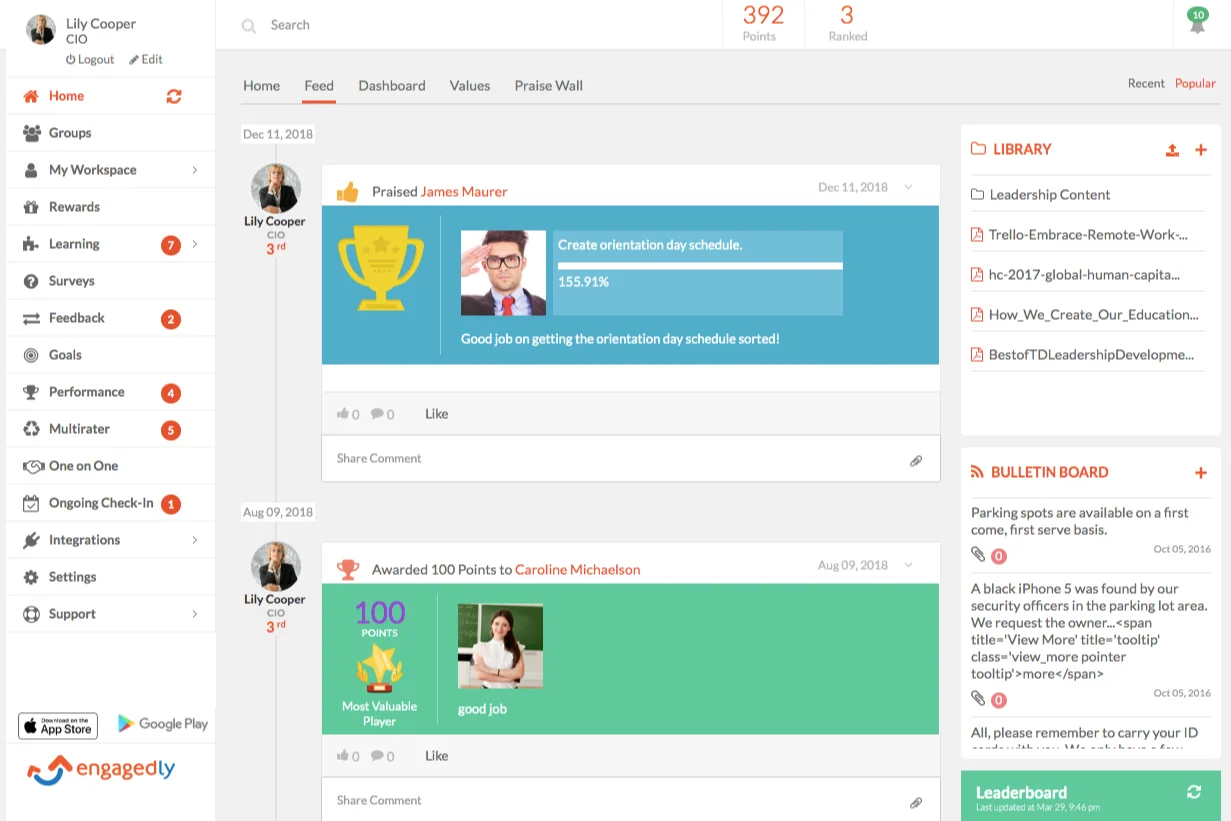
Engagedly bundles performance management, learning, engagement, and career development into one modular platform aimed squarely at SMB and mid-market budgets. Its career and development tooling sits inside a broader performance suite, similar in structure to Lattice, but at a meaningfully lower price point.
Key features
- Career development plans integrated with performance reviews
- 9-box matrix for leadership potential assessment
- Competency and skill modeling tied to development goals
- Gamified engagement features alongside development tracking
- OKR and goals alignment across individual and organizational levels
Integrations: ADP Workforce Now, BambooHR, HiBob, Gusto, Namely, Microsoft Teams and Outlook, Google Sheets, Jira, and LinkedIn Learning.
Pros and Cons
Pros: “It is one of the best Performance Management Software, helps keep a track of our progress which helps with our Q4 reviews.” - G2 review
- The 9-box matrix gives SMB and mid-market buyers succession functionality that's often reserved for enterprise-tier tools elsewhere on this list.
- Modular pricing lets smaller teams start with just one suite and expand later.
Cons: "Does not offer a comprehensive HR management solution.It does not provide the courses time to be completed,it does not have personalization based on user preferences." - Capterra review
- Career development functionality is noticeably lighter than dedicated pathing tools like TalentGuard or Fuel50.
- No internal talent marketplace or mobility-matching engine.
- The $7,500 annual platform minimum can make small deployments less economical than the per-user rate suggests.
Pricing
- Modular, per-user pricing: $2 to $8 per user/month, billed annually
- Final cost depends on employee count and selected bundles
- Minimum commitment: $7,500/year
9. iMocha

iMocha approaches career management from an unusual angle: skills validation first, career planning second. Its core strength is assessment, coding tests, cognitive evaluations, and domain-specific skill checks, which then feeds into skills-based career and mobility decisions elsewhere in the HR stack.
Key features
- 200-plus ready-made IT job-role skills tests
- 2,000-plus skill library spanning coding, cognitive, and domain assessments
- Real-time proctoring for remote skills assessments
- Skills-to-role mapping feeding into mobility decisions
- API access for integrating validated skills data into HRIS or marketplace tools
Integrations: API-based integration designed to feed validated skills data into broader HR and talent systems.
Pros and Cons
Pros: “For not advanced users you can quickly create tests and use the configurations that they provide.” - Capterra review
- Validated skills data, rather than self-reported competency claims, gives mobility and promotion decisions a stronger evidence base than most career platforms can offer.
- Broad skill library covers technical and domain-specific testing that few career-pathing tools attempt.
Cons: “One area for improvement is the test setup process, it could be more intuitive, especially for new users. The initial learning curve is a bit steep, and clearer step-by-step guidance or an improved user interface would make onboarding smoother.” - G2 review
- iMocha is not a career management platform on its own; it validates skills but does not build career paths, IDPs, or succession plans without pairing with another tool.
- No native pathing, succession, or internal mobility functionality.
- Best suited as a complement to a platform like TalentGuard or Fuel50, not a replacement for one.
Pricing
- No public pricing available
- Custom quotes and packages tailored to organizational needs; contact sales tea
10. Phenom
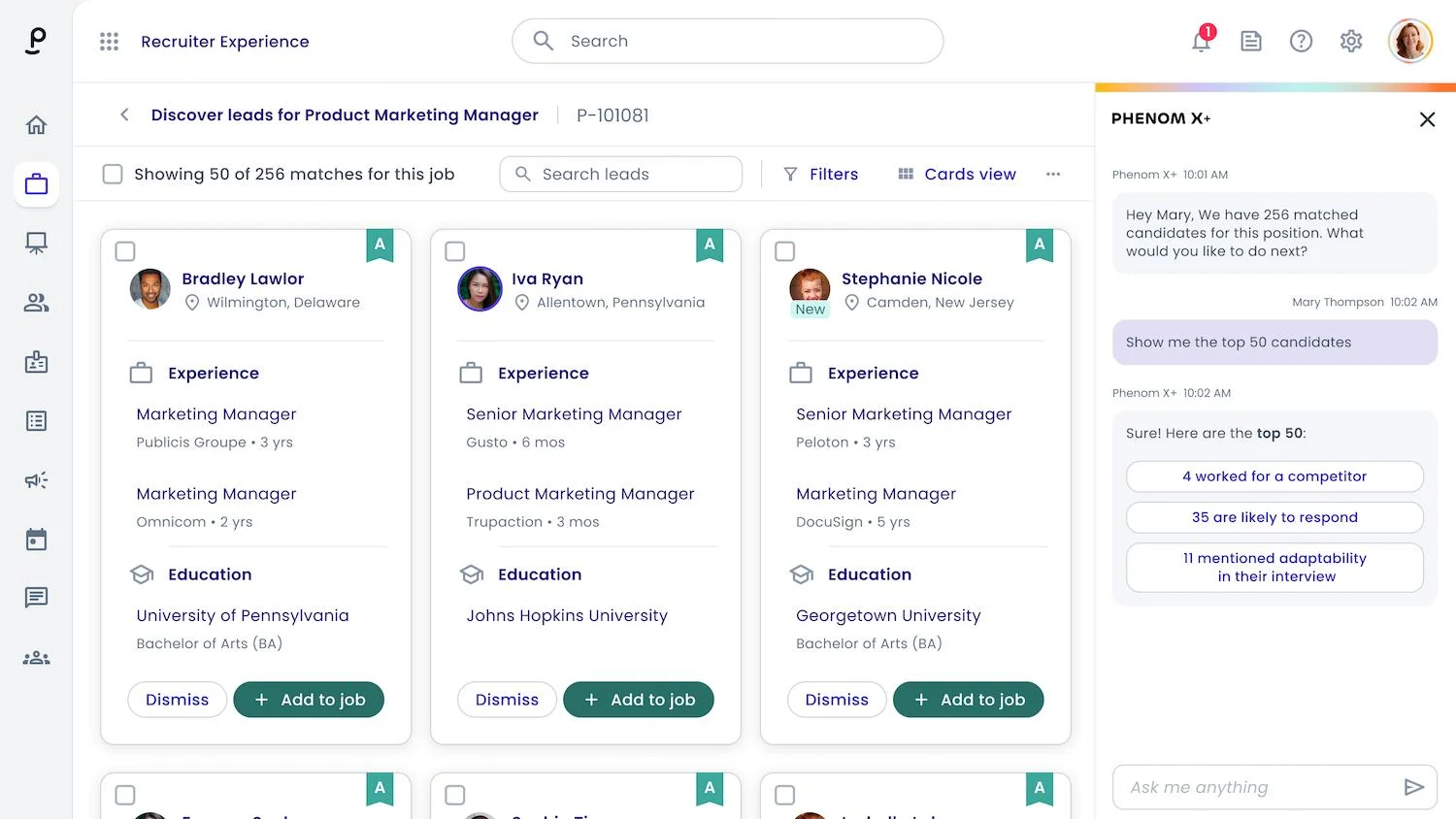
Phenom's Talent Experience Management platform applies AI across the full talent lifecycle, recruiting, internal mobility, and career growth, at enterprise scale. Its career and mobility tooling shares the same AI engine used for candidate matching, which gives it strong analytics but a recruiting-first orientation that shows up throughout the product.
Key features
- AI-driven internal mobility matching shared with the recruiting engine
- Talent experience analytics spanning acquisition and internal moves
- Career site personalization extended to internal opportunity discovery
- Skills-based candidate and employee matching
- Workforce analytics dashboard for talent leaders
Integrations: Enterprise ATS and HRIS platforms; built for organizations running Phenom's broader talent acquisition suite.
Pros and Cons
Pros: “It makes it easy to find what I need right away.” - G2 review
- Sharing an AI engine across recruiting and internal mobility gives talent leaders a single analytics layer instead of reconciling two systems.
- Enterprise-scale design handles large, complex candidate and employee pools without the configuration strain reviewers report with Fuel50.
Cons: “There are multiple things which I don't like:-We can not delete multiple candidates from the project, we need to delete every candidate one by one.we can not change the status in bulk.” - Capterra review
- Individual development plans and succession planning are noticeably lighter than dedicated career platforms like TalentGuard.
- Custom-only pricing with no published rate, typical of enterprise-tier platforms, but a real friction point for early budget conversations.
- Best suited to organizations already invested in Phenom's talent acquisition suite; the internal mobility module is less compelling as a standalone purchase.
Pricing
- No published standard pricing
- Complete the inquiry form to receive a quote, RFP information, or platform walkthrough via a sales expert
How to Choose Career Management Software
Picking the right platform comes down to a handful of practical questions rather than a feature checklist. Work through these before booking demos.
Do you need pathing depth or mobility matching first?
TalentGuard and Fuel50 lead on structured career pathing; Gloat and Phenom lead on AI-driven mobility matching. Few tools do both equally well, so decide which problem is more urgent.
Where does your competency data live today?
If competencies are scattered across spreadsheets, prioritize a platform with a strong native competency library, TalentGuard, Leapsome, and iMocha all handle this differently.
How deep does your IDP and succession need to be?
Organizations running formal succession and 9-box reviews need TalentGuard, Teamflect, or Engagedly's 9-box tooling. Lighter development-plan needs can be served by Lattice or Culture Amp.
What does your HRIS and LMS stack already include?
Fuel50 and Teamflect are built to plug into an existing HRIS/LMS rather than replace it. Phenom and Gloat lean toward organizations with a mature, integrated talent stack already in place.
What is your real pricing model?
Per-user pricing ranges widely, from Engagedly's $2 per user per month entry tier to Lattice's $11 per user base plus add-ons. Several tools on this list, including TalentGuard, Culture Amp, Fuel50, Gloat, and Phenom, require a custom quote, so build extra time into procurement for those conversations.
How fast do you need to move?
Teamflect and Engagedly can be operational within days for smaller teams. Enterprise tools like Gloat and Phenom typically require weeks of implementation and configuration.
Start Building Your Career Pathing Shortlist
The right starting point depends on which problem is most urgent. If structured competency-based pathing and succession are the priority, start with TalentGuard.
If your organization runs on Microsoft 365 and adoption is the bigger barrier than feature depth, Teamflect is worth a free pilot before anything else. If internal mobility at scale is the gap, Fuel50 or Gloat deserve a closer look.
Whichever direction fits, the next move is the same: book two or three demos from this list, bring a real use case to each one, and ask every vendor to show, not describe, how an employee actually moves from "I don't know what's next" to a documented path.
For related research, see our Performance Management Software listicle, our Succession Planning Software listicle, and our Employee Development Software listicle for the learning and training side of this category.
.avif)