.svg)
Gusto and Rippling end up on the same shortlists often enough that the comparison seems straightforward. Both handle US payroll. Both have benefits administration and employee onboarding. Both serve companies in the 5 to 500 employee range. But the overlap is mostly surface-level. Gusto was built to make payroll simple for founders who don't have an HR team.
Rippling was built around a different premise entirely: that a single employee record should automatically update every connected system, from HR to IT to finance, without manual intervention. Whether you're looking at Rippling vs Gusto or Gusto vs Rippling, the deciding factor isn't which one has more features. It's which philosophy your organization actually needs.
Gusto Overview
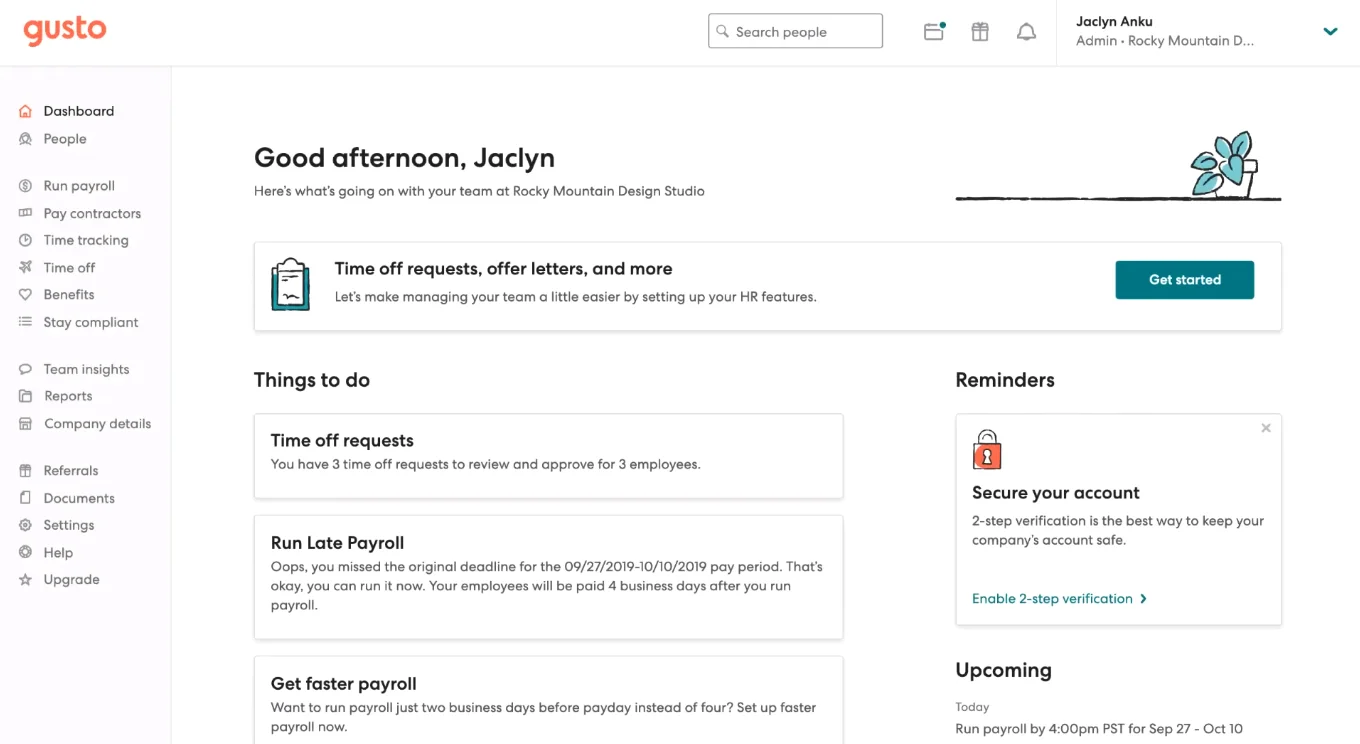
Gusto launched in 2011 as a payroll product for small US businesses and has since grown into a broader HR platform used by more than 300,000 businesses across the country. The design intent has stayed consistent: let a non-HR founder run compliant payroll without needing to understand tax jurisdictions or benefits law. For that audience, it delivers well.
Key capabilities include:
- Full-service US payroll with automatic federal, state, and local tax filing
- Unlimited monthly payroll runs across all plans
- Benefits administration with in-house licensed brokers across all 50 states
- Employee self-service portal covering PTO requests, pay stubs, and W-2 access
- Time tracking and PTO management (Plus and Premium tiers)
- Hiring and onboarding workflows with offer letters and e-signature
- International contractor payments in 120+ countries (not full EOR)
- Integrations with QuickBooks, Xero, FreshBooks, and 100+ other tools
Rippling Overview
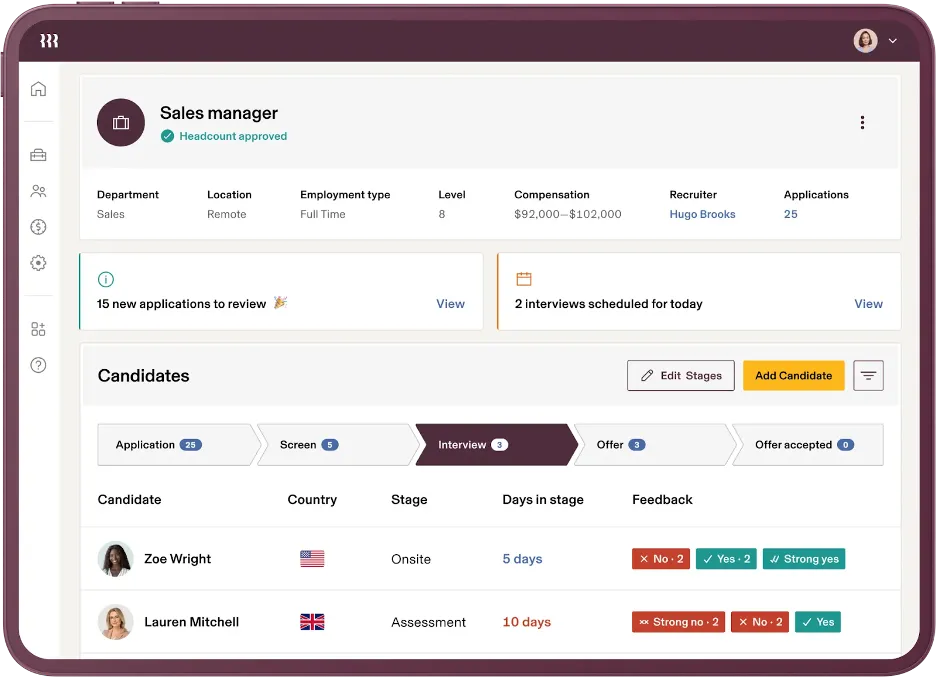
Rippling was founded in 2016 by Parker Conrad, co-founder of Zenefits, with a clear architectural thesis: employee data entered once should flow automatically through every connected system. Hire someone, and Rippling provisions their laptop, creates their email account, adds them to payroll, and enrolls them in benefits, without separate steps in separate tools. That unified model is what distinguishes Rippling from most HR platforms, including Gusto.
Key Features
- Unified employee data model: one record update propagates across HR, payroll, IT, and finance
- Full-service US payroll with 90-second payroll run capability
- Global payroll across 185+ countries (native employee payroll, not just contractor)
- EOR services for hiring full-time international employees
- IT module: device management for Apple, Windows, and Linux; app provisioning; SSO
- Finance module: corporate cards, expense management, and bill pay
- Workflow Studio: custom automations across HR, IT, and finance
- Benefits administration with US health, dental, vision, 401(k), HSA, and FSA
- 700+ integrations across the broader business stack
Gusto vs Rippling: Feature Comparison
Choosing the right HR platform often comes down to whether a company needs a straightforward, payroll-first tool or a deeply integrated operations system. While both platforms aim to simplify administrative tasks, they solve different problems for growing businesses.
The following comparison breaks down how these two platforms stack up across key categories to help you determine which fits your current organizational structure.
Performance Reviews
Gusto includes performance management features in its Premium plan, or as a paid add-on for users on the Plus tier. The feature set supports basic goal tracking, self-evaluations, manager reviews, and 360-degree feedback loops. The system is designed with a straightforward interface that requires minimal setup, making it easy for small businesses to initiate straightforward review cycles without dedicated HR staff.
Rippling also offers performance management, but it must be purchased as a separate, modular add-on to its core platform. Because Rippling acts as a centralized data hub, its module allows for highly automated review triggers such as automatically launching a 90-day review based on an employee's hire date and handles complex organizational charts and custom question sets more robustly than Gusto.
Verdict: Rippling provides a more powerful and automated system for complex organizations, while Gusto offers a simpler, more accessible experience out of the box for smaller teams.
Payroll Processing and Tax Compliance
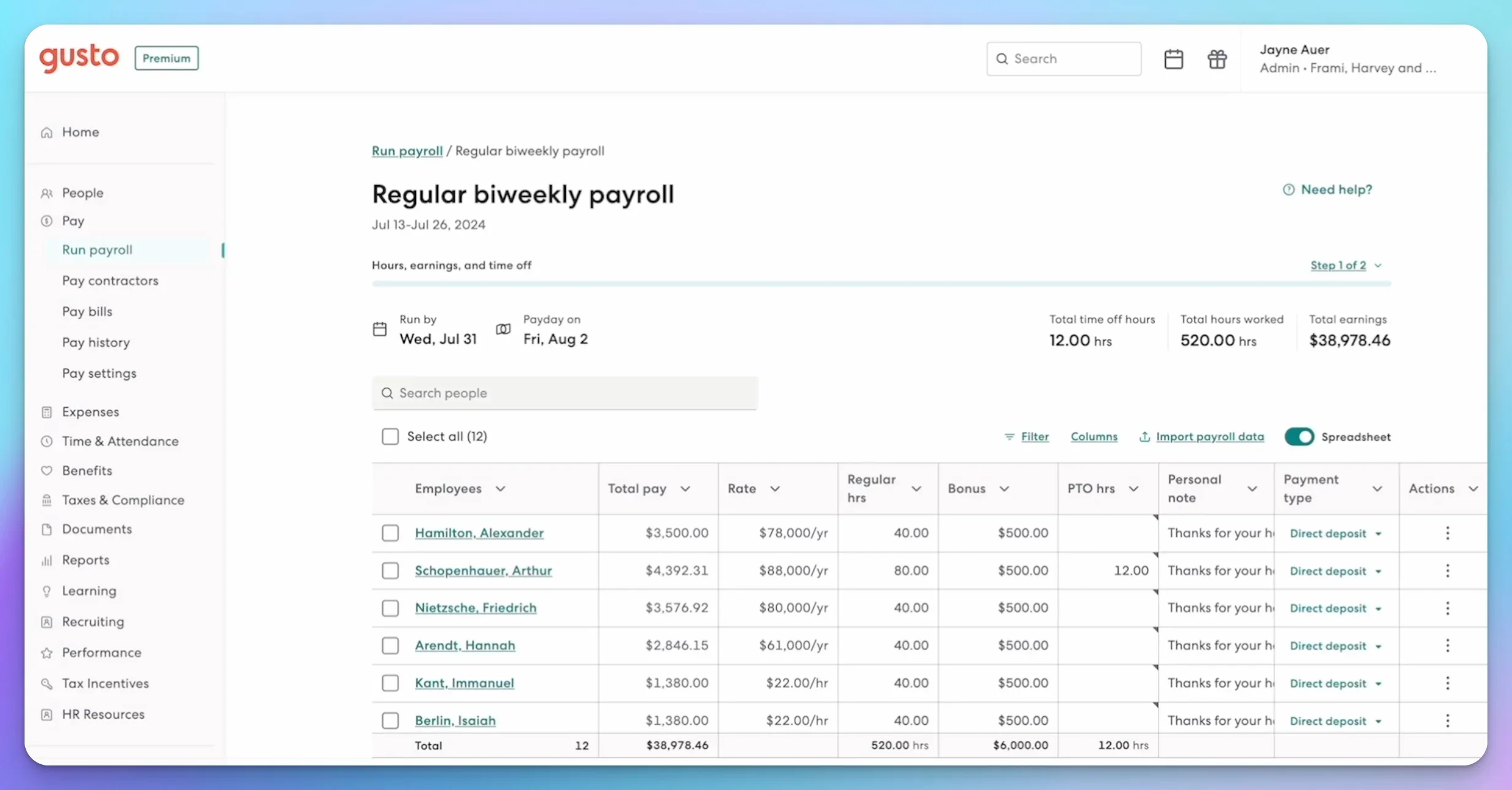
Both platforms handle US payroll competently, but they're built for different users. Gusto's automated federal, state, and local tax filing is consistently rated as approachable for founders and office managers running payroll for the first time. Rippling's 90-second payroll run is the faster operational workflow for HR professionals who already know what they're doing and run payroll regularly.
On multi-state payroll, Gusto Plus includes unlimited states at the plan rate. Rippling handles multi-state as part of its unified employee record, which some HR teams find more maintainable at scale.
Verdict: Gusto for first-time payroll buyers. For HR professionals managing regular payroll at 50+ employees, the two are genuinely comparable.
HR Features and HRIS Depth
Gusto provides the core HR functions a small business needs: employee records, PTO tracking, and a basic onboarding workflow. It is not a full HRIS platform, and that's by design. Rippling is. Its HRIS module includes custom fields, org chart tools, document management, and cross-functional workflow automation.
For companies that want HR to operate as a formal function with reporting depth and automation, Rippling is the stronger tool. For companies that need enough HR to stay compliant without a dedicated HR person Gusto covers the requirement.
Verdict: Rippling for organizations that need true HRIS capabilities. Gusto for organizations where basic HR is sufficient.
International Capabilities
This is one of the clearest separators between the two platforms. Gusto handles international contractor payments across 120+ countries, but for full-time international employees, it requires an EOR partner integration rather than handling employment directly.
Rippling has native global payroll across 185+ countries and built-in EOR services for hiring full-time international staff, all within the same platform.
For any organization with current or anticipated full-time international employees, Rippling is the materially stronger option.
Verdict: Rippling, decisively. Gusto works for international contractor relationships but falls short for full-time global employment.
IT and Device Management
Gusto has no IT functionality. Rippling's IT module manages devices across Apple, Windows, and Linux environments, provisions application access and SSO credentials at hire, and automatically de-provisions them at offboarding.
For any organization where IT and HR processes intersect and that includes most companies with 50 or more employees, Rippling removes an entire additional vendor from the stack. Platforms like Jamf, Kandji, or Okta become redundant for many companies once Rippling's IT module is active.
Verdict: Rippling, with no meaningful competition in this dimension.
User Experience and Ease of Adoption
Gusto wins on first-use experience. A founder with no prior payroll background can complete their first payroll run within hours of signup. Rippling's initial configuration takes 3–8 weeks because of its modular structure and the number of systems it connects to. Once fully configured, Rippling's interface is rated well on G2, but the upfront complexity is real and should not be underestimated.
The trade-off is clear: Gusto delivers fast time-to-first-payroll with less long-term capability. Rippling requires a longer setup in exchange for significantly more automation downstream.
Verdict: Gusto for organizations that need to start running payroll this week. Rippling for those willing to invest in a longer implementation for a more capable long-term system.
Support Quality
Neither platform has a clean record here. Gusto's G2 rating of 4.6/5 sits alongside a Trustpilot rating of 2.5/5. That gap reflects documented complaints around support response times and billing disputes when something goes wrong issues that don't surface as often in structured G2 surveys. Rippling's G2 reviewers report inconsistent response times and limited phone support, even at higher plan tiers.
Verdict: Genuinely tied to this dimension, and not in a good way. Both platforms warrant a pre-purchase support quality check with reference customers of similar size and industry.
Pricing Comparison
Between the two, only Gusto fully publishes its tiered packages and base fees. However, final costs for both platforms scale based on employee count, plan selection, and optional add-on modules.
Gusto’s pricing follows a transparent base fee plus a per-person monthly charge structure across four primary tiers:
- Solo: $49/month base + $6/month per person.
- Contractor: $0/mo base (limited-time offer) + $6/mo per person.
- Simple: $49/month base + $6/month per person.
- Plus: $80/month base + $12/month per person.
- Premium: $180/month base + $22/month per person (requires a custom quote consultation).
Meanwhile, Rippling utilizes a modular system that starts at a baseline of $8/employee/month for its core platform. Because it operates on a choose-your-own-adventure module architecture (where payroll, IT, and spend management are separate add-ons), the exact final monthly total requires a custom quote. A free trial isn't publicly advertised for Rippling, though a live demo can be requested directly.
Gusto is generally more affordable and predictable for smaller teams with straightforward US-only payroll and core HR needs. On the other hand, Rippling can become highly cost-effective for growing businesses looking to consolidate multiple systems, as unifying your HRIS, IT device provisioning, and corporate expense tracking into a single hub can eliminate individual software subscriptions.
Always request an itemized quote reflecting your specific module requirements, and factor in potential implementation fees and contract terms before making your final decision.
Why Teams Choose Gusto
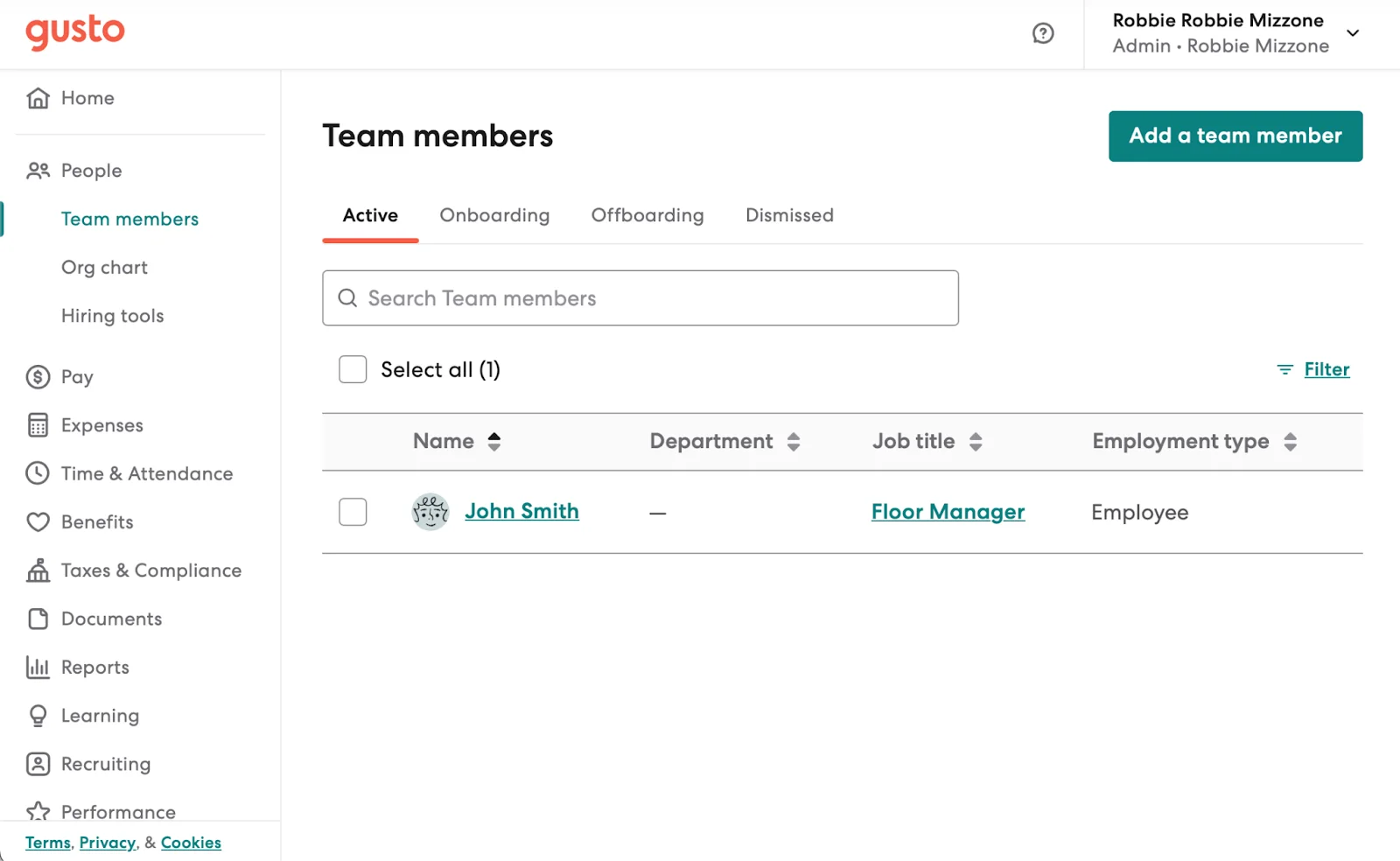
“The interface of Gusto is attractive, simple and user-friendly. It keeps track of your time, pay-periods and take home pay well, letting you know when to anticipate pay days.” - Capterra reviewer
- Exceptionally intuitive and easy-to-navigate interface built specifically for small businesses
- Automated full-service payroll, including automated tax calculations, filings, and state payments across all 50 states
- Comprehensive employee self-service portal and mobile app (Gusto Wallet) for easy access to pay stubs, W-2s, and scheduling
- Built-in financial wellness and flexible payment options, such as early access to funds and automatic savings tools
- Native benefits administration that seamlessly syncs insurance premiums, 401(k) plans, and HSAs directly with payroll
- Quick, straightforward setup that allows most small teams to onboard and run their first payroll in under 30 minutes
Why Teams Choose Rippling
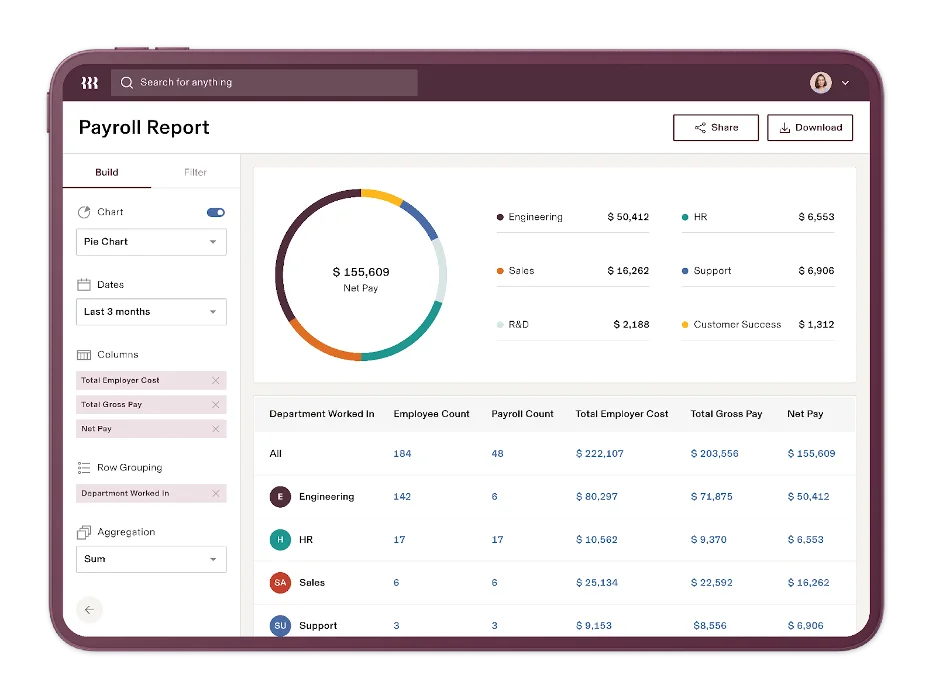
“We’ve had an excellent experience using Rippling for payroll and workforce management. The platform is incredibly user-friendly, efficient, and streamlined, making payroll processing simple and stress-free. What stands out most is how seamlessly Rippling integrates payroll, benefits, onboarding, time tracking, and HR functions all in one place.” - G2 reviewer
- True consolidation of HR, payroll, IT, and finance operations under a single, unified employee database
- Automated, click-and-done global payroll and Employer of Record (EOR) services for seamless international hiring
- Advanced workflow automation engine that triggers cross-departmental actions, such as automatically shipping a laptop when a new hire is added
- Massive integration ecosystem with over 500 apps, featuring deep data sync and instant user provisioning
- Comprehensive IT asset management to buy, configure, secure, and retrieve employee devices remotely
- High-level scalability that easily accommodates rapid workforce expansion well beyond hundreds of employees
Which Tool Is Right For You?
Choose Gusto If
- Your company is US-only with 1 to 50 employees and payroll is the primary need
- Your team has no dedicated HR person and needs to run payroll within hours, not weeks
- Pricing transparency matters and you want to know the full cost before speaking to sales
- Benefits administration with licensed in-house brokers across all 50 states is a priority
- You do not need IT management, device provisioning, or full HRIS workflow depth
- Multi-state payroll is your only complexity, and international full-time employees are not in scope
Choose Rippling If
- Your headcount is 50+ or expected to reach that within 18 months
- You want HR, IT, and payroll connected in one system rather than coordinated across three vendors
- You hire full-time international employees and need native global payroll and EOR in one place
- Device management and app provisioning are currently handled manually and causing real friction
- You can absorb a 3 to 8 week implementation in exchange for long-term workflow automation
- Reporting depth and cross-functional automation are higher priorities than speed-to-first-payroll
Final Verdict
The choice between Gusto and Rippling comes down to one question: are you buying a payroll tool or a workforce operating system?
Gusto is the right call for US-based companies under 50 employees with straightforward HR needs and no IT complexity. Rippling is the right call for companies at 50+ employees, those with full-time international hires, or any organization where HR, IT, and finance currently live in separate systems. Its pricing requires a sales conversation and setup takes weeks, but the consolidation value at scale is real.
For buyers who have ruled out both, BambooHR vs Rippling is worth reviewing next.
Frequently Asked Questions
Is Gusto or Rippling better for a small business?
For most small businesses in the 1 to 50 employee range, Gusto is the stronger starting point. Its pricing is published, setup takes days rather than weeks, and the payroll workflow is approachable for founders with no HR background. Rippling becomes the better fit once headcount grows or when IT management and international hiring enter the picture.
Can Rippling replace Gusto?
Yes, for companies that have outgrown Gusto's scope. Rippling handles everything Gusto does on payroll and benefits, and adds full HRIS, IT management, global payroll, and finance tools on top. The migration itself is manageable, but the implementation takes 3 to 8 weeks and requires more configuration effort than Gusto's initial setup.
Does Gusto handle international payroll?
Gusto supports international contractor payments in 120+ countries. For full-time international employees, it does not handle employment directly you would need a separate EOR partner integrated with the platform. If full-time international hiring is part of your current or near-term plan, Rippling's native global payroll and built-in EOR are worth the added cost and setup time.
Which platform has better customer support?
Neither platform has a strong record here. Gusto's G2 rating of 4.6/5 contrasts sharply with its Trustpilot rating of 2.5/5, pointing to support quality problems that tend to surface when payroll errors or billing disputes occur. Rippling's G2 reviewers report slow response times and limited phone support at multiple plan tiers. Both warrant direct reference checks with customers of similar size before signing.
Is Rippling worth the higher cost?
It depends on what you are comparing. If you only need US payroll and basic HR, Gusto is cheaper and simpler. If you are managing IT provisioning, international employees, or cross-functional workflows across HR and finance, Rippling's consolidated model can reduce total vendor spend and administrative overhead enough to justify the price. The break-even point for most companies falls between 50 and 75 employees.