.svg)
Two enterprise performance platforms are rarely this different in architecture while targeting such similar buyers. Betterworks was purpose-built for large organizations where OKRs are the operating model: cascading goal alignment, calibration at scale, and AI that flags execution risk before a quarter closes.
Teamflect was purpose-built for organizations that run on Microsoft 365: performance management, engagement, and career development inside Teams and Outlook, with no separate login and no months-long rollout. Since May 2026, it also offers enterprise security controls that are rare in the performance management category.
The question for an enterprise HR buyer is not which platform has more features. It is which architecture fits the operating model. This software comparison is built for that decision.
Teamflect Overview
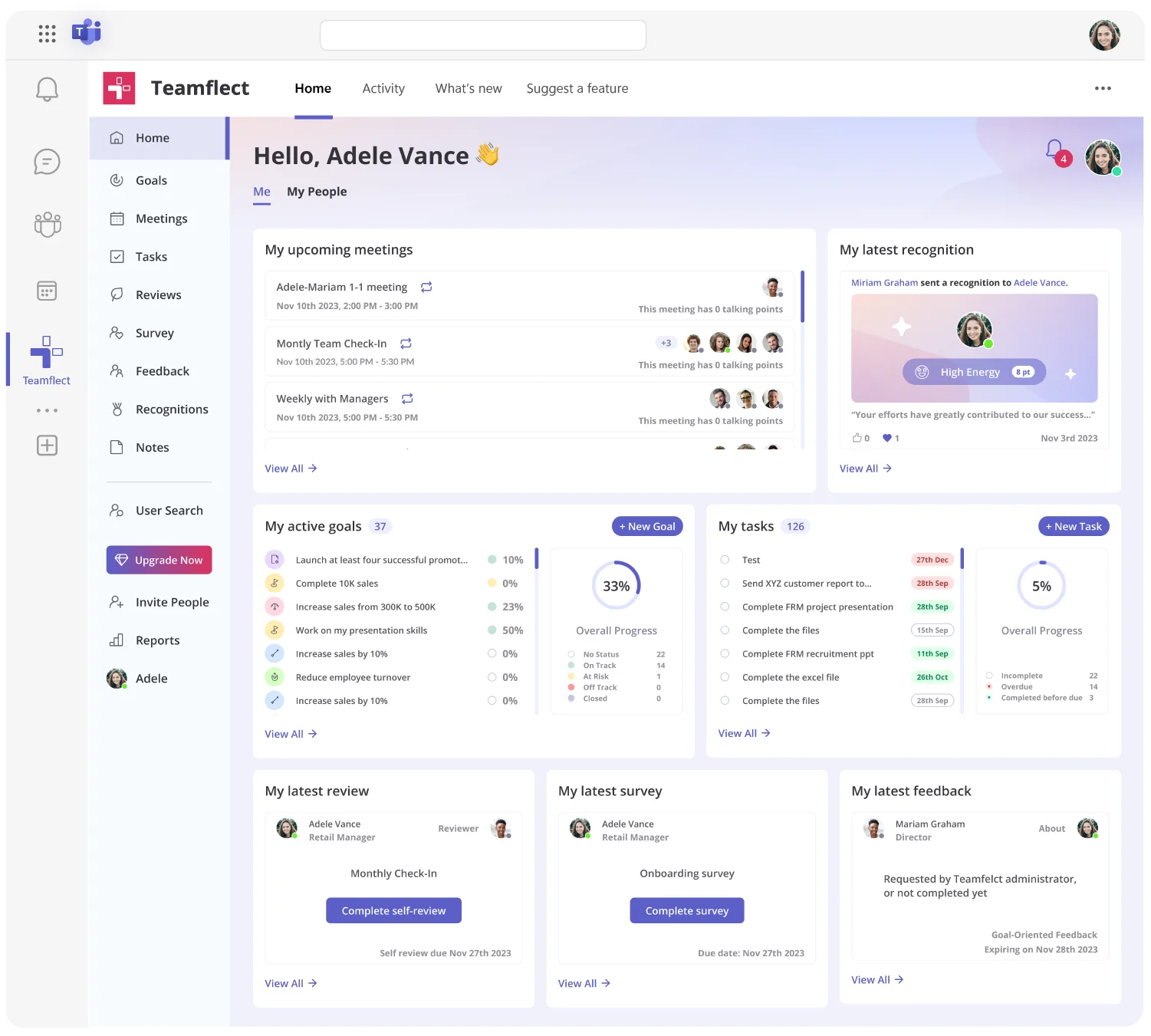
Teamflect is an all-in-one performance management and employee engagement platform built natively inside Microsoft Teams, with deep Outlook integration for meetings and 1-on-1s. Founded in 2018, it is currently rated one of the highest-rated performance management tools in the Microsoft Teams App Store.
In G2’s Summer 2026 report, it earned “Easiest to Set Up” and “Easiest to Do Business With” enterprise badges. Global enterprises including Securitas and Invacare have deployed it across multiple continents and tens of thousands of users. Its G2 review count stands at 170 verified reviews (June 2026), with a 4.5/5 average across the performance management category.
The design conviction that runs through every feature is that performance management fails when employees have to leave the tools they already use. Every review, goal update, feedback request, and recognition sits inside Teams or Outlook. There are no separate logins. 1-on-1 agendas appear in meeting invites. OKR progress is visible inside the daily work surface. The adoption rates that global deployments report reflect this directly.
In May 2026, Teamflect launched its Enterprise plan with three controls that are rare in the performance management category. These include customer-managed encryption keys, dedicated cloud infrastructure with no shared components between tenants, and customer-selectable data residency across any Microsoft Azure region. The plan also includes real-time audit logs streaming to Splunk, Datadog, and Microsoft Sentinel.
Key features include:
- Goals and OKRs: Cascading from company to individual, visible and updateable inside Teams; connects directly to performance reviews and 1-on-1 agendas
- Performance reviews: Configurable cycles (quarterly, annual, 30/60/90-day, exit) pulling in OKRs, 360 feedback, survey scores, and development plans in real time; templates adjustable without developer support
- 360-degree feedback and continuous feedback: Requested, given, and received inside Teams; embedded directly into review forms for structured, transparent cycles
- 1-on-1 meetings: Shared agendas appear in Outlook meeting invites; talking points, action items, and notes persist across sessions and feed into reviews
- Recognition and rewards: Custom recognition badges, points-based rewards, leaderboards (optional), and peer-to-peer shoutouts inside Teams
- Career development: Individual development plans (IDPs), competency frameworks, nine-box talent grid for potential vs. performance mapping, succession planning
- Engagement surveys and eNPS: Pulse surveys and full engagement cycles inside Teams; real-time results visible to managers and HR
- Power BI connector: Enterprise-grade workforce analytics and custom dashboards for Microsoft shops; data refreshes every 3 to 5 hours
- AI assistance: Goal-writing, feedback summaries, review drafting, and manager insights across the platform; AI HR Partners in beta launch as of mid-2026
- 200+ HRIS integrations: Connects to BambooHR, Workday, Rippling, ADP, SAP SuccessFactors, HiBob, Personio, and many more for automated user provisioning
Pros
“I really like how Teamflect seamlessly integrates into Microsoft Teams, which is a big plus for us since we use Teams as our official communication platform. This integration is valuable because it brings performance management and HR processes directly into the day-to-day workspace where people already communicate and collaborate.” – G2 reviewer
- No adoption problem. Performance management fails when people stop using the tool. Because Teamflect lives inside Teams and Outlook, there is no separate login to forget and no culture of avoidance to overcome. Multiple enterprise deployments at 10,000+ users report adoption rates that standalone platforms cannot match. G2 reviewers cite ease of use (67 mentions) as the platform’s single clearest strength.
- One system for the full people management cycle. Goals, reviews, 360 feedback, 1-on-1s, recognition, surveys, IDPs, and career paths all sit in the same platform. For an HR team managing these in four or five separate tools, consolidation onto one system with a single data model changes how much time goes to administration versus decision-making.
- Enterprise security that the category did not previously offer. Customer-managed encryption keys with full rotation, revocation, and audit control. Dedicated cloud infrastructure. Customer-selectable data residency across any Azure region. Real-time audit logs streaming to Splunk, Datadog, and Microsoft Sentinel. These are not features most performance management platforms have built. Teamflect is among the first performance management platforms to offer this combination of controls.
- Transparent pricing with no sales wall for getting started. Essential at $7/user/month (annual) and Professional at $11/user/month (annual) are published. A 30-day free trial is available on paid tiers. Enterprise pricing requires a quote, but the core plans are visible before any sales conversation.
- Purpose-built for Microsoft 365 organizations. Power BI connector for enterprise workforce analytics, SharePoint and Outlook integration, Azure data residency, and official Microsoft partner status make Teamflect the natural performance management layer for organizations already invested in the Microsoft stack.
Cons
“One of the main things I dislike about Teamflect is the pricing structure. The cost can be quite high, especially for smaller teams or organisations that may not use all of the available features. A more flexible or scalable pricing option would make it more accessible and better value for money.” – G2 reviewer
- Microsoft 365 dependency is absolute. Teamflect does not function outside the Microsoft ecosystem. Organizations not running Teams as the primary collaboration layer cannot evaluate it regardless of other requirements. This is a feature for the right buyer and a disqualifier for everyone else.
- Reporting flexibility has documented limitations. Multiple Capterra and G2 reviewers flag that out-of-the-box reports offer limited customization and that data exports are constrained to the provided dashboards. The Power BI connector addresses this for organizations willing to build custom reporting, but it requires setup effort and the data refreshes every 3 to 5 hours rather than in real time.
- Not an OKR specialist. Goal tracking and OKR management are capable and genuinely useful inside Teams. But Teamflect was not built around OKR methodology the way Betterworks was. Organizations where OKRs are the operating system, with formal cascading alignment and leadership-level execution analytics, will find the OKR depth lighter than what a dedicated OKR platform offers.
- Template and customization ceiling. Capterra reviewers note that templates can feel rigid and that configuration options across some workflows are narrower than they would like, particularly for large organizations with complex, varied review structures across divisions.
- Learning curve across workflows. G2 reviewers flag a learning curve across multiple reviews when managing multiple modules simultaneously, particularly during initial setup of complex performance cycles in larger organizations.
Betterworks Overview
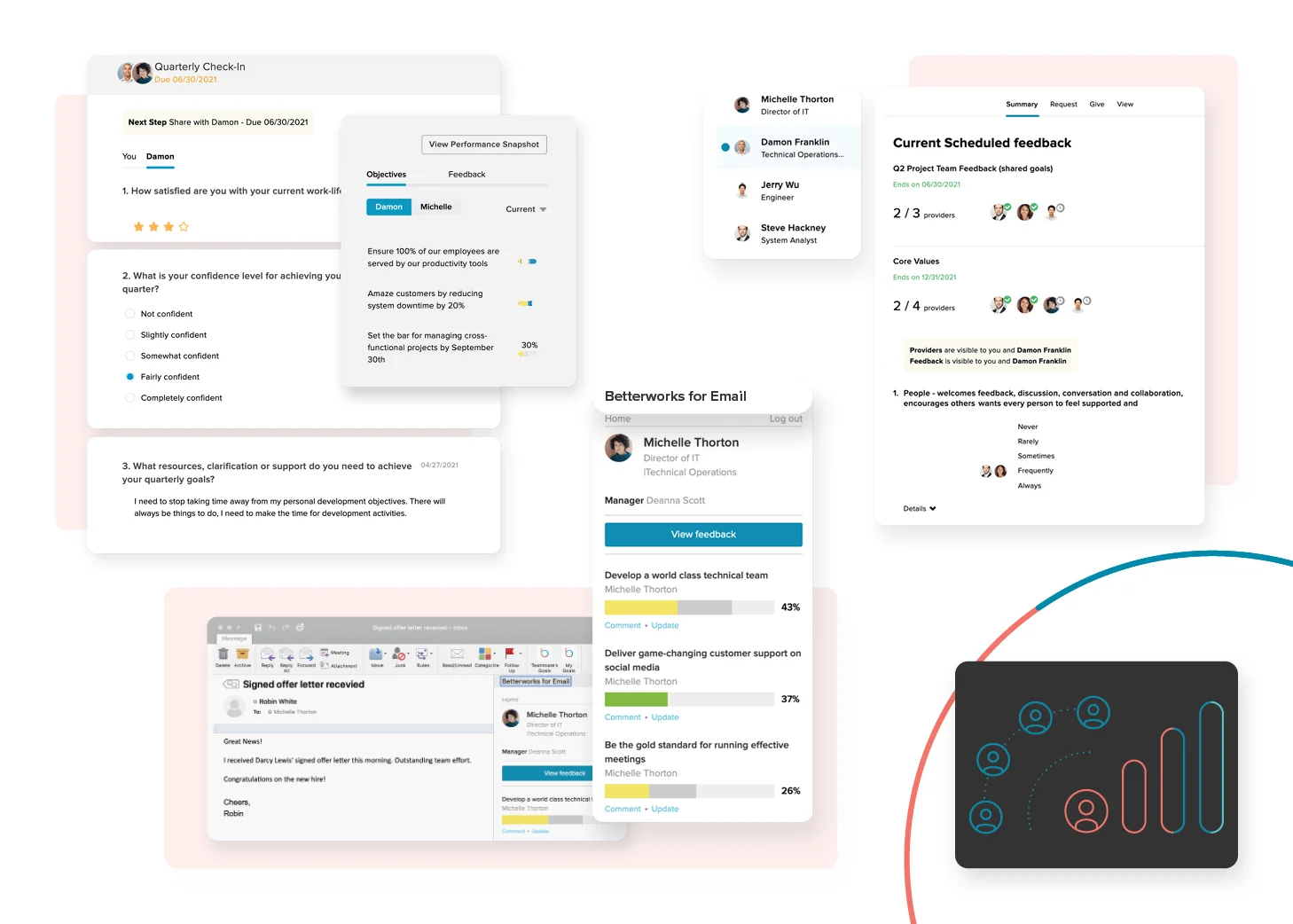
Betterworks was founded in 2013 in Menlo Park, California, on one premise: large organizations run on goals. HR’s job is to make goal execution visible from company strategy to individual output. The January 2026 NextGen platform update added 400+ enterprise-requested features including AI execution-risk detection, a Manager Command Center for real-time alignment visibility, and performance trend anomaly detection. It carries a G2 rating of 4.3/5 from 237 verified reviews (June 2026). Customers include Colgate-Palmolive, Intuit, and ATB Financial.
Betterworks is not an HRIS, and it is not Microsoft-native. It is designed to sit alongside Workday or SAP SuccessFactors, syncing bidirectionally so that calibrated performance data writes back to the system of record automatically. The integration model is what makes it the right call for enterprises already running enterprise HRIS infrastructure, and the wrong call for organizations that need the performance layer to live inside their daily collaboration tool.
Key features include:
- Enterprise OKR and goal cascading: four-level alignment from company strategy to individual OKRs with AI execution-risk detection; the Manager Command Center surfaces alignment gaps in real time
- Continuous feedback via the CFR model (Conversations, Feedback, Recognition) with AI-assisted prompts, structured check-ins, and delivery via Slack, Microsoft Teams, Outlook, and Google Workspace
- Calibration module: side-by-side employee comparisons, visual rating distribution curves, drag-and-drop 9-box placement, demographic filtering, and bias detection
- Engage module: pulse surveys and engagement analytics connected to performance data in the same system
- Bidirectional HRIS integrations with Workday, SAP SuccessFactors, ADP, Oracle, Rippling, and BambooHR
- Enterprise alignment analytics: the Manager Command Center gives leadership live visibility into goal completion rates, team alignment gaps, and at-risk programs
Pros
“Betterworks offers a modern interface for tracking goals, sharing feedback, and collaborating with others. Also I really appreciate the AI tools to enhance feedback texts, this is maybe my major advantage. In addition I never had issues with performance - the system seems to be stable and scalable.” – G2 reviewer
- OKR cascading is among the deepest we’ve reviewed at enterprise scale, based on feature set and analyst coverage. Four-level goal alignment from company strategy to individual OKRs. AI execution-risk detection flags programs at risk before the quarter ends. The Manager Command Center gives leadership a live view of execution, not a quarterly status report. For organizations where OKRs are the operating model, Teamflect’s feature set does not match this depth.
- Calibration at scale is a genuine differentiator. Side-by-side employee comparisons, distribution curves, demographic filtering, bias detection, and 9-box placement make calibration a data-driven exercise. At 1,000+ employees with dozens of managers, this produces rating outcomes that smaller-scale tools cannot match.
- Production-tested HRIS sync. Bidirectional data flow with Workday and SAP SuccessFactors writes calibrated ratings and performance summaries back to the system of record automatically. Merit cycles start from current data, not last year’s export.
- Support quality holds up at enterprise complexity. G2 reviewers rate quality of support at 9.1/10 on G2's quality of support metric, meaningfully above most competitors at this price tier. For a platform with a 2 to 4 month implementation, post-go-live support quality matters.
Cons
“The overall appearance, as a quick tool that you only visit from time to time, is not perfectly intuitive. Sometimes you have to search for settings just to change other settings, and it doesn’t feel well integrated with other tools like Microsoft Teams.” – G2 reviewer
- Not Microsoft-native. Betterworks integrates with Teams and Outlook for feedback delivery and check-in prompts, but it is not built inside Microsoft 365 the way Teamflect is. For organizations that use Teams as the daily workspace and want performance management to surface there without a separate login, Betterworks does not provide that experience.
- Implementation is a 2 to 4 month organizational project. Structured change management is not optional; it is part of how the platform gets deployed. Organizations without a dedicated HR ops or HRIS administrator consistently report a harder go-live experience than those that invest in implementation infrastructure.
- Quote-only pricing with no self-serve entry. Every buyer starts with a sales conversation. Vendr’s anonymized contract dataset shows a median annual contract of $56,400, with a per-employee rate of $6 to $18/month depending on configuration. A 500-employee organization budgeting without a vendor quote is working with an estimate, not a number.
- Mobile experience is a structural gap. Multiple G2 and Gartner reviews flag the mobile app as less developed than the desktop version, consistently, across review cycles. For organizations where managers work primarily on mobile, this is a documented limitation.
- Engage module is newer and less feature-rich than dedicated engagement platforms. The engagement survey capability works, but it does not match the benchmarking depth or adoption-driving social features of platforms built around engagement as the primary product.
Teamflect vs Betterworks: Feature Comparison
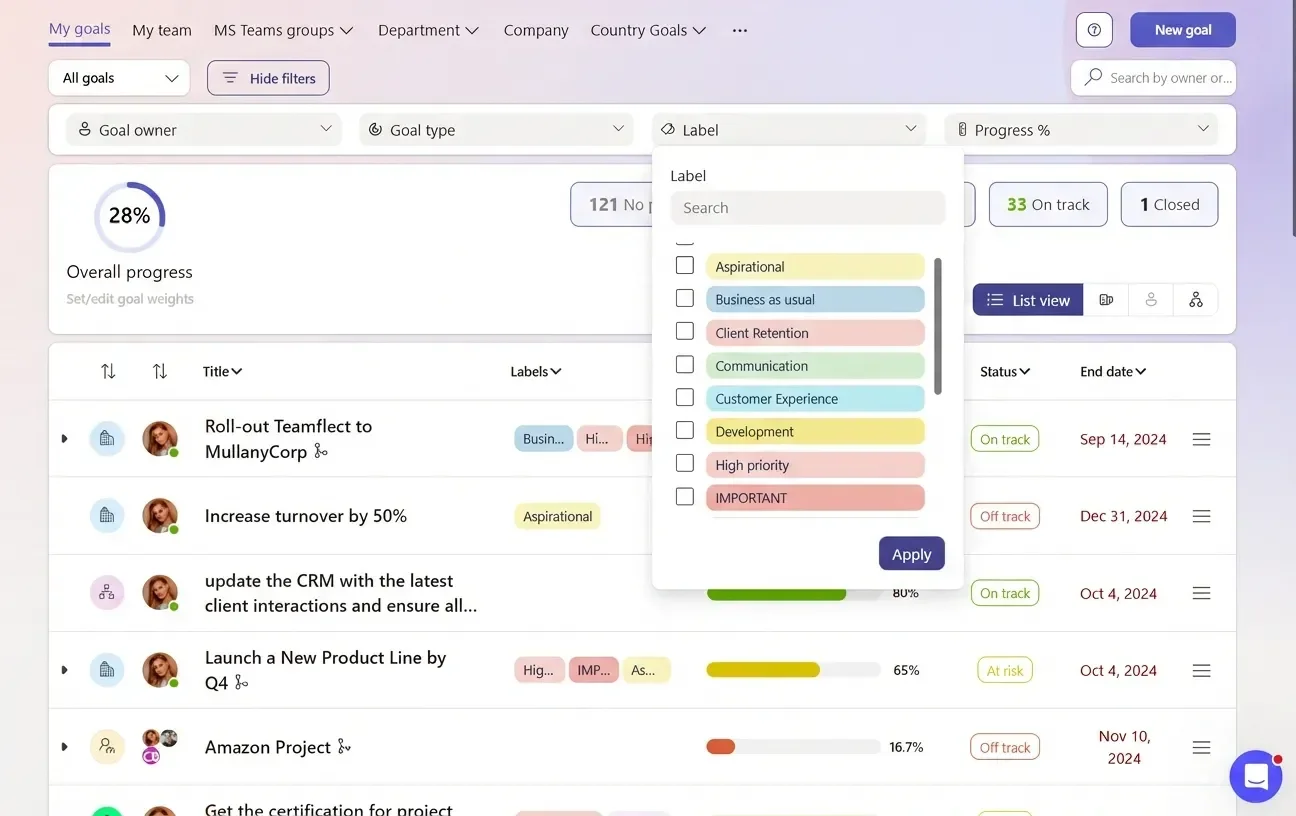
Both platforms cover enterprise performance management, but the architecture determines what each does well and where it reaches its limits. The verdicts below follow the evidence, not the ownership.
Goals and OKR Management
Betterworks is OKR-native. The four-level cascade, AI execution-risk detection, and Manager Command Center are not features added to a broader platform; they are the platform’s organizing logic. For enterprises where OKRs are the operating system and leadership needs program-level visibility into goal execution, this depth is specific and verified.
Teamflect’s OKR module is capable and practically useful: goal cascading, key results, progress tracking, and direct connection to reviews and 1-on-1 agendas, all inside Teams. G2 reviewers rate goal setting highly, with strong recurring positive mentions. The module was designed for usefulness in daily work, not for the kind of cross-organizational alignment analytics that Betterworks delivers.
Verdict: Betterworks. OKR depth, cascading alignment at scale, and execution-risk AI are where Betterworks was built to win, and the evidence supports that verdict plainly.
Performance Reviews and Calibration
Teamflect’s review module pulls in OKRs, 360 feedback, survey scores, and development plan data in real time. Reviewers see the full picture before they write a word. Templates cover quarterly, annual, 30/60/90-day, and exit cycles out of the box. The Teams-native experience means review participation rates that most standalone platforms do not achieve.
Betterworks’ calibration module is the clearest differentiator on this dimension at enterprise scale. Side-by-side comparisons, distribution curves, bias detection, and 9-box placement normalize ratings across dozens of managers. For HR teams where calibration consistency is the problem, Betterworks’ infrastructure is specific and substantiated. These capabilities are particularly relevant when comparing performance review software for enterprise organizations, where calibration depth, HRIS integration, review-cycle configurability, and the ability to manage completion across large workforces become important selection criteria.
Verdict: Teamflect for review experience and adoption at any scale; Betterworks for calibration at large-organization scale where rating consistency across many managers is the documented challenge.
Continuous Feedback and 1-on-1s
Teamflect’s 1-on-1 tooling is native to the medium where these conversations already happen. Shared agendas appear in Outlook meeting invites. Talking points, action items, and notes carry forward between sessions. Feedback requests, recognition, and follow-up tasks stay in Teams with no context switch required. G2 reviewers describe 1-on-1 management as one of the platform’s strongest practical features.
Betterworks’ CFR model (Conversations, Feedback, Recognition) covers the same functional requirement with AI-assisted prompts and goal progress surfacing in check-in views. It integrates with Slack, Teams, and Outlook for delivery. The experience is solid for enterprise teams where the manager-employee relationship is structured and supported. It is not built around the daily workflow the way Teamflect is.
Verdict: Teamflect. The native Teams experience for 1-on-1s and continuous feedback produces the kind of manager adoption that makes the feature work rather than sit unused.
Recognition and Engagement
Teamflect’s recognition tools are built where employees already spend their workday: custom badges, peer shoutouts, points-based rewards, and leaderboards inside Teams. Engagement surveys and eNPS run through the same surface. Adoption of recognition programs is consistently higher when the friction of switching to a separate tool is removed.
Betterworks’ Engage module covers pulse surveys and engagement analytics connected to performance data in the same system. The performance-engagement correlation is the differentiating design choice: HR can see whether teams with low engagement scores are also showing goal progress declines. The module is functional but newer than dedicated engagement platforms, and it does not include the social recognition features Teamflect offers.
Verdict: Teamflect. Built-in recognition inside Teams and a more mature engagement feature set than Betterworks’ Engage module.
Career Development and Succession
Teamflect includes IDPs, competency frameworks, a nine-box talent grid, and succession planning as part of the core product. These features connect directly to performance reviews and goal data, giving HR a view of development trajectory alongside performance outcomes. SelectSoftwareReviews’ independent evaluation specifically cited the nine-box grid as a standout capability.
Betterworks is focused on OKR execution and performance management. It does not include a dedicated career development module, IDP tooling, or succession planning infrastructure at the same depth. For organizations where career pathing is part of the performance conversation, this is a gap.
Verdict: Teamflect. Career development, IDPs, and succession planning are built into the core product; Betterworks’ depth is in OKR execution and calibration, not talent lifecycle management.
Microsoft 365 and Ecosystem Fit
This dimension is not competitive. Teamflect was designed from day one to live inside Teams and Outlook. There is no separate login. Performance management surfaces in the exact environment where work happens. Power BI integration enables enterprise-grade custom analytics for Microsoft shops. Official Microsoft partner status, Azure data residency, and SOC 2 Type II certification complete the ecosystem story.
Betterworks integrates with Teams and Outlook for feedback delivery and check-in prompts, but it is a separate application. It is not a Teams-native experience. For organizations where Microsoft 365 is the workspace and the goal is for performance management to exist inside that workspace rather than alongside it, Betterworks does not address the requirement.
Verdict: Teamflect, decisively. Microsoft 365-native is the architecture; Betterworks’ Microsoft integrations are connectors, not the same thing.
AI Capabilities
Betterworks’ AI centers on execution risk: detecting at-risk goals in real time, surfacing alignment gaps in the Manager Command Center, flagging performance trend anomalies before they become quarter-end surprises. Goal-writing assistance and review drafting support are also part of the 2026 NextGen update. The use case is strategic oversight at enterprise scale.
Teamflect’s AI covers goal-writing assistance, feedback summaries, review drafting, and manager insights across the platform. AI HR Partners, a more proactive AI layer providing coaching and guidance, launched in beta in mid-2026. The applications are in the daily workflow rather than the program-level analytics layer.
Verdict: Context-dependent. Betterworks for AI-powered execution oversight across an OKR program; Teamflect for AI assistance embedded in the daily manager and employee workflow. Neither has closed the gap on what the other does.
Analytics and Reporting
Betterworks’ Manager Command Center and enterprise alignment analytics are built for OKR-program oversight: goal completion rates, cross-team alignment gaps, execution risk signals, and calibration distribution across managers. For HR and leadership teams running a formal OKR operating model, this is the analytics layer that makes OKRs governable at scale.
Teamflect’s Power BI connector is the enterprise reporting story for Microsoft shops. Custom dashboards, cross-module data, and workforce analytics are available for organizations willing to build the reports in Power BI. Multiple Capterra reviewers flag that the out-of-the-box reports have limited customization, but the Power BI connector resolves this for organizations with the resources to use it.
Verdict: Betterworks for enterprise OKR program analytics; Teamflect via the Power BI connector for Microsoft-centric organizations that need custom workforce analytics.
Implementation and Adoption
Teamflect deploys in days to weeks, not months. Because it lives inside Teams, there is no change management program required to get employees to log in to a new tool. Adoption happens because the platform appears in the daily workspace. The enterprise deployments at Securitas and Invacare across multiple continents and tens of thousands of users are evidence that this scales.
Betterworks takes 2 to 4 months with structured change management. Organizations without dedicated HR ops infrastructure consistently find the implementation harder than expected. The platform delivers most of its value after the investment in implementation is made, which is a real bar.
Verdict: Teamflect. Faster time to value, higher adoption, and no change management program required. Betterworks’ implementation depth is appropriate for what the platform delivers, but it is a real investment.
Pricing and Transparency
Betterworks is quote-only at all tiers. Vendr’s anonymized contract data shows a median annual contract of $56,400, with a per-employee rate of $6 to $18/month and a range of $7,430 to $124,267. There is no self-serve path and no published pricing floor. A 500-employee organization cannot budget meaningfully without going through the sales process.
Verdict: Teamflect. Published pricing, a free trial, and a free starter plan give buyers the ability to evaluate before committing. Betterworks’ quote-only model is appropriate for its complexity, but the transparency gap is real.
Pricing Comparison
Teamflect publishes its tiers and is one of the few enterprise-adjacent performance platforms to do so. Betterworks is quote-only. Betterworks figures below come from Vendr's buyer guide (verified June 2026) and should be treated as market estimates based on Vendr’s anonymized buyer data as of June 2026, not quotes, and may change. Contact Betterworks directly for a number relevant to your organization.
Teamflect:
- Starter (Free): up to 10 users, full access to core performance management features, no time limit
- Essential: $7/user/month (annual) or $9/user/month (monthly). Goal tracking, performance reviews, 360 feedback, 1-on-1s, recognition, surveys. 30-day free trial.
- Professional: $11/user/month (annual) or $14/user/month (monthly). Adds advanced talent management (nine-box grid, IDPs, succession planning), Power BI connector, and advanced AI. 30-day free trial.
- Enterprise: Custom quote. Customer-managed encryption keys, dedicated cloud infrastructure, customer-selectable Azure data residency, real-time audit log streaming, IP allowlisting, and granular access controls. Nonprofits receive up to a 60% discount on annual contracts.
Betterworks:
- No published pricing. Quote-only at all tiers. Sales demo required to begin evaluation.
- Per-employee rate: $6 to $18/month depending on module selection and negotiated terms. (Vendr, 2026)
- Median annual contract: $56,400 (observed range: $7,430 to $124,267)
- Implementation: often a five-figure project per public buyer benchmarks; confirm the fee directly with Betterworks
- Buying cycle: 2 to 8 weeks. Implementation: 2 to 4 months.
Worked example at 500 employees: Teamflect Professional at $11/user/month (annual) runs $66,000/year before any enterprise upgrade. Betterworks at 500 employees requires a direct quote; Vendr’s data suggests the range spans $30,000 to $90,000+ annually depending on module selection and negotiated terms, with a meaningful implementation fee on top. The only reliable Betterworks figure comes from the vendor.
Enterprise and Security
Enterprise security has historically been treated as a footnote in performance management. It should not be, given what the data includes: compensation discussions, performance ratings, succession plans, and the unfiltered content of 1-on-1 conversations. Both platforms carry enterprise credentials, but the depth differs.
Teamflect Enterprise Security
The May 2026 Enterprise plan introduced three controls that are rare in the performance management category and not currently listed among Betterworks’ documented features:
- Customer-managed encryption keys (BYOK): full rotation, revocation, and audit control through your own key management system
- Dedicated cloud infrastructure: no shared components between customers
- Customer-selectable data residency: any Microsoft Azure region, including the US, EU, Canada, Singapore, and UAE
- Real-time audit logs: streamed to Splunk, Datadog, Microsoft Sentinel, and other SIEM platforms
- IP allowlisting and granular role-based access controls
- SOC 2 Type II certified, GDPR and CCPA compliant, official Microsoft partner
Betterworks Enterprise Security
Betterworks holds enterprise security credentials appropriate for the enterprise organizations it serves. SOC 2 Type II compliance is confirmed via its enterprise documentation. GDPR compliance is documented. Betterworks integrates with Okta and other enterprise SSO providers and supports role-based access controls at the administrator level.
The specific controls Teamflect’s Enterprise plan introduced (customer-held encryption keys, dedicated per-tenant infrastructure, customer-selectable data residency) are not currently listed among Betterworks’ documented security features. Buyers for whom these controls are a procurement requirement should verify Betterworks’ current posture directly with the vendor before drawing conclusions from this comparison.
Why Organizations Choose Teamflect Over Betterworks

Performance management that employees actually use
Adoption is where most HR software investments fail. When the tool requires a separate login, employees and managers avoid it. Teamflect eliminates the avoidance because it is not a separate tool. It is the same interface employees use for meetings, chat, and collaboration. Multiple enterprise deployments report adoption rates that standalone platforms, including Betterworks, do not match.
All-in-one people management for Microsoft 365 organizations
An organization running Teams as its daily workspace does not need a performance platform that integrates with Teams. It needs one that lives there. Teamflect delivers goals, reviews, feedback, 1-on-1s, recognition, surveys, and career development inside the Microsoft 365 environment, connected to Power BI for enterprise analytics. For organizations where Microsoft is the stack, this eliminates the integration dependency that Betterworks requires. Where internal mobility itself, not just career development tracking, is the priority, dedicated talent marketplace platforms go further than either tool here.
Enterprise security that procurement can approve
The May 2026 Enterprise plan brought customer-held encryption keys, dedicated cloud infrastructure, and customer-selectable Azure data residency to performance management for the first time. CISOs and procurement teams that apply the same security standards to HR software as to the rest of the enterprise stack now have a performance management platform that meets those standards.
Transparent pricing and a faster path to a decision
Betterworks requires a sales conversation before any pricing discussion is possible. Teamflect’s published Essential and Professional tiers let an HR team build a budget estimate, model the per-employee cost at different headcounts, and present an internal business case without a vendor call. Enterprise pricing still requires a quote, but the core economics are visible.
Weeks to go live, not months
A 2 to 4 month implementation with structured change management is appropriate for what Betterworks delivers, but it is a real resource commitment. Teamflect’s Teams-native architecture means go-live in days to weeks at most scales, with adoption driven by the platform’s presence in the daily workspace rather than by change management programs.
When Betterworks Is the Better Choice
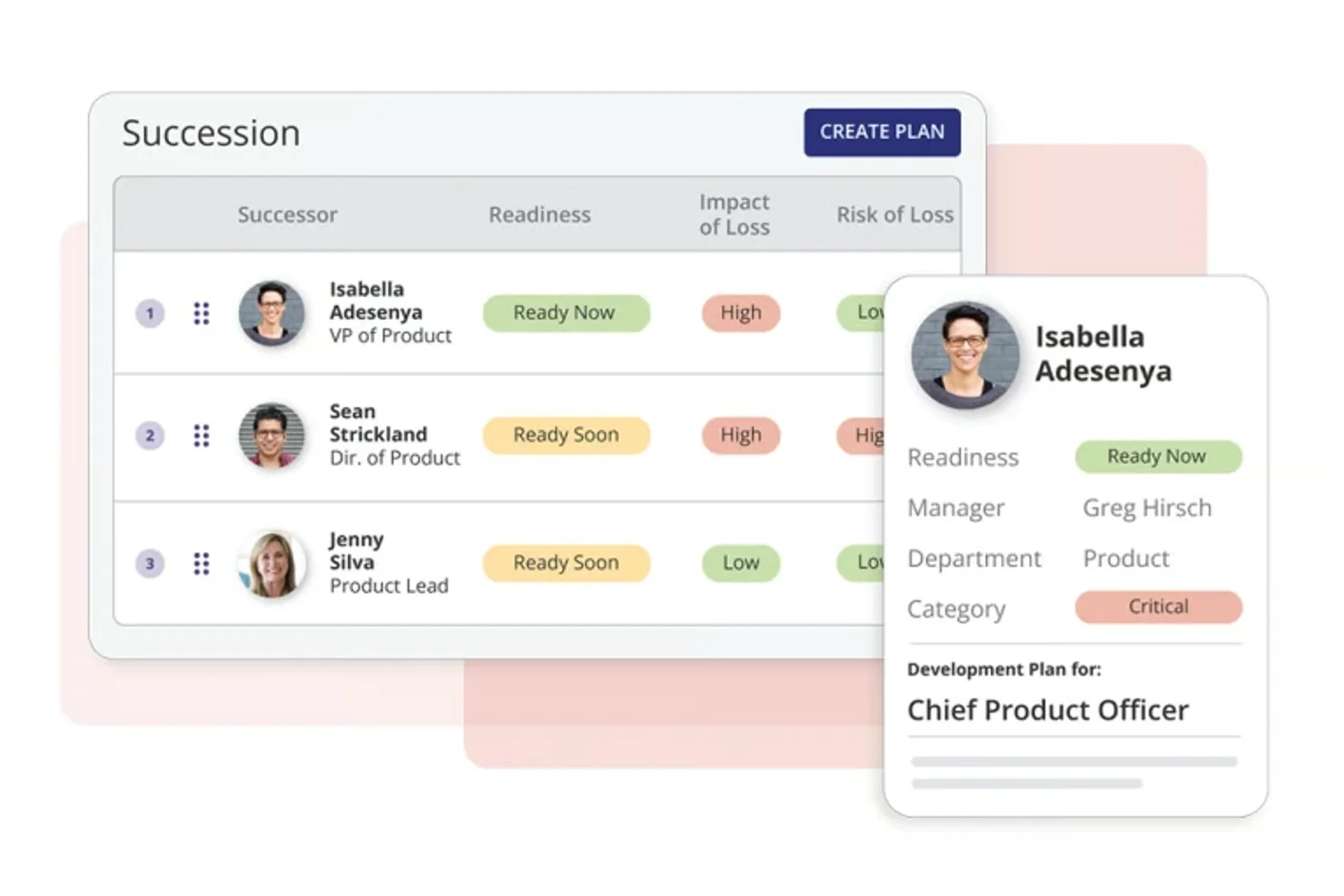
This section is not a token balance. There are enterprise organizations for which Betterworks is the right platform and Teamflect is not. The verdicts are specific.
- Your organization has committed to OKRs as the operating model, meaning goals are the mechanism by which company strategy becomes individual execution, and HR needs cross-organizational visibility into whether that mechanism is working. Betterworks’ four-level cascading OKRs, AI execution-risk detection, and Manager Command Center are built for this specific organizational operating model. Teamflect’s OKR module is capable but not built to the same depth.
- Calibration consistency across many managers is a documented HR credibility problem. If your organization has fifty managers rating employees on different standards and HR cannot normalize those ratings before communicating outcomes, Betterworks’ calibration module with bias detection, distribution overlays, and demographic filtering is the specific tool for that specific problem. Teamflect does not have a calibration module at this depth.
- You are already running Workday or SAP SuccessFactors and need performance data to write back to the system of record automatically. Betterworks’ production-tested bidirectional HRIS sync is the integration model for that requirement. Teamflect connects to 200+ HRIS systems for user provisioning but does not write performance data back to the HRIS in the same way.
- Microsoft Teams is not your primary collaboration layer. Teamflect’s entire value proposition depends on Teams being the daily workspace. If your organization runs Slack, Google Workspace, or another primary collaboration tool, Teamflect is not the right platform regardless of its other strengths. Betterworks’ integrations cover Slack, Teams, Outlook, and Google Workspace with more neutrality.
Which Tool Is Right For You?
Choose Teamflect If:
- Microsoft Teams is your daily workspace and you want performance management to live where work already happens, not alongside it
- Adoption is the primary concern: your organization has tried performance management tools before and found they go unused because they require a separate login and a separate habit
- You need all-in-one people management covering goals, reviews, feedback, 1-on-1s, recognition, engagement surveys, and career development in one system without a multi-vendor stack
- Enterprise security is a procurement requirement: customer-managed encryption keys, dedicated infrastructure, Azure data residency, and SIEM-compatible audit logs are now available on Teamflect’s Enterprise plan
- Published pricing and a faster evaluation path matter: Teamflect’s Essential and Professional tiers are visible without a sales conversation
Choose Betterworks If
- OKRs are the organizational operating model and you need enterprise cascading alignment, execution-risk AI, and leadership-level program visibility that goes beyond goal tracking
- Calibration consistency across many managers is the primary HR problem: rating normalization with bias detection, distribution curves, and demographic filtering at scale
- You run Workday or SAP SuccessFactors and need calibrated performance data to write back to the system of record automatically
- Microsoft Teams is not your primary collaboration tool and you need a platform that integrates neutrally across Slack, Teams, Outlook, and Google Workspace
Frequently Asked Questions
What is the main difference between Teamflect and Betterworks?
Teamflect is enterprise performance management native to Microsoft Teams and Outlook, built for adoption and breadth: goals, reviews, feedback, recognition, career development, and enterprise security in one system inside the Microsoft 365 workspace. Betterworks is enterprise OKR-native, built for depth: cascading goal alignment, calibration at scale, and AI execution-risk detection for organizations where OKRs are the operating model. The choice is between Microsoft-native breadth and OKR-native depth.
Is Teamflect enterprise-ready?
Yes, Teamflect is deployed across multiple continents and tens of thousands of users at organizations including Securitas and Invacare. The May 2026 Enterprise plan added customer-managed encryption keys, dedicated cloud infrastructure, customer-selectable Azure data residency, and real-time audit log streaming to SIEM platforms. SOC 2 Type II certification, GDPR and CCPA compliance, and official Microsoft partner status are in place. G2’s Summer 2026 enterprise category badges included “Easiest to Set Up” and “Easiest to Do Business With.”
Which is more affordable, Teamflect or Betterworks?
Teamflect’s Essential plan starts at $7/user/month (annual) and Professional at $11/user/month (annual), both published without a sales call. Betterworks is quote-only. Vendr’s data shows a median Betterworks annual contract of $56,400, with a per-employee rate of $6 to $18/month. At 500 employees, Teamflect Professional runs $66,000/year; Betterworks at the same headcount requires a vendor quote.
Evaluating other performance platforms? See how PerformYard compares to Engagedly.
.avif)